

Disaster recovery planning sounds scary until you realize how much our safety depends on preparation. Most people overlook that over 60 percent of small businesses never reopen after a major disaster. Yet here is what most checklists miss. The smartest risk assessment is not just about filling in boxes. It is about knowing which boxes actually matter for real people in real emergencies.
Table of Contents
- Understanding The Risk Assessment Process
- Key Steps In Creating A Risk Assessment Checklist
- Tailoring The Checklist For Different Stakeholders
- Common Mistakes And How To Avoid Them
Quick Summary
| Takeaway | Explanation |
|---|---|
| Identify All Potential Hazards | Conduct a thorough examination of environmental, technological, and human risks for disaster preparedness. |
| Assess Impact and Probability | Use quantitative and qualitative methods to prioritize risks based on their severity and likelihood of occurrence. |
| Develop Actionable Mitigation Strategies | Create specific, measurable plans to reduce vulnerabilities and enhance resilience during disasters. |
| Tailor Checklists for Stakeholders | Customize risk assessment checklists to address the unique needs of emergency responders, government agencies, and communities. |
| Avoid Common Risk Assessment Mistakes | Stay aware of interdependencies, ensure adequate training, and treat risk assessment as a dynamic process to improve efficacy. |
Understanding the Risk Assessment Process
Risk assessment is a critical strategic process that enables organizations and individuals to systematically evaluate potential threats and vulnerabilities during disaster scenarios. By comprehensively understanding potential risks, stakeholders can develop proactive strategies to minimize damage, protect lives, and ensure rapid recovery.
Identifying Potential Hazards
The first step in risk assessment involves meticulously identifying potential hazards that could disrupt normal operations or threaten human safety. According to the PrepareCenter, this process requires a comprehensive examination of environmental, technological, and human-induced risks. These hazards might include natural disasters like hurricanes, earthquakes, floods, wildfires, or human-caused incidents such as infrastructure failures, technological breakdowns, or pandemic outbreaks.
Effective hazard identification demands a multidisciplinary approach. Emergency management professionals, climate scientists, engineers, and local community leaders collaborate to create detailed risk profiles. They analyze historical data, current environmental conditions, geographical vulnerabilities, and emerging technological trends to develop a comprehensive understanding of potential threats.
Analyzing Impact and Probability
Once potential hazards are identified, risk assessment moves into a critical phase of analyzing their potential impact and likelihood of occurrence. This involves quantitative and qualitative evaluation techniques that help prioritize risks based on their severity and probability. Risk matrices are commonly used tools that plot potential hazards on a grid measuring potential consequences against their estimated frequency.
For disaster recovery planning, this analysis goes beyond simple statistical modeling. Disaster Victim Services recommends considering cascading effects and interconnected risks. A single event might trigger multiple secondary challenges, such as how a hurricane could lead to infrastructure damage, power outages, communication disruptions, and subsequent economic instability.
Developing Mitigation Strategies
The final crucial component of risk assessment involves developing targeted mitigation strategies. These strategies transform theoretical risk analysis into practical, actionable plans designed to reduce vulnerability and enhance resilience. Mitigation approaches can range from structural interventions like reinforcing buildings and creating emergency shelters to procedural measures such as establishing communication protocols and training response teams.
Successful mitigation requires continuous adaptation. Risk landscapes are dynamic, continuously evolving with technological advancements, climate changes, and societal transformations. Organizations must regularly review and update their risk assessment frameworks, integrating new data, emerging technologies, and lessons learned from recent disaster experiences.
Ultimately, a robust risk assessment process is not about eliminating all potential threats but about building adaptive capacity. By understanding potential risks, developing flexible response mechanisms, and fostering a culture of preparedness, communities and organizations can transform vulnerability into resilience.
Key Steps in Creating a Risk Assessment Checklist
Creating a comprehensive risk assessment checklist requires strategic planning, detailed analysis, and a systematic approach to identifying and mitigating potential disaster scenarios. The goal is to develop a robust tool that enables proactive response and minimizes potential damage.
Comprehensive Hazard Inventory
The foundation of an effective risk assessment checklist is a thorough hazard inventory. This involves systematically documenting all potential risks across multiple domains. According to FEMA, a comprehensive inventory should include natural disasters, technological failures, human-induced incidents, and complex interconnected threats.
Key components of this inventory require detailed documentation of:
- Geographic Vulnerabilities: Specific regional risks like flood zones, earthquake-prone areas, wildfire landscapes.
- Infrastructure Weaknesses: Critical system vulnerabilities in power grids, communication networks, transportation systems.
- Population Specific Risks: Demographic factors that increase vulnerability, such as age, mobility limitations, economic conditions.
Professional emergency managers recommend creating a dynamic, continuously updated database that reflects evolving risk landscapes. Disaster Victim Services emphasizes the importance of interdisciplinary collaboration in developing these comprehensive risk inventories.
Probability and Impact Assessment
Once hazards are identified, the next critical step involves assessing their probability and potential impact. This requires quantitative and qualitative analysis techniques that help prioritize risks based on their severity and likelihood of occurrence.
Risk scoring methods typically involve:
- Estimating frequency of potential events
- Calculating potential economic and human costs
- Evaluating secondary and cascading effects
- Determining recovery complexity
Advanced risk assessment frameworks use sophisticated modeling techniques that incorporate historical data, climate projections, technological trend analysis, and predictive algorithms. These models help transform abstract risk concepts into actionable intelligence.
Actionable Mitigation Strategies
The final phase of creating a risk assessment checklist involves developing concrete, implementable mitigation strategies. These strategies must be specific, measurable, and adaptable to changing circumstances.
Effective mitigation strategies should include:
- Clear response protocols
- Resource allocation plans
- Emergency communication frameworks
- Training and preparedness programs
- Continuous monitoring and evaluation mechanisms
Successful risk assessment checklists are not static documents but living frameworks that evolve with emerging challenges. Regular review, updating, and interdisciplinary input ensure the checklist remains relevant and effective in addressing complex, dynamic risk environments.
By following these systematic steps, organizations and communities can transform potential vulnerabilities into resilient, adaptive response capabilities. A well-constructed risk assessment checklist becomes more than a document it becomes a strategic tool for proactive disaster management and community protection.
Tailoring the Checklist for Different Stakeholders
Effective disaster recovery requires a nuanced approach that recognizes the unique needs, capabilities, and responsibilities of different stakeholders. A one-size-fits-all risk assessment checklist fails to address the complex, interconnected nature of disaster response and recovery.
Emergency Responders and First Responder Considerations
First responders represent the critical frontline of disaster recovery, requiring specialized risk assessment checklists that prioritize immediate life-saving interventions and rapid damage assessment. According to the National Disaster Recovery Framework, these professionals need checklists that emphasize:
- Rapid Triage Protocols: Immediate assessment of human safety and critical infrastructure damage
- Communication Systems: Robust emergency communication strategies
- Resource Deployment: Quick mobilization of medical, rescue, and support personnel
- Scene Security: Ensuring safety while conducting rescue and initial recovery operations
Their risk assessment checklist must be dynamic, allowing real-time updates and flexible decision-making under extreme pressure. Disaster Victim Services highlights the importance of creating adaptable frameworks that support quick, informed actions.
Government Agencies and Policy Makers
Government stakeholders require comprehensive risk assessment checklists that address broader systemic challenges. The APEC Disaster Recovery Checklist emphasizes a multi-sector approach that goes beyond immediate response to long-term recovery and resilience building.
Key elements for government-focused checklists include:
- Comprehensive economic impact assessments
- Policy coordination across multiple agencies
- Long-term infrastructure reconstruction planning
- Social support and community rehabilitation strategies
- Funding allocation and resource management
These checklists must integrate cross-departmental communication, ensuring seamless collaboration between emergency management, health services, infrastructure departments, and social welfare agencies.
Community and Individual Preparedness
Risk assessment checklists for individual community members and families must be accessible, practical, and empowering. These checklists should focus on personal preparedness, immediate survival skills, and understanding individual roles in broader recovery efforts.
Essential components include:
- Personal emergency kit preparation
- Family communication and reunion plans
- Basic first aid and emergency medical knowledge
- Understanding local evacuation routes
- Critical document preservation strategies
- Financial preparedness and insurance understanding
By developing stakeholder-specific risk assessment checklists, organizations can create more responsive, efficient, and comprehensive disaster recovery frameworks. The key lies in recognizing that each stakeholder brings unique perspectives, resources, and capabilities to the recovery process.
To help readers quickly compare the unique needs and checklist components for different disaster recovery stakeholders, the following table organizes key considerations mentioned for emergency responders, government agencies, and community members.
| Stakeholder | Key Checklist Focus Areas |
|---|---|
| Emergency Responders | Rapid triage, emergency communication, resource deployment, scene security |
| Government Agencies/Policy Makers | Economic impact assessment, policy coordination, infrastructure planning, social support, resource management |
| Community/Individuals | Personal emergency kits, family plans, first aid, evacuation routes, document safety, financial preparedness |
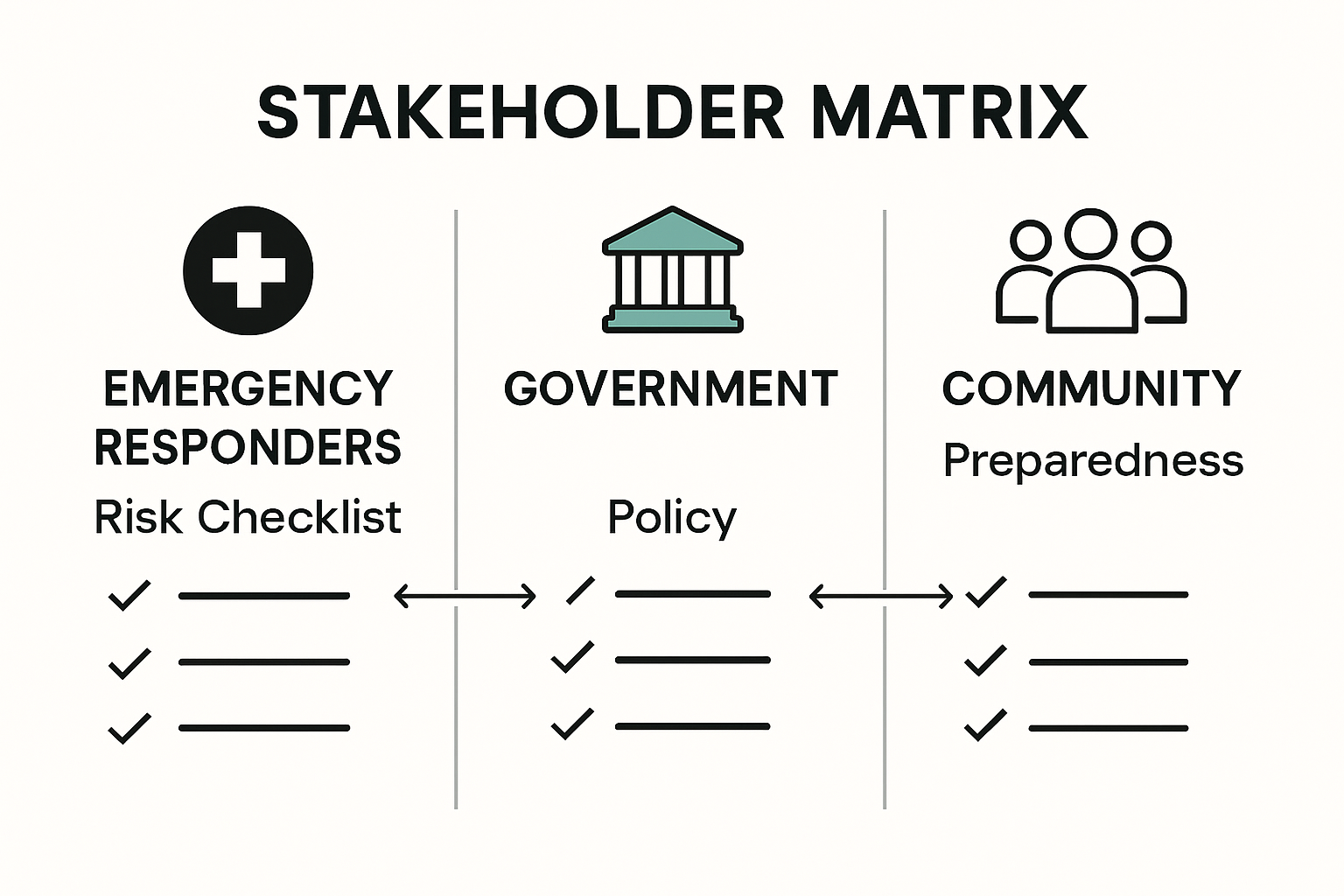
Ultimately, a successful risk assessment approach transcends individual checklists, fostering a collaborative ecosystem where different stakeholders work synergistically. This approach transforms potential vulnerability into collective resilience, ensuring more effective and compassionate disaster response and recovery.
Common Mistakes and How to Avoid Them
Risk assessment checklists are powerful tools for disaster preparedness, but they can be rendered ineffective by common strategic oversights. Understanding and proactively addressing these potential pitfalls is crucial for developing robust, actionable disaster recovery frameworks.
Overlooking Interdependency and Cascading Risks
One of the most critical mistakes in risk assessment is treating potential hazards as isolated events. According to research from the Erwood Group, organizations frequently fail to recognize the complex interconnections between different risk factors.
Common interdependency oversights include:
- Neglecting secondary and tertiary disaster impacts
- Failing to map critical infrastructure dependencies
- Underestimating technological system vulnerabilities
- Ignoring potential economic and social cascading effects
To mitigate these risks, organizations must develop holistic risk assessment models that consider complex system interactions. Disaster Victim Services recommends creating adaptive frameworks that can dynamically update based on emerging interconnected threat patterns.
Inadequate Training and Communication Protocols
Another significant mistake is developing comprehensive risk assessment checklists without corresponding robust training and communication strategies. A well-designed checklist becomes ineffective if stakeholders are not properly prepared to implement its protocols.
Key training and communication challenges include:
- Insufficient emergency response skill development
- Lack of regular scenario-based training exercises
- Poor communication infrastructure
- Unclear role definitions during crisis scenarios
- Limited cross-departmental collaboration mechanisms
Effective mitigation requires:
- Regular comprehensive training programs
- Simulated disaster response drills
- Clear, accessible communication protocols
- Continuous skill updates and knowledge sharing
- Building a culture of preparedness and adaptability
Static versus Dynamic Risk Assessment
Perhaps the most fundamental mistake is treating risk assessment as a static, one-time process rather than a dynamic, evolving framework. Risk landscapes continuously transform due to technological advancements, climate changes, societal shifts, and emerging global challenges.
Characteristics of outdated risk assessment approaches include:
- Infrequent checklist updates
- Reliance on historical data without predictive modeling
- Limited incorporation of emerging technological insights
- Resistance to interdisciplinary collaboration
- Inflexible response mechanisms
To create truly effective risk assessment strategies, organizations must embrace:
- Continuous monitoring and evaluation
- Integration of predictive analytics
- Flexible, adaptive frameworks
- Regular interdisciplinary review processes
- Investment in emerging risk detection technologies
Transforming risk assessment from a compliance exercise to a strategic, dynamic process requires commitment, creativity, and a willingness to challenge existing methodologies. By recognizing and proactively addressing common mistakes, organizations can develop resilient, forward-thinking disaster recovery approaches that protect lives, infrastructure, and community well-being.
The following table summarizes common mistakes found in disaster recovery risk assessment and provides the corresponding strategies to avoid them, as discussed in the article.
| Common Mistake | How to Avoid It |
|---|---|
| Overlooking interdependency & cascading risks | Use holistic models and adaptive frameworks that map system dependencies |
| Inadequate training & communication protocols | Regular training, drills, clear communication, and defined roles |
| Treating risk assessment as a static process | Continuous updates, predictive analytics, and flexible/adaptive frameworks |

Frequently Asked Questions
What is a risk assessment checklist for disaster recovery?
A risk assessment checklist for disaster recovery is a structured tool that helps organizations identify potential hazards, analyze their impact and probability, and develop actionable mitigation strategies to enhance preparedness and resilience during disasters.
How can I create a comprehensive risk assessment checklist?
To create a comprehensive risk assessment checklist, you should conduct a thorough inventory of potential hazards, prioritize risks based on their severity and likelihood using both qualitative and quantitative methods, and develop clear, actionable mitigation strategies tailored to your specific context.
Why is identifying potential hazards important in the risk assessment process?
Identifying potential hazards is crucial because it lays the foundation for understanding the specific risks that could disrupt operations or threaten safety. This step allows stakeholders to proactively develop strategies to mitigate those risks before they manifest during a disaster.
How often should I update my risk assessment checklist?
Your risk assessment checklist should be regularly updated, ideally on an annual basis or whenever new information emerges regarding potential risks, changes in the environment, or shifts in organizational operations. Treating risk assessment as a dynamic process ensures preparedness evolves with changing conditions.
Ready to Turn Your Risk Assessment Into Real Disaster Recovery Action?
You have just learned how crucial a thoughtful risk assessment is for preparing your organization or family for disaster recovery. But even the most detailed checklist cannot eliminate the anxiety of wondering what comes next after a real emergency hits. Missed hazards, overlooked dependencies, and a lack of clear action plans can leave you vulnerable and overwhelmed when the unthinkable happens. At Disaster Victim Services we help you bridge the gap between planning and real-life recovery. Our team understands the pain points highlighted in your risk assessment journey such as the need for immediate emergency housing, logistics support, and fast communication with insurance, government, and first responders.
Do not let all your preparation go unused when a disaster strikes. Visit our homepage or explore our resource hub to see exactly how we can help you move swiftly from risk awareness to real support. You have made a plan. Now let us help you put it into action when it matters most. Reach out to our experts today and get the guidance and resources you need, before trouble finds you.
Recommended
- Risk Assessment Steps for Disaster Response in 2025 – Disaster Victim Services | Helping You Recover After Disaster
- Disaster Recovery Process Steps: A Complete Guide 2025 – Disaster Victim Services | Helping You Recover After Disaster
- Essential Steps for Disaster Documentation in 2025 – Disaster Victim Services | Helping You Recover After Disaster
- Disaster Preparedness Checklist 2025: Essential Guide for All Responders – Disaster Victim Services | Helping You Recover After Disaster