

Disaster strikes and thousands of people are left without homes. The difference between chaos and safety often hinges on one detail. Studies show that a rapid assessment of housing needs must happen within just three days of an emergency, or critical support will fall short. Most would assume this process is simply about counting empty beds, but the real challenge is much bigger and far less predictable—see why even top agencies struggle to keep up.
Table of Contents
- Key Factors For Assessing Housing Capacity
- Tools And Methods For Accurate Evaluation
- Challenges And Solutions In Emergency Assessments
- Best Practices For Coordinated Housing Support
Quick Summary
| Takeaway | Explanation |
|---|---|
| Conduct comprehensive vulnerability assessments | Assess the needs of affected populations within days of a disaster to ensure appropriate housing support. |
| Evaluate existing infrastructure and resources | Analyze housing facilities, utilities, and proximity to essential services for effective shelter solutions. |
| Utilize advanced technologies for assessment | Leverage GIS, drones, and data collection tools to gather accurate information quickly during disaster response. |
| Prioritize the most vulnerable populations | Tailor housing strategies to accommodate high-risk groups and ensure their specific needs are met effectively. |
| Develop flexible resource allocation plans | Implement adaptable systems for rapid decision-making and deployment of housing resources during changing disaster conditions. |
Key Factors for Assessing Housing Capacity
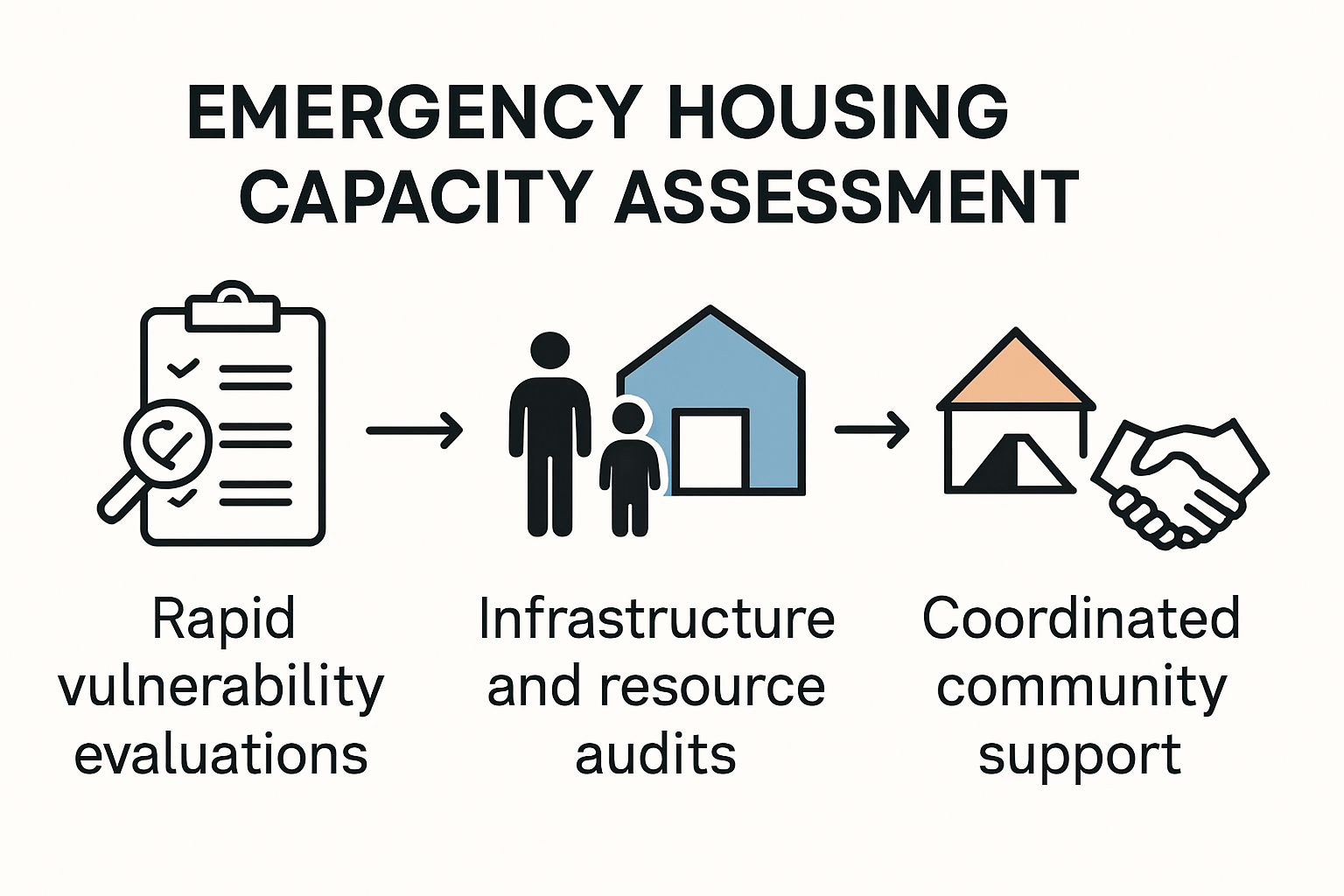
Assessing housing capacity during disaster response requires a systematic and comprehensive approach that goes beyond simple counting of available spaces. Emergency management professionals must analyze multiple critical dimensions to ensure effective shelter solutions for displaced individuals and families.
To quickly understand major factors that should be assessed when evaluating disaster housing capacity, refer to the summary table below.
| Key Factor | Description |
|---|---|
| Vulnerability Assessment | Analyze population needs: demographics, health status, and special requirements of vulnerable groups. |
| Infrastructure Evaluation | Evaluate facilities for structural integrity, utilities, proximity to essential services, and safety. |
| Resource Assessment | Assess the support capacity of local systems (healthcare, social services, community centers). |
| Adaptive Housing Strategies | Plan for scenarios ranging from emergency shelters to temporary and long-term housing solutions. |
| Continuous Monitoring | Regularly update assessments as disaster conditions and population needs evolve. |
Comprehensive Vulnerability Assessment
Understanding the specific vulnerabilities of affected populations forms the foundation of housing capacity assessment. The United Nations High Commissioner for Refugees (UNHCR) emphasizes the critical importance of conducting a rapid initial assessment within the first three days of an emergency. This assessment must consider multiple interconnected factors including demographic composition, pre-existing living conditions, health status, and specific needs of vulnerable groups such as elderly individuals, people with disabilities, children, and those with medical requirements.
A comprehensive vulnerability assessment involves gathering detailed data about the displaced population. This includes understanding family sizes, age distributions, medical conditions, and potential special accommodation needs. Emergency responders must evaluate not just the quantity of available housing but its quality and suitability for different population segments.
Infrastructure and Resource Evaluation
Beyond population needs, assessing housing capacity demands a thorough examination of existing infrastructure and available resources. The National Center for Biotechnology Information recommends establishing a dedicated disaster housing task force that can perform detailed vulnerability and capacity assessments before potential emergencies occur.
Key infrastructure considerations include:
- Structural integrity of potential housing facilities
- Availability of essential utilities like water, electricity, and sanitation
- Proximity to medical facilities and emergency services
- Transportation accessibility
- Safety and security of potential housing locations
Resource evaluation extends beyond physical structures. Emergency managers must analyze the capacity of local support systems, including healthcare facilities, community centers, and social service networks that can provide additional support to displaced individuals.
Adaptive and Scalable Housing Solutions
Effective housing capacity assessment requires developing adaptive strategies that can quickly scale based on evolving disaster conditions. The Center for Disaster Philanthropy emphasizes the importance of considering the entire shelter cycle, from immediate emergency response to long-term housing transitions.
This approach involves creating flexible housing plans that can accommodate changing population needs. Emergency responders should develop multiple housing scenarios, ranging from short-term emergency shelters to potential temporary housing solutions. The goal is to create a dynamic system that can rapidly adjust to emerging challenges while prioritizing the most vulnerable populations.
Successful housing capacity assessment is not a one-time event but a continuous process of evaluation, adaptation, and responsive planning. By integrating comprehensive vulnerability assessments, rigorous infrastructure analysis, and scalable housing strategies, emergency management teams can develop robust solutions that meet the complex needs of disaster-affected communities.
For more detailed guidance on implementing these strategies, explore our comprehensive guide on safe housing placement.
Tools and Methods for Accurate Evaluation
Accurate housing capacity evaluation during disaster response demands sophisticated tools and methodological approaches that can quickly and precisely assess available resources. Emergency management professionals rely on a combination of advanced technologies and strategic assessment techniques to generate comprehensive housing capacity insights.
Geographic Information Systems and Mapping Technologies
The Federal Emergency Management Agency (FEMA) highlights the critical role of Geographic Information Systems (GIS) in disaster response housing assessments. These advanced mapping technologies enable emergency managers to rapidly visualize potential housing spaces, evaluate infrastructure vulnerabilities, and understand spatial relationships between available resources and critical community services.
GIS tools provide real-time spatial analysis that can:
- Identify suitable shelter locations
- Assess infrastructure connectivity
- Analyze population distribution patterns
- Calculate potential evacuation and housing routes
- Overlay demographic data with geographic information
By integrating satellite imagery, topographical data, and comprehensive databases, GIS technologies transform complex spatial information into actionable housing deployment strategies. Emergency responders can quickly identify optimal shelter locations while understanding potential environmental or logistical challenges.
Data Collection and Assessment Protocols
The International Organization for Migration recommends implementing structured data collection protocols that standardize housing capacity evaluation. These protocols involve systematic assessment frameworks designed to capture nuanced information about potential housing resources.
Standardized assessment protocols typically include:
- Detailed building condition surveys
- Occupancy capacity evaluations
- Infrastructure functionality assessments
- Accessibility and safety rating systems
- Comprehensive vulnerability scoring mechanisms
Advanced assessment tools now incorporate digital platforms that enable real-time data collection and immediate analysis. Mobile applications and cloud-based reporting systems allow emergency responders to rapidly input and share critical housing information across multiple agencies and response teams.
Advanced Technological Assessment Techniques
Emerging technologies are revolutionizing housing capacity evaluations by providing unprecedented accuracy and speed. Drone surveillance, artificial intelligence algorithms, and machine learning models can quickly analyze large geographic areas and generate detailed housing resource assessments.
These advanced techniques allow emergency managers to:
- Conduct rapid aerial surveys of potential housing areas
- Generate predictive models of housing needs
- Automatically classify and evaluate building structures
- Create dynamic resource allocation strategies
- Monitor changing environmental conditions
By combining technological innovation with established emergency management protocols, response teams can develop more responsive and efficient housing capacity evaluation strategies. The integration of cutting-edge tools with human expertise ensures comprehensive and adaptable disaster response capabilities.
Learn more about our advanced housing assessment methodologies and how we leverage innovative technologies to support communities during critical times.
Challenges and Solutions in Emergency Assessments
Emergency housing assessments present complex challenges that require innovative, multi-dimensional strategies to overcome systemic barriers and effectively support displaced populations. Understanding these challenges is crucial for developing resilient and responsive disaster response mechanisms.
The following table summarizes common challenges faced in emergency housing assessments and solutions suggested within the article for each issue.
| Challenge | Description | Solution |
|---|---|---|
| Data Collection Barriers | Fragmented info systems, limited comms, inconsistent reporting | Standardized protocols, integrated digital platforms |
| Technological Limitations | Lack of infrastructure, high tech costs, insufficient devices | Invest in adaptive tech, portable tools, more training |
| Coordination Difficulties | Unclear agency roles, slow info sharing | Unified communication, real-time shared systems |
| Rapidly Changing Disaster Conditions | Shifting needs and population movements | Modular frameworks, scenario-based planning |
Data Collection and Coordination Barriers
The U.S. Government Accountability Office reveals significant challenges in post-disaster emergency housing assessments, including insufficient baseline data, unclear interagency responsibilities, and difficulties in identifying displaced populations. These obstacles can dramatically slow down critical emergency response efforts.
Key data collection challenges include:
- Fragmented information systems
- Limited real-time communication channels
- Inconsistent data reporting standards
- Privacy concerns during population tracking
- Technology infrastructure limitations in disaster zones
Effective solutions require developing standardized data collection protocols that prioritize rapid, accurate information sharing across multiple agencies and response teams. This involves creating integrated digital platforms that can securely and quickly exchange critical housing and population data.
Technological and Resource Limitations
The National Emergency Management Association emphasizes that technological constraints often impede comprehensive emergency housing assessments. Many regions lack robust digital infrastructure, making real-time data collection and analysis challenging during disaster scenarios.
Technological and resource challenges include:
- Limited internet connectivity in affected areas
- Insufficient mobile device penetration
- High cost of advanced assessment technologies
- Complexity of implementing sophisticated tracking systems
- Shortage of trained personnel for technical assessments
Mitigating these challenges requires investment in adaptive technologies, portable assessment tools, and comprehensive training programs for emergency response professionals. Developing scalable, low-bandwidth solutions can help overcome infrastructure limitations and ensure effective data collection.
Adaptive Response Strategies
Successful emergency housing assessments demand flexible, innovative approaches that can rapidly adapt to changing disaster conditions. Emergency management teams must develop comprehensive strategies that anticipate potential challenges and create multiple response scenarios.
Key adaptive strategies include:
- Developing modular assessment frameworks
- Creating redundant communication systems
- Establishing pre-disaster resource inventories
- Training cross-functional response teams
- Implementing scenario-based planning methodologies
By building resilience into assessment processes, emergency managers can create more responsive and effective housing support systems. This approach allows for quick pivots and dynamic resource allocation during complex disaster scenarios.
Explore our comprehensive guide to emergency response strategies to understand how we prepare for and address these critical challenges in disaster response.
Best Practices for Coordinated Housing Support
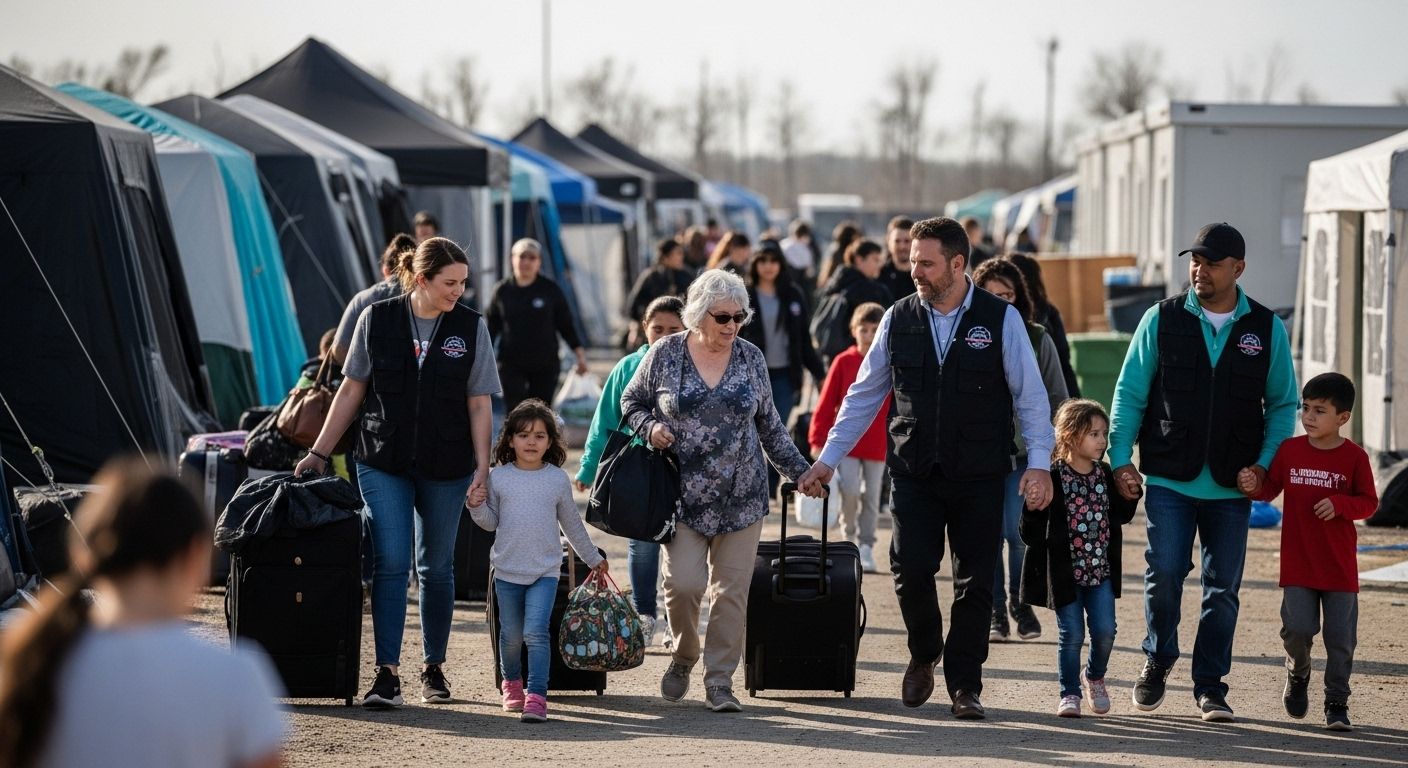
Coordinated housing support represents a critical lifeline for communities devastated by disasters, requiring sophisticated collaboration and strategic planning across multiple agencies and stakeholders. Effective coordination ensures rapid, compassionate, and efficient housing solutions for displaced populations.
Interagency Collaboration and Communication
The American Society of Civil Engineers emphasizes the importance of systematic approaches that integrate federal, state, and local agencies in disaster housing response. Successful coordination demands clear communication protocols, shared data systems, and established roles that prevent bureaucratic delays during emergency situations.
Key interagency collaboration strategies include:
- Establishing unified communication platforms
- Developing cross-agency training programs
- Creating standardized reporting and assessment frameworks
- Implementing real-time information sharing mechanisms
- Defining clear decision-making hierarchies
These strategies help break down traditional organizational silos, enabling faster and more responsive housing support during critical post-disaster periods. By fostering a culture of collaboration, agencies can more effectively pool resources and expertise.
Prioritizing Vulnerable Populations
The US Government Accountability Office highlights the critical importance of developing targeted housing support strategies that prioritize the most vulnerable community members. Emergency response teams must create nuanced approaches that recognize the diverse needs of different population segments.
Prioritization strategies should focus on:
- Identifying high-risk demographic groups
- Developing specialized housing accommodations
- Ensuring accessibility for individuals with disabilities
- Creating support systems for elderly and pediatric populations
- Addressing specific cultural and linguistic needs
Successful housing support requires more than just providing shelter. It demands a holistic approach that considers the comprehensive well-being of displaced individuals, addressing both immediate physical needs and long-term psychological recovery.
Flexible and Adaptive Resource Allocation
Emergency housing support demands dynamic resource allocation strategies that can rapidly adjust to changing disaster conditions. Emergency management teams must develop flexible frameworks that enable quick decision-making and resource deployment.
Adaptive resource allocation includes:
- Maintaining flexible housing inventory systems
- Developing mobile housing deployment capabilities
- Creating scalable emergency shelter networks
- Establishing rapid assessment and reallocation protocols
- Implementing predictive modeling for housing needs
By developing these adaptive strategies, emergency response teams can create more resilient housing support systems that can quickly respond to unpredictable disaster scenarios. The goal is to create a responsive ecosystem that can seamlessly transition between emergency, temporary, and long-term housing solutions.
Discover our comprehensive guide to safe housing placement strategies and learn how we transform challenges into effective support mechanisms for communities in need.
Frequently Asked Questions
What is the importance of conducting a comprehensive vulnerability assessment after a disaster?
Conducting a comprehensive vulnerability assessment within the first three days of a disaster is crucial for understanding the specific needs of affected populations, including demographics, health status, and accommodation requirements for vulnerable groups. This assessment ensures that appropriate housing solutions can be implemented quickly and effectively.
How can Geographic Information Systems (GIS) assist in evaluating housing capacity during disaster response?
Geographic Information Systems (GIS) provide critical spatial analysis that helps emergency managers visualize potential housing locations, assess infrastructure vulnerabilities, and understand the relationships between available resources and essential community services. This technology enables rapid identification of suitable shelters and efficient resource allocation.
What are some key challenges faced during emergency housing assessments?
Common challenges include fragmented data collection systems, limited communication channels among agencies, and rapidly changing disaster conditions. These issues can hinder the effectiveness of emergency response efforts and delay the provision of housing support to displaced populations.
Why is prioritizing vulnerable populations essential in disaster housing support?
Prioritizing vulnerable populations is essential because these groups may have specific needs related to health, accessibility, or demographic factors. Addressing their requirements ensures that the housing support provided is not only adequate but also equitable, promoting the overall well-being and safety of all affected individuals.
Turn Emergency Housing Assessments Into Action With Disaster Victim Services
When every minute counts and uncertainty hangs in the balance, having the right support to accurately assess housing capacity is the difference between quick recovery and prolonged hardship. You have learned that identifying vulnerabilities, evaluating infrastructure, and building adaptive housing solutions are crucial, yet carrying out these steps alone can quickly become overwhelming. Miscommunication, fractured systems, and changing conditions often leave disaster victims without the help they urgently need.
At Disaster Victim Services, we bridge this gap with trusted expertise and rapid intervention. We partner directly with agencies, insurance carriers, and relief professionals to offer comprehensive solutions for those displaced. If you want to see how professional capacity assessment translates into safe, immediate housing and long-term recovery, visit our Developing Project Category for more insight. Get the assurance and compassion you deserve—take the next step by visiting Disaster Victim Services and connect with a team ready to restore stability when it matters most.
Recommended
- Safe Housing Placement Steps for Disaster Response 2025 – Disaster Victim Services | Helping You Recover After Disaster
- Housing Placement Process Guide for Disaster Relief 2025 – Disaster Victim Services | Helping You Recover After Disaster
- Housing Placement Workflow Guide 2025: Steps for Disaster Recovery – Disaster Victim Services | Helping You Recover After Disaster
- Housing Accessibility Standards 2025: Essential Guide for Disaster Response – Disaster Victim Services | Helping You Recover After Disaster