
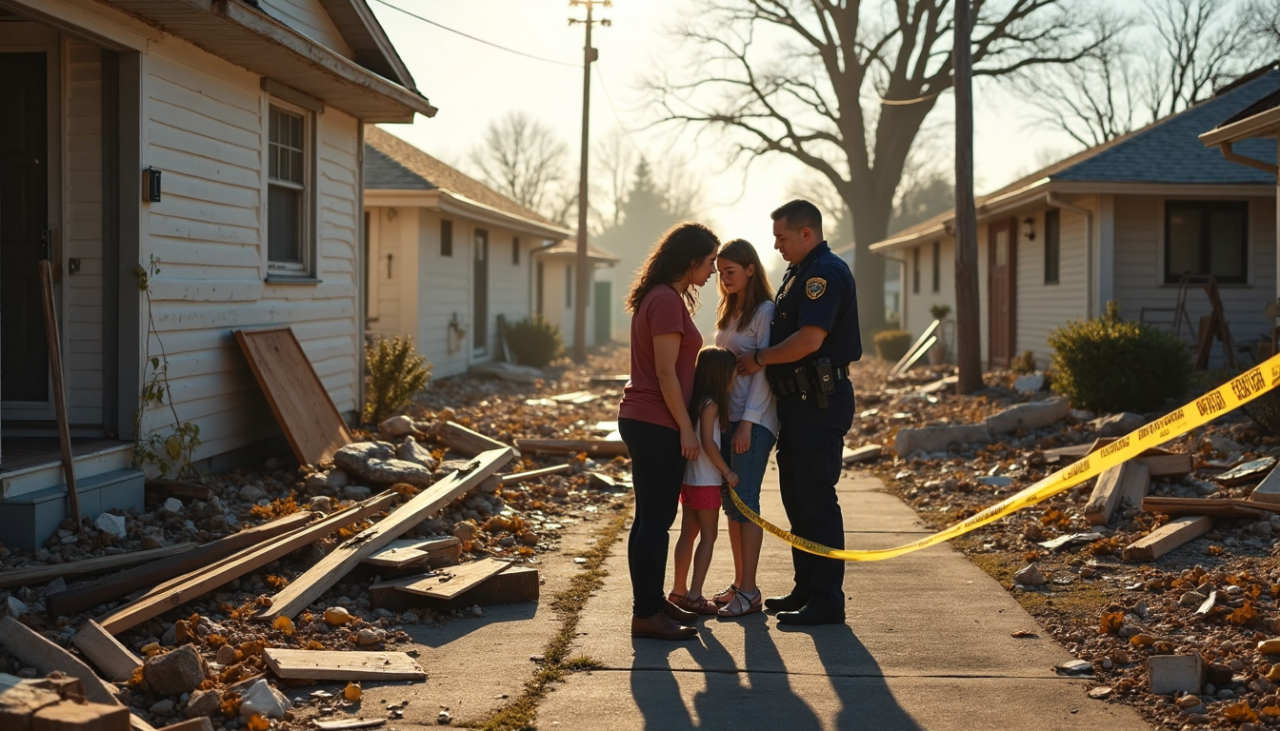
Losing your home is one of life’s greatest shocks, and millions of Americans face this reality each year. Here’s a fact that might surprise you: more than 14 million homes in the US were damaged by natural disasters in just a single year. You would think the toughest part is picking up the physical pieces, but that’s only half the battle. The less obvious challenge is knowing the first steps to take, because what you do in those first hours and days can make all the difference in your recovery.
Table of Contents
- Immediate Actions After Home Loss
- Documenting Damage And Filing Claims
- Accessing Emergency Aid And Resources
- Rebuilding And Moving Forward Safely
Quick Summary
| Takeaway | Explanation |
|---|---|
| Prioritize Personal Safety | First, ensure the safety of all family members and pets before assessing property damage. Check for injuries and avoid unstable structures. |
| Comprehensive Documentation | Thoroughly document all damages with photographs, videos, and inventories to support insurance claims. Preserve all relevant records. |
| Access Emergency Resources | Leverage government, community, and nonprofit support networks for immediate aid, including financial assistance and temporary housing options. |
| Professional Assessments for Rebuilding | Engage licensed professionals to evaluate structural safety before reconstruction and to guide the rebuilding process effectively. |
| Emotional Recovery is Key | Acknowledge emotional trauma, seek counseling, and maintain connections with supportive networks to facilitate healing during the recovery process. |
Immediate Actions After Home Loss
The moments following a home loss are critical for ensuring safety, protecting assets, and initiating the recovery process. Disaster can strike unexpectedly, leaving families vulnerable and overwhelmed. Understanding the immediate steps to take can significantly reduce stress and help streamline your path to recovery.
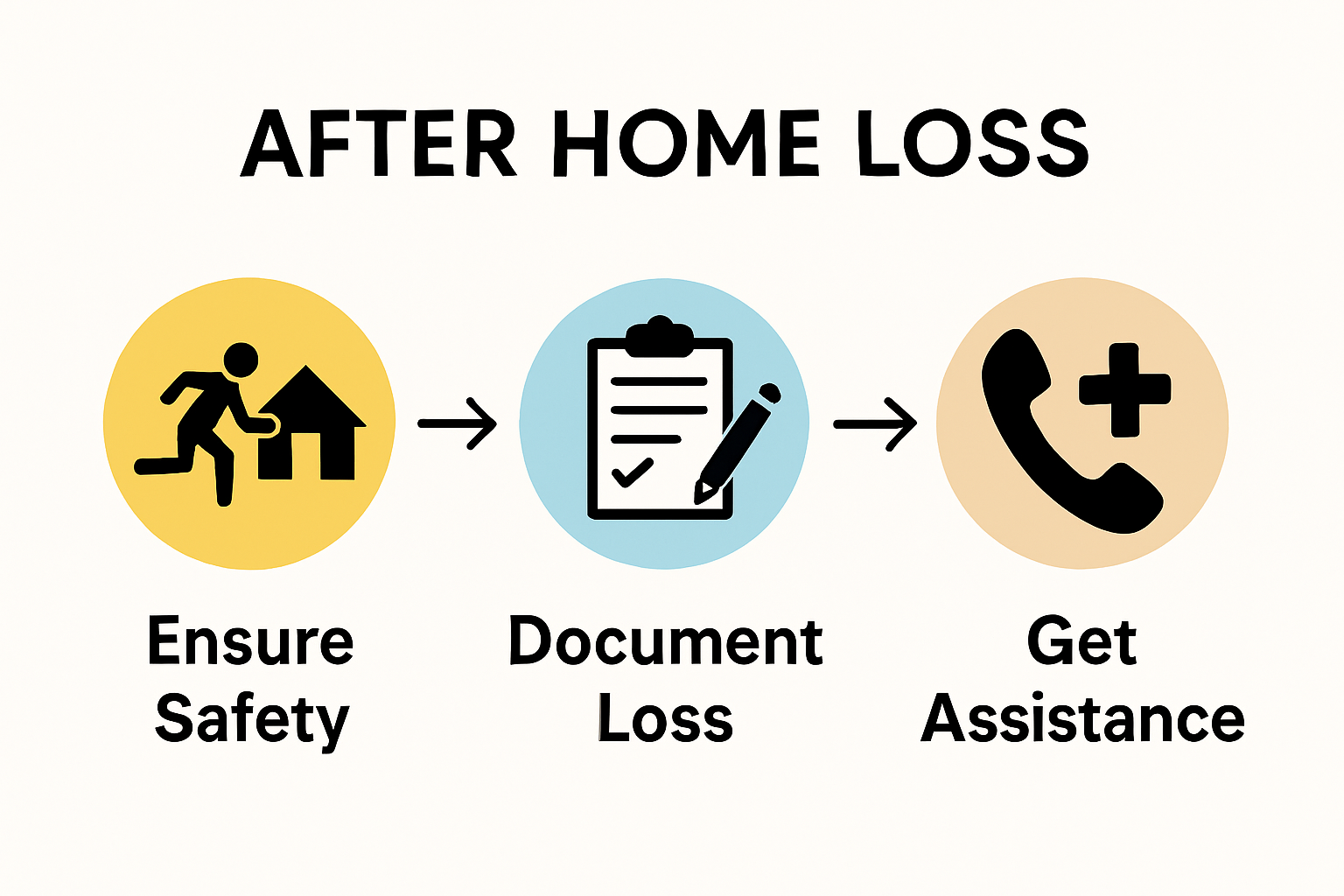
Below is a table summarizing the key immediate actions recommended after home loss, along with their purposes. This will help you quickly identify what to do first and why each step matters.
| Immediate Action | Main Purpose |
|---|---|
| Account for family and pets | Ensure everyone’s safety |
| Assess injuries & provide first aid | Address urgent medical needs |
| Call emergency services if needed | Access essential medical/emergency help |
| Move away from danger | Avoid potential hazards and safe relocation |
| Check for structural/electrical hazards | Prevent accidents or further harm |
| Wear protective gear when returning | Increase personal safety amid debris |
| Avoid unstable structures | Minimize risk of collapse or injury |
Prioritize Personal Safety and Emergency Care
Your first priority is protecting human life. Immediately account for all family members and pets, checking for potential injuries. Emergency medical response guidelines recommend:
- Assess injuries and provide first aid if necessary
- Call emergency services if anyone requires immediate medical attention
- Ensure everyone is physically safe and removed from potential danger zones
- Check for potential structural damage that might compromise immediate safety
Emergency responders advise wearing protective gear like sturdy shoes and long pants when returning to a damaged property. Avoid entering unstable structures or areas with potential electrical hazards.
Document and Secure Your Property
After ensuring personal safety, focus on documenting and protecting your property. The Federal Emergency Management Agency (FEMA) recommends comprehensive documentation for insurance and potential assistance claims:
- Take extensive photographs and videos of all damage
- Create a detailed inventory of lost or damaged belongings
- Preserve evidence of damage for insurance purposes
- Secure the property to prevent further damage or potential theft
Contact your insurance provider immediately to initiate the claims process. Many policies have specific timeframes for reporting damage, so prompt communication is crucial. Read our comprehensive guide on navigating insurance claims for more detailed support.
Seek Immediate Support and Resources
Disaster recovery involves more than physical restoration. Connecting with support networks and resources can provide emotional and practical assistance. United Way suggests the following steps:
- Contact local emergency management agencies
- Reach out to family and friends for support
- Identify temporary housing options
- Explore financial assistance programs
During this challenging time, remember that multiple support systems exist. Government agencies, nonprofits, and community organizations are equipped to help you navigate the complex process of recovery. Stay patient, document everything, and prioritize your physical and emotional well-being.
The journey of recovery begins with these crucial first steps. By acting swiftly, staying organized, and seeking appropriate support, you can effectively manage the immediate aftermath of home loss and set a strong foundation for rebuilding.
Documenting Damage and Filing Claims
After experiencing home loss, the process of documenting damage and filing insurance claims becomes a critical pathway to recovery. Precision and thoroughness are key to ensuring you receive fair compensation and can effectively rebuild your life.
Comprehensive Property Documentation
Documenting property damage requires meticulous attention to detail. The National Association of Insurance Commissioners recommends creating a comprehensive record that will serve as essential evidence for your insurance claim:
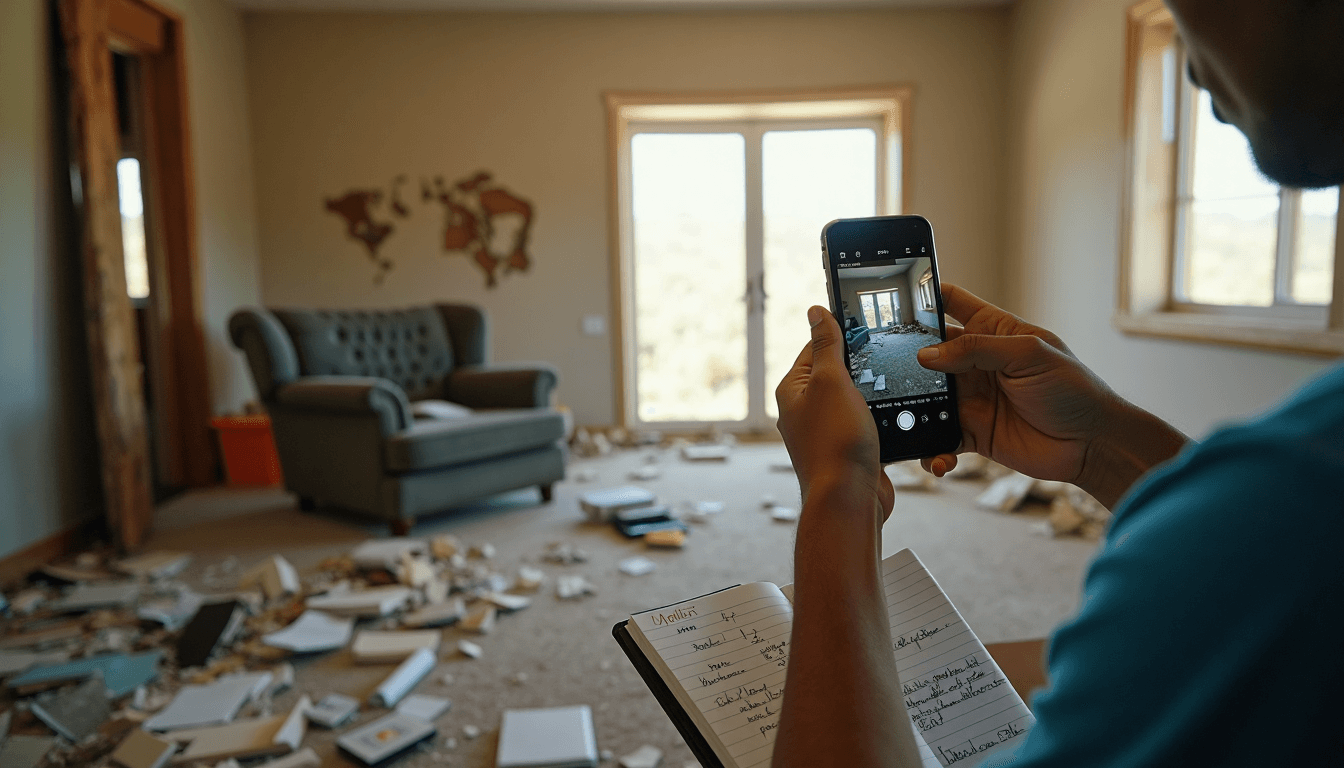
- Photograph and video record all damaged areas from multiple angles
- Create a detailed inventory of damaged or destroyed personal belongings
- Include estimated value, purchase date, and replacement cost for each item
- Preserve receipts, warranties, and proof of ownership when possible
Digital documentation can be incredibly valuable. Use cloud storage or email copies to yourself to ensure these critical records are not lost with the damaged property. Capture systematic visual evidence that clearly demonstrates the extent of destruction.
Navigating the Insurance Claims Process
Understanding the insurance claims process is crucial for effective recovery. California Department of Insurance advises taking these strategic steps:
- Contact your insurance provider immediately after documenting damage
- Request a detailed explanation of your policy coverage
- Ask about specific claim filing deadlines and required documentation
- Understand your policy deductible and potential out-of-pocket expenses
- Request an official claims adjuster inspection
Maintain organized communication records with your insurance company. Document every conversation, including date, time, representative name, and key discussion points. This documentation can prove invaluable if disputes arise during the claims process.
The following table outlines the major steps in the insurance claim process and what each one accomplishes, providing clarity for homeowners navigating recovery.
| Step in Claims Process | Recommended Action | Purpose/Outcome |
|---|---|---|
| Contact Insurance Provider | Notify immediately after damage is documented | Officially start claim process |
| Request Policy Explanation | Ask for details about coverage and benefits | Understand what is and isn’t covered |
| Gather Required Docs | Compile forms, photos, inventories, receipts | Ensure complete claim submission |
| Schedule Adjuster Inspection | Meet insurance representative on site | Allow damages to be professionally evaluated |
| Keep Communication Records | Log all calls, emails, and correspondence | Resolve disputes and track progress |
| Check Filing Deadlines | Confirm timeframes for submitting claims | Avoid denied/late claims |
Professional Assessment and Additional Support
Beyond personal documentation, professional assessments can strengthen your insurance claim. Federal Emergency Management Agency (FEMA) recommends:
- Obtain professional damage assessments from licensed contractors
- Request detailed written estimates for repair and reconstruction
- Consider hiring a public insurance adjuster for complex claims
- Explore potential government disaster assistance programs
Remember that insurance claims can be complex and time-consuming. Patience, organization, and persistent communication are essential. Each piece of documentation brings you closer to rebuilding and recovery. By following these systematic steps, you maximize your chances of receiving fair compensation and support during this challenging time.
The path to restoration begins with thorough documentation and strategic engagement with your insurance provider. Stay proactive, detail-oriented, and persistent throughout the claims process.
Accessing Emergency Aid and Resources
After experiencing home loss, navigating the complex landscape of emergency aid and resources becomes crucial for recovery. Multiple support systems exist to help disaster victims rebuild their lives, but understanding how to access these resources requires strategic planning and persistence.
Government Assistance Programs
Federal and state governments offer comprehensive support for disaster victims. FEMA provides multiple assistance channels for individuals impacted by disasters:
- Apply for federal disaster assistance through DisasterAssistance.gov
- Contact FEMA directly at 1-800-621-3362
- Visit local Disaster Recovery Centers in person
- Explore individual and household program grants
Additionally, Disaster Unemployment Assistance can provide critical financial support for those who become unemployed directly because of the disaster. Eligibility requirements vary, so carefully review the specific guidelines for your situation.
Community and Nonprofit Support Networks
Beyond government resources, numerous community organizations offer targeted assistance. United Way’s 211 service connects individuals with local support networks providing emergency food, housing, and critical services. Key resources include:
- Local charitable organizations
- Religious institutions offering disaster relief
- Community action agencies
- Nonprofit disaster recovery organizations
Learn more about comprehensive aid strategies to maximize your support options. Each community has unique resources, so thorough local research is essential.
Financial and Legal Assistance
Recovery often requires specialized financial and legal guidance. The Small Business Administration offers low-interest disaster loans for homeowners and renters. Additional financial support avenues include:
- State emergency relief programs
- Temporary housing assistance
- Grants for home repairs and replacement
- Legal aid for insurance claim disputes
Document all communication, maintain organized records, and be persistent. Recovery is a process that requires patience, strategic planning, and leveraging available resources. While the journey may seem overwhelming, comprehensive support systems exist to help you rebuild and restore your life after home loss.
Remember that accessing aid is not just about financial support but about reconnecting with hope and community during challenging times. Each resource you discover brings you one step closer to recovery.
Rebuilding and Moving Forward Safely
Rebuilding after home loss is a complex journey that requires strategic planning, emotional resilience, and careful decision making. The path forward involves more than physical reconstruction it demands comprehensive personal and financial recovery.
Assessing Structural Safety and Reconstruction Options
The National Institute of Building Sciences emphasizes the critical importance of professional structural assessments before reconstruction. Key considerations include:
- Engage licensed structural engineers to evaluate property damage
- Obtain comprehensive professional damage reports
- Understand potential long-term structural vulnerabilities
- Determine whether repair or complete reconstruction is more viable
Professional assessments help prevent future risks and ensure your rebuilt home meets current safety standards. Learn about safe rebuilding strategies to make informed decisions about your property restoration.
Financial Planning and Resilience
Consumer Financial Protection Bureau recommends comprehensive financial planning during recovery:
- Communicate with mortgage lenders about potential relief options
- Create a realistic budget accounting for reconstruction expenses
- Explore disaster recovery loans and grants
- Develop an emergency financial contingency plan
- Consider long-term financial protection strategies
Maintain detailed financial records and documentation throughout the rebuilding process. This approach helps track expenses, supports potential insurance claims, and provides a clear financial roadmap.
Emotional Recovery and Community Support
The American Psychological Association highlights the importance of emotional healing during disaster recovery:
- Acknowledge and process trauma associated with home loss
- Seek professional counseling or support groups
- Develop healthy coping mechanisms
- Stay connected with supportive family and community networks
- Practice self-care and emotional resilience techniques
Recovery is not linear. Some days will be challenging, while others will bring hope and progress. Recognize that rebuilding extends beyond physical structures it involves reconstructing your sense of security and stability.
The journey of rebuilding after home loss is deeply personal and unique. By approaching recovery with patience, professional guidance, and a strategic mindset, you can transform this challenging experience into an opportunity for renewal and growth. Remember that each step forward, no matter how small, represents progress toward reclaiming your life and creating a secure future.
Frequently Asked Questions
What should I do immediately after losing my home?
First, prioritize personal safety by ensuring that all family members and pets are unharmed. Then, assess potential injuries, secure your property, and document the damage thoroughly.
How can I document damage for my insurance claim?
Take comprehensive photographs and videos of all affected areas, create an inventory of lost or damaged items, and include details such as their estimated value. Preserve any receipts or proof of ownership you may have.
What types of emergency support are available after a home loss?
Emergency support includes government assistance programs through FEMA, community resources, and nonprofit organizations that provide financial aid, temporary housing, and necessary services to disaster victims.
How can I ensure my emotional recovery after losing my home?
Seek professional counseling or support groups to help process trauma. Stay connected with family, friends, and community networks for emotional support, and practice self-care and resilience-building techniques.
Turn Home Loss Into Recovery With Compassionate, Expert Support
Losing your home disrupts every part of your life, leaving you with urgent questions about what to do next and how to rebuild. The article you just read highlights the complex steps needed after home loss, from documenting damage to dealing with insurance, emergency housing, and rebuilding your future. In these uncertain moments, many find it hard to stay organized and hopeful, especially when dealing with difficult logistics and navigating emotional stress.
That is where Disaster Victim Services steps in. We help families and responders just like you move from crisis to stability. If you need immediate relocation help or want expert guidance with insurance, claims, or rebuilding, visit our renovation solutions page to see how we help people start fresh. Do not wait to take the first step. Start your path to recovery with trusted specialists who put your safety and well-being first. Let us help you reclaim comfort and control today.
Recommended
- Essential Steps After Home Damage: Guide for 2025 – Disaster Victim Services | Helping You Recover After Disaster
- How to Rebuild Safely: Essential Steps for Disaster Recovery 2025 – Disaster Victim Services | Helping You Recover After Disaster
- Home Safety Tips 2025: Essential Guide for Disaster Recovery – Disaster Victim Services | Helping You Recover After Disaster
- steps after home damage – Disaster Victim Services | Helping You Recover After Disaster
- Disaster Recovery Phases Explained for 2025: Guide for Victims, Pros & Agencies – Disaster Victim Services | Helping You Recover After Disaster
- How to Manage Displacement: Practical Steps for Disaster Recovery 2025 – Disaster Victim Services | Helping You Recover After Disaster