

Work-life balance keeps showing up in headlines and corporate meetings, but its real impact goes way deeper than satisfying a manager or catching up on sleep. Studies show that employees with healthy work-life balance report up to 33 percent higher job satisfaction and far lower rates of burnout. That sounds like a win, right? What most people miss is that this balance is not about splitting your day neatly in half. Instead, it is a dynamic survival skill that pivots as your life and the world around you change.
Table of Contents
- What Is Work-Life Balance And Why It Matters?
- The Importance Of Work-Life Balance For Displaced Families
- How Disaster Context Influences Work-Life Balance
- Key Concepts In Achieving Work-Life Balance
- Future Trends In Work-Life Balance For 2025
Quick Summary
| Takeaway | Explanation |
|---|---|
| Establish clear work-life boundaries | Setting boundaries helps separate work responsibilities from personal time, reducing burnout and enhancing well-being. |
| Prioritize mental health | Focusing on mental health is crucial; it improves job satisfaction, productivity, and personal relationships. |
| Utilize technology effectively | Leveraging digital tools facilitates remote work and maintains professional engagement, especially in challenging circumstances. |
| Adapt to evolving work structures | Embrace flexible work models like four-day workweeks and hybrid arrangements for better balance and personal fulfillment. |
| Develop robust support networks | Establish connections within new environments to enhance resilience and manage stress during transitions or challenges. |
What is Work-Life Balance and Why It Matters?
Work-life balance represents the strategic allocation of time and energy between professional responsibilities and personal life, creating a harmonious framework that supports overall well-being and productivity. In 2025, this concept has evolved beyond a simple time management strategy to become a critical component of mental health and professional sustainability.
Defining Work-Life Balance
Work-life balance is not about achieving a perfect 50-50 split between work and personal activities, but rather creating a flexible, personalized approach that allows individuals to meet professional obligations while maintaining personal happiness and health. According to Harvard Business Review, this dynamic concept recognizes that professional and personal domains are interconnected and influence each other significantly.
Key characteristics of effective work-life balance include:
- Setting clear boundaries between work and personal time
- Maintaining flexibility in work arrangements
- Prioritizing mental and physical health
- Developing strategies for stress management
- Establishing meaningful connections both professionally and personally
The Critical Importance of Balance
The significance of work-life balance extends far beyond individual preferences.
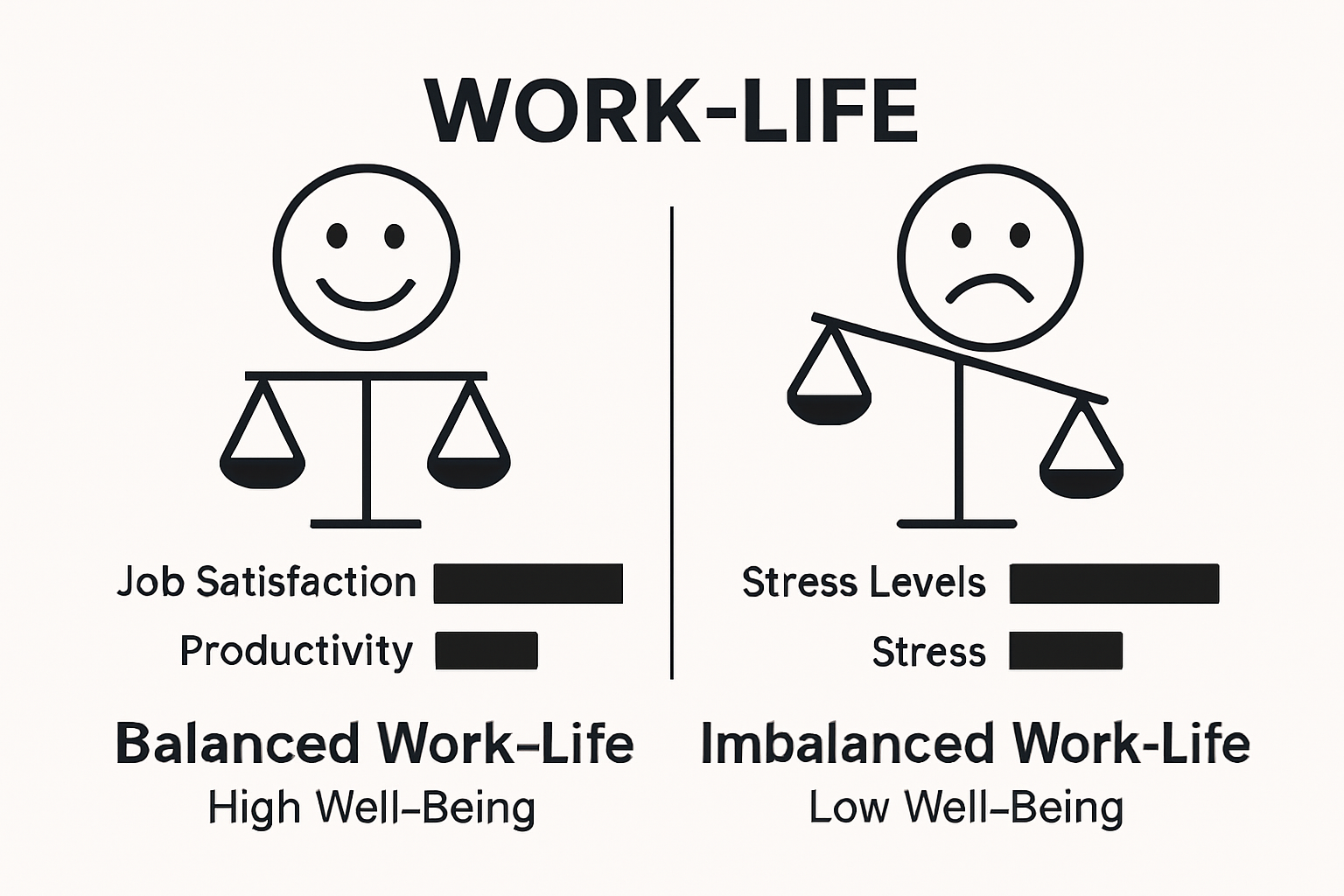 Research from American Psychological Association demonstrates that employees who successfully manage this balance experience substantial benefits:
- Reduced stress and burnout
- Higher job satisfaction
- Improved mental and physical health
- Enhanced productivity and creativity
- Better personal relationships
In 2025, work-life balance has transformed from a workplace trend to a fundamental requirement for sustainable professional engagement. Organizations and individuals increasingly recognize that true success is not measured solely by professional achievements but by the holistic quality of one’s life experience.
The modern approach to work-life balance acknowledges the complexity of contemporary work environments, including remote work, digital communication, and rapidly changing professional landscapes. It requires continuous adaptation, self-awareness, and intentional strategies to maintain equilibrium in an increasingly complex world.
The Importance of Work-Life Balance for Displaced Families
Displaced families face unique challenges that make work-life balance not just a professional strategy, but a critical survival mechanism. In 2025, the landscape of displacement demands innovative approaches to maintaining psychological stability and functional effectiveness during periods of significant personal disruption.
Psychological Resilience Through Structure
For displaced families, work-life balance becomes a powerful tool for psychological resilience. Maintaining routine and establishing clear boundaries between professional responsibilities and personal recovery helps mitigate the overwhelming stress associated with sudden life changes. Research from the International Journal of Environmental Research and Public Health highlights that consistent daily structures can significantly reduce trauma-related psychological strain.
Key psychological benefits of maintaining work-life balance during displacement include:
- Providing a sense of normalcy and control
- Reducing anxiety about uncertain living situations
- Creating predictable emotional and practical frameworks
- Supporting mental health during transition periods
- Preventing complete emotional and professional burnout
Practical Strategies for Maintaining Balance
Displaced families require flexible, adaptive strategies to manage work-life integration. Technology and remote work capabilities have transformed how individuals can maintain professional engagement while navigating relocation challenges. Read more about displacement trends that impact family dynamics to understand the evolving landscape.
Critical strategies for displaced families include:
- Establishing flexible work arrangements
- Leveraging digital communication tools
- Creating portable workspace solutions
- Developing support networks in new locations
- Practicing self-compassion during transition periods
Work-life balance for displaced families transcends traditional definitions. It represents a dynamic, resilient approach to maintaining personal and professional continuity during challenging life transitions. The ability to adapt, remain connected, and preserve a sense of purpose becomes paramount in navigating displacement successfully.
The following table summarizes the key psychological and practical benefits of maintaining work-life balance for displaced families, helping readers understand how these aspects support resilience during challenging transitions.
| Benefit Type | Description |
|---|---|
| Sense of Normalcy | Establishing routines creates a feeling of control amid uncertainty. |
| Reduced Anxiety | Structure helps lower stress about unpredictable living situations. |
| Predictable Frameworks | Provides stability for both emotional and practical daily life. |
| Supports Mental Health | Routine and boundaries bolster psychological well-being during change. |
| Prevents Burnout | Balance reduces the risk of emotional and professional exhaustion. |

How Disaster Context Influences Work-Life Balance
Disasters fundamentally disrupt the established rhythms of personal and professional life, creating complex challenges that dramatically reshape traditional work-life balance frameworks. In 2025, understanding the nuanced impact of disaster contexts becomes crucial for individuals and organizations seeking to maintain psychological resilience and professional continuity.
Psychological and Professional Disruption
Disasters create multifaceted stressors that extend far beyond immediate physical challenges. Research from the Proceedings of the National Academy of Sciences reveals that disaster-related stress disorders can significantly impair long-term labor market participation, highlighting the profound interconnection between personal trauma and professional functionality.
Key psychological disruptions include:
- Sudden loss of predictable work environments
- Increased mental health vulnerability
- Heightened financial uncertainty
- Compromised professional networks
- Reduced capacity for emotional regulation
Adaptive Strategies for Resilience
Navigating work-life balance during disaster contexts requires dynamic, flexible approaches. Technology and remote work capabilities have become critical lifelines for maintaining professional engagement. Learn more about managing displacement during disaster recovery to understand comprehensive adaptation strategies.
Critical adaptive strategies encompass:
- Developing portable digital work infrastructures
- Creating flexible communication protocols
- Establishing robust mental health support systems
- Maintaining professional skills through online learning
- Building resilient personal and professional networks
The intersection of disaster contexts and work-life balance represents more than a temporary challenge. It demands a fundamental reimagining of personal and professional sustainability, where adaptability, technological integration, and psychological resilience become primary survival skills in an increasingly unpredictable world.
Key Concepts in Achieving Work-Life Balance
Achieving work-life balance requires a sophisticated understanding of personal boundaries, strategic time management, and intentional lifestyle design. In 2025, successful professionals recognize that balance is not a static destination but a dynamic, ongoing process of self-awareness and adaptive strategies.
Boundary Setting and Personal Management
Research from the National Institutes of Health underscores the critical importance of establishing clear boundaries between professional and personal domains. Effective boundary management involves creating deliberate separation between work responsibilities and personal time, which prevents burnout and maintains psychological well-being.
Key boundary-setting strategies include:
- Designating specific physical workspaces
- Establishing consistent work hour limits
- Implementing digital communication protocols
- Creating mental transitions between work and personal modes
- Communicating availability expectations clearly
Time Management and Priority Alignment
Time management transcends simple scheduling. It represents a holistic approach to allocating personal energy and attention across professional and personal spheres. Learn more about comprehensive displacement management strategies to understand adaptive time management techniques.
Critical time management principles encompass:
- Understanding personal energy rhythms
- Prioritizing tasks based on genuine importance
- Creating flexible yet structured daily routines
- Utilizing technology for efficient task management
- Regular reflection and schedule optimization
Work-life balance in 2025 demands a personalized, nuanced approach that recognizes individual differences in professional and personal requirements. By developing sophisticated boundary management skills and adopting flexible time allocation strategies, individuals can create sustainable, fulfilling lifestyles that support both professional achievement and personal well-being.
Future Trends in Work-Life Balance for 2025
The landscape of work-life balance is rapidly transforming, driven by technological advancements, shifting workforce demographics, and evolving organizational philosophies. In 2025, these trends reflect a profound reimagining of how professionals integrate professional responsibilities with personal well-being and lifestyle aspirations.
Technological and Legal Innovations
According to the Global Wellness Institute, emerging legal frameworks are redefining workplace expectations. The ‘Right to Disconnect’ movement is gaining momentum, with progressive jurisdictions implementing protections that prevent employers from contacting employees outside standard work hours.
Significant technological and legal innovations include:
- Implementation of legal ‘disconnection’ rights
- Advanced digital wellness monitoring technologies
- AI-powered personal productivity management tools
- Enhanced cybersecurity for remote work environments
- Comprehensive digital well-being platforms
Workforce Structural Transformations
Workplace structures are experiencing radical reimaginations, moving beyond traditional nine-to-five models. Learn more about comprehensive displacement management strategies to understand the broader context of workforce adaptability.
Key structural transformations encompass:
- Widespread adoption of four-day workweeks
- Increased prevalence of hybrid work models
- Personalized career development pathways
- Intergenerational workforce integration
- Flexible compensation and benefit structures
Work-life balance in 2025 represents more than a workplace trend. It signals a fundamental cultural shift towards recognizing human potential beyond traditional productivity metrics. By embracing technological innovations, legal protections, and flexible workforce structures, organizations and individuals are co-creating environments that prioritize holistic human performance and personal fulfillment.
This table outlines important technological and legal innovations that are shaping the future of work-life balance in 2025, offering a quick overview of how workplaces are evolving.
| Innovation Type | Example or Description |
|---|---|
| Legal Protection | Rights that prevent after-hours employer contact |
| Digital Wellness Tools | Apps and technologies for monitoring and supporting well-being |
| AI Productivity Tools | AI-powered solutions for managing tasks and maximizing efficiency |
| Enhanced Cybersecurity | Advanced security for remote work settings |
| Digital Well-being Platforms | Platforms integrating health, communication, and productivity |
Turn Balance into Resilience with Support That Understands Your Needs
Balancing work and life can be tough, especially after a disaster disrupts everything you know. The article “Understanding Work-Life Balance Tips 2025 for All” highlights how important it is to set boundaries, manage your time, and create routines that support mental health. Yet, when you are facing sudden displacement and uncertainty, these basic needs become even harder to achieve. You need real solutions and a support network that recognizes both your professional and personal challenges.
If you or your family are recovering from disaster and struggling to maintain work-life balance, Disaster Victim Services is here to help you rebuild your daily structure with confidence. Our team specializes in connecting you with emergency housing and critical resources so you can focus on finding stability again. Visit DisasterVictimServices.com for immediate assistance and guidance. Explore our Uncategorized – Helping You Recover After Disaster page to learn more about practical steps and expert insights for getting your life back on track. Do not wait—take your next step toward recovery and a healthier work-life balance today.
Frequently Asked Questions
What are effective strategies for achieving work-life balance in 2025?
Effective strategies include setting clear boundaries between work and personal time, utilizing flexible work arrangements, practicing self-care, prioritizing mental and physical health, and developing supportive networks.
How can technology improve work-life balance for professionals?
Technology can enhance work-life balance by enabling remote work capabilities, providing digital wellness monitoring tools, and offering AI-driven productivity management solutions, allowing professionals to manage their time and responsibilities more effectively.
What role does mental health play in maintaining work-life balance?
Mental health is crucial for work-life balance as it affects an individual’s ability to cope with stress, maintain productivity, and enjoy personal relationships. Prioritizing mental health through self-care and stress management contributes to overall effectiveness in both work and personal life.
How can displaced families maintain work-life balance during transitions?
Displaced families can maintain work-life balance by establishing flexible work arrangements, leveraging digital communication tools, creating portable workspaces, and building support networks to adapt to new environments while managing professional commitments.