
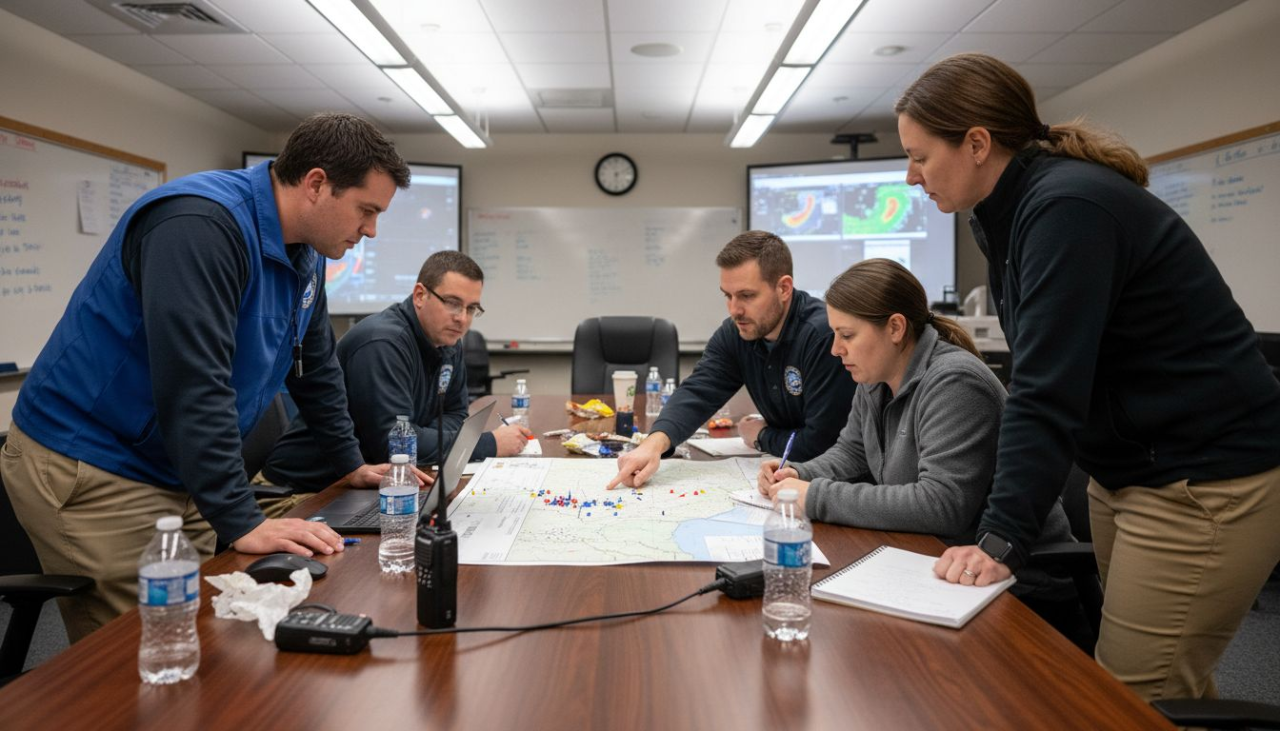
Most American emergency response efforts falter when communication between agencies breaks down, yet studies show that coordinated action can reduce response times by up to 30 percent. For coordinators on the frontlines, the challenge is not just moving resources, but ensuring every agency and volunteer works in concert under pressure. This article highlights practical strategies for American teams to unify communication and logistics, supporting more resilient recovery and better outcomes for disaster victims.
Table of Contents
- Defining Seamless Coordination In Emergencies
- Key Types Of Emergency Coordination Models
- How Interagency Communication Impacts Outcomes
- Common Coordination Breakdowns And Risks
- Best Practices For Multi-Agency Collaboration
- Real-World Examples Of Seamless Response
Key Takeaways
| Point | Details |
|---|---|
| Seamless Coordination is Essential | Effective emergency response requires integrated efforts from multiple agencies and stakeholders to provide rapid assistance during crises. |
| Importance of Communication | Real-time, structured communication is fundamental to overcoming challenges and ensuring efficient collaboration among organizations. |
| Adaptability in Disaster Scenarios | Emergency response models must maintain flexibility and adaptability to effectively respond to evolving disaster scenarios and complexities. |
| Proactive Training Measures | Regular cross-agency training and simulations can help identify potential challenges and improve coordination effectiveness during emergencies. |
Defining Seamless Coordination In Emergencies
Seamless coordination in emergencies represents a sophisticated strategic approach that goes beyond traditional response methods. At its core, it involves the synchronized efforts of multiple agencies, stakeholders, and professionals working together to deliver rapid, efficient assistance during critical situations. Coordination across humanitarian organizations requires a comprehensive framework that anticipates challenges and enables swift, collaborative action.
The fundamental elements of seamless coordination include real-time communication, predefined protocols, integrated risk management, and adaptive response strategies. Emergency response teams must establish clear lines of communication, share critical information instantaneously, and maintain flexible operational structures that can quickly adjust to evolving disaster scenarios. This approach demands robust technological infrastructure, comprehensive training, and a shared commitment to collaborative problem solving.
Successful seamless coordination requires more than just good intentions. It necessitates structured collaboration among humanitarian, development, and peace organizations, particularly in complex and unpredictable environments. By developing comprehensive contingency plans, establishing interagency communication protocols, and creating transparent decision-making processes, emergency response teams can significantly enhance their ability to protect and support vulnerable populations during critical moments.
Pro Tip: Develop a standardized communication matrix before emergencies that outlines specific communication channels, response protocols, and decision-making hierarchies for each participating organization.
Key Types Of Emergency Coordination Models
Emergency coordination models provide structured frameworks for managing complex disaster response scenarios, each designed to address unique challenges and organizational needs. The Incident Command System (ICS) stands as a critical model widely used across the United States, offering a standardized approach that establishes clear hierarchies and communication protocols during emergencies. This system enables multiple agencies to work together seamlessly by creating a unified management structure that can adapt to incidents of varying scales and complexities.
Another prominent coordination model is the Refugee Coordination Model (RCM), which focuses specifically on humanitarian responses involving displaced populations. Developed by the United Nations High Commissioner for Refugees (UNHCR), this model emphasizes collaborative approaches that prioritize predictable, inclusive strategies. The RCM ensures that humanitarian actors can coordinate effectively, sharing resources, information, and responsibilities to provide comprehensive support during refugee crises.
Beyond these specific models, emergency coordination frameworks typically share common characteristics: flexible organizational structures, clear communication channels, predefined roles and responsibilities, and the ability to integrate multiple stakeholders. The Cluster Approach represents another significant model, particularly in non-refugee emergencies, where different humanitarian sectors collaborate to address specific response needs efficiently. These models ultimately aim to reduce response times, minimize duplicated efforts, and maximize the impact of emergency interventions.
Here’s a quick comparison of common emergency coordination models and their unique features:
| Model Name | Main Focus | Key Strength | Typical Use Case |
|---|---|---|---|
| Incident Command System (ICS) | Hierarchical management | Standardized structure | Wildfires, natural disasters |
| Refugee Coordination Model (RCM) | Displacement crises | Inclusive collaboration | Refugee emergencies |
| Cluster Approach | Sector-based response | Specialized groups | Non-refugee disasters |
Pro Tip: Develop a comprehensive cross-training program that familiarizes team members with multiple emergency coordination models to enhance adaptability during complex disaster scenarios.
How Interagency Communication Impacts Outcomes
Interagency communication represents a critical lifeline during emergency response, determining the effectiveness and speed of collaborative efforts across multiple organizations. Interagency communication networks serve as the fundamental infrastructure that enables public, private, and non-profit entities to share vital information, coordinate resources, and respond dynamically to complex crisis scenarios. These communication networks are not simply technological connections but complex social systems that require trust, mutual understanding, and established protocols.
The profound impact of effective interagency communication becomes evident during high-stakes emergencies where rapid, coordinated action can mean the difference between successful intervention and catastrophic failure. Collaboration among federal, state, and local agencies hinges on their ability to communicate swiftly and accurately, sharing real-time information, operational updates, and critical resource requirements. This communication process goes beyond simple information exchange, involving nuanced interpretations of situational contexts, adaptive decision-making, and seamless operational integration.
Successful interagency communication is built on several foundational elements: establishing clear communication protocols, developing shared technological platforms, creating mutual understanding of each organization’s capabilities and limitations, and fostering a culture of transparency and collaboration. Historical case studies, such as the emergency response to the September 11 attacks, highlight how breakdowns in communication can significantly impede effective disaster management. By investing in robust communication infrastructure, training programs, and collaborative frameworks, agencies can dramatically improve their collective capacity to respond to emergencies with precision and compassion.
Pro Tip: Conduct regular cross-agency communication simulation exercises to identify and address potential communication barriers before actual emergencies occur.
Common Coordination Breakdowns And Risks
Emergency response coordination is fraught with complex challenges that can dramatically undermine effective crisis management. Coordination breakdowns frequently emerge from intricate value conflicts and dynamic environmental factors, creating significant risks that can paralyze emergency response efforts. These failures are not simply technical communication issues, but deeply rooted challenges involving misaligned organizational cultures, unclear role definitions, and disparate operational expectations.
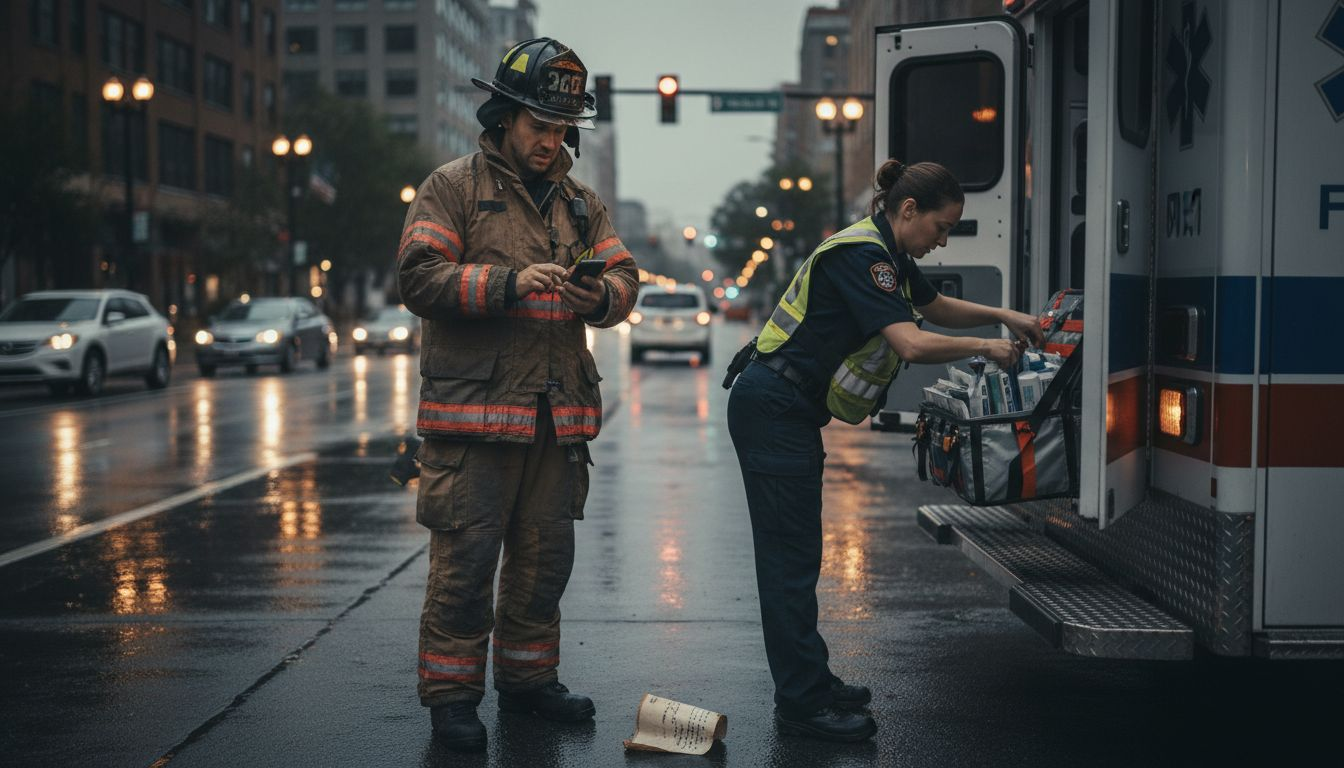
Research examining large-scale emergency responses reveals multiple critical risk points where coordination can catastrophically fail. Wildfire response studies highlight the profound communication disconnects that occur between teams with different operational perspectives. These breakdowns often manifest through mismatched informational understanding, conflicting decision-making approaches, and fundamental differences in how various agencies perceive and prioritize emergency response strategies.
The most dangerous coordination risks emerge when organizations operate with incomplete situational awareness, leading to resource misallocation, delayed responses, and potentially life-threatening gaps in emergency intervention. Common breakdown patterns include communication silos, territorial behaviors among agencies, inconsistent communication protocols, and a lack of standardized information-sharing mechanisms. By recognizing these potential failure points, emergency response teams can proactively develop strategies to mitigate risks, establish clear communication frameworks, and create more resilient collaborative systems that can adapt quickly to rapidly changing crisis environments.
The table below highlights major causes of coordination breakdowns and recommended mitigation strategies:
| Breakdown Cause | Risk Impact | Mitigation Strategy |
|---|---|---|
| Communication silos | Delayed response | Foster open channels |
| Unclear role definitions | Overlapping efforts | Define roles early |
| Inconsistent information sharing | Resource misallocation | Standardize data exchange |
| Cultural clashes | Reduced trust | Cross-agency training |
Pro Tip: Implement regular cross-agency training simulations that deliberately introduce communication challenges to help teams identify and preemptively address potential coordination breakdown scenarios.
Best Practices For Multi-Agency Collaboration
Multi-agency collaboration represents a complex but critical strategy for effective emergency response, requiring intentional, systematic approaches to overcome organizational barriers. Disaster preparedness fundamentally depends on building robust collaborative frameworks that transcend traditional institutional boundaries. Successful collaboration demands more than goodwill – it requires structured mechanisms for communication, shared goal setting, and coordinated action across diverse organizational cultures and operational mandates.
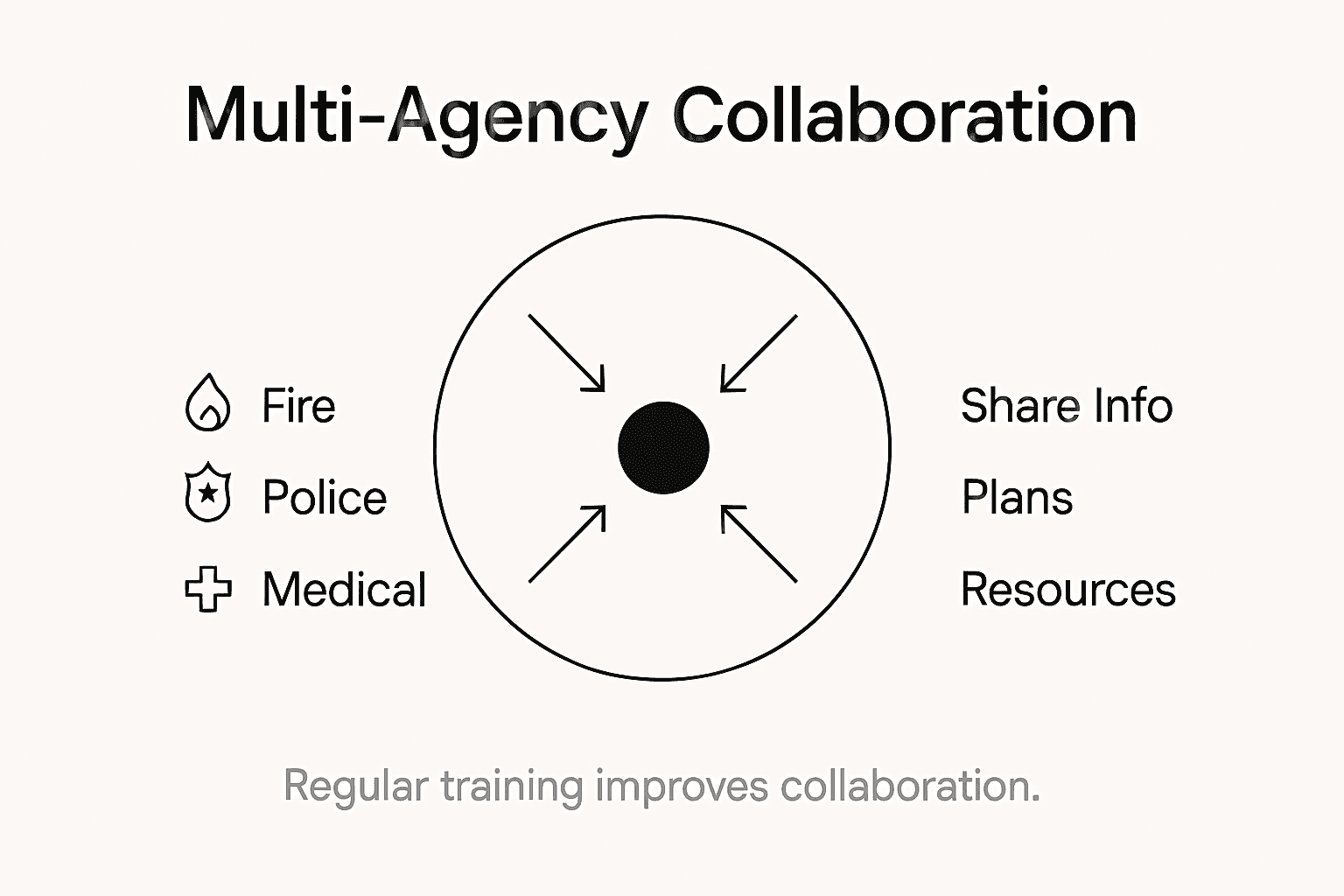
The cornerstone of effective multi-agency collaboration lies in establishing clear, mutually understood protocols and communication channels. Cross-agency collaboration strategies must prioritize relationship building, trust development, and adaptive leadership that can navigate complex interpersonal and institutional dynamics. This approach involves creating formal mechanisms for information sharing, joint training exercises, and developing mutual aid agreements that provide flexible yet structured frameworks for emergency response.
Practical implementation of multi-agency collaboration requires several key strategic elements: developing comprehensive communication protocols, conducting regular joint training simulations, establishing clear role definitions, and creating transparent decision-making processes. Emergency response teams must invest in building cultural competence, understanding each agency’s unique capabilities and constraints, and developing shared mental models that facilitate rapid, coordinated action during high-stress scenarios. By focusing on these foundational practices, agencies can transform potential communication barriers into opportunities for more resilient, adaptive emergency response systems.
Pro Tip: Conduct quarterly cross-agency workshops that simulate complex emergency scenarios, specifically designed to stress-test communication protocols and identify potential collaboration gaps.
Real-World Examples Of Seamless Response
Some of the most compelling demonstrations of seamless emergency coordination emerge from complex disaster scenarios that challenge traditional response mechanisms. Interagency coordination during Hurricane Katrina and the California wildfires exemplified how strategic collaboration can mitigate catastrophic impacts, revealing the critical importance of integrated communication systems and shared situational awareness. These events highlighted how multiple agencies like FEMA, National Guard, state, and local emergency services can synchronize efforts to facilitate mass evacuations and rapid resource deployment.
International disaster responses provide additional insights into effective coordination strategies. Real-time rescue operations during the 2010 Haiti earthquake and Hurricane Harvey demonstrated the transformative potential of pre-established partnerships and technology-enabled tracking. These scenarios showcased how integrated coordination frameworks that leverage technology, local knowledge, and community volunteer engagement can dramatically improve emergency response efficiency, particularly in complex and unpredictable environments.
Successful seamless response is not about perfect execution, but about creating adaptive systems that can quickly adjust to evolving challenges. The most effective emergency responses share common characteristics: flexible communication protocols, robust technological infrastructure, clear role definitions, and a commitment to continuous learning and improvement. By studying these real-world examples, emergency management professionals can develop more resilient, responsive coordination strategies that prioritize human lives and community recovery.
Pro Tip: Develop a comprehensive after-action review process that systematically captures lessons learned from each emergency response, allowing continuous refinement of coordination strategies.
Strengthen Emergency Outcomes With Seamless Coordination
The challenge of achieving seamless coordination in emergencies is clear: real-time communication and multi-agency collaboration must work flawlessly to protect vulnerable populations. The article highlights crucial pain points such as communication silos, unclear role definitions, and inconsistent information sharing that can delay aid and increase risks for disaster victims. Understanding these concepts helps reveal why coordinated efforts and adaptive response strategies are essential for effective disaster recovery.
At DisasterVictimServices.com, we specialize in bridging these critical gaps by connecting disaster victims directly to immediate resources through a strong collaborative network involving insurance carriers, government agencies, and first responders. Our commitment to facilitating smooth communication channels and clearly defined roles aligns perfectly with best practices for emergency coordination discussed in the article. Explore how our approach supports victims with around-the-clock emergency housing and critical logistical assistance by visiting our Developing – Disaster Victim Services | Helping You Recover After Disaster page and our general Uncategorized – Disaster Victim Services | Helping You Recover After Disaster.
Take action now to ensure your emergency response benefits from a trusted partner who understands the complexity of multi-agency collaboration. Visit DisasterVictimServices.com to learn how we bring compassion, efficiency, and expert guidance to your disaster recovery journey.
Frequently Asked Questions
What is seamless coordination in emergencies?
Seamless coordination in emergencies refers to the synchronized efforts of multiple agencies and stakeholders working together to deliver rapid and efficient assistance during critical situations. It involves real-time communication, predefined protocols, and adaptive response strategies.
Why is interagency communication important during emergencies?
Interagency communication is crucial during emergencies as it determines the effectiveness and speed of collaborative efforts. Effective communication networks enable organizations to share vital information, coordinate resources, and respond dynamically to complex crisis scenarios, which can significantly improve outcomes.
What are common coordination breakdowns in emergency responses?
Common breakdowns include communication silos, unclear role definitions, inconsistent information sharing, and cultural clashes among agencies. These issues can lead to delayed responses and misallocation of resources.
What best practices can enhance multi-agency collaboration?
Best practices for enhancing multi-agency collaboration include establishing clear communication protocols, conducting regular joint training simulations, defining roles early, and fostering relationship building and trust among agencies.
Recommended
- How to Coordinate Response in Disasters: A Guide for 2025 – Disaster Victim Services | Helping You Recover After Disaster
- Catastrophe Coordination: Streamlining Disaster Recovery – Disaster Victim Services | Helping You Recover After Disaster
- Role of Collaboration in Disaster Response Impact – Disaster Victim Services | Helping You Recover After Disaster
- Role of Communication in Crisis Response Success – Disaster Victim Services | Helping You Recover After Disaster