
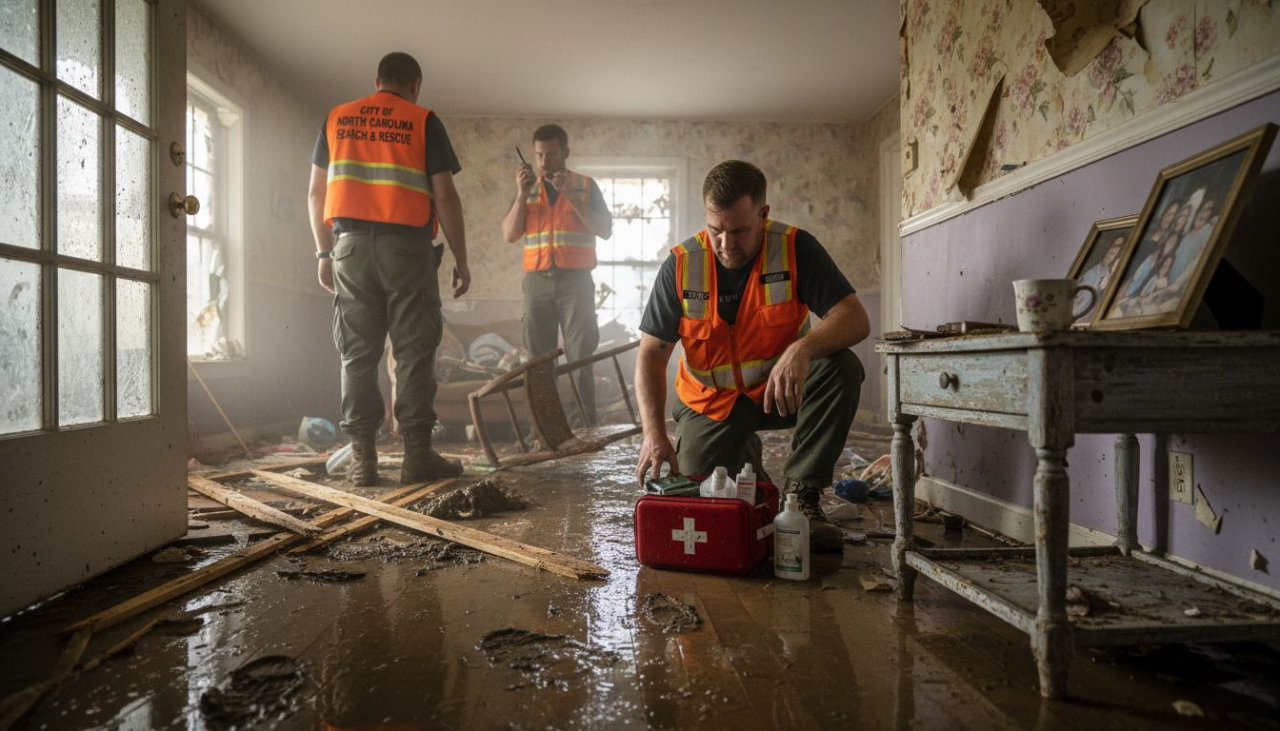
Disaster strikes without warning and over 40 million American households face immediate risk from hurricanes, floods, and wildfires each year. For many American families, the challenge is not just surviving the initial event but finding urgent housing, quick insurance solutions, and clear guidance in a maze of emergency response systems. If you need to secure shelter, file claims, or cut through confusion after a crisis, practical steps and expert advice can make a vital difference for a faster, more stable recovery.
Table of Contents
- Timely Response In Disaster Recovery Explained
- Types Of Emergency Response And Coordination
- How Timeliness Impacts Victims And Outcomes
- Risks And Costs Of Delayed Response
- Collaborating With Agencies For Efficient Action
Key Takeaways
| Point | Details |
|---|---|
| Timely Response is Crucial | Swift intervention can significantly enhance community recovery and individual resilience post-disaster. |
| Effective Coordination Among Agencies | Comprehensive disaster management requires seamless collaboration across federal, state, and local agencies. |
| Focus on Immediate Support | Prompt assistance is essential to prevent long-term financial and social instability for affected populations. |
| Prepare for Disasters Ahead of Time | Creating an emergency document folder and communication plan can expedite recovery during chaotic situations. |
Timely Response in Disaster Recovery Explained
Disaster recovery demands swift, strategic action. When catastrophic events strike, the speed and efficiency of initial response can dramatically influence long-term community recovery and individual resilience. The federal disaster response landscape is inherently complex, with multiple agencies involved in coordinating assistance, creating significant challenges for displaced families seeking immediate support.
The critical nature of timely response becomes evident when examining national disaster research protocols. The National Institutes of Health’s Disaster Research Response (DR2) program demonstrates how rapid, organized intervention can transform recovery outcomes. By establishing well-developed response structures, communities can mitigate long-term health and economic impacts more effectively. This approach requires seamless communication between emergency services, government agencies, insurance providers, and local support networks.
Effective disaster response is not just about immediate rescue but encompasses a comprehensive strategy of assessment, coordination, and sustained support. Key elements include rapid damage evaluation, immediate housing solutions, insurance claim processing, and psychological support for affected individuals. The goal is to minimize disruption and help families transition from crisis to recovery as smoothly as possible. Scientific investigations following disasters have consistently shown that communities with faster, more organized response mechanisms demonstrate higher resilience and quicker normalization.
Pro Emergency Response Tip: Prepare a comprehensive emergency document folder in advance, including identification, insurance policies, medical records, and contact information. Store these in a waterproof, portable container that you can quickly grab during an evacuation, ensuring you have critical documentation readily available during chaotic recovery periods.
Types of Emergency Response and Coordination
Emergency response in the United States follows a complex, structured approach designed to address catastrophic events systematically. National coordination mechanisms involve multiple agency interactions that ensure comprehensive disaster management across federal, state, and local levels. These systems are built to handle diverse emergency scenarios, from natural disasters to technological incidents, requiring seamless communication and rapid decision-making.
The National Incident Management System (NIMS) serves as the foundational framework for emergency coordination. Under this system, federal agencies like FEMA utilize Emergency Support Function (ESF) Annexes to organize specialized response capabilities. These annexes outline precise roles and responsibilities for different government functions, enabling a structured approach to resource allocation, personnel deployment, and unified emergency management across multiple jurisdictions.
Key types of emergency response coordination include centralized command structures, multi-agency collaborative teams, and incident-specific task forces. These approaches allow for flexible yet organized interventions that can adapt to rapidly changing disaster scenarios. Effective coordination requires not just technological infrastructure but also robust communication protocols, cross-agency training, and predefined escalation mechanisms that enable quick, decisive action during critical moments.
Here’s a quick reference on disaster recovery coordination models:
| Coordination Model | Main Feature | Typical Use | Key Advantage |
|---|---|---|---|
| Centralized Command | Single authority directs all response | Large-scale disasters | Rapid, unified decisions |
| Multi-Agency Team | Agencies share roles equally | Complex, multi-jurisdiction events | Utilizes specialized expertise |
| Incident-Specific Task Force | Custom team for unique events | Chemical spills, terrorism | Tailored, adaptable response |
Pro Emergency Coordination Tip: Develop a comprehensive emergency communication plan that includes backup communication methods. Identify multiple contact points across different agencies and establish clear communication hierarchies to ensure information flows smoothly during high-stress disaster scenarios.
How Timeliness Impacts Victims and Outcomes
In disaster recovery, every moment counts. Barriers and delays in assistance can create profound long-term consequences for vulnerable populations, particularly affecting low-income households, renters, and minority communities. The speed of response directly correlates with a community’s ability to recover, rebuild, and prevent cascading social and economic challenges that can persist for years after the initial event.
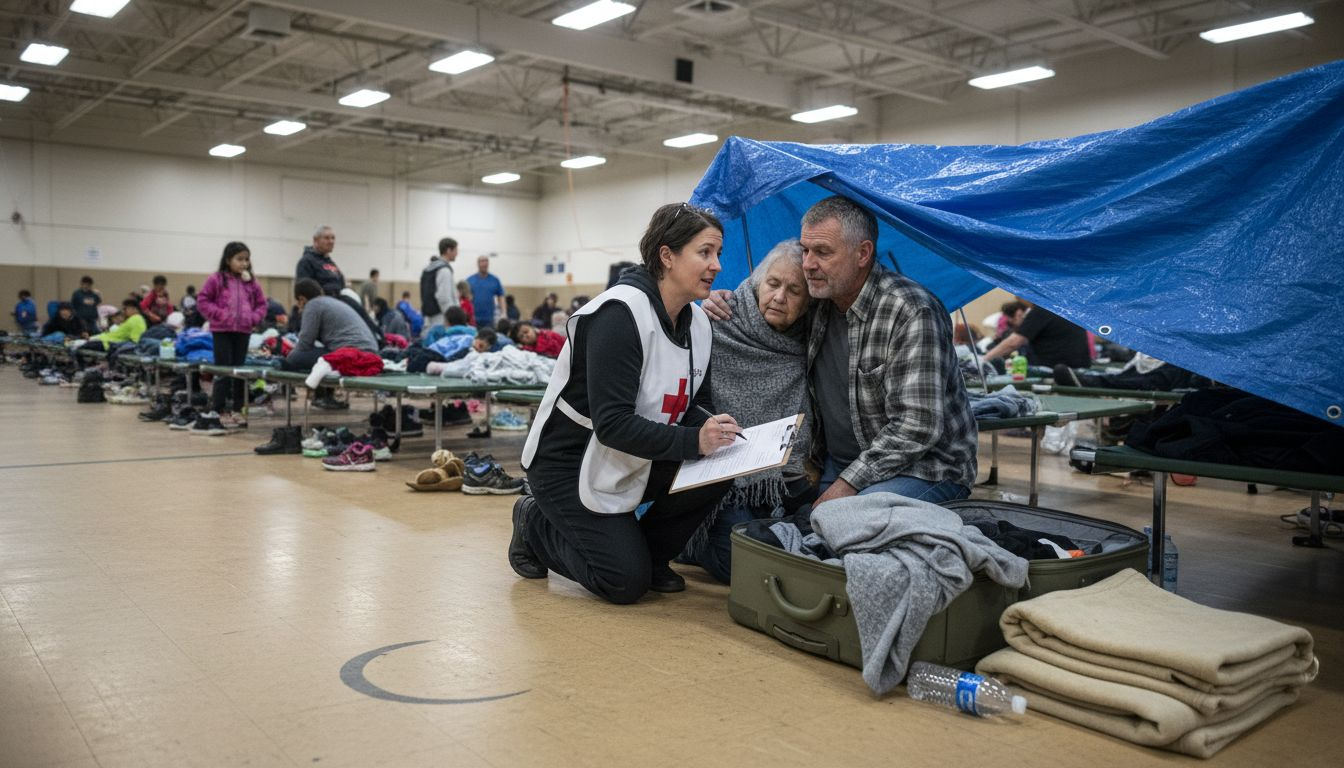
Research demonstrates that prompt assistance is critical in preventing downward spirals of financial instability and social disruption. Delayed recovery program delivery can significantly increase community stratification and individual suffering, creating systemic barriers that make recovery increasingly difficult over time. Victims who receive immediate support are more likely to maintain employment, preserve housing stability, and maintain mental health resilience compared to those experiencing prolonged uncertainty and limited resources.
The impact of timeliness extends beyond immediate physical needs, touching psychological and economic dimensions of recovery. Rapid response reduces trauma, provides critical psychological safety, and helps individuals maintain a sense of hope and agency during extremely challenging circumstances. By minimizing disruption and providing swift, comprehensive support, disaster response teams can significantly mitigate the long-term negative impacts on individuals and entire communities.
Pro Rapid Recovery Tip: Create an emergency preparedness folder with critical documents, contact information, and a basic survival kit. Store this in an easily accessible location, ensuring you can quickly grab essential resources if disaster strikes, thereby reducing your personal recovery timeline.
Risks and Costs of Delayed Response
Bureaucratic obstacles and funding gaps can dramatically increase the economic and human costs of disaster response, creating a complex landscape of challenges that extend far beyond the initial emergency. Delayed interventions not only prolong individual suffering but also create systemic ripple effects that can devastate entire communities. When critical resources and support are slow to arrive, victims face compounded risks including economic instability, psychological trauma, and potential long-term displacement.
The financial implications of slow disaster response are particularly severe. State and community budgets face mounting risks as recovery delays multiply fiscal exposure, creating a potentially catastrophic economic spiral. Each day of delayed response increases repair costs, reduces potential for rapid economic recovery, and leaves vulnerable populations increasingly susceptible to prolonged hardship. These delays can transform what might have been a manageable setback into a generational economic challenge.
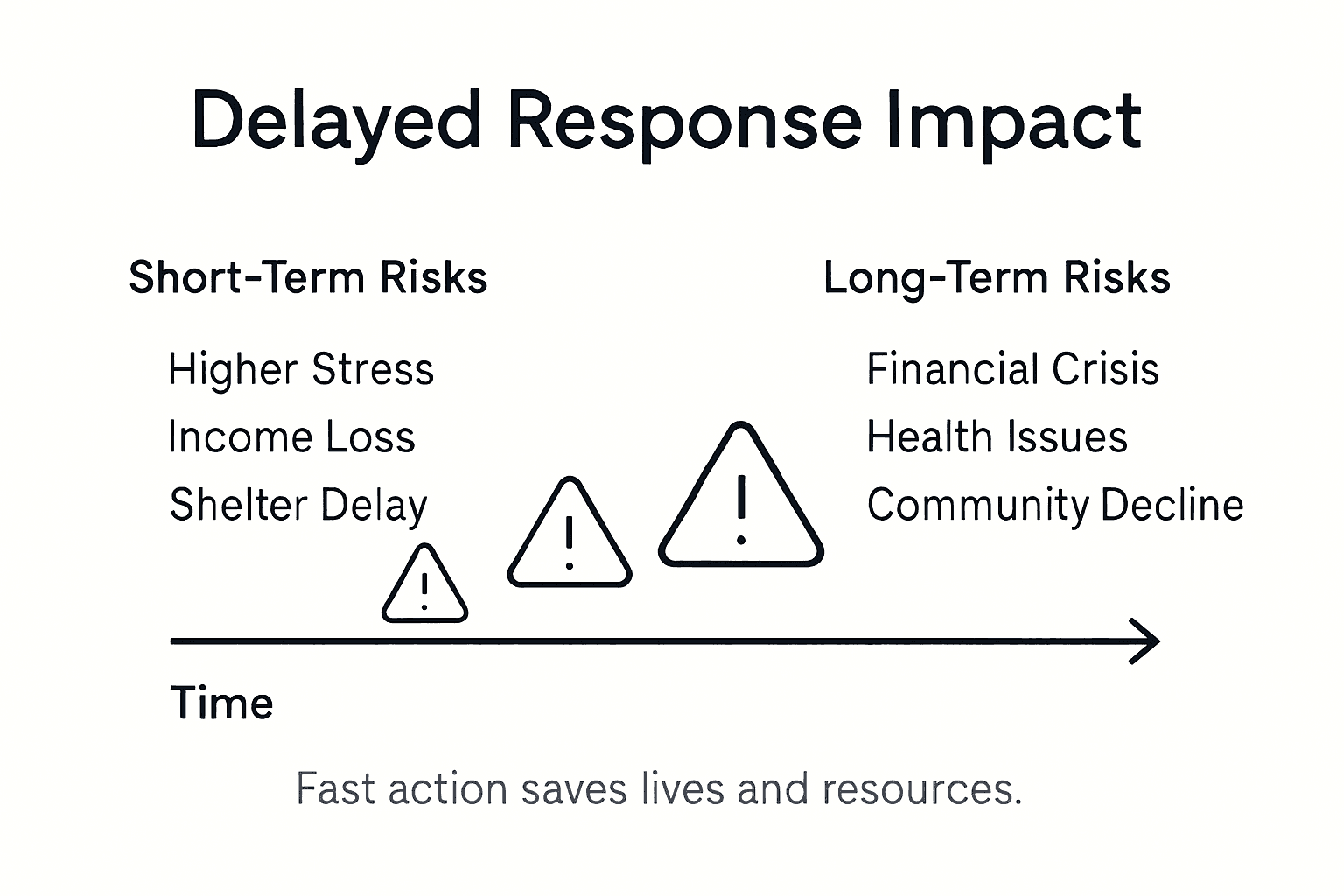
Beyond immediate financial consequences, delayed responses create profound human costs. Interruptions in housing, employment, healthcare, and social support networks can trigger cascading negative outcomes. Families may experience prolonged uncertainty, increased stress, and reduced capacity to rebuild their lives. The psychological toll of waiting for assistance can be as damaging as the original disaster, eroding community resilience and individual hope.
Below is a summary of the consequences of delayed disaster response:
| Impact Area | Short-Term Result | Long-Term Risk |
|---|---|---|
| Financial Stability | Lost income and resources | Prolonged economic hardship |
| Housing | Displacement or unsafe shelter | Increased homelessness rate |
| Mental Health | Elevated stress and anxiety | Lasting trauma, reduced resilience |
| Community Recovery | Slow rebuild efforts | Generational recovery challenges |
Pro Preparedness Tip: Develop a comprehensive emergency communication plan with multiple backup communication channels. Identify key contacts across different support agencies and establish clear protocols for rapid information sharing to minimize response delays during critical moments.
Collaborating With Agencies for Efficient Action
Effective interagency collaboration represents the backbone of successful disaster response, creating a comprehensive network that can rapidly mobilize resources and support across multiple jurisdictions. The complex landscape of emergency management requires seamless communication and coordinated efforts between federal, state, local, and tribal agencies. When these entities work together with clear shared goals, they can significantly enhance the speed, efficiency, and effectiveness of disaster recovery efforts.
The framework for successful collaboration involves several critical components. FEMA’s partnership approach demonstrates how strategic coordination can be achieved through mission assignments, resource sharing, and network building, creating a whole-community response mechanism. Key strategies include establishing mutual communication protocols, developing joint training programs, and creating flexible resource allocation systems that can adapt quickly to changing emergency conditions. These collaborative approaches help break down traditional bureaucratic barriers that often slow down critical response times.
Cross-agency collaboration extends beyond immediate emergency response, encompassing long-term recovery and resilience planning. By sharing information, expertise, and resources, different agencies can develop more comprehensive strategies that address the multifaceted challenges facing disaster-affected communities. This approach recognizes that no single agency can effectively manage complex disaster scenarios alone, and that true efficiency emerges from integrated, coordinated efforts that leverage the unique strengths of each participating organization.
Pro Coordination Tip: Create a personal emergency contact list that includes representatives from multiple agencies, such as local emergency management, FEMA regional offices, state disaster response teams, and community support organizations. Keep this list updated and easily accessible to streamline communication during critical response periods.
Act Fast to Secure Support When Every Moment Counts
Disasters demand a timely and coordinated response to help victims avoid prolonged hardship and uncertainty. This article highlights how critical delays in emergency housing, communication, and resources can cause cascading financial and emotional stress for displaced families. At DisasterVictimServices.com, we understand the challenges victims face navigating complex emergency response systems. Our expert team acts quickly to connect you with immediate housing solutions and streamline coordination with insurance carriers, government agencies, and first responders.
If you want to minimize disruption and move confidently toward recovery, discover how our multi-agency collaboration and around-the-clock assistance make a real difference in easing your path forward. Learn more about our approach in our Developing category or explore helpful insights in our Uncategorized section. Don’t wait for uncertainty to take hold. Visit DisasterVictimServices.com now to get the support you need to recover faster and stronger.
Frequently Asked Questions
Why is timely response important in disaster recovery?
Timely response is crucial because it significantly impacts the long-term recovery of communities and individuals. Quick action helps mitigate health and economic impacts, reduce trauma, and stabilize essential services.
What are the key elements of an effective disaster response?
Key elements include rapid damage evaluation, immediate housing solutions, insurance claim processing, and psychological support for those affected. A comprehensive strategy ensures minimal disruption and a smoother transition from crisis to recovery.
How can delays in disaster response affect vulnerable populations?
Delays in assistance can exacerbate financial instability and social disruption, particularly for low-income households and minorities. This can lead to prolonged suffering, increased risks of homelessness, and mental health challenges.
What are some strategies for efficient disaster recovery coordination?
Effective disaster recovery coordination involves establishing mutual communication protocols, developing joint training programs, and creating flexible resource allocation systems among various agencies. Cross-agency collaboration enhances the speed and effectiveness of response efforts.
Recommended
- How to Coordinate Response in Disasters: A Guide for 2025 – Disaster Victim Services | Helping You Recover After Disaster
- How to Coordinate With First Responders After a Disaster – Disaster Victim Services | Helping You Recover After Disaster
- Emergency Response Basics for 2025: A Practical Guide – Disaster Victim Services | Helping You Recover After Disaster
- How to Coordinate Response in Disasters: A Guide for 2025 – Disaster Victim Services | Helping You Recover After Disaster