
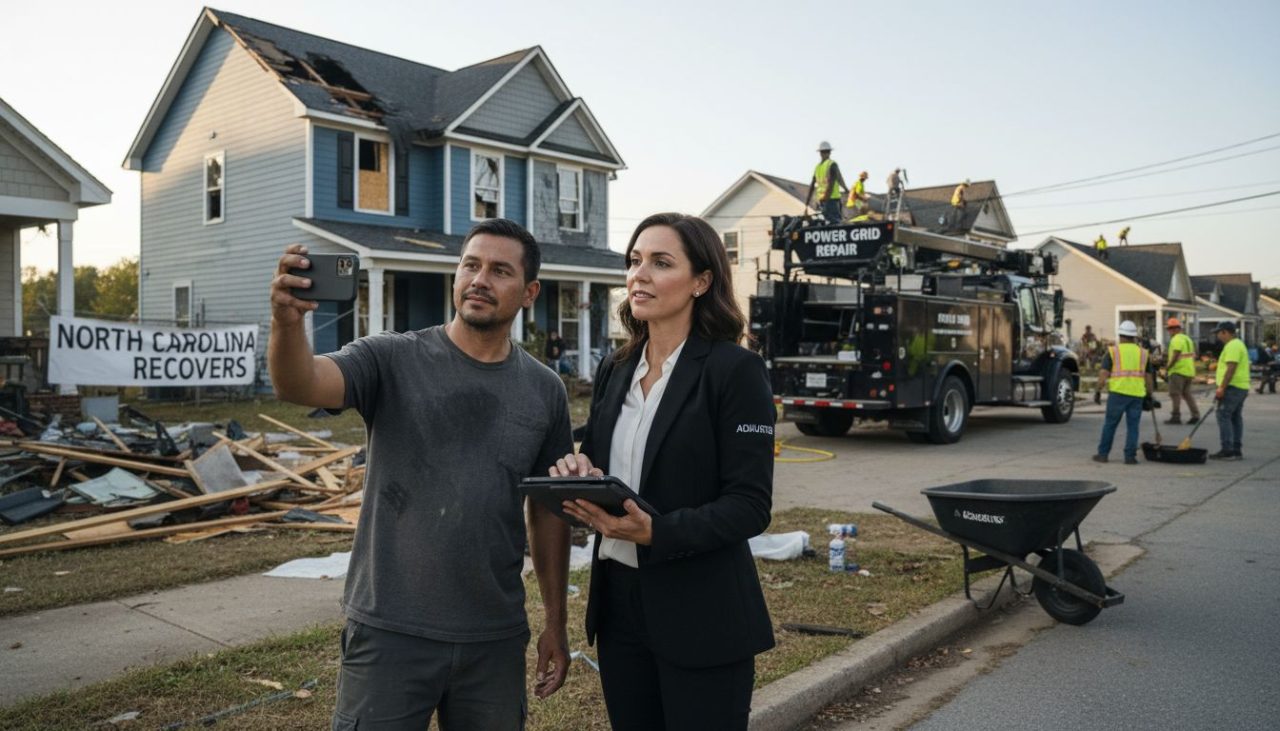
Over one third of disaster victims report delays or difficulties with insurance claims after major catastrophes. When tragedy strikes, filing a disaster claim is often the first step toward regaining stability and securing financial help. Understanding this process not only helps families rebuild their homes and lives, but also ensures communities recover faster and more effectively. This guide sheds light on the true role of disaster claims, what makes them unique, and how they support recovery when every resource matters most.
Table of Contents
- Defining Disaster Claims And Their Importance
- Types Of Disaster Claims In The U.S.
- How Disaster Claims Support Recovery
- Insurance Companies’ Role In Disaster Relief
- Rights And Responsibilities For Disaster Victims
- Common Pitfalls And How To Avoid Them
Key Takeaways
| Point | Details |
|---|---|
| Importance of Disaster Claims | Disaster claims are vital for financial recovery post-catastrophe, addressing immediate needs and facilitating community restoration. |
| Complexity of Claim Processes | Victims must navigate intricate procedures, requiring thorough documentation and prompt communication with insurers. |
| Rights and Responsibilities | Disaster victims have specific rights to fair compensation and timely processing, balanced by their responsibilities to document and report damages accurately. |
| Avoiding Common Pitfalls | To ensure successful claims, victims should proactively gather evidence, report promptly, and fully understand their insurance policies. |
Defining Disaster Claims And Their Importance
A disaster claim represents a formal request for financial compensation and support following significant property damage, personal injury, or economic loss triggered by natural or human-made catastrophic events. According to pdx, these claims typically encompass multiple categories including property damage, general liability, and workers’ compensation claims, each serving a critical function in risk management and recovery.
The importance of disaster claims extends far beyond simple monetary reimbursement. ijfmr highlights that efficient claims handling plays a pivotal role in community recovery post-disaster, addressing complex challenges such as data inaccuracies, potential delays, and widespread underinsurance that can significantly impede rebuilding efforts. These claims serve as lifelines for individuals and communities, providing essential financial resources to restore infrastructure, rebuild homes, and re-establish normalcy after devastating events.
Disaster claims involve several key components that make them uniquely complex:
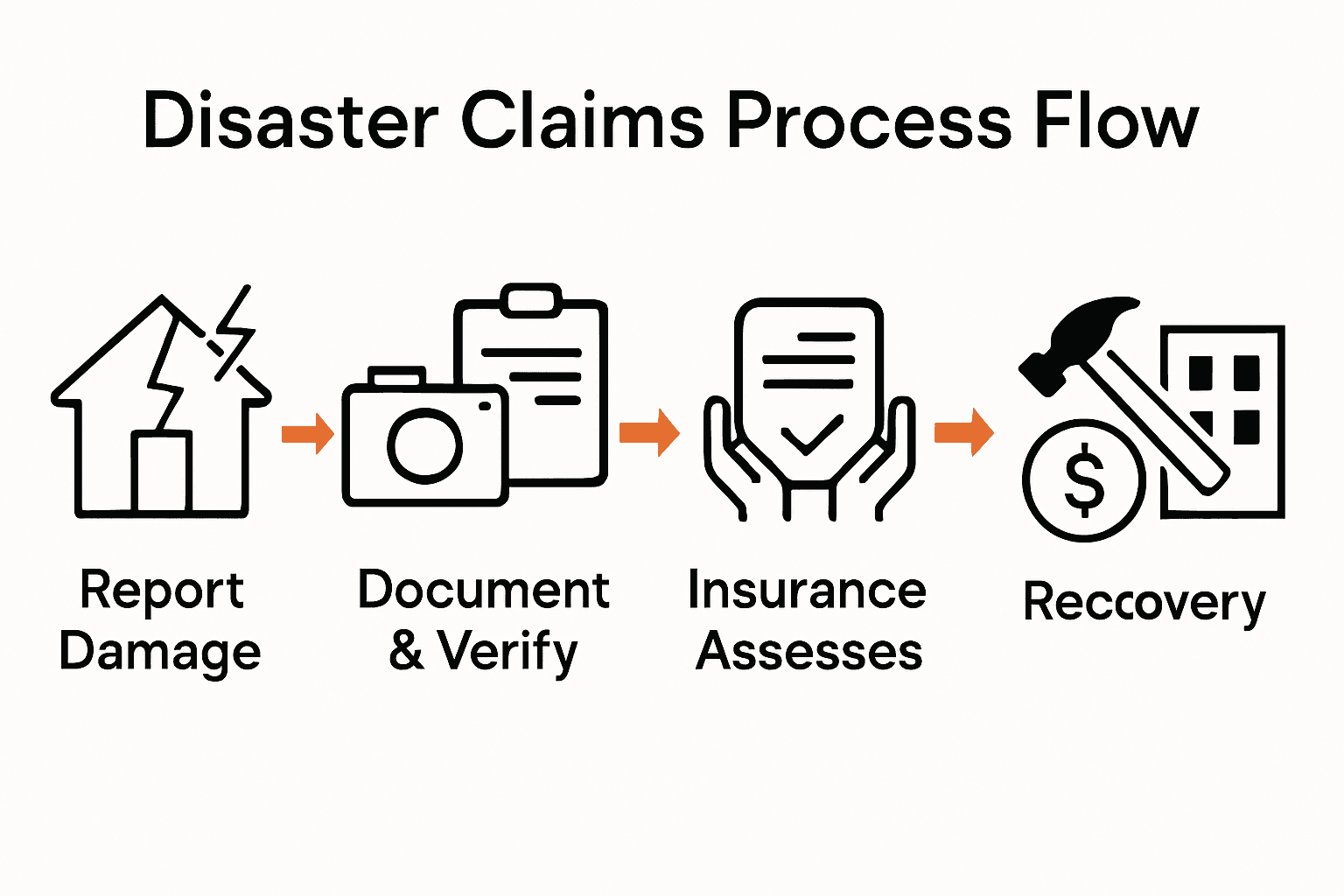
- Documentation: Comprehensive evidence gathering of damage and losses
- Verification: Independent assessment of claim validity and extent of damages
- Compensation: Financial support matched to documented losses
- Restoration: Funds allocated toward rebuilding and recovery efforts
By understanding and promptly navigating the disaster claims process, victims can accelerate their path to recovery and ensure they receive the support necessary to rebuild their lives and communities. The process demands patience, thorough documentation, and strategic communication with insurance providers and relevant agencies.
Types Of Disaster Claims In The U.S.
Disaster claims in the United States encompass a wide range of catastrophic events and associated financial recovery mechanisms. According to pdx, these claims are typically categorized into four primary types: property damage claims, general liability claims, workers’ compensation claims, and motor vehicle liability claims. Each category addresses specific risks and potential financial losses encountered by individuals, businesses, and organizations during disaster scenarios.
Content from the National Association of Insurance Commissioners reveals the complexity of disaster-related claims, highlighting specific claim types associated with different natural disasters:
- Tornado Claims: Structural damage, personal property loss
- Hurricane Claims: Wind damage, flood damage, property destruction
- Wildfire Claims: Property loss, equipment damage, landscape destruction
- Flood Claims: Water damage, property restoration, infrastructure repairs
- Earthquake Claims: Structural damage, foundation issues, property reconstruction
Each claim type requires unique documentation and follows distinct processing protocols. Some claims might overlap or require multi-agency coordination, making the recovery process intricate. Claim Documentation Tips can help victims navigate these complex scenarios efficiently, ensuring they receive appropriate compensation and support during challenging recovery periods.
Understanding these claim types is crucial for disaster victims. The right knowledge empowers individuals to prepare comprehensive documentation, communicate effectively with insurance providers, and maximize their potential recovery resources. Prompt reporting, detailed evidence collection, and strategic communication remain key to successfully managing disaster claims across different categories.
How Disaster Claims Support Recovery
Disaster claims serve as critical financial lifelines that bridge the gap between catastrophic loss and community restoration. ijfmr research emphasizes that efficient claims management is pivotal for community recovery, highlighting how timely financial support can prevent prolonged economic hardship and accelerate rebuilding efforts. Without these claims, individuals and communities would struggle to recover from devastating events that destroy infrastructure, homes, and livelihoods.
Content from the National Association of Insurance Commissioners underscores the multifaceted support provided through disaster claims. These financial resources address various critical recovery needs:
- Immediate Emergency Expenses: Covering temporary housing, essential living costs
- Property Restoration: Funds for repairing or rebuilding damaged structures
- Personal Property Replacement: Compensation for lost or destroyed belongings
- Medical Expense Coverage: Supporting health-related costs from disaster impacts
- Income Replacement: Assistance for lost wages during recovery periods
The recovery support extends beyond immediate financial relief. Disaster Recovery Process Steps demonstrate how claims act as a structured pathway to comprehensive community healing. By providing systematic financial support, these claims help restore not just physical infrastructure, but also the psychological and economic stability of affected individuals and communities.
Ultimately, disaster claims represent more than just monetary transactions.
 They are essential mechanisms of resilience, transforming potential devastation into opportunities for rebuilding, healing, and ultimately, community renewal. The right claim can mean the difference between prolonged suffering and swift, effective recovery.
Insurance Companies’ Role In Disaster Relief
Insurance companies play a critical role in disaster relief, serving as financial first responders who provide essential support during some of the most challenging moments in people’s lives. Their responsibilities extend far beyond simple monetary compensation, encompassing a complex network of financial protection, risk assessment, and community recovery mechanisms.
The core responsibilities of insurance companies in disaster relief include:
- Immediate Financial Assessment: Rapidly evaluating property damage
- Claims Processing: Expediting financial support for victims
- Risk Mitigation: Developing strategies to minimize future disaster impacts
- Resource Coordination: Connecting victims with emergency services
- Long-Term Recovery Support: Providing sustained financial assistance
Insurance Coordination Steps highlight the intricate process of navigating disaster relief. Insurance professionals must balance technical expertise with compassionate response, understanding that each claim represents not just a financial transaction, but a critical lifeline for individuals facing potentially devastating losses.
Beyond financial compensation, insurance companies serve as crucial advocates for disaster victims. They work closely with government agencies, emergency responders, and recovery organizations to create comprehensive support systems. Their role transforms them from mere financial institutions into essential partners in community resilience, helping individuals and communities rebuild, recover, and ultimately emerge stronger from catastrophic events.
Rights And Responsibilities For Disaster Victims
Disaster victims navigate a complex landscape of legal protections and personal obligations during recovery. Content from the National Association of Insurance Commissioners highlights the critical balance between victims’ rights and responsibilities in the claims process, emphasizing that understanding these parameters is crucial for successful disaster recovery.
Victims’ fundamental rights include:
- Timely Claims Processing: Receive prompt response to insurance claims
- Fair Compensation: Get appropriate financial support for documented losses
- Transparent Communication: Obtain clear information about claim status
- Professional Assessment: Request independent damage evaluation
- Appeal Mechanisms: Challenge unsatisfactory claim determinations
Corresponding responsibilities require victims to be proactive and methodical. How to Access Support outlines the critical steps victims must take, which include:
- Documenting all property damage thoroughly
- Reporting incidents promptly to insurance providers
- Maintaining comprehensive records of expenses
- Cooperating fully with insurance adjusters
- Understanding specific policy coverage details
The content from the NAIC’s Catastrophe Resource Center emphasizes that successful recovery hinges on victims’ ability to navigate these rights and responsibilities effectively. By understanding their legal protections and personal obligations, disaster victims can transform a potentially overwhelming experience into a structured path toward restoration and resilience.
Common Pitfalls And How To Avoid Them
Disaster claims can quickly become complicated, with numerous potential obstacles that can derail victims’ recovery efforts. Content from the National Association of Insurance Commissioners reveals critical pitfalls that can significantly impact the claims process, emphasizing the need for strategic, informed approaches.
The most common challenges disaster victims encounter include:
- Incomplete Documentation: Insufficient evidence to support claims
- Delayed Reporting: Waiting too long to file initial claims
- Inadequate Record Keeping: Poor tracking of expenses and damages
- Miscommunication: Unclear interactions with insurance providers
- Lack of Policy Understanding: Insufficient knowledge of coverage details
Claim Documentation Tips provide crucial guidance for navigating these challenges. According to ijfmr research, proactive planning and clear communication are essential strategies for mitigating common pitfalls. Victims can protect themselves by:
- Documenting everything immediately after a disaster
- Taking comprehensive photographs of all damage
- Maintaining organized financial records
- Understanding insurance policy details thoroughly
- Communicating promptly and consistently with insurers
Ultimately, avoiding these pitfalls requires a combination of preparedness, attention to detail, and strategic communication. By anticipating potential challenges and maintaining a systematic approach, disaster victims can significantly improve their chances of successful claims processing and comprehensive recovery.
Navigate Disaster Claims with Confidence and Compassion
Facing the complexities of disaster claims can be overwhelming. The article highlights key challenges like documentation, timely reporting, and understanding your rights and responsibilities. These pain points often delay recovery and add stress during already difficult times. If you are searching for reliable support to bridge the gap between disaster losses and rebuilding, having expert guidance is crucial.
At DisasterVictimServices.com, we specialize in connecting displaced individuals and families with immediate emergency housing and vital resources. Our team works closely with insurers, government agencies, and first responders to streamline claims and recovery efforts. Learn more about our collaborative approach in our Uncategorized – Disaster Victim Services | Helping You Recover After Disaster section and discover how effective project coordination can accelerate your path to stability through Project design – Disaster Victim Services | Helping You Recover After Disaster.
Do not let delays or confusion prolong your hardship. Act now to secure the compassionate support and expert guidance you need by visiting DisasterVictimServices.com. Your recovery deserves speed, clarity, and care every step of the way.
Frequently Asked Questions
What are disaster claims?
A disaster claim is a formal request for financial compensation following property damage, personal injury, or economic losses due to catastrophic events. They encompass various categories, including property damage, general liability, and workers’ compensation claims.
Why are disaster claims important for community recovery?
Disaster claims are crucial for recovering from catastrophic events as they provide financial resources necessary for restoring infrastructure, rebuilding homes, and re-establishing normalcy in communities affected by disasters.
What types of disasters typically lead to different types of claims?
Common disasters that prompt specific claims include tornadoes (structural and personal property damage), hurricanes (wind and flood damage), wildfires (property and equipment loss), floods (water damage), and earthquakes (structural damage and reconstruction needs).
How can victims effectively navigate the disaster claims process?
Victims can successfully navigate the disaster claims process by documenting all damages thoroughly, reporting incidents promptly, maintaining organized records, understanding their insurance policy details, and communicating effectively with insurance providers.
Recommended
- Why Report Disaster Damage Quickly: Essential Guide – Disaster Victim Services | Helping You Recover After Disaster
- Claim Documentation Tips for Effective Disaster Recovery – Disaster Victim Services | Helping You Recover After Disaster
- Essential Steps After Home Damage: Guide for 2025 – Disaster Victim Services | Helping You Recover After Disaster
- Understanding Disaster Property Loss Steps for Recovery – Disaster Victim Services | Helping You Recover After Disaster