
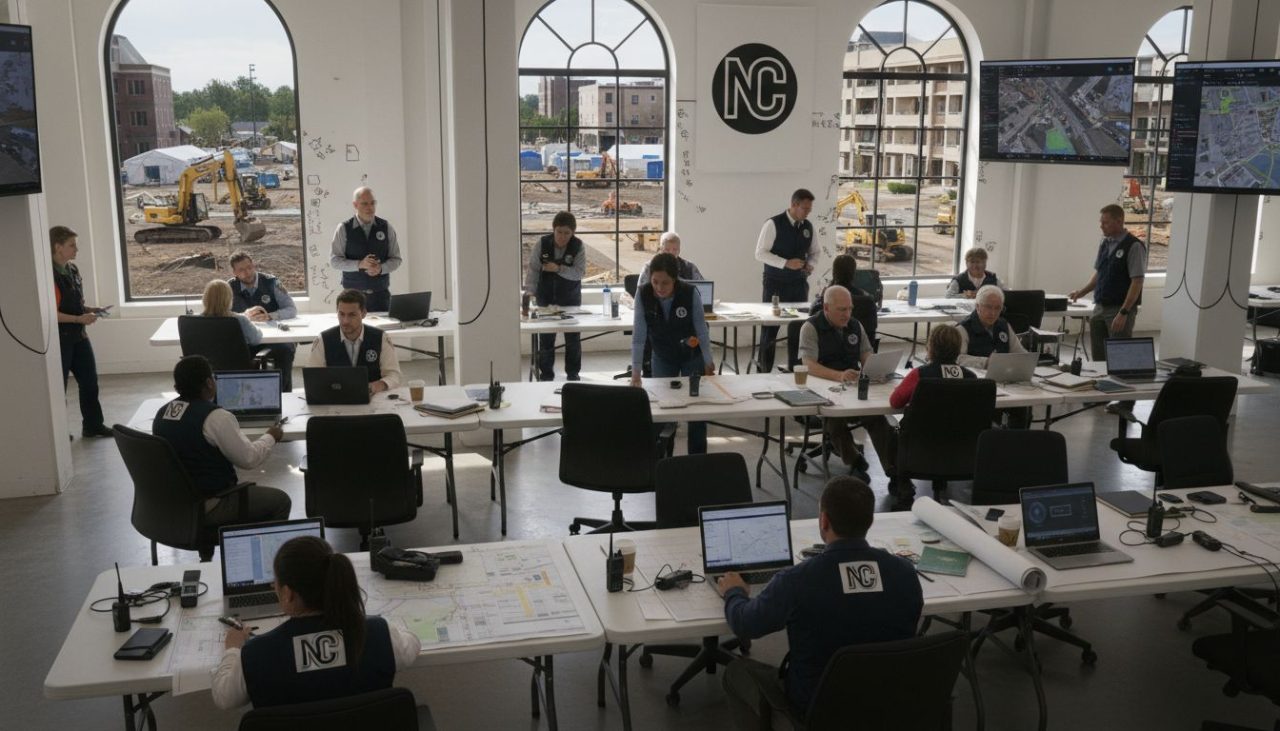
Nearly 40 percent of small businesses never reopen after a major disaster, according to FEMA. When catastrophe strikes, recovery is not just about quick fixes or emergency relief. Communities need clear strategies and long-term support to rebuild their infrastructure, restore trust, and return to normal life. Understanding the full scope of disaster recovery helps people and organizations create stronger, more resilient futures amid uncertainty.
Table of Contents
- Defining Long-Term Disaster Recovery Processes
- Types of Long-Term Recovery Efforts Nationwide
- Essential Phases in Disaster Recovery Planning
- Roles of Agencies and Support Partners
- Financial, Legal, and Housing Implications for Victims
- Common Challenges and Solutions in Recovery
Key Takeaways
| Point | Details |
|---|---|
| Holistic Recovery Approach | Long-term disaster recovery must integrate infrastructure, economic, and community support to ensure sustainable community restoration. |
| Collaborative Engagement | Diverse stakeholders, including government and non-profit organizations, are essential for creating effective and adaptive recovery strategies. |
| Structured Recovery Phases | The recovery process involves critical phases such as preparedness, response, and recovery, each requiring targeted activities and clear planning. |
| Addressing Victim Needs | Comprehensive plans must focus on financial, legal, and housing considerations to support disaster victims effectively and facilitate their recovery journey. |
Defining Long-Term Disaster Recovery Processes
Long-term disaster recovery is a comprehensive, strategic approach that goes far beyond immediate emergency response. According to FEMA Training, the process focuses on re-establishing a healthy, functioning community that can sustain itself over time, with critical objectives like providing permanent disaster-resistant housing and systematically revitalizing affected areas.
The recovery framework involves multiple interconnected stages designed to restore normalcy and build resilience. As Resilient Oahu explains, long-term disaster recovery requires coordinated efforts that ensure seamless continuity between emergency response, short-term recovery, and sustained rehabilitation activities. This holistic approach recognizes that true community healing extends well beyond initial crisis management.
Key components of long-term disaster recovery typically include:
- Comprehensive infrastructure rebuilding
- Economic stabilization and recovery programs
- Mental health and community support services
- Resilient reconstruction with enhanced disaster-mitigation strategies
- Social and economic reintegration of displaced populations
Successful long-term disaster recovery demands collaborative engagement from multiple stakeholders. Government agencies, nonprofit organizations, insurance providers, and local community leaders must work together to develop adaptive, comprehensive strategies that address immediate needs while simultaneously planning for future community sustainability and resilience.
Types of Long-Term Recovery Efforts Nationwide
The landscape of national disaster recovery is complex and multifaceted, with systematic approaches designed to address comprehensive community needs. According to the Department of Interior, the National Disaster Recovery Framework (NDRF) strategically organizes recovery efforts into six critical Recovery Support Functions: Community Planning and Capacity Building, Housing, Economics, Infrastructure Systems, Health, and Natural and Cultural Resources. This comprehensive framework ensures that every aspect of community restoration receives targeted attention.
These recovery efforts are not one-size-fits-all but instead require nuanced, locally tailored strategies. As Resilient California explains, effective disaster recovery frameworks enable communities to determine their unique recovery vision, identify specific obstacles and opportunities, map out potential funding sources, and establish measurable progress indicators. This approach involves intricate coordination between local, regional, and tribal agencies.
Key types of long-term recovery efforts typically encompass:
- Infrastructure reconstruction and resilience enhancement
- Economic revitalization and business support programs
- Mental health and community wellness initiatives
- Housing rehabilitation and sustainable redevelopment
- Environmental restoration and conservation efforts
Successful nationwide recovery demands collaborative, adaptive strategies that recognize each community’s distinct challenges and strengths. By integrating comprehensive planning, flexible resource allocation, and community-driven approaches, these long-term recovery efforts aim to rebuild not just physical structures, but also social networks, economic stability, and community resilience.
Essential Phases in Disaster Recovery Planning
Disaster recovery planning is a structured, systematic approach that requires careful navigation through multiple critical stages. According to the Centers for Medicare & Medicaid Services, the disaster recovery process encompasses four fundamental phases: Readiness and Preparedness, Activation, Continuity Operations, and Reconstitution. Each phase involves specific activities designed to ensure comprehensive and effective recovery strategies.
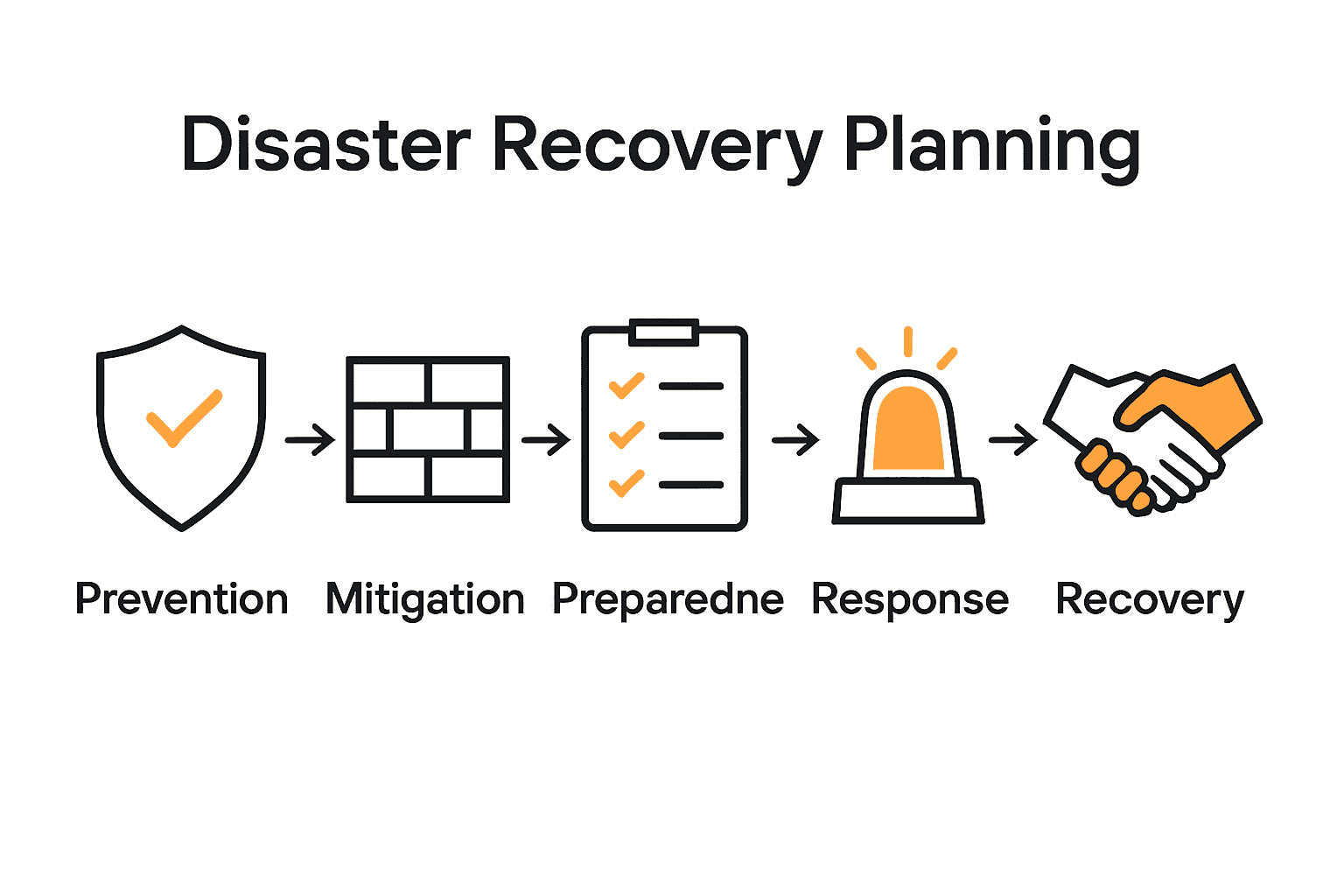
Building on this framework, University of Central Florida expands the perspective by presenting a five-stage disaster management cycle that provides a holistic view of recovery efforts. This cycle includes Prevention, Mitigation, Preparedness, Response, and Recovery, highlighting the interconnected nature of disaster management and the importance of proactive planning.
Key phases in disaster recovery planning typically involve:
Here’s a summary of the essential disaster recovery phases and their key activities:
| Phase | Main Activities |
|---|---|
| Prevention | Risk assessment Hazard identification |
| Mitigation | Implement safety measures Reduce potential impact |
| Preparedness | Develop response plans Train personnel Stock resources |
| Response | Immediate life-saving actions Resource deployment |
| Recovery | Rebuild infrastructure Restore services Support communities |
- Prevention: Identifying and addressing potential risks before they escalate
- Mitigation: Implementing strategies to reduce potential damage
- Preparedness: Developing comprehensive response plans and resources
- Response: Immediate actions taken during and immediately after a disaster
- Recovery: Long-term restoration of community infrastructure and social systems
Successful disaster recovery planning requires a dynamic, adaptive approach that recognizes the unique challenges of each situation. By integrating thorough risk assessment, strategic resource allocation, and collaborative multi-agency efforts, communities can build resilience and develop robust recovery frameworks that minimize long-term impact and support swift, effective restoration of critical systems and social structures. Explore our guide on disaster recovery phases to gain deeper insights into developing comprehensive recovery strategies.
Roles of Agencies and Support Partners
Disaster recovery is a complex ecosystem requiring coordinated efforts from multiple stakeholders. According to the Department of Interior, the Federal Emergency Management Agency (FEMA) plays a pivotal leadership role by appointing a Federal Disaster Recovery Coordinator who works to synchronize efforts across state, tribal, territorial, and local partners, including non-governmental organizations and private sector entities. This centralized coordination ensures a comprehensive and efficient response to disaster challenges.
Indiana Department of Homeland Security emphasizes the critical importance of comprehensive organizational preparedness, encouraging state departments, local and tribal governments, non-governmental organizations, and private-sector entities to develop and maintain robust Continuity of Operations (COOP) programs. These proactive strategies are essential for maintaining functional capacity during and after disaster events.
Key roles and responsibilities of agencies and support partners include:
- Federal Agencies: Provide strategic coordination, funding, and large-scale resource allocation
- State Governments: Develop regional recovery strategies and manage local implementation
- Local Authorities: Coordinate immediate response and ground-level recovery efforts
- Non-Profit Organizations: Offer direct support, humanitarian aid, and community resources
- Private Sector Partners: Contribute technical expertise, infrastructure support, and logistical capabilities
Successful disaster recovery demands a collaborative, multi-agency approach that transcends traditional organizational boundaries. By fostering transparent communication, sharing resources, and maintaining flexible, adaptive strategies, these diverse partners can create a comprehensive support network that addresses the complex, multilayered challenges faced by disaster-affected communities. Learn more about first responder coordination strategies to understand how these intricate partnerships operate in real-world scenarios.
Financial, Legal, and Housing Implications for Victims
Disaster recovery represents a complex landscape of challenges that extend far beyond immediate physical damage. According to the Department of Interior, recovery efforts are fundamentally designed to restore, redevelop, and revitalize communities by comprehensively addressing the financial, legal, and housing needs of disaster victims through coordinated support functions. This holistic approach recognizes that true recovery involves more than just rebuilding structures.
Resilient California emphasizes that effective Disaster Recovery Plans are critical in helping communities navigate the intricate challenges of post-disaster reconstruction. These plans play a pivotal role in identifying potential funding sources and systematically addressing the legal and housing obstacles that victims face during their recovery journey.
Critical implications for disaster victims typically encompass:
- Financial Challenges: Navigating insurance claims, accessing emergency funds, and managing unexpected economic disruptions
- Legal Considerations: Understanding rights, potential litigation, and protection against predatory practices
- Housing Disruptions: Securing temporary and long-term housing solutions, managing displacement
- Insurance Navigation: Comprehending coverage limitations and claim processes
- Support Resource Identification: Locating government and nonprofit assistance programs
Successful recovery demands a comprehensive, compassionate approach that recognizes the multifaceted challenges faced by disaster victims. By providing integrated support that addresses financial stability, legal protection, and housing security, communities can help individuals and families rebuild not just their physical environments, but their sense of hope and resilience.
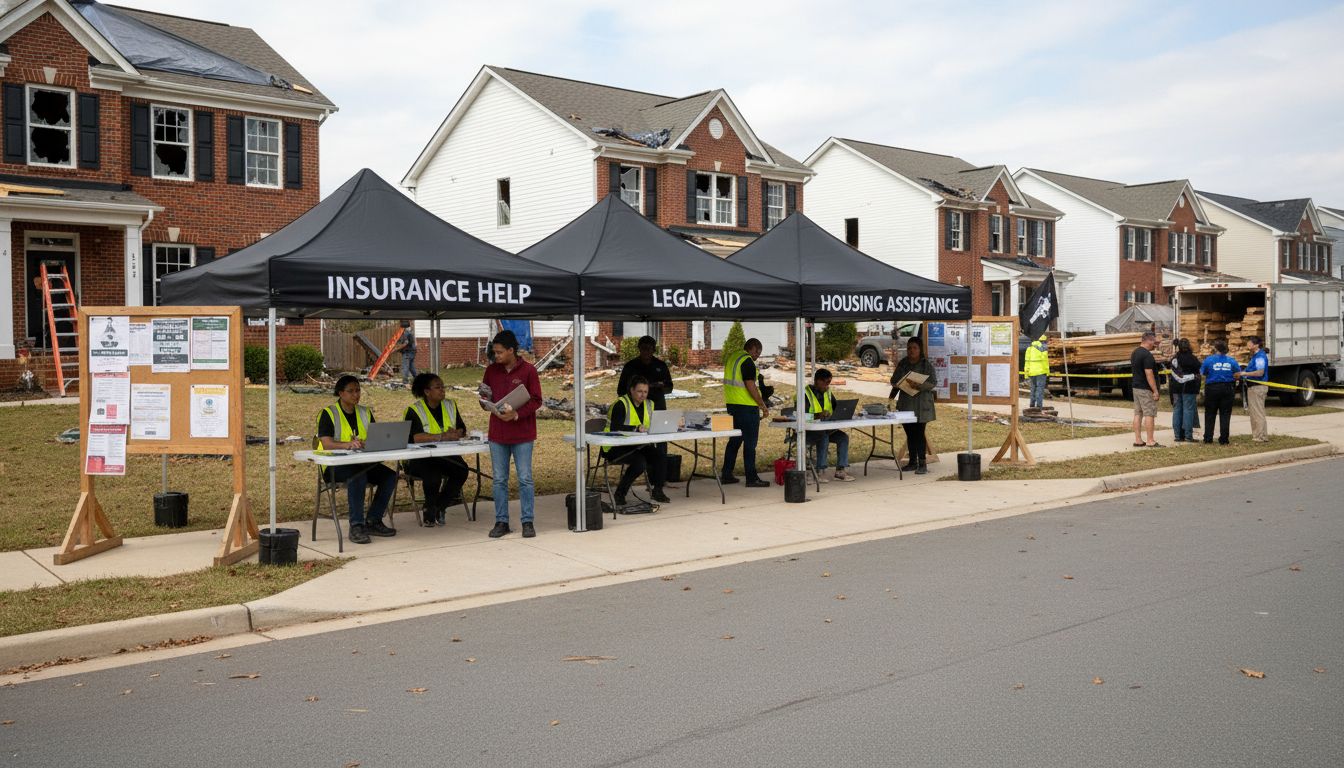 Explore our guide on navigating housing assistance to understand the critical steps in securing stable housing after a disaster.
Common Challenges and Solutions in Recovery
Long-term disaster recovery is a complex process fraught with multifaceted challenges that require strategic and collaborative approaches. According to Resilient Oahu, one of the most significant obstacles is coordinating efforts among various agencies and organizations, which demands sophisticated planning and intentional collaboration to overcome institutional barriers and communication gaps.
Resilient California highlights that developing a comprehensive Disaster Recovery Framework is crucial for communities to systematically identify both obstacles and opportunities. These structured planning approaches enable more effective problem-solving by creating transparent mechanisms for addressing recovery challenges and mapping out realistic, achievable solutions.
Common challenges in disaster recovery typically include:
- Resource Allocation: Uneven distribution of emergency funds and support
- Communication Breakdowns: Ineffective coordination between agencies
- Psychological Trauma: Managing emotional and mental health impacts
- Infrastructure Disruption: Restoring critical community systems
- Economic Instability: Addressing financial losses and economic recovery
Successful recovery demands a holistic, adaptive approach that recognizes the interconnected nature of community challenges. By fostering transparent communication, developing flexible strategies, and maintaining a victim-centered perspective, communities can transform potential obstacles into opportunities for resilience and renewal. Learn how to access critical support networks to navigate these complex recovery landscapes more effectively.
Navigate Long-Term Disaster Recovery with Expert Support
Recovering from a disaster is more than rebuilding structures. It means overcoming complex challenges like coordinating multi-agency efforts, securing sustainable housing, and managing legal and financial obstacles. This guide highlights key phases such as preparedness, response, and recovery that require timely, compassionate action. At DisasterVictimServices.com, we understand how overwhelming these stages can be when impacted by disaster.
You do not have to face this journey alone. Our dedicated team specializes in connecting disaster victims with immediate housing solutions and essential resources. We collaborate with insurance providers, government agencies, and first responders to streamline your path toward stability. Explore our Uncategorized resources for practical support and insightful guidance tailored to vulnerable communities.
Take control of your recovery today by visiting DisasterVictimServices.com and learn how our coordinated approach can help you rebuild with confidence. Do not wait for challenges to escalate—reach out now and start moving forward.
Frequently Asked Questions
What is long-term disaster recovery?
Long-term disaster recovery is a strategic process focused on re-establishing a healthy, functioning community after a disaster, addressing not just immediate needs but also ensuring sustainability and resilience in the long term.
What are the key components of long-term disaster recovery?
Key components include comprehensive infrastructure rebuilding, economic stabilization programs, mental health support services, resilient reconstruction strategies, and the social reintegration of displaced populations.
What phases are involved in disaster recovery planning?
Disaster recovery planning typically involves five phases: Prevention, Mitigation, Preparedness, Response, and Recovery, each addressing specific activities to ensure effective recovery strategies.
How do agencies and organizations collaborate in disaster recovery?
Collaboration among agencies and organizations is crucial for effective disaster recovery. Federal, state, local agencies, non-profits, and private sector partners work together to provide coordinated support, resources, and strategic planning to address the complex challenges faced by affected communities.
Recommended
- How to Rebuild Safely: Essential Steps for Disaster Recovery 2025 – Disaster Victim Services | Helping You Recover After Disaster
- 7 Essential Steps for Your Disaster Recovery Timeline 2025 – Disaster Victim Services | Helping You Recover After Disaster
- Disaster Recovery Statistics 2025: Key Trends for Agencies and Families – Disaster Victim Services | Helping You Recover After Disaster
- Disaster Recovery Phases Explained for 2025: Guide for Victims, Pros & Agencies – Disaster Victim Services | Helping You Recover After Disaster