

Did you know that over 70 percent of adults in the United States have experienced some type of traumatic event? This staggering figure highlights why understanding trauma informed care is so important for professionals and communities alike. The four R’s—Realize, Recognize, Respond, and Resist re-traumatization—offer practical guidance for supporting people who have lived through trauma, focusing on safety, compassion, and lasting recovery.
Key Takeaways
| Point | Details |
|---|---|
| Trauma-Informed Care | Integrates the 4 R’s (Realize, Recognize, Respond, Resist re-traumatization) to support individuals affected by trauma. |
| Recognizing Symptoms | Identifying psychological and physiological signs of trauma is essential for effective support during recovery. |
| Effective Response | Response strategies must prioritize psychological safety, clear communication, and individual empowerment in disaster contexts. |
| Preventing Re-Traumatization | Emergency interactions should create secure environments and prioritize emotional safety to support healing for trauma survivors. |
Table of Contents
- Defining The 4 R’s In Trauma Informed Care
- Recognizing Signs Of Trauma In Disaster Victims
- Responding Effectively Using Trauma Informed Principles
- Resisting Re-Traumatization During Emergency Response
- Real-World Applications And Common Pitfalls
Defining the 4 R’s in Trauma Informed Care
Trauma informed care represents a critical framework for understanding and responding to the complex impacts of traumatic experiences. According to SAMHSA, this approach centers around four fundamental principles known as the 4 R’s: Realize, Recognize, Respond, and Resist re-traumatization. These principles provide a comprehensive roadmap for professionals and support systems to effectively support individuals who have experienced trauma.
The first principle, Realize, involves understanding the profound and widespread impact trauma can have on individuals, families, and entire communities. This means acknowledging that traumatic experiences are not isolated incidents but can create long-lasting psychological, emotional, and physiological effects. Recognize builds upon this understanding by teaching professionals and support networks how to identify specific signs and symptoms of trauma across different contexts – whether in clients, family members, staff, or broader community settings.
The third and fourth principles, Respond and Resist re-traumatization, focus on actionable strategies. Responding means fully integrating trauma knowledge into organizational policies, procedures, and practices, ensuring that every interaction is sensitive to potential traumatic experiences. Resisting re-traumatization involves creating environments and interactions that do not trigger or repeat the dynamics of original traumatic events. By implementing these principles, organizations can create supportive, healing-centered approaches that prioritize safety, understanding, and genuine recovery.
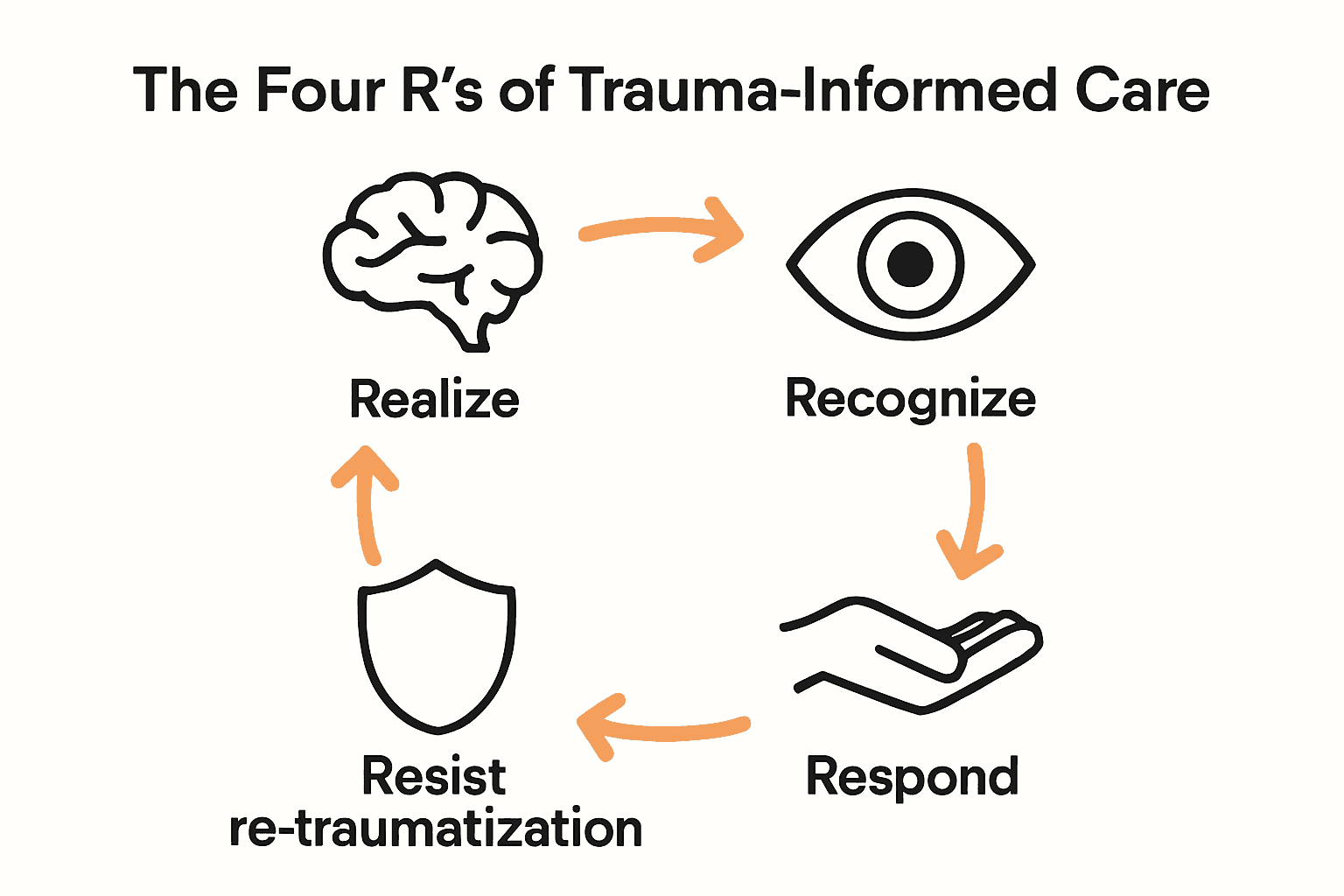
- Realize: Understand trauma’s widespread impact
- Recognize: Identify trauma signs and symptoms
- Respond: Integrate trauma knowledge into practices
- Resist: Prevent potential re-traumatization
As Southern New Hampshire University notes in its 2023 guidance, these principles apply across clinical and non-clinical settings, making them versatile tools for creating more compassionate, understanding support systems.
Here’s a summary of the 4 R’s in trauma informed care:
| Principle | Core Focus | Example Practice |
|---|---|---|
| Realize | Understand trauma’s widespread impact | Staff education on trauma effects |
| Recognize | Identify signs and symptoms of trauma | Screening and observation tools |
| Respond | Integrate trauma knowledge into action | Trauma-sensitive protocols |
| Resist Re-traumatization | Prevent repeat of traumatic dynamics | Safe environments Respectful communication |
Recognizing Signs of Trauma in Disaster Victims
Understanding and identifying trauma symptoms is crucial for effectively supporting disaster victims during their recovery journey. According to Loma Linda University’s disaster psychology experts, trauma can manifest through complex psychological and physiological responses that vary widely between individuals. These signs are not just momentary reactions but can represent deeper emotional and physical disruptions triggered by overwhelming experiences.
Psychological symptoms can include a range of challenging experiences such as numbness, persistent denial, profound grief, unexplained irritability, feelings of helplessness, social isolation, and significant memory or concentration difficulties. Physiologically, disaster victims might experience persistent headaches, recurring nausea, disrupted sleep patterns, heightened hypervigilance, and potentially increased substance use as coping mechanisms. These symptoms are normal responses to abnormal situations and should not be viewed as personal weaknesses.
The VA’s National Center for PTSD emphasizes the importance of normalizing these distress reactions while simultaneously supporting effective coping strategies. Helping professionals and support networks play a critical role in recognizing these signs early, providing compassionate intervention, and preventing potential long-term psychological complications. Read more about responder strategies in managing disaster trauma.
Key Trauma Indicators:
- Emotional numbness or persistent sadness
- Unexplained physical symptoms
- Sleep disruptions and nightmares
- Increased anxiety or hypervigilance
- Social withdrawal
- Difficulty concentrating
Recognizing these signs is the first step toward healing. Every individual’s trauma response is unique, and compassionate, patient support can make a significant difference in their recovery journey.
Responding Effectively Using Trauma Informed Principles
Trauma informed principles transform disaster response from a purely logistical approach to a deeply compassionate, human-centered strategy. Enterprise Community Partners emphasizes that effective response goes far beyond immediate physical needs, focusing instead on rebuilding psychological safety and trust within affected communities. This approach recognizes that every interaction during disaster recovery can either support healing or potentially cause additional emotional harm.
The core of trauma-informed response centers on six fundamental principles: promoting safety, establishing trust, encouraging peer support, fostering collaboration, enabling personal empowerment, and maintaining cultural sensitivity. These principles mean creating environments where disaster victims feel genuinely heard, respected, and supported. For instance, communication strategies must be transparent, choices should be offered wherever possible, and individuals’ autonomy must be consistently honored. Learn more about coordinating effective disaster response.
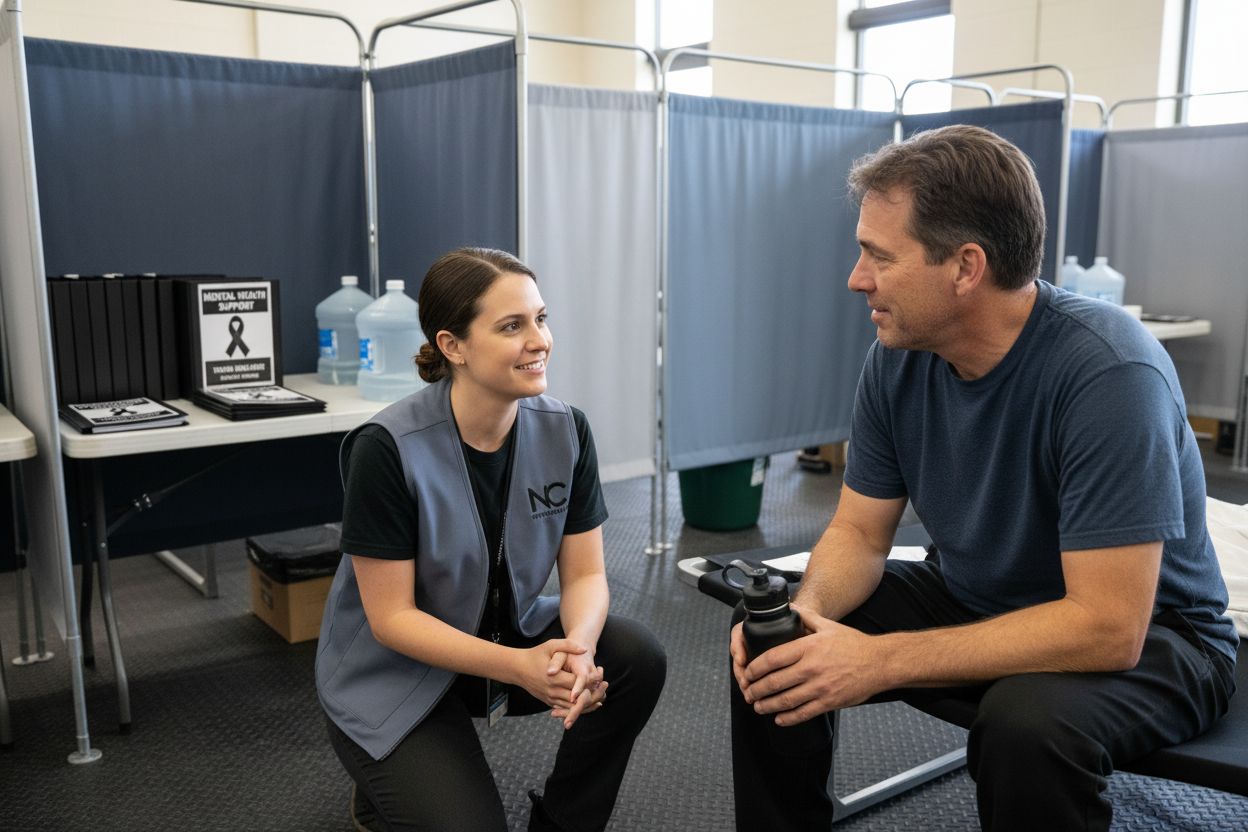
Practical implementation of these principles requires intentional, systemic approaches. Response teams must be trained to recognize trauma signs, communicate compassionately, and create spaces that feel physically and emotionally secure. This might involve providing private consultation areas, offering multiple communication channels, ensuring consistent and clear information sharing, and creating opportunities for individuals to participate actively in their own recovery process.
Key Trauma-Informed Response Strategies:
- Prioritize psychological safety alongside physical needs
- Offer clear, consistent communication
- Provide choices and control wherever possible
- Respect individual cultural and personal boundaries
- Create supportive, non-judgmental environments
- Facilitate peer and community support networks
By centering human dignity and emotional well-being, trauma-informed principles transform disaster response from a transactional service to a genuinely healing intervention.
Resisting Re-Traumatization During Emergency Response
Re-traumatization occurs when emergency response interactions inadvertently trigger or recreate the emotional and psychological experiences of the original traumatic event. This delicate process requires extraordinary sensitivity, understanding, and intentional communication strategies that prioritize the emotional safety of disaster victims. Every interaction has the potential to either support healing or potentially cause additional psychological harm.
Emergency responders must create environments of psychological safety by implementing several critical strategies. This means avoiding interrogative or invasive questioning, providing clear and predictable communication, offering genuine choices whenever possible, and maintaining consistent, respectful boundaries. Physical spaces should be designed to feel secure and non-threatening, with private consultation areas, gentle lighting, and opportunities for individuals to control their immediate environment. Learn more about first responder roles in emergency situations.
Practical approaches to preventing re-traumatization involve training response teams to recognize trauma signs, communicate with empathy, and understand the nuanced ways traumatic stress manifests. This includes using calm, non-judgmental language, allowing survivors to share their experiences at their own pace, and never pressuring individuals to disclose more than they feel comfortable sharing. Responders should also be prepared to recognize and manage their own potential emotional responses, ensuring they remain composed and supportive.
Key Strategies to Prevent Re-Traumatization:
- Prioritize emotional safety alongside physical needs
- Use calm, predictable communication
- Offer genuine choices and control
- Create secure, non-threatening environments
- Allow survivors to share at their own pace
- Maintain consistent, respectful boundaries
- Practice active, compassionate listening
By understanding and implementing these principles, emergency response teams can transform potentially re-traumatizing interactions into opportunities for genuine healing and support.
Real-World Applications and Common Pitfalls
Implementing trauma-informed principles requires more than theoretical understanding—it demands practical, nuanced application across diverse emergency response scenarios. Real-world implementation challenges professionals to translate compassionate frameworks into concrete, actionable strategies that genuinely support disaster victims’ emotional and psychological recovery. This approach goes beyond standard protocols, demanding heightened emotional intelligence and systematic organizational commitment.
Common pitfalls often emerge when organizations approach trauma-informed care as a checklist rather than a comprehensive philosophical shift. Typical mistakes include superficial training, inconsistent implementation across teams, and a one-size-fits-all approach that fails to recognize individual trauma responses. Learn more about emergency response roles and challenges to understand the complexity of these interactions. Successful implementation requires continuous training, regular feedback mechanisms, and a culture of adaptability that prioritizes human connection over rigid procedural compliance.
Practical applications involve creating comprehensive systems that integrate trauma-informed principles at every interaction point. This means developing communication protocols that center survivor autonomy, designing physical spaces that feel safe and non-threatening, and training response teams to recognize and respond to diverse trauma manifestations. Organizations must also invest in ongoing support for their own staff, acknowledging the emotional toll of working with traumatized populations and providing robust mental health resources.
Key Real-World Considerations:
- Recognize trauma responses are never uniform
- Prioritize individual agency and choice
- Develop flexible, adaptive response strategies
- Invest in continuous team training and support
- Create feedback loops for constant improvement
- Maintain emotional boundaries while showing genuine compassion
- Understand cultural and individual trauma variations
By embracing trauma-informed principles as a dynamic, evolving approach rather than a static set of rules, emergency response organizations can transform their interactions from potentially re-traumatizing encounters to genuine healing experiences.
Move From Understanding to Action With Compassionate Disaster Recovery
If you recognize the importance of the 4 R’s in Trauma Informed Care, you know how crucial it is to support emotional healing and avoid re-traumatization while navigating disaster recovery. Experiencing disaster can leave you or your loved ones overwhelmed, isolated, and uncertain about your next steps. Understanding trauma is just the beginning. What truly matters is having a dedicated partner to help you apply these principles as you recover and rebuild.
At Disaster Victim Services, we specialize in compassionate, trauma-informed support from your very first call. Our team knows the signs of trauma and brings practical solutions such as immediate emergency housing, direct collaboration with key agencies, and guidance through complex claims processes. If you are ready to bridge knowledge with real help, visit our main hub and explore our resource center for actionable information and next steps. Now is the time to bring safety and stability back to your life. Reach out today and let our experienced professionals guide you toward a secure, confident recovery.
Frequently Asked Questions
What are the 4 R’s in Trauma Informed Care?
The 4 R’s in Trauma Informed Care are Realize, Recognize, Respond, and Resist re-traumatization. These principles guide professionals in understanding and addressing the effects of trauma on individuals.
How can professionals implement the principle of ‘Realize’ in their practice?
Professionals can implement ‘Realize’ by educating themselves and their teams about the widespread effects of trauma, fostering an understanding that trauma impacts individuals, families, and communities.
What does it mean to ‘Respond’ in Trauma Informed Care?
‘Respond’ means integrating trauma knowledge into organizational policies and practices, ensuring that all interactions with individuals are sensitive to their potential traumatic experiences.
Why is preventing re-traumatization important in emergency response?
Preventing re-traumatization is crucial as it protects individuals from experiencing additional emotional harm during emergency interactions, promoting a supportive and healing environment that aids recovery.
Recommended
- Understanding Risk Assessment Guidelines for Safety – Disaster Victim Services | Helping You Recover After Disaster
- First Responder Roles Explained: Key Duties and Impact in 2025 – Disaster Victim Services | Helping You Recover After Disaster
- Emergency Response Trends 2025: What Stakeholders Need to Know – Disaster Victim Services | Helping You Recover After Disaster
- Housing Placement Workflow Guide 2025: Steps for Disaster Recovery – Disaster Victim Services | Helping You Recover After Disaster