
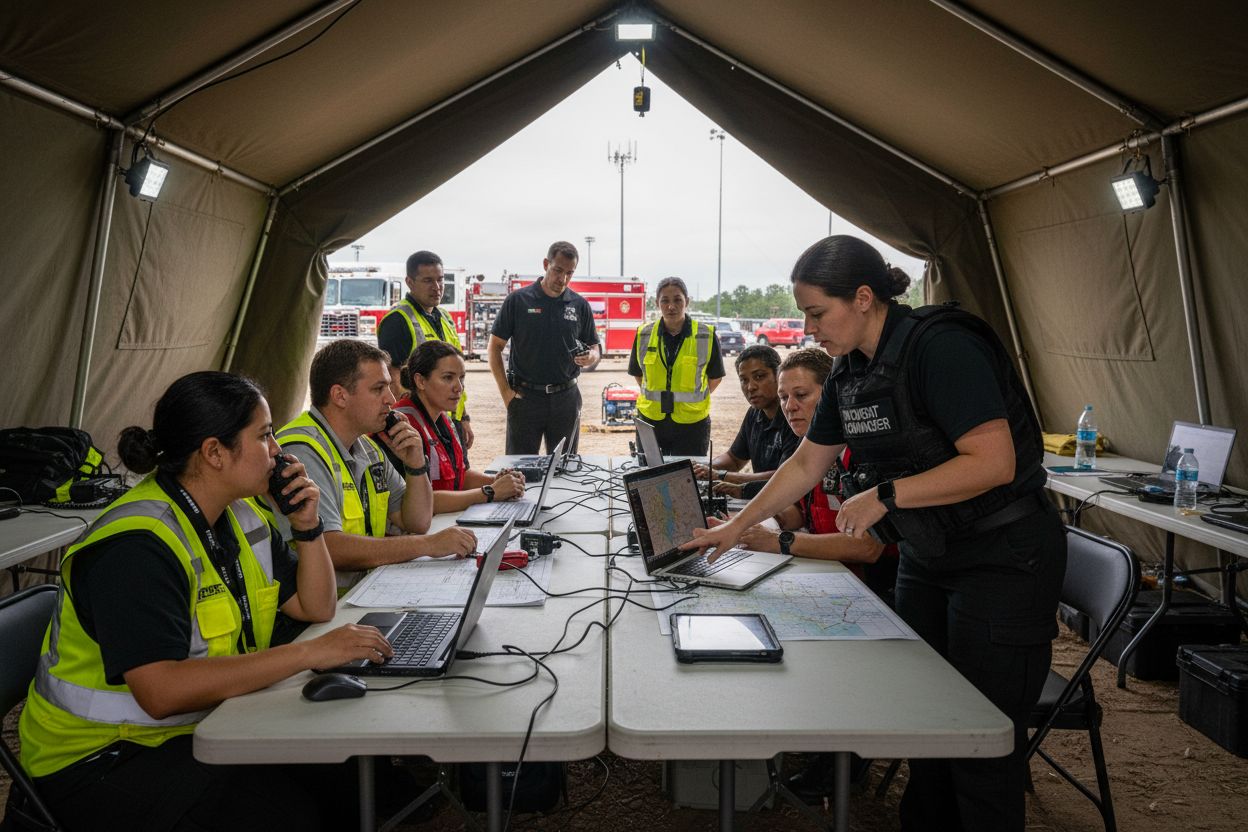
During a major disaster, poor communication can slow emergency response by up to 40 percent. This delay can cost lives and escalate chaos within minutes. The Incident Command System stands out as a proven structure that helps emergency teams respond swiftly and in sync. With clear roles, defined responsibilities, and reliable communication channels, this system brings order to confusion when it matters most.
Key Takeaways
| Point | Details |
|---|---|
| Standardized Framework | The Incident Command System (ICS) offers a universal structure for managing emergencies, ensuring clear communication and coordinated action across agencies. |
| Core Management Functions | ICS operates through five key functions: Incident Command, Operations, Planning, Logistics, and Finance/Administration, each with specific, defined roles. |
| Integration with NIMS | ICS integrates seamlessly with the National Incident Management System (NIMS), promoting effective collaboration among government and private agencies during emergencies. |
| Challenges in Implementation | Common pitfalls include authority ambiguity and communication breakdowns; these can be mitigated by regular training and clear protocols among agencies. |
Table of Contents
- Defining The Incident Command Chain System
- Structure, Roles, And Key Responsibilities
- Integration With Multi-Agency Emergency Response
- Legal Foundations And Compliance Requirements
- Common Challenges And Pitfalls To Avoid
Defining the Incident Command Chain System
The Incident Command System (ICS) represents a critical standardized framework that emergency responders and disaster management professionals use to coordinate complex emergency responses. According to FEMA’s official guidelines, this hierarchical system provides a universal structure for managing incidents of any scale or complexity, ensuring seamless communication and coordinated action across multiple agencies.
At its core, the ICS is designed to create a clear, flexible management approach that can adapt to diverse emergency scenarios. Key features of this system include:
- Scalability: Can be used for small local emergencies or large-scale national disasters
- Standardized Terminology: Creates a common language across different response organizations
- Integrated Communication: Establishes clear reporting structures and communication protocols
- Role-Based Management: Defines specific responsibilities for each team member
As outlined in national emergency management resources, the ICS integrates seamlessly with the National Incident Management System (NIMS), providing a comprehensive approach to emergency response. This integration ensures that government agencies, private organizations, and emergency services can work together effectively, reducing confusion and streamlining critical decision-making processes during high-stress situations.
Understanding the Incident Command Chain System is crucial for anyone involved in emergency management, from first responders to government officials. By establishing clear hierarchies, communication channels, and standardized procedures, the ICS transforms potentially chaotic emergency scenarios into coordinated, strategic responses that can save lives and minimize damage.
Structure, Roles, and Key Responsibilities
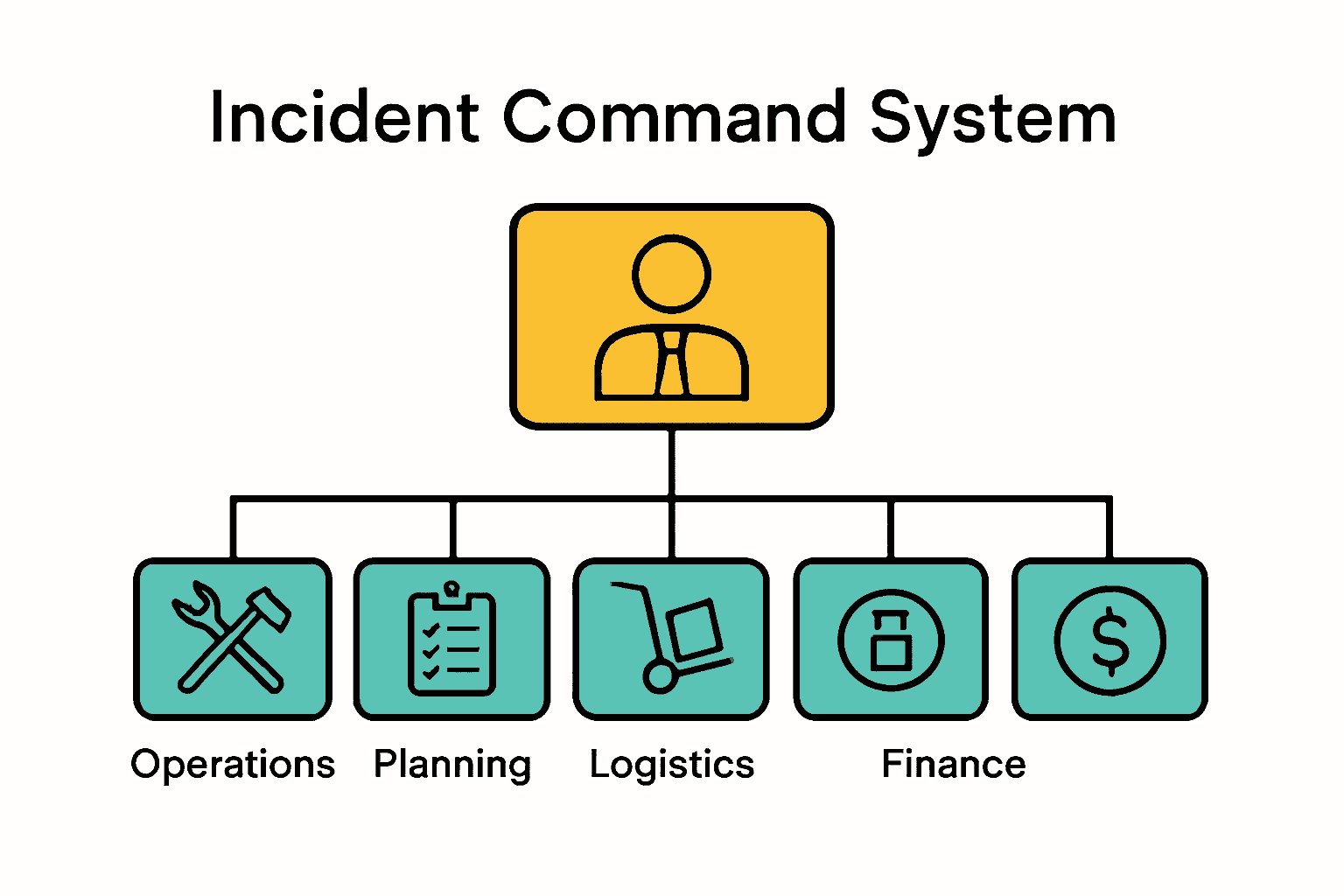
The Incident Command System (ICS) operates through a strategic organizational structure designed to manage complex emergency scenarios efficiently. According to first responder guidelines, the system is built around five core management functions that ensure comprehensive and coordinated response efforts.
Key Management Functions include:
- Incident Command: Overall leadership and strategic decision-making
- Operations Section: Direct management of tactical response activities
- Planning Section: Resource tracking, situation analysis, and documentation
- Logistics Section: Procurement and management of resources and support services
- Finance/Administration Section: Cost tracking, financial management, and administrative oversight
Within this framework, the system supports two primary command models: a single Incident Commander or a Unified Command where multiple agencies collaborate. According to research from the Federal Highway Administration, each section has specific roles and responsibilities that report directly to the Incident Commander, creating a clear chain of communication and accountability.
The Command Staff plays a critical supporting role, including:
- Safety Officer: Monitors and assesses operational safety conditions
- Public Information Officer: Manages external communication and media relations
- Liaison Officer: Coordinates communication between different responding agencies
This structured approach allows emergency responders to adapt quickly to changing situations, allocate resources efficiently, and maintain clear communication channels during high-stress disaster scenarios.
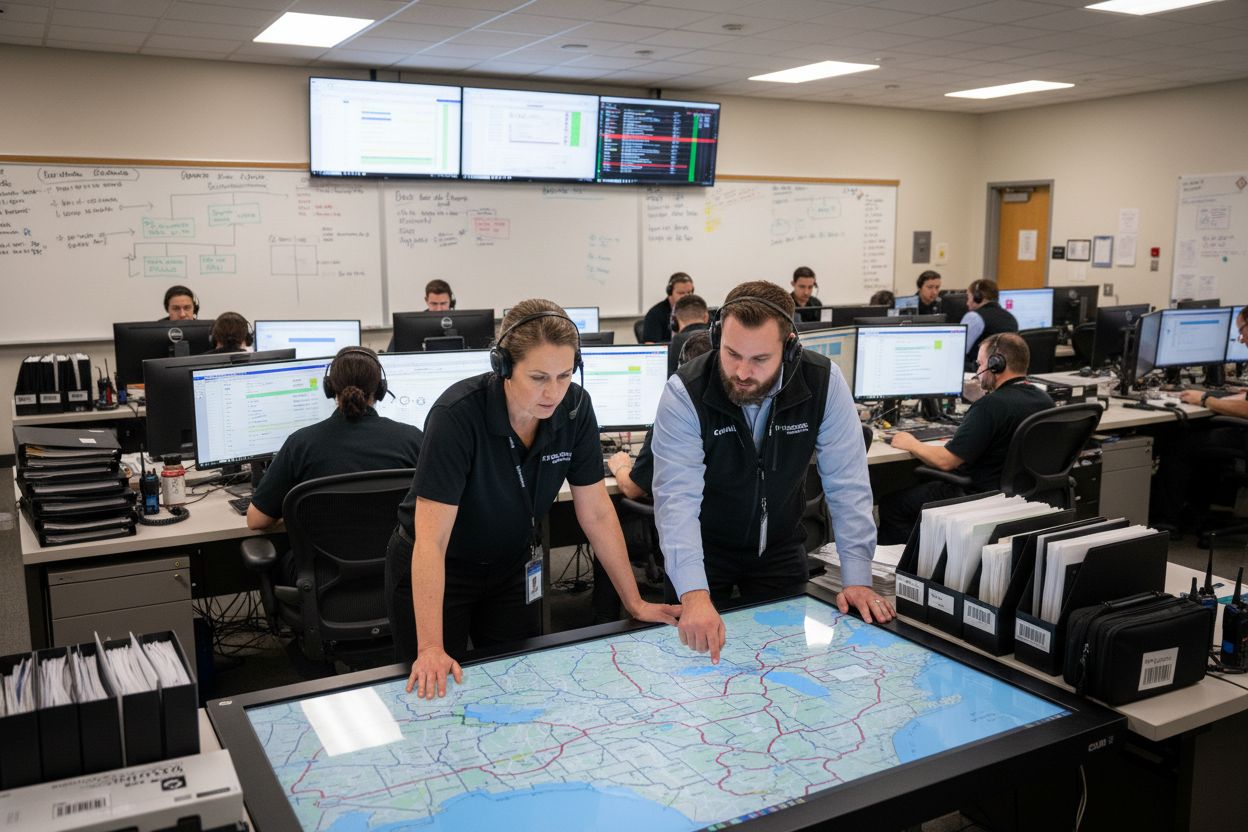
Here’s a comparison of the five ICS management sections:
| Section | Core Function | Key Responsibilities |
|---|---|---|
| Incident Command | Strategic leadership | Set objectives Overall decision-making |
| Operations | Tactical response | Manage field operations Direct resources |
| Planning | Situation analysis & planning | Track resources Develop action plans |
| Logistics | Resource and support management | Procure equipment Arrange facilities |
| Finance/Administration | Financial & administrative oversight | Track costs Handle documentation |
Integration with Multi-Agency Emergency Response
The National Incident Management System (NIMS) provides a comprehensive framework for coordinating emergency responses across multiple agencies and jurisdictions. Emergency response coordination experts emphasize that successful multi-agency integration requires more than just good intentions—it demands structured communication and collaborative mechanisms.
Key Coordination Mechanisms include:
- Multi-Agency Coordination Groups (MAC): Facilitate high-level strategic decision-making
- Emergency Operations Centers (EOCs): Centralize information and resource management
- Unified Command Structures: Enable agencies to work together with shared objectives
- Resource Allocation Protocols: Streamline critical resource distribution during emergencies
According to FEMA research, these coordination systems address complex challenges by establishing clear protocols for communication, resource sharing, and joint decision-making. The primary goal is to break down traditional organizational barriers that can impede effective emergency response.
The integration process relies on several critical components:
- Standardized communication systems
- Shared technological platforms
- Predefined roles and responsibilities
- Continuous inter-agency training and collaboration
By implementing these comprehensive coordination strategies, emergency response teams can quickly adapt to dynamic and unpredictable disaster scenarios, ensuring a more efficient and effective collective response that maximizes available resources and minimizes potential risks.
Legal Foundations and Compliance Requirements
The Incident Command System’s legal framework is rooted in critical national emergency preparedness directives, specifically the Homeland Security Presidential Directive-5. Disaster response legal experts emphasize that compliance is not optional but a mandatory requirement for federal funding and effective emergency management.
Key Legal Mandates include:
- Federal Grant Eligibility: Agencies must demonstrate NIMS and ICS compliance
- Mandatory Training Requirements: Specific certification courses are necessary
- Funding Repayment Risk: Non-compliance can result in loss of federal grants
- Standardized Implementation: Uniform protocols across different jurisdictions
According to federal guidelines, agencies must complete specific training courses to maintain compliance, including:
- ICS-100: Introduction to Incident Command System
- ICS-200: Basic Incident Command System for Initial Response
- IS-700: National Incident Management System (NIMS) Awareness
- IS-800: National Response Framework (NRF) Overview
- ICS-300/400: Intermediate and Advanced Incident Command System
These legal requirements serve a critical purpose beyond bureaucratic compliance. They ensure that emergency response teams across different agencies and jurisdictions can communicate effectively, allocate resources efficiently, and respond to complex disaster scenarios with a unified, standardized approach. The goal is to create a robust, interconnected emergency management system that can adapt quickly and save lives when every moment counts.
Common Challenges and Pitfalls to Avoid
Implementing the Incident Command System (ICS) is not without its complexities. First responder coordination experts highlight that understanding potential challenges is crucial for developing robust emergency response strategies.
Primary Operational Challenges include:
- Authority Ambiguity: Unclear chain of command during high-stress situations
- Communication Breakdowns: Ineffective inter-agency information sharing
- Resource Tracking Problems: Difficulty managing dynamic resource allocation
- Technological Integration: Complex system interoperability issues
- Cultural Resistance: Organizational reluctance to adopt new protocols
Emergency management research reveals that these challenges often stem from insufficient training, technological limitations, and institutional inertia. The most critical pitfalls typically emerge during the initial implementation and real-world application of ICS protocols.
To mitigate these risks, organizations should focus on:
- Comprehensive and continuous training programs
- Regular inter-agency communication exercises
- Phased system implementation with pilot programs
- Investing in compatible communication technologies
- Developing flexible adaptation strategies
Successful ICS implementation requires a proactive approach that anticipates potential barriers and creates flexible, resilient response mechanisms. By recognizing and addressing these challenges systematically, emergency response teams can develop more effective, coordinated disaster management strategies that protect communities and save lives.
Bridge the Gap Between Command and Real-World Recovery
Understanding the Incident Command System is only the first step toward effective disaster management. As explored in this guide, challenges like communication breakdowns, resource allocation issues, and authority confusion can stand in the way of rapid recovery and safety. If you are tasked with translating complex ICS protocols into actionable support for displaced individuals, the path can feel especially overwhelming when immediate help is needed.
DisasterVictimServices.com exists to make that journey easier. Our team specializes in turning coordinated plans into life-saving action by offering emergency housing, direct logistical support, and compassionate guidance in real time. We operate nationwide to deliver seamless collaboration between first responders, agencies, and victims. When every second counts and clarity is critical, trust us to be your connecting point. Visit our main site to learn how our rapid solutions can help you move from response to recovery today. Take action now and let us help you put your ICS knowledge into practice when it matters most.
Frequently Asked Questions
What is the Incident Command System (ICS) and why is it important?
The Incident Command System (ICS) is a standardized framework used by emergency responders to coordinate complex emergency responses. It is important because it provides a universal structure for managing incidents, ensuring clear communication and coordinated action among various agencies during emergencies.
What are the key components of the Incident Command Chain?
The key components of the Incident Command Chain include five core management functions: Incident Command, Operations Section, Planning Section, Logistics Section, and Finance/Administration Section, each with specific roles and responsibilities that work together to enhance emergency response efforts.
How does the ICS integrate with multi-agency emergency responses?
ICS integrates with multi-agency emergency responses through mechanisms like Multi-Agency Coordination Groups (MAC), Emergency Operations Centers (EOCs), Unified Command Structures, and predefined resource allocation protocols, which facilitate structured communication and collaboration between different responding agencies.
What are the compliance requirements related to the Incident Command System?
Compliance requirements for the ICS include demonstrating NIMS and ICS compliance for federal grant eligibility, completing mandatory training courses such as ICS-100 and ICS-200, and adhering to standardized protocols across different jurisdictions to ensure effective emergency management.
Recommended
- Incident Command Chain Explained: Roles and Steps for 2025 – Disaster Victim Services | Helping You Recover After Disaster
- Incident Command Chain Explained: Roles and Steps for 2025 – Disaster Victim Services | Helping You Recover After Disaster
- Incident Command Structure Explained: Roles and Benefits – Disaster Victim Services | Helping You Recover After Disaster
- Disaster Response Chain: How It Works and Why It Matters in 2025 – Disaster Victim Services | Helping You Recover After Disaster