
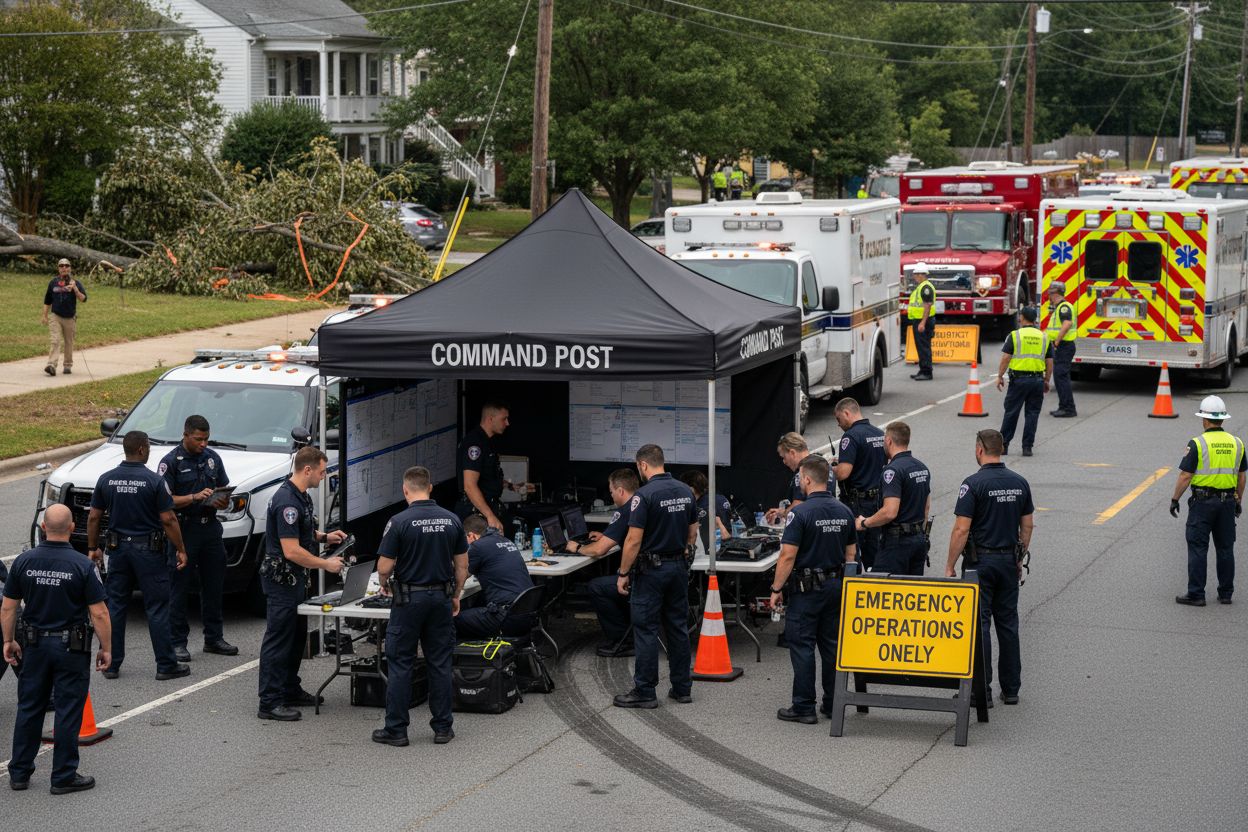
Did you know that clear communication can cut disaster response time by up to 30 percent? When every minute matters, understanding emergency response terminology can save lives and reduce chaos. These terms are not just jargon for professionals—they form the backbone of every coordinated action you see during a crisis. Learning this vocabulary helps everyone, from first responders to families, make sense of emergency situations and feel more confident in urgent moments.
Key Takeaways
| Point | Details |
|---|---|
| Understanding Terminology | Familiarity with emergency response terms improves clarity and aids in comprehension during crises. |
| Emergency Management Phases | Recognizing the five key stages—prevention, mitigation, preparedness, response, recovery—helps guide effective emergency planning and action. |
| Structured Response Roles | Knowledge of disaster response team roles, such as Incident Commander and Operations Chief, ensures clarity in leadership during emergencies. |
| Importance of Communication | Effective communication through standardized terminology and interagency coordination is essential for a streamlined emergency response. |
Table of Contents
- Defining Emergency Response Terminology
- Essential Terms And Common Acronyms
- Types Of Emergency Response Stages
- Key Roles In Disaster Response Teams
- Effective Communication And Coordination Terms
Defining Emergency Response Terminology
When disaster strikes, understanding emergency response terminology becomes more than just academic knowledge—it’s a critical lifeline. Emergency response fundamentally refers to the coordinated actions taken by professionals and organizations to address and mitigate the immediate impacts of a crisis or catastrophic event.
According to the National Academies Press glossary, several key terms define the landscape of emergency management:
- Emergency: A sudden, urgent situation requiring immediate action to prevent serious harm
- Emergency Management: A comprehensive system coordinating resources, strategies, and responses to minimize damage and protect lives
- Emergency Operations Center (EOC): A centralized command facility responsible for monitoring, coordinating, and directing emergency response activities
- Emergency Support Function (ESF): Specific operational capabilities organized to address critical aspects of emergency response, such as transportation, communication, or medical services
These definitions provide a roadmap for understanding how various agencies and professionals work together during critical incidents. Our practical guide on emergency response basics offers deeper insights into how these terminologies translate into real-world action. The goal is always clear: protect human life, minimize damage, and restore normalcy as quickly and efficiently as possible.
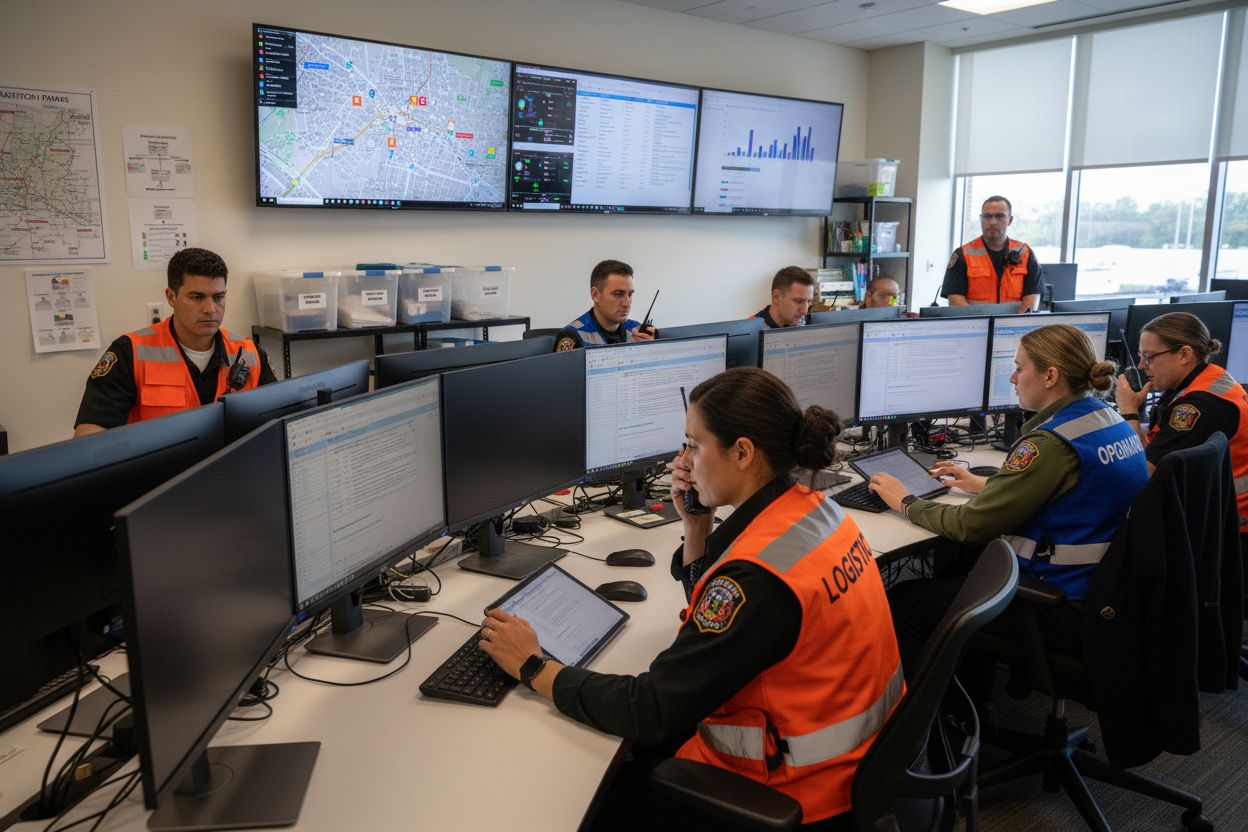
Knowing these terms isn’t just for professionals—it empowers disaster victims, families, and community members to better understand and navigate complex emergency scenarios. When you hear these terms during a crisis, you’ll have a clearer picture of the coordinated efforts happening behind the scenes to ensure your safety and support.
Essential Terms and Common Acronyms
Navigating the complex world of emergency response requires understanding a unique set of specialized terms and acronyms that professionals use to communicate quickly and effectively during critical situations. Emergency management terminology serves as a critical language that bridges communication across different agencies and response teams.
According to the National Academies glossary, several key acronyms and terms are fundamental to understanding emergency operations:
- EMAC (Emergency Management Assistance Compact): An interstate mutual aid agreement enabling states to share resources and personnel during emergencies
- ESF (Emergency Support Function): Specific operational capabilities addressing critical response needs like transportation, communication, and medical services
- EOC (Emergency Operations Center): A centralized command facility coordinating emergency response activities and decision making
- Whole Community: A comprehensive approach involving government, nonprofit organizations, businesses, and individual citizens in emergency preparedness
Our guide on understanding emergency response roles provides deeper context on how these terms translate into real-world emergency management strategies. These acronyms might seem technical, but they represent the critical infrastructure that keeps communities safe during unpredictable and challenging situations.
Understanding these terms demystifies the emergency response process. Whether you’re a disaster victim, a community member, or a professional, knowing this terminology helps you better comprehend the sophisticated systems designed to protect and support people during times of crisis.
Types of Emergency Response Stages
Emergency response isn’t a single moment—it’s a complex, interconnected process involving multiple strategic stages designed to protect communities and minimize potential damage. Emergency management operates through a systematic approach that transforms reactive measures into proactive strategies.
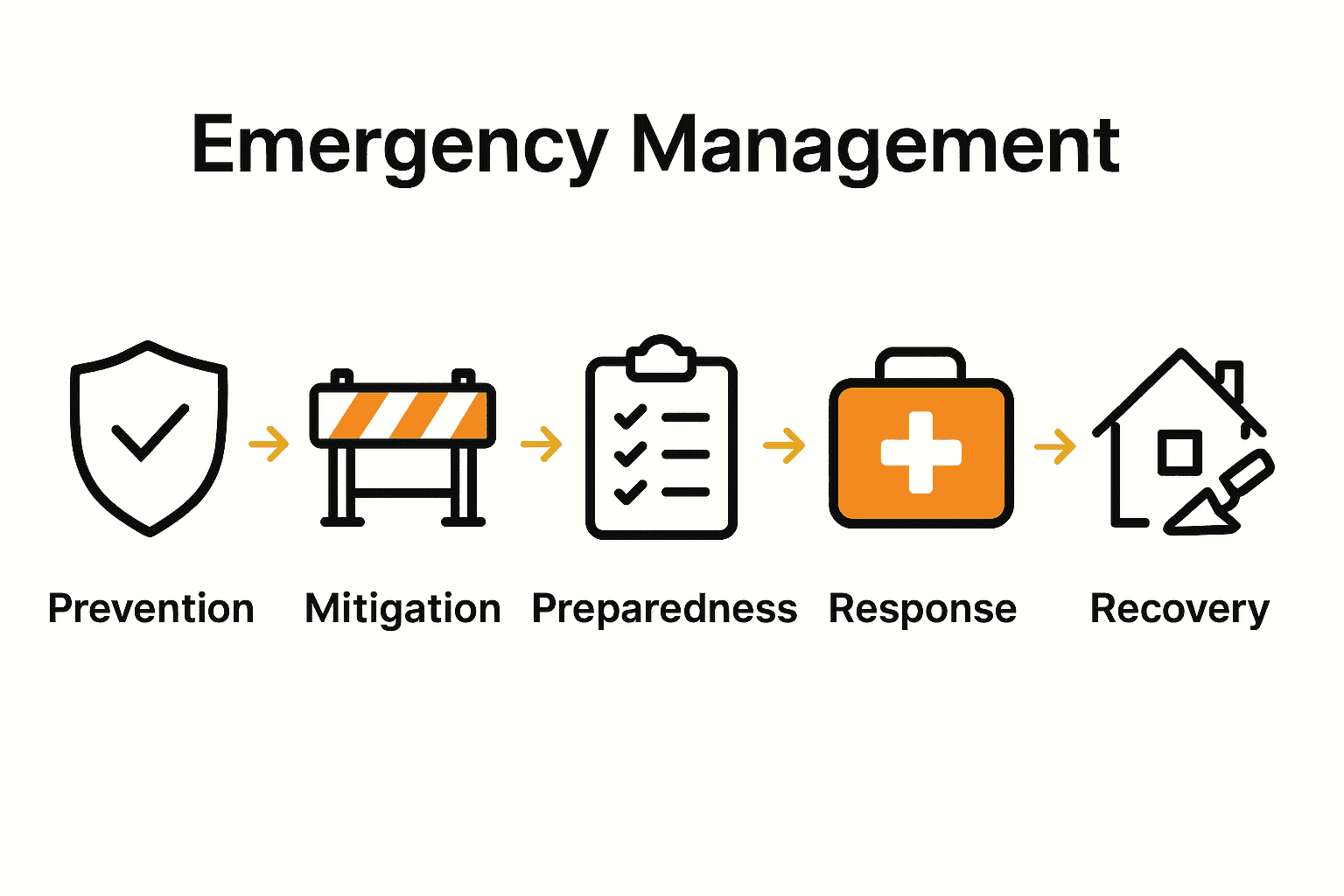
According to the University of Nevada, Reno, emergency management typically encompasses five critical phases:
- Prevention: Identifying and eliminating potential risks before they escalate
- Mitigation: Reducing the potential impact of future emergencies through strategic planning
- Preparedness: Developing action plans, training personnel, and establishing communication protocols
- Response: Activating immediate emergency operations and providing direct intervention
- Recovery: Restoring community infrastructure and supporting long-term rehabilitation
The City of Miramar’s emergency management framework provides concrete examples of how these stages work in practice. For instance, mitigation might involve implementing stringent building codes, while preparedness focuses on conducting emergency training and establishing mutual aid agreements.
Here’s a summary of the five main stages of emergency management:
| Stage | Main Objective | Example Activities |
|---|---|---|
| Prevention | Eliminate potential risks | Risk assessments Inspections |
| Mitigation | Reduce impact of emergencies | Building codes Flood barriers |
| Preparedness | Develop plans and train personnel | Emergency drills Planning sessions |
| Response | Immediate action and intervention | Search and rescue Medical aid |
| Recovery | Restore and support communities | Infrastructure repair Counseling services |
Our guide on understanding first responder roles offers deeper insights into how professionals execute these stages. Understanding these phases empowers individuals and communities to comprehend the complex, coordinated efforts that transform potential chaos into structured, effective emergency management.
Key Roles in Disaster Response Teams
Disaster response is a complex, highly organized effort requiring precision, communication, and clearly defined responsibilities. The Incident Command System (ICS) provides a standardized framework that ensures every team member knows exactly what they need to do during an emergency.
According to the National Park Service, disaster response teams are structured with several critical leadership roles:
-
Incident Commander: The overall leader responsible for managing the entire emergency response
-
Command Staff:
- Information Officer: Manages public communication and media relations
- Liaison Officer: Coordinates between different agencies and organizations
- Safety Officer: Ensures the safety of all response personnel
-
General Staff Section Chiefs:
- Operations Chief: Directs tactical response activities
- Planning Chief: Develops strategic response plans and tracks resources
- Logistics Chief: Manages supplies, equipment, and support services
- Finance/Administration Chief: Handles cost tracking and financial documentation
Our comprehensive guide on coordinating disaster response offers deeper insights into how these roles interact during critical situations. This structured approach allows for flexible, scalable responses that can adapt to the unique challenges of any emergency scenario.
Understanding these roles helps disaster victims and community members appreciate the intricate, well-coordinated efforts happening behind the scenes. Each team member plays a crucial part in protecting lives, minimizing damage, and supporting communities during their most vulnerable moments.
Effective Communication and Coordination Terms
In emergency response, communication isn’t just about talking—it’s about creating a seamless, unified language that bridges different agencies, disciplines, and operational challenges. Common terminology serves as the critical foundation that transforms potential chaos into coordinated action.
According to the National Academies glossary, several key communication concepts are fundamental to effective emergency management:
- Common Terminology: Standardized language that ensures clear, consistent communication across different agencies and response teams
- Interagency Coordination: The collaborative process of multiple organizations working together to achieve shared emergency response objectives
- Emergency Communications: Structured communication protocols designed to quickly and accurately share critical information during crisis situations
- Consequence Management: Strategic approaches focused on mitigating and managing the potential long-term impacts of an emergency
The Incident Command System (ICS) further emphasizes a unified command structure that allows different agencies to operate cohesively. Our guide on improving response after disasters provides deeper insights into how these communication strategies are implemented in real-world scenarios.
Understanding these terms isn’t just for professionals—it helps disaster victims and community members appreciate the sophisticated communication networks that spring into action during emergencies. By using standardized language and coordinated approaches, emergency teams can respond more quickly, efficiently, and effectively when every second counts.
Put Emergency Knowledge Into Action With Real Support
Learning the key terms and roles in emergency response is a vital step toward safeguarding your family and community. Yet when disaster hits, understanding terminology alone cannot ease the urgent stress of displacement or the chaos of finding safe shelter. Whether you are facing confusion about the phases of emergency response or you feel overwhelmed trying to coordinate with multiple agencies, the true challenge is knowing where to turn for real, expert help. Your journey from crisis to recovery does not have to be isolating.
Let trusted professionals turn knowledge into practical solutions. Disaster Victim Services stands ready to connect you with immediate support, leveraging our expertise in emergency housing, insurance navigation, and critical coordination. See how our team bridges complex emergency management concepts with hands-on assistance by visiting our Uncategorized Resource Center. Act now to gain the guidance and compassion you deserve. Visit DisasterVictimServices.com and let us help you move from terminology to tangible recovery.
Frequently Asked Questions
What is the definition of emergency management?
Emergency management is a comprehensive system that coordinates resources, strategies, and responses to minimize damage and protect lives during emergencies.
What are the main phases of emergency management?
The five critical phases of emergency management are Prevention, Mitigation, Preparedness, Response, and Recovery, each focused on different aspects of managing emergencies effectively.
What roles are included in disaster response teams?
Disaster response teams typically include an Incident Commander, Command Staff (such as Information, Liaison, and Safety Officers), and General Staff Section Chiefs (like Operations, Planning, Logistics, and Finance Chiefs).
How does effective communication enhance emergency response?
Effective communication enhances emergency response by providing a standardized language that ensures clear, consistent communication among various agencies, facilitating coordinated actions during crises.
Recommended
- Emergency Response Basics for 2025: A Practical Guide – Disaster Victim Services | Helping You Recover After Disaster
- Understanding First Responder Roles in Emergency Situations – Disaster Victim Services | Helping You Recover After Disaster
- Understanding Emergency Response Roles in 2025: Key Insights – Disaster Victim Services | Helping You Recover After Disaster
- Emergency Response Basics for 2025: A Practical Guide – Disaster Victim Services | Helping You Recover After Disaster