

First aid is the single action that can mean the difference between life and tragedy in an emergency. Every minute spent waiting for help matters, and immediate bystander intervention can double or even triple survival rates for critical conditions like cardiac arrest. People often think first aid is just about bandages and CPR, but there is a bigger picture most don’t see. The real secret is how anyone with even basic first aid knowledge holds the power to shape the outcome long before professional help arrives.
Table of Contents
- What Are The Steps Of First Aid?
- Why Understanding First Aid Steps Is Crucial
- How First Aid Steps Work In Emergency Situations
- Key Concepts Of First Aid And Their Importance
- Practical Applications Of First Aid Steps In Real Life
Quick Summary
| Takeaway | Explanation |
|---|---|
| Prioritize scene safety first | Always assess the environment for dangers before approaching the victim. This prevents additional injuries to both you and the victim. |
| Act quickly to communicate | Promptly contact emergency services to ensure professional help is on the way; early intervention is vital for survival. |
| Focus on basic life support | Administer urgent interventions like CPR and bleeding control, which directly support vital bodily functions until professionals arrive. |
| Stay calm and think clearly | Mental preparedness is crucial. Remaining calm helps you make quick, effective decisions that can save lives in emergencies. |
| Understand community resilience | Knowledge of first aid fosters community preparedness, enabling groups to effectively manage emergencies together and reduce panic. |
What are the Steps of First Aid?
First aid represents a critical set of immediate actions taken to assist an injured or suddenly ill person before professional medical help arrives. Understanding these steps is crucial for anyone who might encounter a medical emergency. Our comprehensive guide on first aid disaster basics provides additional context for emergency preparedness.
Understanding the Core Principles
First aid is not about performing complex medical procedures but about stabilizing a person’s condition and preventing further harm. The fundamental approach involves assessing the situation quickly, ensuring personal and victim safety, and taking appropriate actions based on the specific emergency. These steps are designed to minimize potential complications and support the injured person until professional medical assistance can take over.
To clarify the core principles, here is a concise definition table summarizing key concepts of first aid and their explanations.
| Principle or Concept | Explanation |
|---|---|
| Scene Safety Assessment | Evaluating the environment to ensure no further risks to you or the victim. |
| Emergency Communication | Contacting emergency services promptly to get professional help on the way. |
| Basic Life Support | Providing urgent interventions like CPR or bleeding control. |
| Psychological Preparedness | Staying calm and clear-headed to make effective decisions in emergencies. |
| Community Resilience | Strengthening group readiness and reducing panic during emergencies. |
Key Components of First Aid Response
The standard first aid response typically involves several critical stages, each serving a specific purpose in emergency management.
According to MedlinePlus Medical Encyclopedia, these stages include:
-
Scene Safety Assessment: Before approaching an injured person, evaluate the environment to ensure no additional risks exist for you or the victim.
-
Emergency Communication: Quickly determine whether professional emergency services are required and contact them immediately.
-
Basic Life Support: Perform necessary interventions such as controlling bleeding, managing breathing difficulties, or administering CPR if the person is unresponsive.
Psychological Preparedness
Beyond technical skills, successful first aid requires mental readiness. Staying calm, thinking clearly, and acting decisively can significantly impact the outcome of an emergency situation. Training and practice help individuals develop the confidence needed to respond effectively when unexpected medical crises occur.
Why Understanding First Aid Steps is Crucial
Understanding first aid steps is not just a skill but a potentially life-saving capability that empowers individuals to respond effectively during emergencies. Our first aid basics guide for disaster recovery teams offers additional insights into professional emergency response strategies.
Immediate Impact on Survival Rates
Every minute counts in a medical emergency. The first few moments after an injury or sudden illness can determine whether a person survives or experiences long-term complications. Proper first aid interventions can significantly reduce the risk of permanent damage or death. According to research from the American Heart Association, immediate bystander intervention can double or triple survival rates for critical conditions like cardiac arrest.
Preventing Further Complications
Proper first aid is more than just an immediate response. It is a strategic approach to minimizing potential medical complications. By understanding the correct steps, individuals can:
-
Reduce Infection Risks: Properly cleaning and dressing wounds can prevent bacterial contamination.
-
Stabilize Critical Conditions: Correct positioning and support can prevent additional injury or trauma.
-
Manage Shock: Recognizing and addressing shock symptoms can prevent potentially fatal consequences.
Psychological and Community Resilience
Beyond individual benefits, widespread first aid knowledge contributes to community resilience. When more people understand emergency response protocols, communities become better prepared to handle unexpected medical situations. This collective preparedness reduces panic, speeds up response times, and creates a supportive environment where individuals feel confident in their ability to help others during critical moments.
How First Aid Steps Work in Emergency Situations
First aid operates as a systematic approach to managing unexpected medical emergencies, transforming potential chaos into structured, life-preserving interventions. Our disaster recovery first aid guide provides comprehensive insights into professional emergency response strategies.
Initial Assessment and Rapid Decision Making
The foundation of effective first aid lies in rapid yet methodical scene assessment. Emergency responders and trained individuals must quickly evaluate multiple factors to determine the appropriate course of action. According to research from the National Safety Council, this initial assessment involves analyzing environmental risks, victim condition, and potential hazards within seconds of encountering an emergency situation.
Prioritizing Life-Sustaining Interventions
First aid steps are strategically designed to address the most critical physiological needs. When confronted with an emergency, responders focus on interventions that immediately support basic life functions:
-
Airway Management: Ensuring the victim can breathe by clearing obstructions and maintaining an open respiratory pathway.
-
Circulation Support: Controlling severe bleeding and maintaining blood flow to critical organs.
-
Neurological Monitoring: Assessing consciousness and preventing further potential neurological damage.
Bridging the Gap Until Professional Help
First aid functions as a critical intermediary stage between the moment of emergency and professional medical intervention. The primary goal is stabilization not complete treatment. Trained individuals work to prevent the situation from deteriorating, manage immediate risks, and provide crucial information to incoming medical professionals. This approach transforms first aid from a reactive measure to a proactive, strategic response mechanism that can significantly improve potential health outcomes.
This comparison table highlights how first aid steps address critical priorities during emergency situations, helping readers quickly see the targeted focus of each intervention.
| First Aid Priority | Purpose | Example Action |
|---|---|---|
| Airway Management | Ensure the victim can breathe and clear obstructions | Head tilt-chin lift to open airway |
| Circulation Support | Maintain blood flow and control life-threatening bleeding | Applying direct pressure to wounds |
| Neurological Monitoring | Assess consciousness and prevent further neurological damage | Checking responsiveness, monitoring ABCs |
| Emergency Communication | Quickly secure advanced medical support | Calling 911 or local emergency services |
Key Concepts of First Aid and Their Importance
First aid represents a comprehensive approach to emergency response that goes beyond simple medical interventions. Our disaster recovery first aid guide provides deeper insights into professional emergency management strategies.
Fundamental Principles of Emergency Response
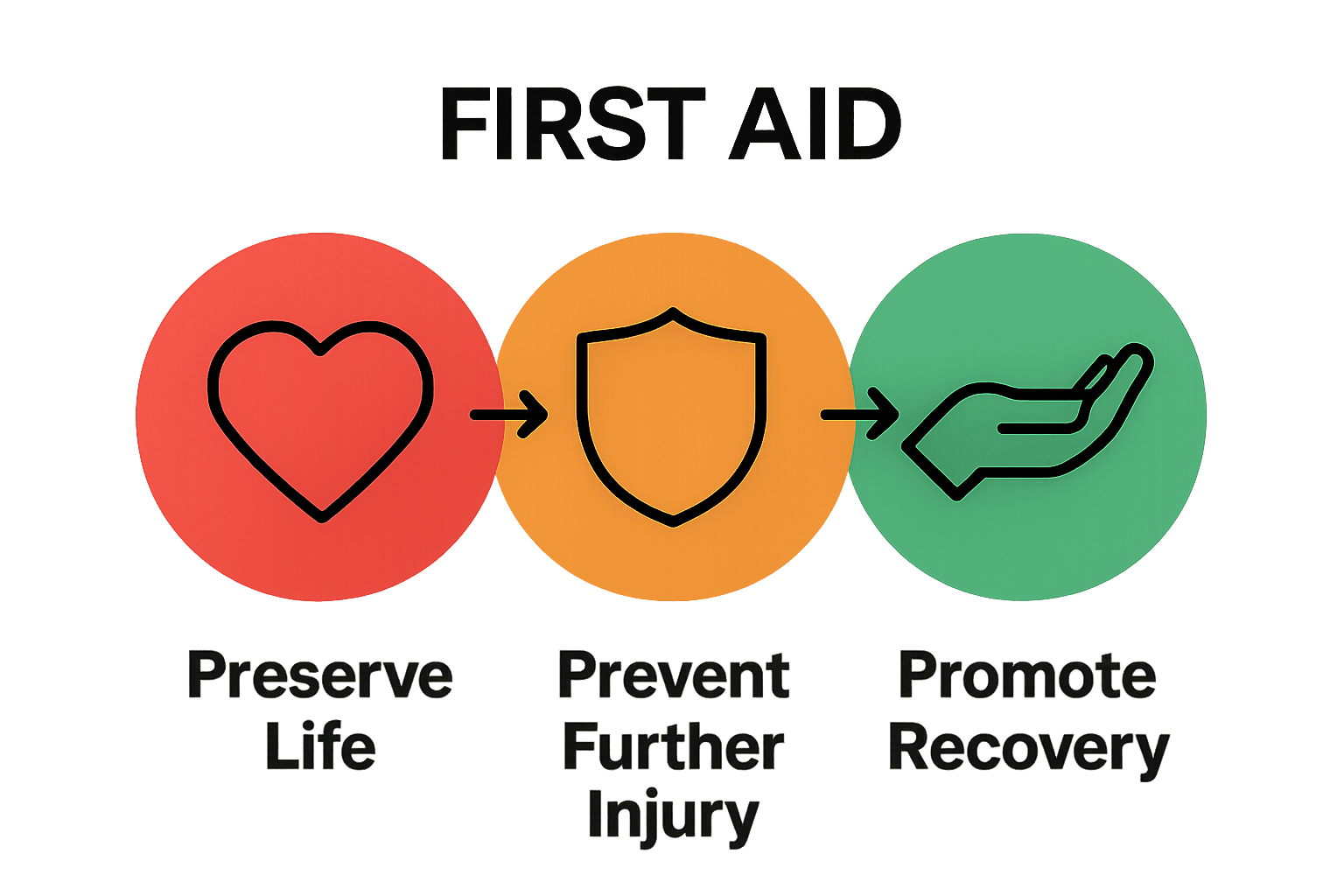
The core of first aid is built on a set of fundamental principles that guide effective emergency interventions. According to research from the National Institutes of Health, these principles focus on creating a systematic approach to managing unexpected medical situations. The primary goal is to protect life, prevent further injury, and promote recovery through strategic and informed actions.
Critical Decision-Making Framework
First aid is more than a set of technical skills. It requires a robust decision-making framework that enables quick and effective responses. This framework encompasses several key components:
-
Risk Assessment: Quickly evaluating the immediate environment and potential dangers
-
Prioritization: Identifying the most critical medical needs and addressing them in order of severity
-
Resource Management: Utilizing available tools and personal capabilities to provide the most effective assistance possible
Psychological and Physical Preparedness
Successful first aid implementation depends equally on psychological resilience and physical readiness. Individuals must develop the mental fortitude to remain calm under pressure while maintaining the physical skills necessary to perform potentially life-saving interventions. This holistic approach transforms first aid from a reactive process to a proactive emergency management strategy, empowering individuals to make critical decisions that can significantly impact survival and recovery outcomes.
Practical Applications of First Aid Steps in Real Life
First aid skills transform theoretical knowledge into tangible life-saving actions across various everyday scenarios. Our disaster recovery first aid guide offers comprehensive insights into implementing emergency response strategies effectively.
Emergency Scenarios and Intervention Strategies
Real-life first aid applications extend far beyond medical textbook scenarios, requiring adaptable and quick thinking. According to clinical research from the National Institutes of Health, practical first aid interventions can dramatically improve trauma outcomes by addressing immediate health risks and preventing further complications. These interventions range from managing minor injuries to stabilizing critical conditions before professional medical help arrives.
Common Everyday Emergency Situations
Practical first aid knowledge becomes invaluable in diverse settings, where unexpected medical challenges can emerge suddenly:
-
Workplace Accidents: Addressing cuts, burns, and potential chemical exposures
-
Home Emergencies: Managing sudden choking incidents, falls, or cardiac events
-
Public Spaces: Responding to allergic reactions, fainting, or minor traumatic injuries
Contextual Application and Skill Adaptation
Successful first aid implementation requires more than memorizing procedures. It demands the ability to read situational contexts, understand individual medical needs, and adapt intervention strategies accordingly. This dynamic approach transforms first aid from a rigid set of instructions into a flexible, responsive system that can be tailored to specific emergency requirements, ultimately increasing the likelihood of positive health outcomes and potentially saving lives in critical moments.
Move from Knowledge to Real-World Recovery with Disaster Victim Services
Understanding the steps of first aid is an essential foundation, especially when facing emergencies that turn lives upside down. But when disaster strikes, knowing how to act is only part of the challenge. You and your loved ones might need urgent shelter, ongoing support, and a trusted partner to handle the complexities beyond the immediate crisis. When you need more than information, Disaster Victim Services is here to guide you each step of the way.
Turn your preparedness into action. Whether you need emergency housing, help navigating insurance claims, or compassionate coordination with recovery professionals, our dedicated team responds around the clock to support your transition from crisis to rebuilding. Visit our Uncategorized section for more real-life emergency insights, and discover how Disaster Victim Services bridges the gap between first aid and full recovery. Take the first step toward restoring your peace of mind today.
Frequently Asked Questions
What are the fundamental steps of first aid?
The fundamental steps of first aid include assessing the scene for safety, communicating the need for professional help, and providing basic life support by controlling bleeding, managing breathing, or administering CPR if necessary.
Why is it important to remain calm during a first aid situation?
Remaining calm is crucial during a first aid situation because it allows you to think clearly, make quick decisions, and effectively provide assistance without causing additional panic to the injured person or bystanders.
How does first aid contribute to survival rates in emergencies?
Proper first aid interventions can significantly improve survival rates by stabilizing a person’s condition during the critical moments before professional medical help arrives, potentially reducing the risk of permanent damage or death.
What psychological skills are important for effective first aid?
Important psychological skills for effective first aid include staying calm, thinking clearly under pressure, and having the mental resilience to act decisively during emergencies, all of which can improve the outcome for the injured person.
Recommended
- First Aid Basics 2025: Essential Guide for Disaster Recovery Teams – Disaster Victim Services | Helping You Recover After Disaster
- First Aid Basics 2025: Essential Guide for Disaster Recovery Teams – Disaster Victim Services | Helping You Recover After Disaster
- First Aid Disaster Basics: Essential Steps for 2025 Recovery – Disaster Victim Services | Helping You Recover After Disaster
- Emergency Response Basics for 2025: A Practical Guide – Disaster Victim Services | Helping You Recover After Disaster