

Housing eligibility rules decide who gets access to life-changing shelter programs and who has to keep searching. Nearly 10 million low-income households in the US depend on these eligibility guidelines every year. Most people think these rules are all about income limits and paperwork. The real story is the system looks at everything from veteran status to family emergencies and even disaster response, creating a hidden network of priority that reshapes entire communities.
Table of Contents
- Defining Housing Eligibility Requirements: Key Concepts
- The Importance of Housing Eligibility in 2025
- Factors Influencing Housing Eligibility Requirements
- How Housing Eligibility Works for Different Groups
- Real-World Impacts and Case Studies on Housing Eligibility
Quick Summary
| Takeaway | Explanation |
|---|---|
| Understand income verification | Applicants must provide income documentation relative to area median income to qualify for assistance. |
| Prioritize vulnerable populations | Groups like the elderly, disabled, and veterans receive enhanced consideration in housing assistance assessments. |
| Recognize legal requirements | Citizenship status and compliance with housing regulations are crucial for eligibility in housing programs. |
| Focus on individual assessments | Each applicant undergoes a personalized evaluation to address their unique circumstances and housing needs. |
| Real-world impacts matter | Effective housing eligibility programs can significantly reduce homelessness and enhance community stability. |
Defining Housing Eligibility Requirements: Key Concepts
Housing eligibility requirements represent a complex framework of guidelines determining an individual’s or family’s qualification for emergency and long-term housing assistance. These comprehensive standards ensure that limited housing resources are allocated efficiently and equitably to those experiencing genuine housing displacement or vulnerability.
The following table summarizes the core eligibility determinants for housing assistance, helping clarify the features considered during the assessment process.
| Determinant | Description |
|---|---|
| Income Verification | Documentation confirming household income relative to area median income levels |
| Citizenship Status | Proof of U.S. citizenship, lawful permanent residency, or eligible immigration documentation |
| Family Composition | Assessment of household size, number of dependents, and special family circumstances |
Core Eligibility Determinants
Understanding housing eligibility involves examining multiple interconnected factors.
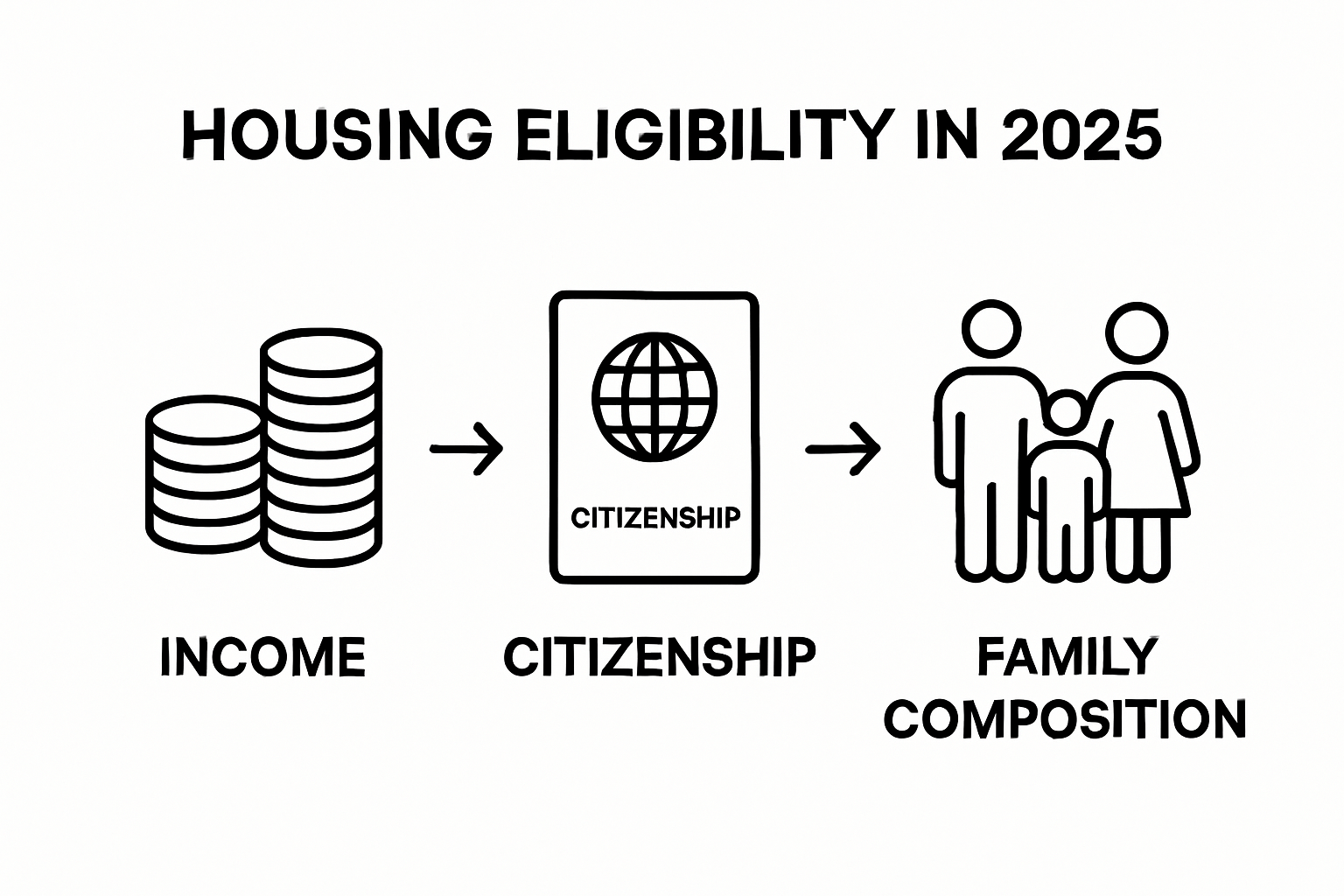 According to the Center on Budget and Policy Priorities, these core determinants typically include:
- Income Verification: Establishing whether an applicant’s household income falls within designated percentage ranges relative to area median income
- Citizenship Status: Confirming legal residency or eligible immigration documentation
- Family Composition: Assessing household size, dependents, and potential priority considerations
Vulnerability and Priority Categories
Housing eligibility extends beyond basic financial metrics. Certain population segments receive enhanced consideration based on demonstrated vulnerability. These priority groups often include:
- Elderly individuals
- People with documented disabilities
- Families experiencing immediate housing crisis
- Veterans with specific service related housing needs
Government agencies and housing authorities strategically design these requirements to balance compassionate support with responsible resource allocation. Read more about our comprehensive housing process guide to understand how these eligibility requirements translate into practical assistance.
The nuanced nature of housing eligibility means that no single universal standard applies uniformly across all scenarios. Each applicant undergoes individualized assessment, considering their unique circumstances, immediate needs, and potential for stabilization. While the process might seem complex, these carefully constructed requirements ultimately serve to connect vulnerable populations with critical housing support during challenging transitions.
This table highlights how housing eligibility requirements prioritize various vulnerable populations, offering a quick comparison of the specific considerations allocated to each group.
| Vulnerable Group | Priority or Special Consideration |
|---|---|
| Elderly Individuals | Enhanced priority; may qualify with lower income thresholds |
| People with Disabilities | Modified eligibility criteria and adaptive housing options |
| Veterans | Priority placement and specialized support programs |
| Families in Immediate Crisis | Expedited assessment and emergency housing access |
| Marginalized Groups | Tailored criteria recognizing unique systemic barriers |
The Importance of Housing Eligibility in 2025
Housing eligibility has become increasingly critical in 2025, serving as a strategic mechanism for addressing complex socioeconomic challenges and ensuring targeted support for vulnerable populations.
The evolving landscape of housing assistance demands a nuanced approach that balances individual needs with broader societal objectives.
Economic Stabilization and Social Equity
Housing eligibility requirements play a pivotal role in economic stabilization. According to HUD research, these guidelines help prevent housing insecurity by systematically allocating resources to individuals and families most at risk. Key economic benefits include:
- Preventing homelessness through structured support
- Reducing long-term social welfare costs
- Creating pathways for economic mobility
- Protecting vulnerable demographic groups from housing discrimination
Disaster Response and Recovery Framework
In the context of increasing climate-related disruptions and emergencies, housing eligibility has transformed into a critical disaster response mechanism. Explore our emergency housing workflow guide to understand how these requirements adapt to rapidly changing scenarios.
The strategic implementation of housing eligibility criteria enables rapid, targeted assistance during crisis situations. By establishing clear, predefined pathways for support, government agencies and relief organizations can quickly identify and assist displaced individuals, minimizing potential long-term social and economic disruptions.
Moreover, housing eligibility serves as a sophisticated risk management tool. By carefully assessing applicants’ circumstances, authorities can prioritize assistance for those experiencing the most significant challenges, ensuring that limited resources are directed where they can generate maximum positive impact. This approach represents a sophisticated blend of compassionate support and strategic resource allocation, reflecting the complex social dynamics of modern emergency response and housing assistance.
Factors Influencing Housing Eligibility Requirements
Housing eligibility requirements represent a complex interplay of socioeconomic, legal, and administrative factors that dynamically shape access to critical housing resources. Understanding these multifaceted influences provides crucial insight into how housing support systems function and adapt to changing societal needs.
Financial and Economic Parameters
Financial considerations form the foundational framework for housing eligibility. According to HUD guidelines, these parameters encompass multiple critical dimensions:
- Income Thresholds: Precise calculations based on area median income
- Employment Stability: Consistent income documentation
- Debt to Income Ratio: Assessment of financial capacity and risk
Legal and Regulatory Considerations
Legal frameworks significantly impact housing eligibility requirements. Key regulatory factors include:
- Citizenship or permanent residency status
- Criminal background checks
- Compliance with federal and state housing regulations
Demographic and Social Vulnerability Factors
Certain demographic characteristics introduce nuanced considerations into housing eligibility assessments. Learn more about our rehousing process steps to understand these complex interactions.
Special consideration is given to populations experiencing heightened vulnerability, such as veterans, elderly individuals, people with disabilities, and families experiencing immediate housing crises. These groups often receive prioritized assessment and support, recognizing their unique challenges in securing stable housing.
The intricate nature of housing eligibility requirements reflects a sophisticated approach to social support. By integrating financial, legal, and social considerations, housing authorities create a comprehensive system designed to balance individual needs with broader societal objectives, ensuring that limited resources are allocated efficiently and compassionately.
How Housing Eligibility Works for Different Groups
Housing eligibility requirements demonstrate remarkable complexity, recognizing that diverse population groups experience unique housing challenges requiring specialized approaches. The intricate framework of housing support adapts to address the nuanced needs of various demographic segments, ensuring equitable access to critical housing resources.
Vulnerable Population Considerations
Certain population groups receive heightened attention in housing eligibility assessments. According to HUD guidelines, these specialized considerations include:
- Veterans: Priority placement and specialized support programs
- Elderly Individuals: Reduced income thresholds and accessibility accommodations
- People with Disabilities: Modified eligibility criteria and adaptive housing options
- Families Experiencing Crisis: Expedited assessment and emergency housing pathways
Income and Demographic Stratification
Housing eligibility criteria strategically segment populations based on multiple factors:
- Household size and composition
- Geographic location and regional economic conditions
- Specific demographic characteristics
- Immediate and long-term housing stability needs
Specialized Housing Program Frameworks
Explore our housing accessibility trends to understand the evolving landscape of targeted housing support.
Tribal communities, immigrant populations, and other historically marginalized groups receive specialized consideration, recognizing the unique systemic barriers they encounter. These tailored approaches go beyond standard income assessments, incorporating cultural competence and historical context into housing eligibility frameworks.
The sophisticated design of housing eligibility mechanisms reflects a profound understanding that housing is not merely a commodity but a fundamental human necessity. By developing nuanced, empathetic assessment processes, housing authorities create pathways that respect individual dignity while efficiently allocating limited societal resources.
Real-World Impacts and Case Studies on Housing Eligibility
Housing eligibility requirements transcend theoretical frameworks, manifesting tangible transformations in communities nationwide. Real-world implementations reveal the profound societal impact of strategic housing support systems, demonstrating how carefully designed policies directly influence individual lives and broader social dynamics.
Community Transformation Narratives
Case studies illuminate the multidimensional effects of targeted housing eligibility approaches. Successful interventions consistently reveal several critical outcomes:
- Reduced homelessness rates
- Enhanced economic mobility for vulnerable populations
- Stabilization of marginalized community segments
- Decreased long-term social service dependency
Innovative Program Implementation
According to HUD USER case studies, groundbreaking housing initiatives demonstrate remarkable potential for systemic change. Noteworthy strategies include:
- Integrated support services alongside housing placement
- Flexible income verification processes
- Collaborative partnerships between government and nonprofit organizations
- Comprehensive post-placement support mechanisms
Socioeconomic Impact Analysis
Learn more about our emergency housing workflow to understand how targeted interventions create lasting community resilience.
Successful housing eligibility programs do more than provide shelter.
 They create ecosystems of support that address interconnected challenges of poverty, education, healthcare, and economic opportunity. By recognizing housing as a foundational human need, these initiatives generate cascading positive effects that extend far beyond immediate housing assistance.
The most effective housing eligibility approaches blend data-driven precision with human-centered compassion. They understand that behind every statistic is a human story of potential, resilience, and the fundamental right to secure, dignified living conditions.
Secure the Housing Support You Need When it Matters Most
Understanding the complex landscape of housing eligibility in 2025 can be overwhelming, especially if you are facing a sudden crisis or displacement. This article highlighted how income limits, citizenship status, and priority categories can make the process feel confusing and uncertain. The fear of missing out on essential support or navigating these requirements alone often brings added stress when you need clarity and quick action.
You do not have to face these challenges by yourself. At Disaster Victim Services, our team specializes in decoding these eligibility rules and connecting families and individuals to emergency housing without delay. Visit our Uncategorized resource hub for the latest updates and practical tools that can streamline your path from crisis to stability. Act now to get expert help with eligibility assessments, temporary housing, and coordinated support. When disaster disrupts your life, let our experts guide you every step of the way. Get started today at DisasterVictimServices.com.
Frequently Asked Questions
What are the core eligibility requirements for housing assistance?
Core eligibility requirements typically include income verification, citizenship status, and family composition. These factors help determine if an individual or family qualifies for housing assistance programs.
How does housing eligibility address vulnerable populations?
Housing eligibility prioritizes certain vulnerable groups, such as the elderly, individuals with disabilities, and families in immediate housing crises. These groups receive enhanced consideration due to their unique challenges in securing stable housing.
What financial parameters influence housing eligibility?
Financial parameters include income thresholds based on area median income, employment stability, and debt-to-income ratios. These factors assess an applicant’s financial capacity to determine eligibility for housing assistance.
How do housing eligibility requirements adapt during emergencies?
During emergencies, housing eligibility requirements can adapt to provide rapid, targeted assistance. Clear pathways for support enable government agencies to prioritize individuals facing acute housing crises, ensuring efficient resource allocation.