

Disaster property loss shreds stability in seconds and leaves homes and lives upended by forces nobody saw coming. Communities can lose entire blocks of affordable housing—sometimes forever—after a single hurricane, fire, or flood. Most people focus on the physical damage at first glance but here is what goes unnoticed. The real impact stretches far beyond broken walls and lost belongings because the wounds can linger in local economies and personal lives for years.
Table of Contents
- What Is Disaster Property Loss And Its Implications?
- Why Understanding Property Loss Matters For Recovery
- How Disaster Property Loss Affects Individuals And Communities
- Key Concepts In Managing Disaster Property Loss
Quick Summary
| Takeaway | Explanation |
|---|---|
| Document all damage meticulously | Keep detailed records, including photos and inventories, to support insurance claims and assistance applications. |
| Understand the insurance process thoroughly | Familiarize yourself with your insurance policy to navigate claims efficiently and maximize recovery benefits. |
| Develop a recovery plan quickly | Create a strategic plan to address immediate needs and long-term recovery for yourself and your community. |
| Access mental health resources | Seek psychological support to cope with the emotional trauma of property loss and its impacts on day-to-day life. |
| Engage with community support systems | Leverage local resources and networks to enhance recovery efforts and strengthen social connections post-disaster. |
What is Disaster Property Loss and Its Implications?
Disaster property loss represents a complex and devastating experience where physical assets and property are damaged or destroyed by sudden, unexpected events such as natural disasters, severe weather conditions, or catastrophic incidents. Research from Texas A&M University highlights that these losses can permanently eliminate affordable housing, creating long-term economic and social challenges for affected communities.
Understanding the Scope of Property Loss
Property loss encompasses more than just physical damage to structures. It involves a comprehensive disruption of personal and economic stability that can impact individuals, families, and entire communities. The implications extend far beyond immediate structural damage, affecting multiple dimensions of life:
- Financial disruption and potential economic instability
- Emotional and psychological trauma
- Potential displacement and housing insecurity
- Complex insurance and recovery processes
At its core, disaster property loss represents a sudden and often overwhelming interruption of normalcy. Whether triggered by hurricanes, floods, wildfires, or other catastrophic events, these losses can rapidly transform a stable living environment into a landscape of uncertainty and challenge.
Economic and Social Consequences
The economic ripple effects of property loss are profound. Beyond individual financial strain, communities experience significant systemic challenges. Property damage can lead to reduced local tax bases, decreased property values, and interrupted economic activities. For individuals, the financial burden includes not just rebuilding structures, but also replacing personal belongings, managing potential income interruption, and navigating complex insurance claims.
Individuals facing disaster property loss often require comprehensive support. Read more about managing displacement and recovery to understand the critical steps in rebuilding and stabilizing your life after a catastrophic event. The journey of recovery is intricate, requiring strategic planning, emotional resilience, and access to specialized resources and support systems.
The table below summarizes the key economic and social consequences that follow disaster property loss at both the individual and community levels.
| Consequence | Individual Impact | Community Impact |
|---|---|---|
| Financial Strain | Loss of savings, increased debt, rebuilding expenses | Reduced local tax base, interrupted economic activity |
| Housing Instability | Displacement, risk of homelessness | Elimination of affordable housing, population shifts |
| Emotional and Psychological Trauma | Grief, anxiety, stress, disrupted routines | Weakened social support networks |
| Insurance and Recovery Complexity | Navigating confusing claims processes | Increased demand on local recovery resources |
| Loss of Personal Belongings | Replacement costs, loss of valuables | Reduced property values in area |
Why Understanding Property Loss Matters for Recovery
Understanding property loss is crucial for effective disaster recovery, transforming a potentially overwhelming experience into a structured pathway toward rebuilding and healing. According to the National Academies of Sciences, comprehensive knowledge about property loss helps communities develop more resilient recovery strategies and allocate resources more effectively.
Strategic Knowledge and Emotional Resilience
Knowledge serves as a powerful tool in disaster recovery. By understanding the full scope of property loss, individuals and communities can:
- Develop targeted recovery plans
- Navigate complex insurance processes
- Access appropriate support systems
- Minimize long-term psychological impact
Comprehensive understanding goes beyond mere documentation. It involves recognizing the interconnected challenges that emerge when physical assets are suddenly destroyed. Property loss is not just about material damage, but about disrupted lives, interrupted routines, and potential long-term economic instability.
Comprehensive Recovery Framework
The recovery process requires a multifaceted approach that integrates financial, emotional, and practical considerations. Learn more about essential disaster recovery phases to gain deeper insights into navigating this complex journey. Effective recovery involves understanding legal rights, insurance protocols, potential financial assistance programs, and mental health support mechanisms.
By approaching property loss with strategic knowledge, individuals transform from passive victims to active participants in their own recovery. This shift empowers communities to rebuild not just structures, but hope, resilience, and collective strength in the face of significant challenges.
How Disaster Property Loss Affects Individuals and Communities
Disaster property loss creates profound ripple effects that extend far beyond immediate physical damage, fundamentally transforming individual lives and entire community landscapes. According to the National Center for PTSD, these events trigger complex psychological and social disruptions that can persist long after the initial catastrophe.
Psychological and Emotional Impact
The psychological consequences of property loss are profound and multifaceted. Individuals often experience a range of intense emotional responses:
- Profound sense of loss and grief
- Heightened anxiety about future security
- Potential development of post-traumatic stress
- Disruption of personal and professional identity
Emotional trauma becomes an invisible yet significant consequence of property destruction. The loss of personal spaces, cherished belongings, and familiar environments can trigger deep psychological wounds that require comprehensive healing and support.
Economic and Social Disruption
Beyond individual experiences, disaster property loss generates systemic community challenges. These disruptions can fundamentally alter local economic structures and social networks. Explore the key steps to recovery after home loss to understand the intricate path toward rebuilding.
Property loss can lead to decreased local tax bases, reduced property values, and significant population shifts. Vulnerable populations often bear the most substantial burden, experiencing increased economic instability and reduced access to critical resources. Communities must develop resilient, adaptive strategies to mitigate these long-term socioeconomic challenges.
Ultimately, disaster property loss represents a complex interplay of personal trauma and collective transformation. By recognizing these multifaceted impacts, individuals and communities can develop more compassionate, strategic approaches to recovery and resilience.
Key Concepts in Managing Disaster Property Loss
Effectively managing disaster property loss requires a strategic, comprehensive approach that addresses immediate needs while preparing for long-term recovery. According to Ready.gov, successful management involves understanding critical processes and proactively navigating complex recovery landscapes.
Documentation and Evidence Collection
The foundation of effective property loss management is meticulous documentation. Victims must create comprehensive records that support insurance claims and potential assistance applications:
- Detailed photographic evidence of damage
- Comprehensive inventory of lost or damaged possessions
- Receipts and financial records of pre-disaster property value
- Professional assessment reports from damage experts
Precise documentation transforms potential financial uncertainty into a structured recovery pathway.
 Each piece of evidence serves as a critical tool in reconstructing your property’s value and securing appropriate compensation.
Financial and Legal Considerations
Navigating the financial aftermath requires understanding complex insurance protocols and legal frameworks. Learn more about essential steps after home loss to gain deeper insights into this critical process.
Property loss management extends beyond immediate repairs. It involves strategic financial planning, understanding insurance claim processes, identifying potential government assistance programs, and protecting personal credit during recovery. Proactive financial management can significantly mitigate long-term economic disruption.
By approaching disaster property loss with knowledge, organization, and strategic planning, individuals can transform a potentially overwhelming experience into a structured path toward recovery and resilience.
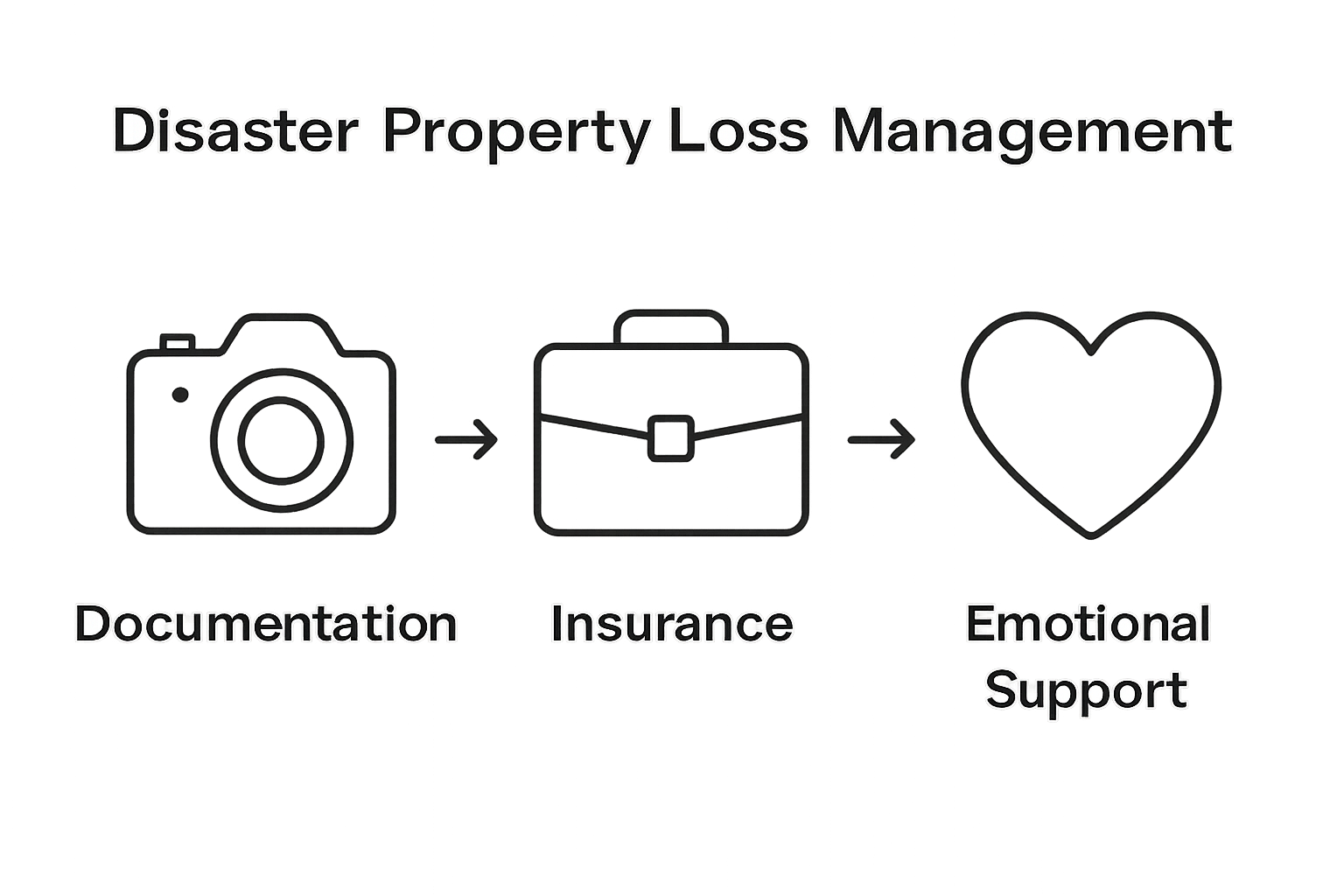
This table outlines the main steps and considerations involved in managing disaster property loss, highlighting actions and their purposes in the recovery process.
| Step or Consideration | Description |
|---|---|
| Documentation | Create photographic evidence and an inventory of all damages |
| Financial Recordkeeping | Collect receipts and records of property values and losses |
| Insurance Process | Understand your policy terms and navigate claims |
| Legal Considerations | Learn about your rights and available government assistance |
| Emotional Support | Access mental health resources to address trauma and stress |
| Strategic Recovery Planning | Develop short- and long-term plans for rebuilding |
| Community Support Engagement | Leverage local services and networks for further assistance |

Regain Stability After Disaster Property Loss
Experiencing disaster property loss means facing overwhelming emotional and financial pressure. This article highlights the critical steps for regaining control, from documenting losses to navigating the recovery process. But without expert guidance, these steps can seem impossible, often leading to uncertainty and further stress. You should not carry this burden alone. Our specialist team at DisasterVictimServices.com is ready to help. We understand the urgency of rebuilding after your world is turned upside down, and we simplify every step from emergency housing to insurance support.
If you need immediate assistance or want to learn how our recovery solutions fit your situation, visit our Uncategorized Recovery Hub to access our latest resources and support. Take your first step to stability right now with DisasterVictimServices.com. We offer round-the-clock support so you can move forward with confidence and compassion.
Frequently Asked Questions
What is disaster property loss?
Disaster property loss refers to the damage or destruction of physical assets due to unexpected events like natural disasters or catastrophic incidents, leading to significant economic and emotional impacts on individuals and communities.
How can I recover from disaster property loss?
Recovering from disaster property loss involves documenting damage, understanding insurance processes, accessing financial assistance programs, and seeking emotional support to navigate the emotional and logistical challenges of rebuilding.
What are the emotional impacts of property loss?
The emotional impacts of property loss can include grief, anxiety about future security, and potential post-traumatic stress. These responses can significantly affect personal and professional identities, requiring comprehensive healing and support.
Why is documentation important after experiencing property loss?
Documentation is crucial for effective recovery as it helps support insurance claims and potential assistance applications. A thorough inventory, photographic evidence of damage, and financial records are essential for reconstructing property value and securing compensation.