

Risk assessment sounds like a complicated checklist for safety teams. But organizations using detailed risk assessments can cut workplace incidents by up to 35 percent. Most people think it is just paperwork, yet it is actually the difference between preventing disaster and just reacting after the fact.
Table of Contents
- What Is Risk Assessment And Why Is It Important?
- The Principles Behind Risk Assessment Guidelines
- Key Components Of Risk Assessment Frameworks
- Real-World Applications Of Risk Assessment Guidelines
- Understanding The Role Of Stakeholders In Risk Assessment
Quick Summary
| Takeaway | Explanation |
|---|---|
| Risk assessment identifies potential hazards. | It systematically pinpoints risks that could affect safety and operations, allowing for timely interventions. |
| Proactive strategies minimize potential harm. | Developing plans before risks materialize protects resources and enhances organizational resilience. |
| Continuous monitoring is essential. | Regular evaluations ensure that risk assessments reflect current conditions and emerging threats effectively. |
| Stakeholder engagement improves assessments. | Involving diverse perspectives leads to more thorough evaluations and better decision-making processes. |
| Effective protocols reduce incidents significantly. | Following structured risk assessment guidelines can decrease workplace incidents by up to 35%, enhancing overall safety. |
What is Risk Assessment and Why is it Important?
Risk assessment is a systematic process designed to identify, evaluate, and mitigate potential hazards that could negatively impact safety, operations, or organizational objectives. At its core, risk assessment serves as a critical preventative strategy enabling individuals and organizations to anticipate challenges before they become dangerous realities.
Understanding the Fundamental Purpose
The primary objective of risk assessment is to create a structured approach to understanding potential threats. This process involves carefully analyzing environments, situations, and scenarios to determine the likelihood and potential severity of various risks. By conducting comprehensive risk assessments, organizations and individuals can develop proactive strategies that minimize potential harm and protect critical resources.
learn more about comprehensive safety strategies can help teams understand the deeper nuances of risk management.
Key characteristics of effective risk assessment include:
- Systematic identification of potential hazards
- Objective evaluation of risk probability and potential impact
- Development of strategic mitigation plans
- Continuous monitoring and reassessment of risk landscapes
The Critical Importance of Risk Assessment
Risk assessment is not merely a bureaucratic exercise but a fundamental component of responsible decision making. According to National Safety Council Research, organizations that implement robust risk assessment protocols can reduce workplace incidents by up to 35%.
Beyond statistical benefits, risk assessment provides multiple strategic advantages. It enables proactive problem solving, helps allocate resources efficiently, ensures regulatory compliance, and fundamentally protects human life and organizational assets. Whether in emergency response, workplace safety, or disaster management, understanding potential risks allows for more intelligent, measured responses to complex challenges.
The Principles Behind Risk Assessment Guidelines
Risk assessment guidelines represent a structured framework designed to systematically analyze and manage potential risks across various domains. These principles serve as foundational protocols that ensure comprehensive, objective, and strategic approaches to identifying and mitigating potential threats.
Core Philosophical Foundations
The underlying philosophy of risk assessment guidelines centers on proactive prevention rather than reactive response. This approach prioritizes anticipation and strategic planning over crisis management. explore detailed risk management strategies can help professionals understand the nuanced approach to systematic risk evaluation.
Fundamental principles that guide effective risk assessment include:
- Comprehensive and systematic analysis
- Objective and evidence based evaluations
- Transparent documentation and reporting
- Continuous monitoring and adaptation
- Stakeholder engagement and collaboration
Scientific and Methodological Framework
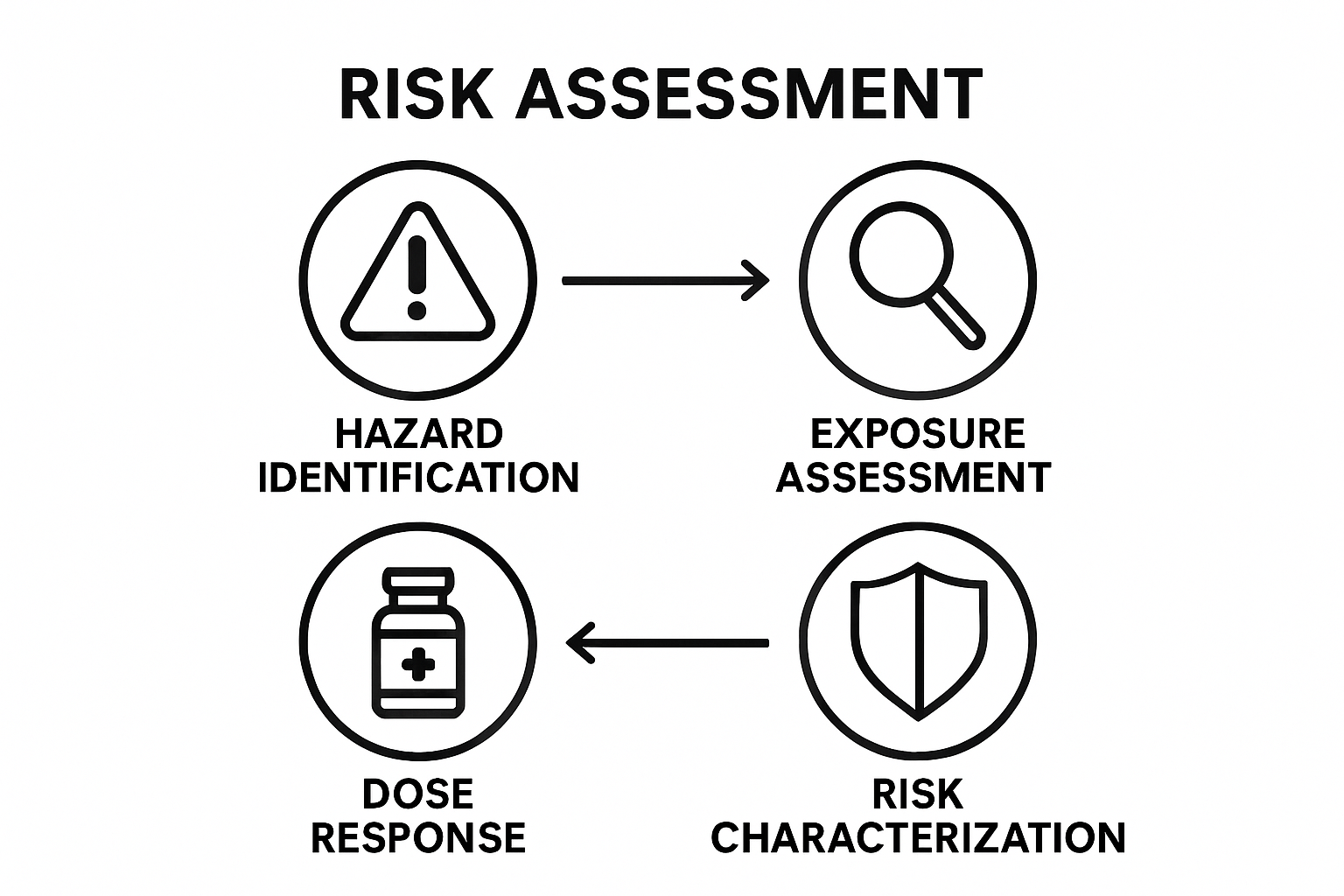
According to National Institute of Occupational Safety and Health, effective risk assessment guidelines are constructed around four critical components:
- Hazard Identification: Recognizing potential sources of harm
- Dose Response Assessment: Understanding the relationship between exposure and potential negative outcomes
- Exposure Assessment: Evaluating the scope and intensity of potential risk factors
- Risk Characterization: Synthesizing data to provide comprehensive risk insights
These scientific principles ensure that risk assessment transcends mere speculation, grounding evaluations in empirical evidence and rigorous methodology. By establishing clear protocols and standardized approaches, organizations can develop more reliable and actionable risk management strategies that protect human lives, organizational assets, and critical infrastructure.
Below is a table summarizing the four key scientific and methodological components that underpin effective risk assessment guidelines, alongside their primary descriptions.
| Component | Description |
|---|---|
| Hazard Identification | Recognizing potential sources of harm |
| Dose Response Assessment | Understanding the relationship between exposure and potential negative outcomes |
| Exposure Assessment | Evaluating the scope and intensity of potential risk factors |
| Risk Characterization | Synthesizing data to provide comprehensive risk insights |
Key Components of Risk Assessment Frameworks
Risk assessment frameworks represent sophisticated, multilayered systems designed to provide comprehensive understanding and management of potential threats. These frameworks function as intricate roadmaps that guide organizations through systematic identification, evaluation, and mitigation of risks across diverse operational environments.
Structural Elements of Risk Assessment
discover comprehensive risk management techniques can help professionals understand the complex interactions within risk assessment frameworks. The structural components are meticulously designed to ensure thorough and strategic risk analysis.
Critical structural elements include:
- Comprehensive data collection mechanisms
- Standardized risk evaluation protocols
- Dynamic risk scoring and prioritization systems
- Adaptable reporting and communication channels
- Integrated feedback and continuous improvement processes
Scientific and Analytical Dimensions
According to Environmental Protection Agency Research, effective risk assessment frameworks are constructed around four fundamental analytical dimensions:
- Hazard Identification: Systematically recognizing potential sources of risk
- Exposure Assessment: Measuring the extent and intensity of potential risk factors
- Dose Response Evaluation: Understanding the relationship between risk exposure and potential consequences
- Risk Characterization: Synthesizing complex data into actionable risk insights
These analytical dimensions transform risk assessment from a theoretical exercise into a practical, data driven approach for protecting organizational and human resources. By integrating scientific rigor with strategic thinking, risk assessment frameworks enable proactive decision making and intelligent risk management strategies.

Real-World Applications of Risk Assessment Guidelines
Risk assessment guidelines serve as critical tools across numerous professional domains, translating theoretical frameworks into practical strategies for managing complex challenges. These guidelines provide structured methodologies that enable organizations to proactively identify, evaluate, and mitigate potential risks across diverse operational contexts.
Sector Specific Risk Management
learn advanced safety assessment strategies offers professionals deeper insights into implementing risk assessment protocols. Different sectors utilize risk assessment guidelines with unique approaches tailored to their specific environmental and operational challenges.
Key sectors leveraging comprehensive risk assessment include:
- Healthcare and medical emergency response
- Industrial manufacturing and workplace safety
- Environmental protection and conservation
- Infrastructure and urban planning
- Emergency management and disaster response
Practical Implementation Strategies
According to National Institute for Occupational Safety and Health, effective risk assessment guidelines demonstrate remarkable versatility through their adaptable implementation strategies. These guidelines transform abstract concepts into actionable protocols that directly protect human lives and organizational resources.
Critical areas where risk assessment guidelines provide tangible benefits include:
- Predictive Safety Modeling: Anticipating potential hazards before they manifest
- Resource Allocation: Strategically directing preventative efforts
- Regulatory Compliance: Ensuring organizational adherence to safety standards
- Continuous Improvement: Creating feedback mechanisms for ongoing risk management
By bridging theoretical knowledge with practical application, risk assessment guidelines enable organizations to develop comprehensive, proactive approaches to identifying and managing potential threats across complex operational landscapes.
Understanding the Role of Stakeholders in Risk Assessment
Stakeholder involvement represents a critical dimension of comprehensive risk assessment, transforming traditional top-down approaches into collaborative, inclusive processes that capture diverse perspectives and experiences. By integrating multiple viewpoints, organizations can develop more nuanced, robust strategies for identifying, evaluating, and mitigating potential risks.
The following table highlights the diverse categories of stakeholders typically engaged in risk assessment and the unique perspectives they contribute to the process.
| Stakeholder Category | Perspective/Contribution |
|---|---|
| Community Representatives | Local concerns and practical insights |
| Technical Experts/Specialists | Subject matter knowledge and technical evaluation |
| Government Regulatory Bodies | Regulatory compliance and policy direction |
| Industry Professionals | Operational practice and industry-specific risks |
| Academic Researchers | Research-based analysis and empirical data |
| Frontline Workers/Practitioners | First-hand experience and actionable feedback |
Stakeholder Engagement Dynamics
explore comprehensive disaster recovery strategies helps professionals understand the intricate interactions between different stakeholder groups. The engagement process goes beyond simple consultation, creating meaningful dialogues that leverage collective knowledge and expertise.
Key stakeholder categories typically involved in risk assessment include:
- Community representatives
- Technical experts and specialists
- Government regulatory bodies
- Industry professionals
- Academic researchers
- Frontline workers and local practitioners
Strategic Participation Frameworks
According to International Risk Governance Council, effective stakeholder involvement requires structured approaches that prioritize communication, consultation, and collaborative decision making. These frameworks aim to create transparent, inclusive processes that capture multiple perspectives and build collective understanding.
Critical objectives of stakeholder participation include:
- Knowledge Integration: Combining diverse expert insights
- Perception Management: Understanding different risk interpretations
- Trust Building: Creating transparent communication channels
- Comprehensive Risk Evaluation: Capturing nuanced organizational challenges
By recognizing stakeholders as active contributors rather than passive recipients, risk assessment transforms from a technical exercise into a dynamic, collaborative process that reflects the complex realities of modern organizational environments.
Move from Risk Assessment to Real Disaster Recovery Solutions
Understanding risk assessment guidelines is the first step in building a safer future, but when disaster strikes, theory alone is not enough. If you are struggling with the uncertainty, stress, or challenges described in the article – like identifying hazards, evaluating risks, or keeping your loved ones safe during chaos – you need more than a checklist. You need hands-on support and real answers, fast.
At Disaster Victim Services, we bridge the gap between risk awareness and practical help. Our team specializes in providing immediate emergency housing, logistics, and expert guidance to keep you protected and ease your recovery journey. With our experience in managing emergencies and collaborating across agencies, you get a trusted partner ready to act on your behalf. Start taking control of your recovery right now. If you want compassionate support and seamless solutions tailored to your unique needs, visit our homepage or explore our most up-to-date resources. The faster you reach out, the sooner you regain safety and peace of mind.
Frequently Asked Questions
What is the purpose of risk assessment guidelines?
Risk assessment guidelines aim to systematically identify, evaluate, and mitigate potential risks to enhance safety and protect organizational objectives.
How can risk assessment help in workplace safety?
Risk assessment can reduce workplace incidents by identifying hazards, allowing for proactive solutions, resource allocation, and ensuring regulatory compliance.
What are the key components of a risk assessment framework?
Key components include comprehensive data collection, standardized risk evaluation protocols, risk scoring systems, and continuous improvement processes.
Why is stakeholder involvement important in risk assessment?
Stakeholder involvement enriches the risk assessment process by integrating diverse perspectives, enhancing knowledge, and building trust for more effective risk management.