

Every year, natural disasters and sudden emergencies force millions of people out of their homes, leaving families scrambling for a safe place to stay. Most people assume that housing reimbursement just means getting your rent money back, no questions asked. But in reality, the process is packed with rules and involves a mountain of paperwork and eligibility checks—proof of original housing, documentation of every expense, and even tax implications are all in play. What most people miss is that this lifeline does a lot more than cover costs. It can be the difference between a fast recovery and months of uncertainty.
Table of Contents
- What Is The Housing Reimbursement Process?
- Why Housing Reimbursement Matters For Displaced Families
- How The Housing Reimbursement Process Works
- Key Concepts In Housing Reimbursement
- Real-World Context: Examples Of Housing Reimbursement Applications
Quick Summary
| Takeaway | Explanation |
|---|---|
| Housing reimbursement supports displaced families. | This process helps families regain financial stability after unexpected housing displacement caused by disasters or emergencies. |
| Documentation is critical for claims. | Claimants must provide extensive proof of displacement and related expenses to validate their claims for reimbursement. |
| Emotional stability is a key benefit. | Housing reimbursement not only offers financial aid but also helps reduce stress and anxiety during times of upheaval. |
| Understanding eligible expenses is vital. | Familiarity with what costs can be reimbursed aids individuals in maximizing their recovery benefits when displaced. |
| Collaboration among agencies is essential. | Government, insurance carriers, and relief organizations work together to ensure claims are evaluated and processed efficiently. |
What is the Housing Reimbursement Process?
The housing reimbursement process is a critical support mechanism designed to help individuals and families recover financial expenses related to temporary or permanent housing displacement after unexpected events like natural disasters, emergencies, or significant life disruptions. This complex system involves multiple stakeholders working together to provide financial relief and housing stability.
Understanding the Core Purpose
At its fundamental level, the housing reimbursement process serves as a financial safety net for people who have been forced to relocate due to circumstances beyond their control. According to UCLA’s relocation procedures, the primary goal is to minimize out-of-pocket expenses and provide a structured pathway for recovering housing related costs.
Key objectives of the housing reimbursement process include:
- Providing immediate financial support for emergency housing needs
- Reducing financial strain during challenging transitional periods
- Ensuring displaced individuals can secure safe, temporary accommodations
- Facilitating a structured approach to documenting and recovering housing expenses
How the Process Typically Functions
The housing reimbursement process typically involves several interconnected components that work together to support displaced individuals. Insurance carriers, government agencies, and relief organizations collaborate to assess individual needs, verify displacement circumstances, and determine appropriate financial assistance.
The process generally requires comprehensive documentation, including proof of displacement, original housing expenses, temporary housing costs, and relevant supporting evidence. Claimants must navigate a structured system that evaluates their specific situation, verifies eligibility, and determines the extent of potential reimbursement.
Learn more about our comprehensive rehousing support, which provides detailed insights into navigating these complex housing recovery procedures. Understanding these processes can significantly reduce stress and uncertainty during challenging times of unexpected displacement.
Why Housing Reimbursement Matters for Displaced Families
Housing reimbursement represents far more than a financial transaction. It is a critical lifeline that provides stability, security, and hope for families facing unexpected displacement. The profound impact of this support extends well beyond immediate monetary relief, touching fundamental aspects of human survival and psychological well-being.
Psychological and Emotional Recovery
Research from the National Institutes of Health highlights the significant mental health challenges faced by displaced families. Unexpected relocation triggers intense stress, anxiety, and potential long-term psychological trauma. Housing reimbursement serves as more than financial assistance it becomes a mechanism for emotional stabilization.
Key psychological benefits include:
- Reducing uncertainty and providing a sense of immediate security
- Minimizing the emotional strain of financial unpredictability
- Supporting families in maintaining a sense of normalcy during disruption
- Creating a pathway toward psychological recovery and resilience
Essential Financial Protection
For many families, housing reimbursement represents the difference between temporary setback and potential long-term economic devastation. Unexpected displacement can quickly drain savings, disrupt employment, and create cascading financial challenges that extend far beyond housing.
Critical financial protections provided through housing reimbursement include:
- Preventing complete economic collapse during crisis periods
- Maintaining families financial stability and credit standing
- Enabling rapid relocation without significant personal financial burden
- Supporting continued employment and income generation
Explore our comprehensive safe housing placement guide to understand how strategic support can transform a family’s recovery journey. Housing reimbursement is not just about monetary compensation it represents a holistic approach to supporting families during their most vulnerable moments, ensuring they can rebuild, recover, and restore their lives with dignity and hope.
How the Housing Reimbursement Process Works
The housing reimbursement process operates as a systematic approach to financial recovery, involving multiple interconnected stages designed to support displaced individuals and families. This intricate mechanism ensures comprehensive evaluation, verification, and financial assistance during challenging transitional periods.
Initial Assessment and Documentation
The process begins with a thorough initial assessment where claimants must compile extensive documentation demonstrating their displacement circumstances. Critical documentation requirements typically include:
- Proof of original housing location and displacement event
- Official documentation verifying the cause of relocation
- Detailed financial records of housing expenses
- Evidence of temporary and alternative housing costs
- Personal identification and residency verification
Each piece of documentation serves as essential evidence supporting the reimbursement claim, providing a comprehensive narrative of the individual or family’s displacement experience.
Verification and Eligibility Determination
After initial documentation submission, specialized agencies conduct a comprehensive review to evaluate claim validity. Insurance carriers, government agencies, and relief organizations collaborate to assess the specific circumstances, verifying the legitimacy of the displacement and determining appropriate financial support levels.
Key evaluation criteria include:
- Extent and nature of displacement
- Financial impact on the affected family
- Compliance with specific program guidelines
- Potential risk factors and unique situational considerations
Explore our detailed rehousing process guide to understand the nuanced approach to claim assessment and support. The verification stage represents a critical checkpoint ensuring that financial assistance reaches those most in need while maintaining program integrity and preventing potential misuse.

Key Concepts in Housing Reimbursement
Housing reimbursement involves complex financial and administrative principles that go far beyond simple monetary transactions. Understanding these foundational concepts helps displaced individuals navigate the intricate landscape of recovery support more effectively and strategically.
Defining Eligible Expenses
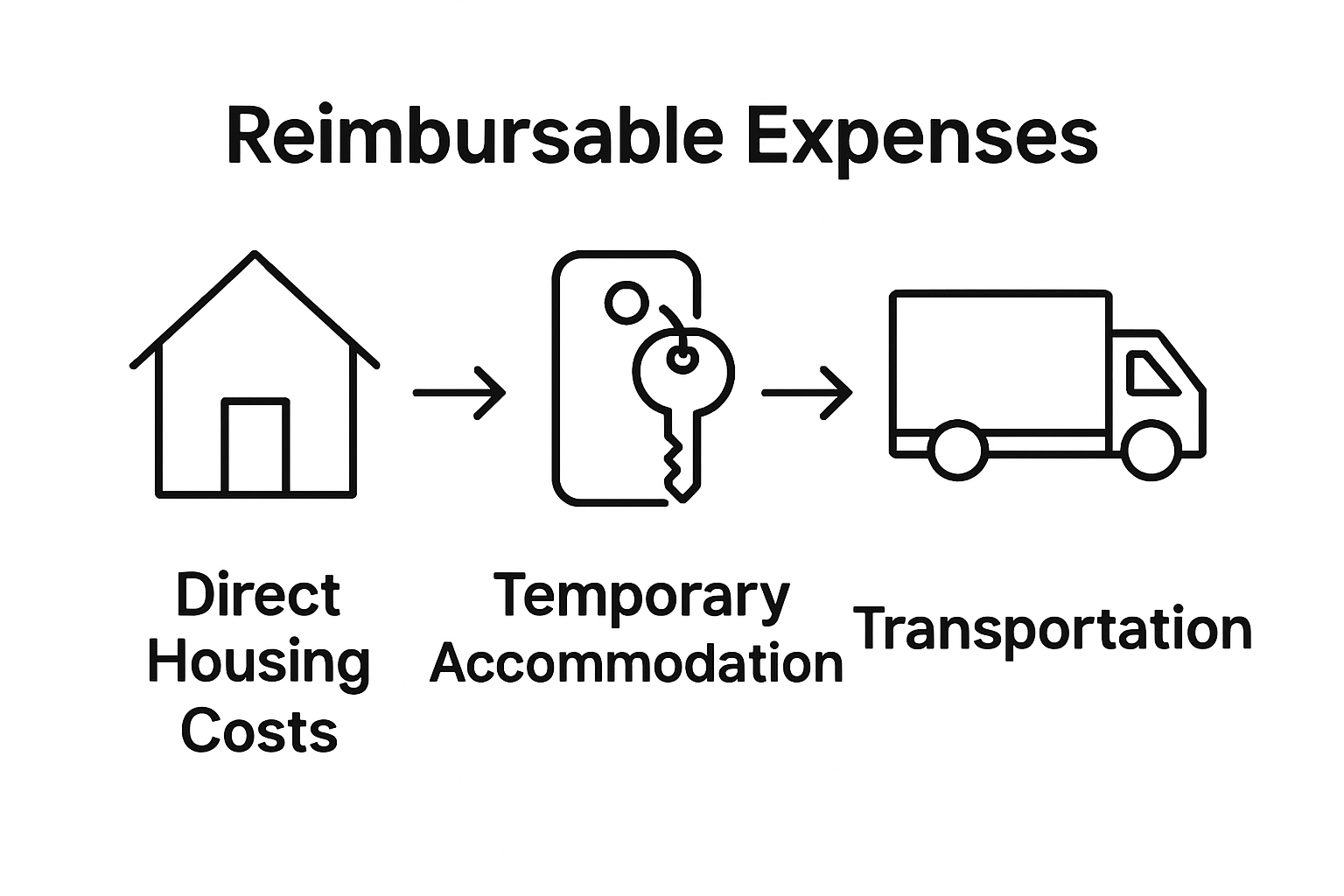
The scope of reimbursable expenses represents a critical concept in housing displacement support. Eligible expenses are not uniform across all programs but typically encompass a range of direct and indirect costs associated with unexpected relocation.
Key categories of reimbursable expenses generally include:
Below is a table summarizing the key categories of eligible expenses commonly mentioned in housing reimbursement processes, helping claimants identify what may be covered during displacement.
| Category | Description |
|---|---|
| Direct housing replacement costs | Expenses for securing safe, new or temporary housing |
| Temporary accommodation expenses | Fees for hotels or short-term rentals during displacement |
| Transportation and moving-related costs | Costs for relocating belongings and travel to new accommodations |
| Essential personal property replacement | Reimbursement for replacing essential household items |
| Utility reconnection and transfer fees | Charges for setting up or transferring utilities at new location |
- Direct housing replacement costs
- Temporary accommodation expenses
- Transportation and moving-related expenditures
- Essential personal property replacement
- Utility reconnection and transfer fees
According to UCLA’s Travel Services guidelines, certain expenses are considered taxable income, highlighting the nuanced nature of financial recovery support. This underscores the importance of understanding precise definitions and limitations within reimbursement frameworks.
Legal and Administrative Framework
Housing reimbursement operates within a structured legal and administrative environment designed to ensure fair, transparent, and accountable support. Critical administrative principles include:
- Standardized documentation requirements
- Clear eligibility verification processes
- Transparent claims assessment mechanisms
- Equitable distribution of available resources
- Protection against fraudulent claims
Learn more about navigating housing assistance programs to understand the comprehensive support available during challenging displacement scenarios. The intricate balance between compassionate assistance and procedural integrity ensures that housing reimbursement remains a reliable lifeline for those facing unexpected housing disruptions.
Real-World Context: Examples of Housing Reimbursement Applications
Housing reimbursement manifests across diverse scenarios, demonstrating its critical role in supporting individuals during unexpected life transitions. These real-world applications reveal the adaptable nature of financial recovery mechanisms designed to provide stability during challenging circumstances.
Disaster and Emergency Displacement
Natural disasters represent one of the most urgent contexts for housing reimbursement. Hurricanes, wildfires, floods, and other catastrophic events can render entire communities uninhabitable, necessitating comprehensive relocation support.
Typical scenarios include:
- Complete home destruction requiring total relocation
- Temporary displacement during reconstruction periods
- Emergency housing for families in high-risk geographic zones
- Comprehensive support for infrastructure-wide recovery efforts
According to UCLA’s relocation guidelines, understanding the nuanced tax implications of various reimbursement strategies remains crucial. Different displacement scenarios require tailored financial approaches to minimize individual financial burden.
Professional and Institutional Relocation
Employment-related housing reimbursement represents another significant application, particularly for professionals required to move for career advancement or organizational needs. Institutional relocation support encompasses multiple dimensions of financial assistance:
- Corporate recruitment and retention strategies
- Academic and research institution staff transfers
- Government agency personnel reassignments
- Military and public service personnel relocations
Explore our comprehensive emergency housing workflow to understand the intricate mechanisms supporting individuals through complex transition periods. These real-world applications demonstrate that housing reimbursement extends far beyond simple monetary transactions, representing a critical social support system designed to provide stability during life’s most challenging moments.
This table compares two major real-world applications of housing reimbursement, outlining their distinct contexts and unique features.
| Application Context | Typical Situations | Distinct Features |
|---|---|---|
| Disaster and Emergency Displacement | Natural disasters like hurricanes, wildfires, or floods | Urgent, large-scale relocation; emphasis on community-wide support |
| Professional and Institutional Relocation | Employment-required or organizational moves | Structured assistance for staff; focuses on recruitment and retention |
Let Us Simplify Your Housing Reimbursement and Recovery
Navigating the housing reimbursement process can be overwhelming, especially when you are also struggling with the emotional and financial impact of sudden displacement. Uncertainty about documentation, eligibility, and where to turn next is common for families facing the aftermath of disasters. You want support that not only explains the steps but actively guides you from assessment through stable rehousing while reducing stress every step of the way.
If you are searching for clear answers and real help, DisasterVictimServices.com is ready to step in. Our experienced team specializes in emergency housing placement and insurance claim support, working day and night with families, insurance carriers, and recovery professionals. Get detailed guidance with our safe housing placement guide or learn the full rehousing process to accelerate your path from crisis to security. Do not wait—get the compassionate, knowledgeable assistance you need right now from the nationwide leader in disaster recovery.
Frequently Asked Questions
What is the purpose of the housing reimbursement process?
The housing reimbursement process serves as a financial safety net for individuals and families who have been displaced from their homes due to unforeseen events, helping to minimize out-of-pocket expenses associated with temporary or permanent relocation.
What types of expenses are eligible for reimbursement in the housing process?
Eligible expenses typically include direct housing replacement costs, temporary accommodation fees, transportation and moving-related costs, essential personal property replacements, and utility reconnection fees, although specifics can vary by program.
How can I document my displacement for the housing reimbursement claim?
To document your displacement, gather proof of your original housing location, official documentation verifying the cause of your relocation, detailed financial records of housing expenses, evidence of alternative housing costs, and personal identification.
What criteria are used to determine eligibility for housing reimbursement?
Eligibility is determined through a comprehensive review of documentation, assessing the extent of the displacement, its financial impact on the affected family, compliance with program guidelines, and any potential unique situational considerations.