
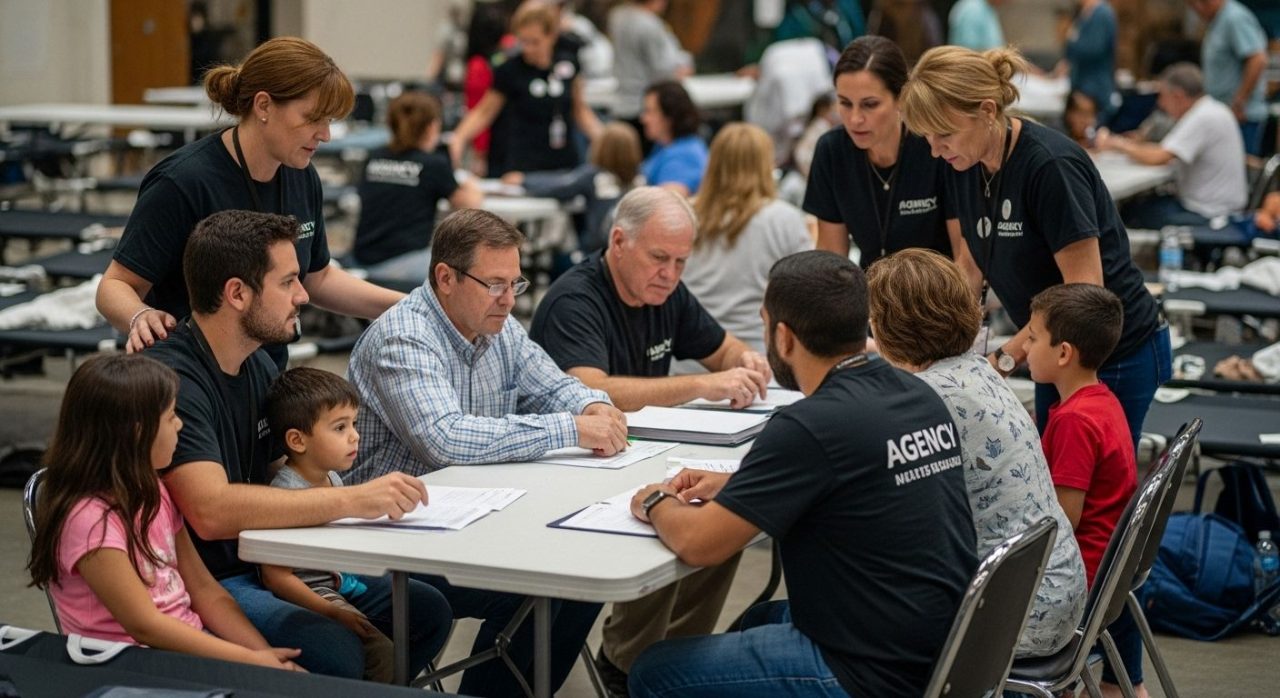
Disaster can strike when you least expect it, leaving families scrambling to find safe shelter and stability. Shocking as it sounds, more than 1.6 million Americans applied for FEMA housing assistance in 2023 alone after major disasters. Most people assume the biggest challenge is simply finding a roof overhead. The surprise comes when you realize that the real struggle is navigating the maze of paperwork, coordination, and agency requirements needed to secure lasting housing—and this is where most recoveries get stalled before they even start.
Table of Contents
- Understanding The Housing Placement Process Steps
- Who Is Eligible And Required Documents
- Tips For Faster And Successful Placement
- Roles Of Agencies And Relief Partners
Quick Summary
| Takeaway | Explanation |
|---|---|
| Conduct a detailed needs assessment. | Gather critical information on family size, medical needs, and employment status for effective support. |
| Understand eligibility criteria for assistance. | Ensure applicants are aware of requirements such as primary residence damage and legal residency status. |
| Prepare essential documentation in advance. | Compile identification, insurance info, and proof of residence to expedite the application process. |
| Engage proactively with support networks. | Utilize community resources and maintain communication with relief agencies to enhance recovery efforts. |
| Coordinate with multiple agencies for support. | Collaboration among federal, state, and nonprofit organizations provides comprehensive assistance for disaster victims. |
Understanding the Housing Placement Process Steps
Disaster recovery begins with a strategic and compassionate housing placement process that addresses the immediate and long-term needs of displaced individuals and families. The journey from crisis to stable housing involves multiple critical steps designed to provide swift, effective support during challenging times.
Initial Assessment and Needs Evaluation
The housing placement process starts with a comprehensive needs assessment that goes far beyond simple shelter allocation. FEMA’s official guidance emphasizes the importance of understanding each disaster victim’s unique circumstances. Relief professionals conduct detailed evaluations that consider family size, medical requirements, employment status, and existing support networks.
This initial assessment involves gathering critical information through structured interviews and documentation review. Professionals examine factors such as:
- Family Composition: Number of family members, ages, and special needs
- Medical Considerations: Any health conditions requiring specific housing accommodations
- Economic Situation: Current employment status and income levels
- Previous Housing: Characteristics of lost residence and potential rebuilding options
Temporary to Permanent Housing Transition
Transitioning from emergency temporary housing to a permanent solution requires careful planning and coordination. The Administration for Children and Families highlights the critical nature of establishing stable housing as a fundamental component of disaster recovery. This process involves multiple stakeholders working together to create a comprehensive housing placement strategy.
Key steps in this transition include:
- Identifying available temporary housing options
- Assessing potential long-term housing solutions
- Coordinating with insurance providers and local agencies
- Developing a personalized housing recovery timeline
The following process table outlines the key steps in the transition from temporary to permanent housing after a disaster, helping readers understand the sequence and focus at each stage.
| Step # | Action Step | Description |
|---|---|---|
| 1 | Identify temporary housing options | Review available temporary shelters or short-term rentals |
| 2 | Assess long-term housing solutions | Explore permanent housing and rebuilding opportunities |
| 3 | Coordinate with insurance/local agencies | Work with insurance companies and local organizations |
| 4 | Develop a housing recovery timeline | Create a personalized plan and schedule for recovery |
Comprehensive Support and Resource Coordination
Successful housing placement extends beyond finding a physical space. It requires a holistic approach that addresses the emotional and practical challenges faced by disaster victims. Professionals work to connect individuals with financial assistance, repair resources, and community support networks.
Discover our comprehensive guide on safe housing placement to understand how we streamline this complex process. Our team ensures that every step is handled with precision, compassion, and a commitment to helping families rebuild their lives after experiencing a disaster.
The housing placement process is not just about finding a roof overhead. It is about restoring hope, providing stability, and supporting individuals through one of the most challenging experiences of their lives. By following a structured, empathetic approach, relief organizations can make a significant difference in helping disaster victims navigate their path to recovery.
Who Is Eligible and Required Documents
Navigating the housing placement process requires understanding specific eligibility criteria and preparing the necessary documentation. Disaster relief programs have structured guidelines to ensure assistance reaches those most in need while maintaining accountability and transparency.
Eligibility Criteria for Housing Assistance
FEMA’s housing assistance program establishes clear requirements for individuals seeking disaster housing support. Eligibility fundamentally depends on several key factors. Applicants must be U.S. citizens, non-citizen nationals, or qualified aliens whose primary residence has been rendered uninhabitable by a presidentially declared disaster.
Critical eligibility considerations include:
- Primary Residence Damage: The damaged property must be the applicant’s primary living space
- Disaster Related Impact: Damage must be directly caused by the declared disaster
- Unmet Housing Needs: Insufficient insurance or personal resources to restore housing
- Legal Residency Status: Specific documentation proving citizenship or qualified alien status
Essential Documentation Requirements
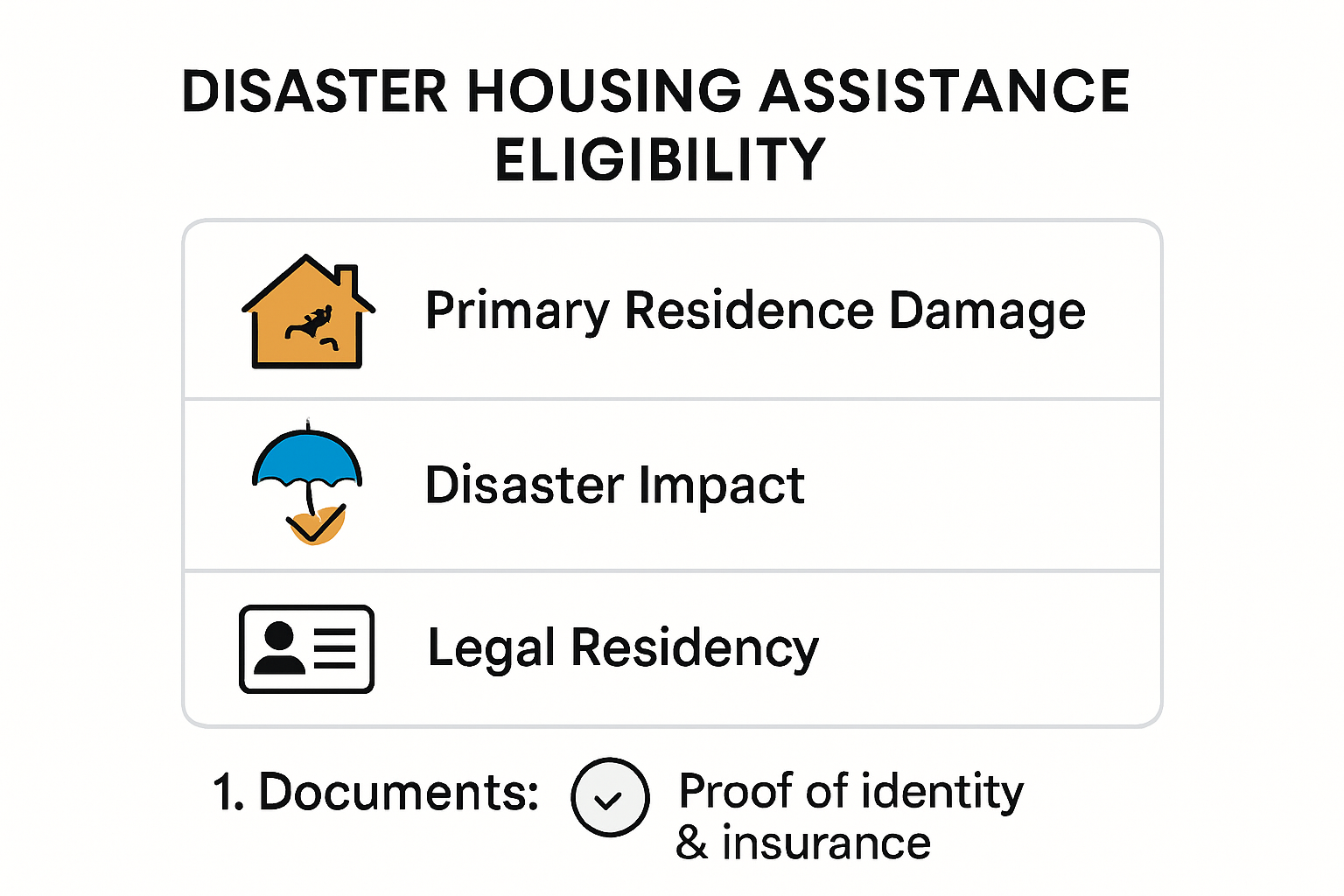
Detailed documentation plays a crucial role in the housing placement process. Applicants must compile a comprehensive package of identification and residency verification documents. These materials help relief organizations accurately assess individual needs and process assistance requests.
Required documentation typically includes:
- Government-issued photo identification
- Social Security number verification
- Proof of property ownership or occupancy
- Insurance settlement documentation
- Utility bills demonstrating residence
- Income verification records
To help readers quickly reference what documentation they need, this checklist table summarizes the essential documents required for disaster housing assistance as described in the article.
| Document Type | Required? |
|---|---|
| Government-issued photo ID | Yes |
| Social Security number | Yes |
| Proof of property ownership/occupancy | Yes |
| Insurance settlement documentation | Yes |
| Utility bills (proof of residence) | Yes |
| Income verification records | Yes |
Verification and Application Process
The verification process goes beyond simple document collection. Relief professionals conduct thorough assessments to validate applicant information and determine appropriate housing assistance. Learn more about our housing placement workflow to understand how we meticulously review and process applications.
Applicants should prepare for a comprehensive review that may include:
- Personal interviews with housing specialists
- Cross-referencing submitted documentation
- Potential site inspections of damaged property
- Verification of financial resources and insurance claims
Understanding and preparing the right documentation can significantly streamline the housing placement process. By gathering required materials in advance and maintaining accurate records, disaster victims can expedite their path to temporary and permanent housing solutions. Our team is committed to guiding individuals through this complex process with compassion and efficiency.
Tips for Faster and Successful Placement
Accelerating the housing placement process requires strategic preparation, proactive communication, and understanding key strategies that can significantly reduce recovery time. Disaster victims can dramatically improve their chances of faster housing placement by implementing targeted approaches and working closely with relief professionals.
Proactive Documentation and Information Preparation
Research from the Government Accountability Office highlights the critical importance of streamlining eligibility documentation and maintaining organized records. Successful applicants should create a comprehensive disaster recovery folder containing all essential documents prepared in advance.
Essential preparation steps include:
- Digital and Physical Backups: Scan and store copies of critical documents in multiple secure locations
- Insurance Documentation: Compile complete insurance policy details and claim correspondence
- Personal Identification: Gather government-issued identification for all family members
- Contact Information: Maintain updated contact details for insurance providers, employers, and emergency contacts
Strategic Communication and Engagement
Effective communication can dramatically accelerate the housing placement process. Disaster victims must proactively engage with relief organizations, insurance providers, and local agencies to ensure swift information exchange and minimize potential delays.
Key communication strategies involve:
- Responding promptly to all requests for additional information
- Maintaining clear, concise, and honest communication
- Documenting all interactions and communication attempts
- Following up regularly on application status
Leveraging Support Networks and Resources
Navigating housing placement is not a solitary journey. Explore our comprehensive housing placement support guide to understand how connecting with support networks can expedite recovery. Successful applicants often leverage multiple resources simultaneously, including:
- Local community support groups
- Religious and nonprofit organizations
- Government disaster relief programs
- Professional disaster recovery networks
By combining strategic preparation, proactive communication, and comprehensive resource utilization, disaster victims can significantly reduce housing placement timelines. Our team remains committed to providing compassionate, efficient guidance throughout this challenging process. Understanding that each disaster scenario presents unique challenges, we customize our approach to meet individual needs and support families in their journey toward stable housing and recovery.
Roles of Agencies and Relief Partners
Disaster housing recovery is a complex ecosystem requiring synchronized efforts from multiple agencies and organizations. Congressional Research Service analysis reveals the intricate collaborative framework that ensures comprehensive support for disaster victims during their housing placement journey.
Federal Agency Coordination
Federal agencies play pivotal roles in disaster housing assistance, each bringing specialized expertise to the recovery process. The Federal Emergency Management Agency (FEMA) serves as the primary coordinator, providing critical leadership and funding. Other key federal partners include the Department of Housing and Urban Development (HUD), which supports long-term housing solutions, and the Department of Health and Human Services (HHS), which addresses survivors’ health and social service needs.
Primary federal agency responsibilities encompass:
- FEMA: Initial emergency housing and financial assistance
- HUD: Long-term housing reconstruction and rental assistance
- HHS: Medical and social support services
- Small Business Administration: Low-interest disaster recovery loans
State and Local Government Engagement
State emergency management agencies and local governments form the critical ground-level support network. These entities understand local community dynamics and can provide targeted, contextually appropriate housing placement strategies. They work closely with federal agencies to assess damage, identify housing resources, and coordinate immediate and long-term recovery efforts.
Key local government functions include:
- Damage assessment and reporting
- Local resource coordination
- Community-specific housing solutions
- Implementing recovery infrastructure
Nonprofit and Voluntary Organization Contributions
Learn more about our collaborative disaster response strategies to understand the vital role of nonprofit organizations. Voluntary organizations like the American Red Cross, Salvation Army, and local faith-based groups provide crucial supplementary support, offering immediate shelter, emotional support, and connection to broader recovery resources.
Nonprofit organizations contribute through:
- Emergency shelter provision
- Emotional and psychological support
- Resource navigation assistance
- Community-based recovery programs
Successful housing placement requires seamless collaboration among these diverse stakeholders. Each agency and partner brings unique capabilities, working together to create a comprehensive safety net for disaster victims. By maintaining clear communication, sharing resources, and maintaining a survivor-centered approach, these organizations transform the challenging journey of housing recovery into a pathway of hope and resilience.
Our team understands that behind every housing placement statistic is a human story of recovery. We remain committed to supporting survivors through this complex process, ensuring that no individual is left behind during their most vulnerable moments.
Frequently Asked Questions
What is the first step in the housing placement process after a disaster?
The housing placement process begins with a comprehensive needs assessment that evaluates family size, medical needs, employment status, and existing support networks to ensure effective support.
What documentation is required to apply for disaster housing assistance?
Applicants typically need to provide a government-issued photo ID, Social Security number, proof of property ownership or occupancy, insurance settlement documentation, utility bills as proof of residence, and income verification records.
How can I expedite the housing placement process after a disaster?
To expedite the process, maintain organized records of essential documents, engage proactively with relief organizations, communicate clearly and promptly, and leverage community support networks to facilitate assistance and resources.
Who is responsible for coordinating housing assistance during a disaster?
The Federal Emergency Management Agency (FEMA) primarily coordinates housing assistance, working alongside other federal, state, and local government agencies as well as nonprofit organizations to provide comprehensive disaster support.
Ready to Simplify Your Disaster Housing Search?
So many disaster survivors find that the biggest challenge is not finding shelter but navigating a complicated process packed with eligibility rules, essential documents, and multi-agency requirements. As described in our Housing Placement Process Guide, you may feel overwhelmed by paperwork, confused by insurance questions, or worried about where to turn for trustworthy guidance. That hesitation can slow down recovery for you and your family. When you need fast answers and seamless support, trust matters most.
Our experts at DisasterVictimServices.com bring clarity and compassion to every case. We work side by side with you to gather your documentation, communicate with key agencies, and cut through the barriers that delay your transition from temporary to permanent housing. Explore more recovery solutions and real stories on our Disaster Victim Services category page. If you or your loved ones are struggling to secure housing after a disaster, visit DisasterVictimServices.com now for expert help. Your safe, stable home is our mission—connect with us today to begin your personalized recovery.
Recommended
- Safe Housing Placement Steps for Disaster Response 2025 – Disaster Victim Services | Helping You Recover After Disaster
- Housing Placement Workflow Guide 2025: Steps for Disaster Recovery – Disaster Victim Services | Helping You Recover After Disaster
- Direct Housing Process Guide 2025: Steps, Eligibility & Tips – Disaster Victim Services | Helping You Recover After Disaster
- Rehousing Process Steps: A Complete Guide for 2025 – Disaster Victim Services | Helping You Recover After Disaster