

Family reunification in 2025 carries challenges most people never imagine. Consider this: some states report child welfare reunification success rates as low as 40 percent, depending on local policies and funding. That sounds discouraging, right? Yet, the path to reconnecting loved ones is becoming more hopeful than ever, thanks to new support systems, digital tools, and a deeper focus on psychological healing.
Table of Contents
- Understanding Family Reunification Needs
- Step-By-Step Process For Reuniting Families
- Key Resources And Support Services
- Tips For A Successful Reunification Effort
Quick Summary
| Takeaway | Explanation |
|---|---|
| Prioritize emotional and psychological support | Addressing emotional trauma is essential for families reuniting successfully. Mental health resources are critical throughout the process. |
| Utilize structured legal procedures | Familiarize yourself with legal requirements, such as I-730 processes, to ensure proper documentation for reunification. |
| Implement comprehensive support systems | Holistic support includes housing, healthcare, and educational assistance for families to stabilize after reunification. |
| Establish clear communication strategies | Open, compassionate communication fosters trust and helps family members express their thoughts and concerns effectively. |
| Adapt technology to streamline connections | Use digital tools for tracking, communication, and accessing resources, making the reunification process more efficient and supportive. |
Understanding Family Reunification Needs
Family reunification represents a critical process of reconnecting displaced families after traumatic separation, requiring a comprehensive and compassionate approach that addresses complex emotional and logistical challenges. In 2025, understanding the nuanced needs of families becomes more important than ever as disaster and displacement scenarios continue to evolve.
Psychological and Emotional Dimensions of Reunification
Reuniting families involves far more than physical proximity. Research from child welfare experts reveals that successful reunification depends on addressing multiple psychological factors. Children and parents who have experienced separation carry significant emotional trauma that cannot be overlooked. The reunification process must prioritize mental health support, creating safe environments where family members can rebuild trust and emotional connections.
Trauma-informed approaches recognize that each family member experiences displacement differently. Parents might struggle with feelings of guilt or inadequacy, while children may experience anxiety, attachment issues, or behavioral challenges. Professional counseling, support groups, and targeted therapeutic interventions become essential components of a holistic reunification strategy.
To summarize the key psychological challenges and solutions discussed in this section, the following table outlines emotional issues commonly faced by family members and corresponding supports recommended.
| Family Member | Common Psychological Challenges | Essential Supports |
|---|---|---|
| Parents | Guilt, inadequacy, stress | Counseling, support groups, therapy |
| Children | Anxiety, attachment issues, behavior | Trauma-informed care, therapy, mentoring |
| All Members | Trust rebuilding, communication gaps | Safe environments, guided workshops |
Systemic Challenges in Family Reunification
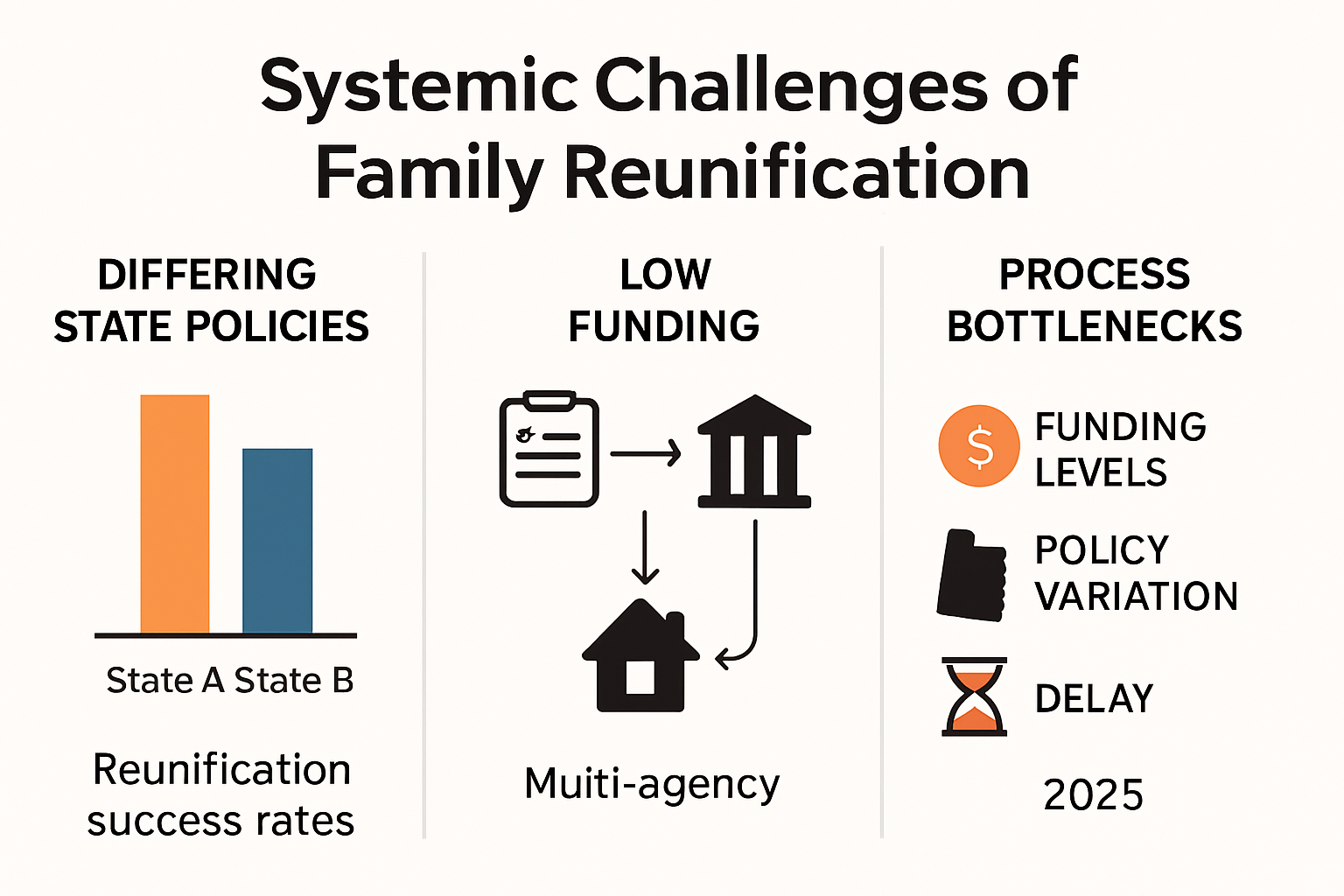
Navigating the complex landscape of family reunification requires understanding significant systemic barriers. A 2023 study in Child Abuse & Neglect highlighted how administrative structures and policy variations dramatically impact reunification outcomes. State-level differences in child welfare policies, budget allocations, and caseworker training can create substantial disparities in family reunification success rates.
Government agencies, nonprofits, and disaster response organizations must collaborate to develop standardized protocols that streamline reunification processes. This involves creating robust communication networks, implementing consistent assessment frameworks, and ensuring that families receive coordinated support across different jurisdictions.
Practical Strategies for Effective Reunification
Successful family reunification demands a multifaceted approach that balances emotional support with practical logistics. Key strategies include comprehensive initial assessments, personalized reunification plans, and ongoing support mechanisms. Families need access to resources such as temporary housing, medical care, legal assistance, and educational support.
Technology can play a crucial role in facilitating reunification. Digital tracking systems, secure communication platforms, and centralized databases can help connect separated family members more efficiently. Learn more about our comprehensive reunification protocols to understand how advanced technological solutions are transforming family reunification efforts.
Ultimately, family reunification is not just a procedural process but a deeply human journey of healing, resilience, and hope. By recognizing the complex emotional and systemic challenges, we can develop more compassionate, effective strategies that truly support families in their most vulnerable moments.
Step-by-Step Process for Reuniting Families
Reuniting families requires a structured and compassionate approach that carefully navigates complex administrative and emotional challenges. The process demands meticulous planning, strategic documentation, and comprehensive support systems to ensure successful reconnection.
To clarify the multi-stage approach to family reunification described below, here is a step-by-step summary of the main phases and their key actions.
| Step | Main Actions |
|---|---|
| Initial Registration & Identification | Intake forms, demographic details, ID proofs, document verification, biometrics |
| Legal & Administrative Procedures | I-730 processing, eligibility checks, legal filings, documentation, parole protocols |
| Comprehensive Support & Transition | Housing, medical screening, mental health, education, case management, technology support |
Initial Registration and Identification
The first critical step in family reunification involves precise identification and registration of separated family members. According to the U.S. Department of Homeland Security’s Family Reunification Task Force, families must complete comprehensive intake forms that capture essential demographic information, last known locations, and specific circumstances of separation.
Registration typically involves multiple verification steps. Families must provide detailed documentation including government-issued identification, proof of familial relationships, and any available communication records from the period of separation. Biometric data collection may also be required to ensure accurate matching and prevent potential fraudulent claims.
Legal and Administrative Procedures
Navigating the legal framework of family reunification demands careful attention to specific procedural requirements. The United Nations High Commissioner for Refugees (UNHCR) highlights the critical I-730 process for refugees and asylees seeking to reunite with immediate family members. This process involves strict eligibility criteria, including filing within two years of initial admission and providing comprehensive documentation of familial relationships.
Additionally, recent Department of Homeland Security guidelines have introduced specialized family reunification parole processes for nationals from specific countries. These new protocols create structured pathways for families to legally reconnect, offering more streamlined approaches to reunion.
Comprehensive Support and Transition
Successful family reunification extends far beyond legal and administrative procedures. A holistic approach requires comprehensive support systems that address immediate and long-term needs. This includes providing temporary housing, medical screenings, mental health resources, and educational support for reunited family members.
Case managers and social workers play a crucial role in coordinating these support services. Learn more about our comprehensive reunification protocols to understand the intricate support mechanisms designed to help families rebuild their lives.
Technology increasingly supports these reunification efforts. Digital platforms enable real-time tracking, secure communication, and efficient documentation management. Translation services, remote counseling, and virtual family connection tools have become integral components of modern reunification strategies.
Ultimately, each family reunification journey is unique. While standardized processes provide essential frameworks, compassionate and individualized approaches remain paramount. The goal transcends mere physical reunification—it aims to restore hope, rebuild trust, and support families in healing from the trauma of separation.
Key Resources and Support Services
Family reunification requires a comprehensive network of resources and support services that address the multifaceted needs of displaced families. In 2025, innovative approaches and targeted interventions have become crucial in helping families navigate the complex journey of reconnection and recovery.
Comprehensive Family Support Programs
The Illinois Department of Children and Family Services provides a model for comprehensive family support that goes beyond basic reunification. Their approach includes crisis intervention, counseling, home-based services, and parenting training designed to strengthen family units and prevent future separations. These programs recognize that successful reunification requires more than physical reconnection—it demands holistic support that addresses underlying challenges.
Support services typically encompass multiple critical areas. Financial assistance helps families stabilize their living situations, while educational resources provide pathways for children to catch up on missed schooling. Mental health counseling becomes essential, offering trauma-informed care that helps family members process their experiences and rebuild emotional connections.
Government and Nonprofit Reunification Resources
The U.S. Department of Homeland Security’s Family Reunification Task Force demonstrates the critical role of coordinated government support. Their comprehensive approach includes targeted services such as transportation assistance, healthcare support, legal services, and career development resources. These multifaceted support mechanisms ensure that reunited families have the tools necessary to rebuild their lives.
Nonprofit organizations play an equally crucial role in supporting family reunification. These organizations often provide specialized services that government agencies cannot, including language translation, cultural mediation, and community-based support networks. They bridge gaps in existing support systems, offering personalized assistance that recognizes the unique challenges faced by each family.
Technology-Enabled Support Solutions
Technology has revolutionized family reunification support services in 2025. Digital platforms now offer comprehensive resources that connect families with critical support networks. Learn more about our integrated support solutions to understand how technology is transforming family recovery efforts.
Telecounseling services provide immediate mental health support, allowing families to access professional guidance regardless of their physical location. Online educational platforms help children continue their studies during displacement, while virtual job training programs support parents in rebuilding their professional lives. Mobile applications now offer real-time translation, resource mapping, and direct connections to support services.
Critically, these support services recognize that family reunification is not a one-size-fits-all process. Each family requires a tailored approach that considers their unique circumstances, cultural background, and specific challenges. The most effective support systems remain flexible, compassionate, and responsive to the evolving needs of displaced families.
As families navigate the challenging journey of reunification, these comprehensive resources offer hope and practical support. They represent more than just services—they are lifelines that help families rebuild trust, heal from trauma, and create a foundation for a stable and supportive future.
Tips for a Successful Reunification Effort
Successful family reunification requires strategic planning, emotional intelligence, and a comprehensive approach that addresses the complex dynamics of families separated by disasters, displacement, or traumatic circumstances. In 2025, professionals and families alike must adopt nuanced strategies that prioritize healing, understanding, and sustainable reconnection.
Psychological Preparation and Emotional Readiness
Research from clinical psychology experts highlights critical factors influencing successful reunification, emphasizing the importance of psychological preparation for all family members. Emotional readiness involves creating realistic expectations, developing communication strategies, and understanding potential challenges that may arise during the reunification process.
Family members should engage in pre-reunification counseling to process individual experiences of separation. This might include individual therapy, group support sessions, and guided workshops that help each person develop emotional resilience. Children, especially, require specialized support to navigate complex feelings of uncertainty, excitement, and potential anxiety about reuniting with parents or siblings.
Establishing Clear Communication Frameworks
Effective communication becomes the cornerstone of successful reunification. Families must develop transparent, compassionate communication strategies that respect each member’s emotional boundaries and individual experiences. This involves creating safe spaces for open dialogue, active listening, and gradual rebuilding of trust.
Professionals recommend implementing structured communication protocols that allow family members to express their feelings, concerns, and expectations. This might include scheduled family meetings, mediated conversations, and ongoing support from mental health professionals who can guide constructive interactions.
Practical Strategies for Long-Term Family Stability

Beyond emotional reconnection, successful reunification demands practical strategies that support long-term family stability. Learn more about our comprehensive reunification protocols to understand the holistic approach required for sustainable family recovery.
Practical strategies include developing comprehensive reintegration plans that address housing, education, employment, and healthcare needs. Families benefit from personalized support that helps them rebuild their collective and individual lives. This might involve financial counseling, job training programs, educational support for children, and access to community resources that facilitate smoother transitions.
Technology can play a significant role in supporting reunification efforts. Digital platforms offering continuous communication, resource tracking, and virtual support groups can help families stay connected and supported, even when physical proximity is challenging.
Ultimately, successful reunification is not about returning to a previous state but about creating a new, resilient family dynamic. It requires patience, compassion, and a commitment to collective healing. Each family’s journey is unique, demanding personalized approaches that recognize individual experiences while fostering collective strength and hope.
Frequently Asked Questions
What are the essential steps for family reunification in 2025?
The essential steps include initial registration and identification, navigating legal and administrative procedures, and ensuring comprehensive support during the transition.
How can emotional and psychological support impact family reunification?
Emotional and psychological support are crucial, as they address trauma and help family members rebuild trust, fostering healthier relationships during the reunification process.
What resources are available to assist with family reunification?
Families can access a range of resources including government and nonprofit support services, comprehensive family support programs, and technology-enabled solutions for communication and resource tracking.
What legal processes should families be aware of for reunification?
Families should familiarize themselves with the I-730 processing and any government-specific protocols, including eligibility checks and required documentation for legal reunification paths.
Bridge the Gap to Family Reunification with Comprehensive Disaster Support
Every family seeking reunification in the wake of a disaster faces overwhelming uncertainty. The article highlights real struggles, such as complex legal hurdles, urgent housing needs, and the burden of emotional trauma. Many families feel lost while trying to manage both bureaucratic processes and the deeply personal journey of healing and reconnection. These pain points can slow recovery and delay the restoration of normal family life. Our work at Disaster Victim Services addresses these very challenges. We offer fast, compassionate emergency housing, expert assistance with paperwork and logistics, and help connecting families with critical resources—all while keeping your emotional well-being at the center of our approach.
Find out how our hands-on support and expertise can help your family reunite faster, safer, and with less stress. Start your recovery journey today by visiting our Main Site or exploring our latest updates at Uncategorized – Disaster Victim Services | Helping You Recover After Disaster. Do not wait to get the help you need. Take action now to give your family the best chance at healing and rebuilding after disaster.
Recommended
- Family Reunification Protocols 2025: Essential Steps for Safety – Disaster Victim Services | Helping You Recover After Disaster
- Rehousing Process Steps: A Complete Guide for 2025 – Disaster Victim Services | Helping You Recover After Disaster
- How to Handle Relocations in 2025: A Guide for Disaster Relief Teams – Disaster Victim Services | Helping You Recover After Disaster
- Uncategorized – Disaster Victim Services | Helping You Recover After Disaster