
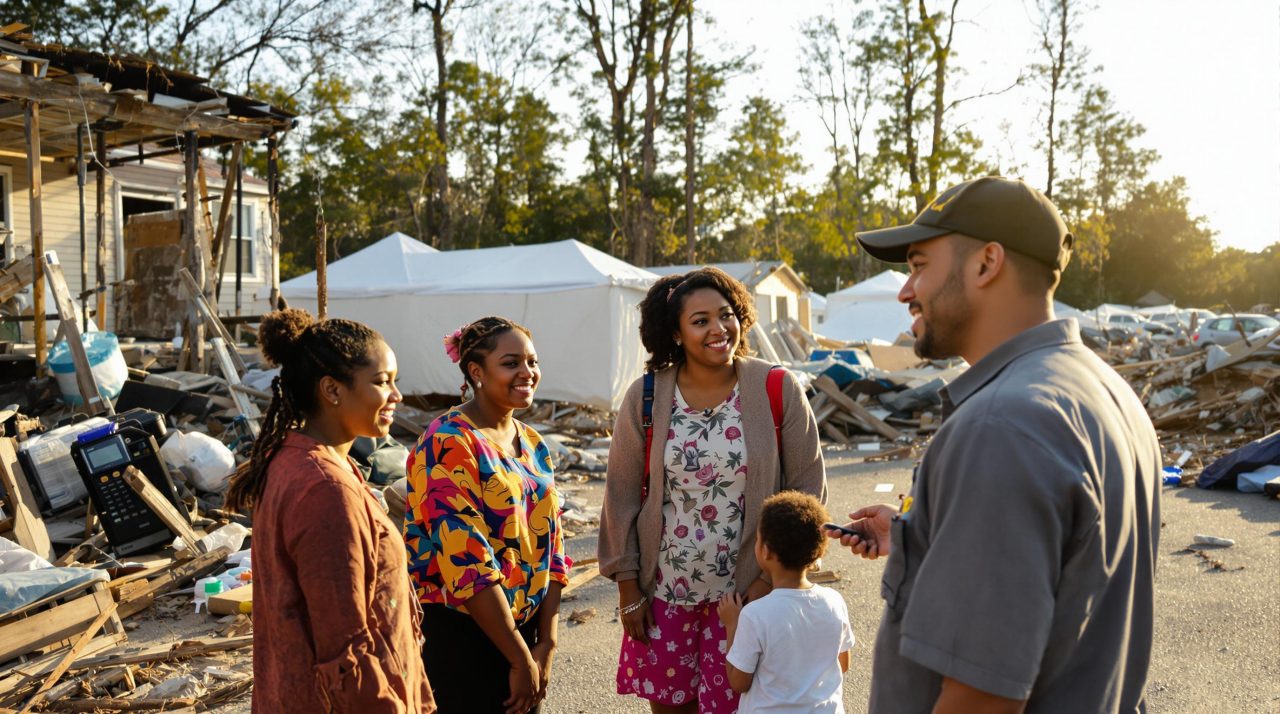
Disaster recovery in 2025 is more complicated than ever and families are now faced with a maze of support channels, paperwork, and agencies to contact. Most people think the hardest part is surviving the disaster itself. But the numbers say otherwise. Nearly 60 percent of disaster victims miss out on available financial support simply because they do not know where to turn or how to document their losses. Turns out, the real challenge starts after the storm, when finding the right help becomes the key to rebuilding.
Table of Contents
- Identifying The Right Support Channels
- Steps For Disaster Victims And Displaced Families
- Guidance For Insurance And Mitigation Professionals
- Resources For Agencies And Relief Organizations
Quick Summary
| Takeaway | Explanation |
|---|---|
| Identify Support Channels | Victims should understand and utilize various government and specialized recovery resources, including agencies like FEMA and the U.S. Department of Agriculture, to navigate the support available to them. |
| Thorough Documentation | Immediate and comprehensive documentation of damages, including photographs and written reports, is essential for securing assistance and rebuilding effectively. |
| Proactive Multi-Agency Communication | Successful recovery involves communication with multiple assistance providers, including local emergency management and community organizations, to ensure access to necessary resources. |
| Long-Term Recovery Planning | Families must develop comprehensive recovery strategies that include financial planning, housing solutions, and emotional support to ensure lasting stability post-disaster. |
| Collaboration Among Agencies | Effective disaster recovery relies on coordination and communication among various agencies to meet the complex needs of affected communities comprehensively. |
Identifying the Right Support Channels
Navigating support channels during a disaster requires strategic approach and understanding of available resources. Victims often feel overwhelmed when attempting to access critical assistance, making it essential to know exactly where and how to seek help effectively.
Government Agency Support Networks
Government agencies play a crucial role in disaster recovery support. The U.S. Department of Education’s Disaster Recovery Unit (DRU) coordinates comprehensive recovery efforts for communities impacted by federally declared natural disasters. These agencies provide technical assistance and financial resources designed to help individuals and communities rebuild.
Specifically, the U.S. Department of the Interior offers an online training course titled ‘National Disaster Recovery Framework Overview’ which provides critical insights into recovery support mechanisms. This course helps individuals understand core principles and roles within disaster recovery frameworks, enabling more effective navigation of support channels.
Identifying Specialized Recovery Resources
Recovery support extends beyond traditional government channels. The U.S. Department of Agriculture’s Rural Development division provides a comprehensive ‘Disaster Resiliency and Recovery Guide’ that offers targeted resources for different community needs. These guides help disaster victims understand:
- Emergency Housing options and immediate shelter solutions
- Financial Assistance programs for recovery and rebuilding
- Community Resilience strategies for long term recovery
Multi Agency Communication Strategies
Successful support access requires proactive communication across multiple agencies. Disaster victims should:
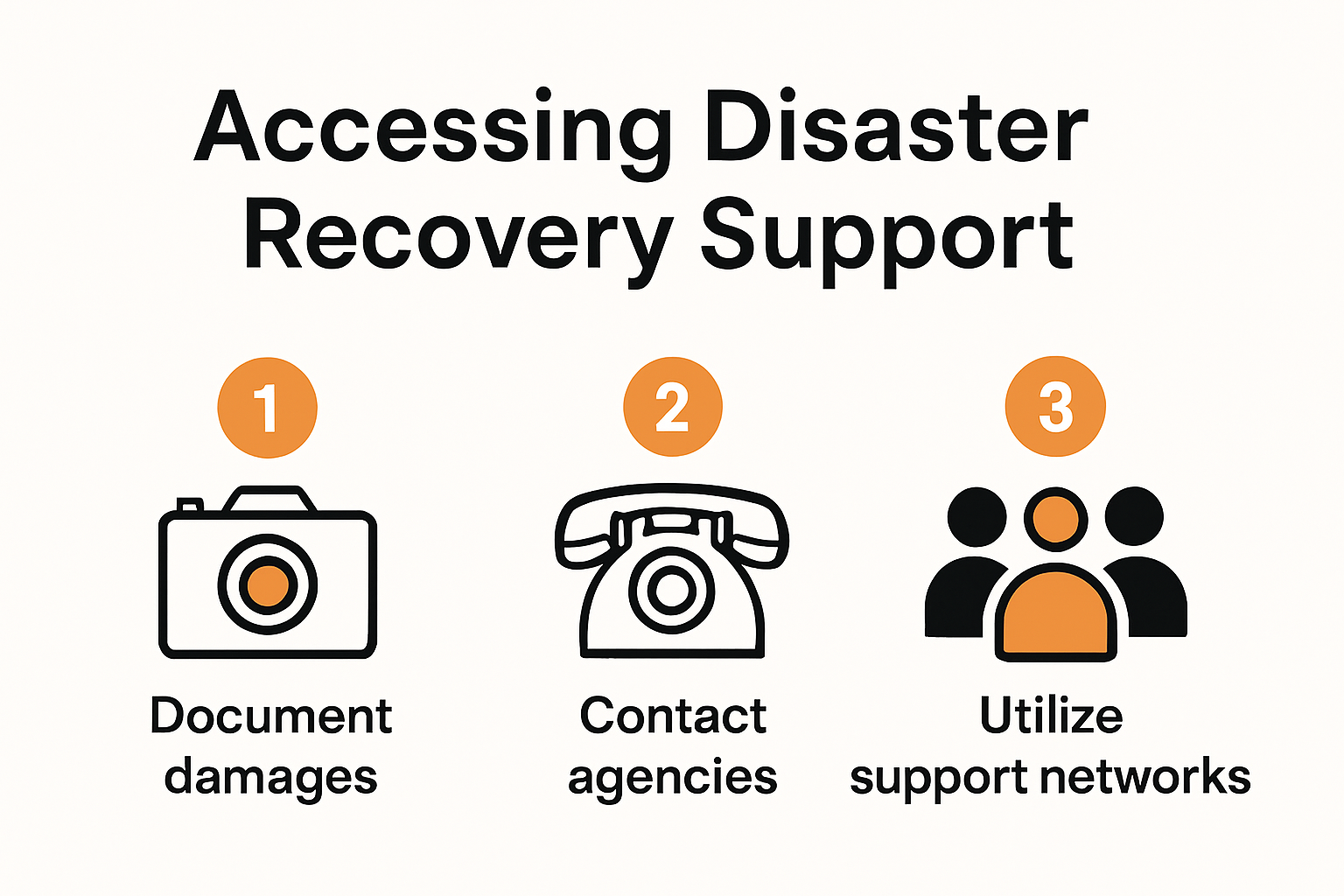
- Document all damage thoroughly with photographs and written descriptions
- Contact local emergency management offices immediately
- Register with FEMA and state disaster relief agencies
- Maintain organized records of all communications and assistance requests
By understanding these support channels and maintaining organized documentation, individuals can significantly improve their ability to access critical resources during challenging recovery periods. The key is persistent communication, thorough documentation, and utilizing multiple support networks simultaneously.
Remember that each disaster scenario is unique. While these strategies provide a general framework, flexibility and adaptability remain crucial when seeking support during emergency situations.
To help visualize and compare key government and specialized disaster recovery resources mentioned above, the following table organizes main organizations and the primary types of support they offer:
| Organization/Agency | Main Support Type(s) | Resource Description |
|---|---|---|
| FEMA | Disaster assistance programs, grants | Federal resources for immediate relief |
| Dept. of Education DRU | Community recovery coordination, technical assistance | Supports rebuilding of schools and education |
| Dept. of the Interior | Training and education, recovery frameworks | Provides disaster recovery framework training |
| USDA Rural Development | Emergency housing, financial aid, resilience guides | Emergency/rural recovery resources |
| State Disaster Relief Agencies | Localized disaster assistance | State-level support and coordination |
| Local Emergency Management | Immediate incident response, documentation support | Point-of-contact for immediate help |
| Community Support Organizations | Emotional & practical support | Grassroots and nonprofit organizations |
Steps for Disaster Victims and Displaced Families
When disaster strikes, displaced families face immediate and complex challenges that require strategic and timely actions. Understanding the critical steps for recovery can help victims navigate the overwhelming process of rebuilding their lives and accessing essential support.
Initial Emergency Response and Documentation
The first crucial phase involves immediate documentation and emergency response. According to the Federal Emergency Management Agency (FEMA), disaster victims must take precise actions to secure assistance. This process begins with comprehensive documentation of all disaster related damages.
Key initial documentation steps include:
- Photographic Evidence capturing property damage comprehensively
- Written Incident Reports detailing the extent of losses
- Insurance Policy Information organized and readily accessible
- Personal Identification Documents preserved or replicated
Quick and thorough documentation establishes a foundation for future recovery efforts and potential financial support. Victims should create digital and physical copies of all critical documents, storing them in secure locations.

Accessing Immediate Support Channels
Navigating support channels requires systematic approach. Families must prioritize contact with multiple assistance providers simultaneously. Learn more about strategic relocation approaches to understand comprehensive recovery strategies.
Critical support channels include:
- Local emergency management offices
- State disaster relief agencies
- FEMA disaster assistance programs
- Insurance claim representatives
- Community support organizations
Long Term Recovery Planning
Successful recovery extends beyond immediate emergency response. Families must develop comprehensive long term recovery strategies that address housing, financial stability, emotional wellness, and community reintegration.
Effective recovery planning involves:
- Creating a detailed reconstruction timeline
- Establishing financial recovery goals
- Identifying mental health support resources
- Developing alternative housing strategies
- Building resilient community connections
Disaster recovery is a complex journey requiring patience, persistence, and strategic planning. By understanding these critical steps, displaced families can transform challenging circumstances into opportunities for rebuilding and renewal. Each small action contributes to the larger process of recovery and restoration.
The following checklist-style table summarizes the essential documentation and steps that victims should complete immediately after a disaster to support recovery and aid applications:
| Step | Description | Completion Status |
|---|---|---|
| Photographic Evidence | Take comprehensive photos of all property damage | ☐ |
| Written Incident Report | Write a narrative detailing the extent of the losses | ☐ |
| Insurance Policy Information | Gather and organize all insurance policy documents | ☐ |
| Personal Identification Documents | Make digital/physical copies of ID and key documents | ☐ |
| Contact Emergency Management Offices | Notify local emergency offices about your situation | ☐ |
| Register with FEMA/State Agencies | Begin filing for federal/state assistance | ☐ |
| Organize Communication Records | Keep all correspondence and records of aid requests | ☐ |
Guidance for Insurance and Mitigation Professionals
Insurance and mitigation professionals serve as critical navigators during disaster recovery, bridging the gap between victims and comprehensive support systems. Their strategic approach determines the effectiveness of recovery efforts and the speed at which displaced families can rebuild their lives.
Professional Assessment and Documentation Protocols
Precise documentation and systematic assessment form the foundation of effective disaster recovery support. Professionals must implement rigorous protocols that capture comprehensive damage details while maintaining empathy and efficiency.
Explore advanced field inspection techniques that enhance accuracy and support victims during challenging times. Key assessment strategies include:
- Comprehensive Damage Evaluation using standardized measurement tools
- Digital Documentation with high resolution photographic evidence
- Immediate Risk Mitigation recommendations
- Precise Cost Estimation for recovery and reconstruction
Successful assessments require professionals to balance technical expertise with compassionate communication, recognizing the emotional complexity of disaster recovery scenarios.
Collaborative Multi Agency Communication
Effective disaster recovery demands seamless communication across multiple agencies and support networks. Insurance and mitigation professionals must establish clear communication channels with:
- Emergency management offices
- Local government agencies
- State disaster relief departments
- Community support organizations
- Mental health support services
This collaborative approach ensures comprehensive support that addresses not just physical damage but holistic recovery needs.
Strategic Recovery and Reconstruction Planning
Beyond immediate assessment, professionals play a crucial role in developing strategic recovery and reconstruction plans. These plans must be adaptive, considering unique community and individual circumstances.
Key planning considerations include:
- Identifying sustainable reconstruction strategies
- Evaluating long term resilience requirements
- Developing financial recovery roadmaps
- Connecting victims with specialized support resources
- Monitoring ongoing recovery progress
Professionals must approach each disaster scenario as unique, requiring customized solutions that balance technical expertise with human compassion. By maintaining a comprehensive and empathetic approach, insurance and mitigation experts become essential partners in the disaster recovery journey.
Resources for Agencies and Relief Organizations
Agencies and relief organizations play a pivotal role in disaster recovery, serving as critical infrastructure for supporting communities during their most vulnerable moments. Effective resource management and strategic deployment can significantly impact recovery outcomes and community resilience.
Strategic Resource Allocation and Coordination
Successful disaster response requires sophisticated resource allocation strategies that prioritize immediate needs while planning for long term recovery. Learn about advanced aid deployment techniques to optimize support mechanisms.
Key resource allocation principles include:
- Rapid Needs Assessment to identify critical community requirements
- Prioritized Support Distribution targeting most vulnerable populations
- Efficient Logistical Coordination across multiple agency networks
- Real Time Communication Systems for dynamic response management
Agencies must develop flexible frameworks that can quickly adapt to changing disaster scenarios, ensuring responsive and targeted assistance.
Technology and Data Management Support
Modern disaster recovery demands advanced technological integration. Organizations need robust data management systems that enable precise tracking, communication, and resource deployment. Critical technological requirements include:
- Geographic Information System (GIS) mapping technologies
- Cloud based communication platforms
- Mobile response coordination applications
- Data analytics for predictive recovery modeling
- Secure information sharing networks
These technological tools transform traditional relief approaches, enabling more efficient and targeted support strategies.
Collaborative Multi Agency Networks
No single agency can effectively manage comprehensive disaster recovery alone. Successful relief efforts require intricate collaboration between government agencies, nonprofit organizations, and community support systems.
Effective collaborative strategies involve:
- Establishing clear inter agency communication protocols
- Creating unified disaster response frameworks
- Sharing critical resource databases
- Developing joint training and simulation programs
- Implementing standardized reporting mechanisms
By fostering strong collaborative networks, agencies can create more resilient, comprehensive support systems that address complex community needs during challenging recovery periods.
Ultimately, agencies and relief organizations must remain adaptable, technologically empowered, and deeply committed to supporting communities through their most challenging moments. Continuous learning, technological innovation, and compassionate approach define truly effective disaster recovery efforts.
Frequently Asked Questions
What are the key steps to access disaster recovery support in 2025?
To access disaster recovery support effectively, victims should document all damages comprehensively, contact local emergency management offices, register with FEMA and state disaster relief agencies, and maintain organized records of all communications and assistance requests.
How can I document damages after a disaster?
You should take comprehensive photographic evidence of property damage, write detailed incident reports describing the extent of losses, and organize your insurance policy information and personal identification documents for easy access.
What types of assistance are offered by government agencies for disaster recovery?
Government agencies such as FEMA provide disaster assistance programs, grants for rebuilding, and local emergency management organizations offer immediate incident response support. Agencies like the U.S. Department of Agriculture also provide targeted resources for housing and financial assistance.
How important is long-term planning in disaster recovery?
Long-term planning is crucial for successful recovery after a disaster. It involves creating a detailed reconstruction timeline, setting financial recovery goals, identifying mental health support resources, and fostering community connections to ensure lasting stability.
Turn Disaster Recovery Knowledge Into Real-World Support
You have learned just how easy it is to feel lost in a maze of support channels, unfamiliar documentation requirements, and critical deadlines after a disaster. The challenge of accessing the right help can leave families and professionals overwhelmed, especially when the need for immediate housing and multi-agency coordination is urgent. If you are facing these obstacles and need a clear, compassionate path forward, our solutions are here whenever disaster strikes.
Let us connect you directly to the expert recovery support and emergency housing your family needs. Discover how Disaster Victim Services brings emergency assistance, insurance claim help, and collaborative coordination within reach. Experience a smoother recovery process by exploring our New recovery solutions today. When every minute matters, reach out now for hands-on guidance and nationwide expertise.
Recommended
- Disaster Recovery Statistics 2025: Key Trends for Agencies and Families – Disaster Victim Services | Helping You Recover After Disaster
- Home Safety Tips 2025: Essential Guide for Disaster Recovery – Disaster Victim Services | Helping You Recover After Disaster
- How to Manage Displacement: Practical Steps for Disaster Recovery 2025 – Disaster Victim Services | Helping You Recover After Disaster
- how to rebuild safely – Disaster Victim Services | Helping You Recover After Disaster