


Evacuation planning saves lives when disaster strikes. Nearly 60 percent of Americans live in areas vulnerable to natural hazards every year, yet most communities still lack a truly robust evacuation plan. It sounds simple—just map routes and send alerts—but the real secrets of effective evacuation go way deeper. The real advantage comes from the hidden details, like how you communicate with vulnerable groups and how often you test and update your strategies. Here’s why most evacuation plans miss the mark and what actually matters for protecting your community.
Table of Contents
- Understanding The Purpose Of Evacuation Plans
- Key Evacuation Planning Steps For Safety
- Roles, Communication, And Special Considerations
- Reviewing, Updating And Practicing Your Plan
Quick Summary
| Takeaway | Explanation |
|---|---|
| Comprehensive Risk Assessment is Essential | Conduct thorough assessments to identify regional hazards, vulnerabilities, and infrastructure capabilities before creating an evacuation plan. |
| Clear Communication Protocols are Key | Establish multi-channel communication systems to ensure timely and accurate information reaches all community members during evacuations. |
| Prepare for No-Notice Emergencies | Develop flexible strategies for rapid response evacuations, including multiple routes and pre-staged emergency supplies. |
| Involve and Support Vulnerable Populations | Identify and create tailored transportation and assistance plans for individuals with unique needs to ensure their safety during evacuations. |
| Continuous Plan Review and Drills are Necessary | Regularly review and practice evacuation plans to adapt to changing conditions, incorporating feedback and improving response effectiveness. |
Understanding the Purpose of Evacuation Plans
Evacuation planning is a critical strategy for protecting human life during emergencies. When disasters strike, having a well-designed evacuation plan can mean the difference between chaos and coordinated safety. These comprehensive blueprints provide structured guidance for moving people away from immediate danger zones quickly and systematically.
Why Evacuation Plans Matter
The fundamental purpose of evacuation plans extends far beyond simple movement instructions. According to FEMA’s National Preparedness Goal, these plans are essential components of national resilience. They enable communities to prevent, protect against, mitigate, respond to, and recover from potentially catastrophic threats.
Emergency scenarios demand precise, actionable strategies. A robust evacuation plan addresses multiple critical objectives:
- Rapid Response: Minimizing potential loss of life by creating clear movement protocols
- Resource Allocation: Identifying critical paths and support mechanisms
- Communication Coordination: Establishing clear communication channels between agencies
Key Components of Effective Evacuation Strategies
Successful evacuation planning requires a multifaceted approach. Communities must develop targeted strategies based on their specific environmental and geographical risks. The National Preparedness Goal emphasizes setting precise targets that reflect local vulnerability profiles.
Effective plans typically incorporate several fundamental elements:
- Comprehensive risk assessment
- Detailed route mapping
- Transportation logistics
- Special needs population considerations
- Shelter identification and management
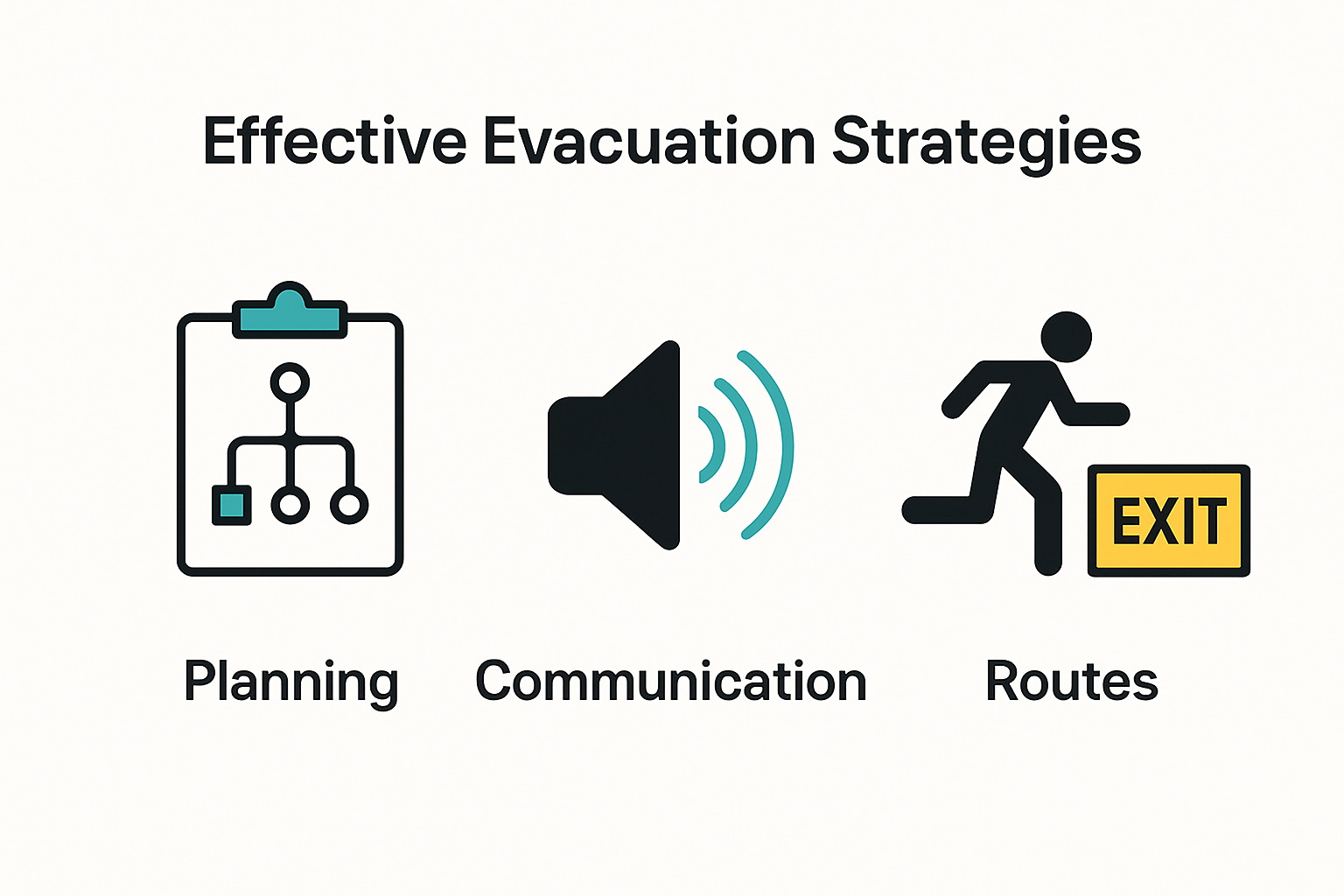
For displaced families and emergency responders, these plans represent more than theoretical documents. They are living strategies that can dramatically reduce human suffering during critical moments. By understanding potential disaster scenarios and developing nuanced response mechanisms, communities transform potential vulnerability into structured resilience.
Professional emergency management requires continuous evaluation and adaptation. As environmental conditions change and new risks emerge, evacuation plans must evolve. Regular training, community engagement, and technological integration ensure these critical roadmaps remain relevant and effective.
Beyond immediate safety, comprehensive evacuation planning supports broader disaster recovery objectives. By establishing clear protocols, communities can minimize psychological trauma, reduce economic disruption, and accelerate post-disaster restoration efforts. These plans are not just about moving people but about maintaining social infrastructure during the most challenging circumstances.
Understanding evacuation planning steps is not a luxury but a necessity. Whether facing hurricanes, wildfires, flooding, or other potential disasters, preparedness determines outcomes. Communities that invest time and resources in developing sophisticated evacuation strategies position themselves to protect their most valuable asset: human life.
Key Evacuation Planning Steps for Safety

Effective evacuation planning requires strategic preparation, clear communication, and systematic approaches to ensure community safety during potential disasters. These steps go beyond simple movement instructions, creating comprehensive frameworks that protect human lives and minimize potential risks.
Developing a Comprehensive Risk Assessment
Before creating an evacuation plan, understanding potential threats is crucial. Ready.gov recommends conducting thorough risk assessments that identify specific regional hazards. This involves analyzing geographical vulnerabilities, historical disaster patterns, and potential emergency scenarios specific to your location.
A comprehensive risk assessment includes:
- Geographical Mapping: Identifying high-risk zones and potential disaster paths
- Threat Analysis: Evaluating potential natural and human-made emergency scenarios
- Infrastructure Evaluation: Assessing local transportation networks and emergency response capabilities
Establishing Critical Communication Protocols
FEMA’s National Preparedness Guidelines emphasize the importance of clear, multi-channel communication during evacuations. Effective communication strategies ensure that critical information reaches all community members quickly and accurately.
Key communication protocols should include:
- Emergency alert systems
- Redundant communication channels
- Multilingual information distribution
- Specialized notification methods for vulnerable populations
Preparing for No-Notice Emergency Evacuations
The National Institute of Standards and Technology highlights the increasing complexity of emergency evacuations, particularly with rapidly developing disasters like wildfires. No-notice evacuations demand pre-planned, flexible strategies that can be implemented within minutes.
Critical preparation steps for no-notice evacuations include:
- Maintaining multiple evacuation routes
- Creating pre-staged emergency supply kits
- Developing real-time tracking and communication systems
- Training community members in rapid response protocols
Successful evacuation planning transcends theoretical documentation. It requires ongoing commitment, regular training, and adaptive strategies that evolve with changing environmental and technological landscapes. Communities must view these plans as living documents that demand continuous refinement and community engagement.
Understanding and implementing these key evacuation planning steps transforms potential chaos into coordinated, life-saving action. By prioritizing comprehensive risk assessment, establishing robust communication protocols, and preparing for unexpected scenarios, communities can significantly reduce vulnerability and protect their most valuable resource: human life.
Roles, Communication, And Special Considerations
Successful evacuation planning requires a complex ecosystem of coordinated efforts, where each participant understands their specific responsibilities and contributes to collective safety. The intricate process demands clear role definition, robust communication strategies, and targeted support for vulnerable populations.
Agency And Professional Responsibilities
FEMA’s National Preparedness Plan outlines a unified command structure that defines precise roles for emergency management professionals. Each agency and organization plays a critical part in the evacuation process:
- Emergency Management Agencies: Coordinate overall evacuation strategy
- Local Law Enforcement: Manage traffic control and route security
- Fire Departments: Provide immediate rescue and hazard mitigation
- Public Health Officials: Monitor health risks and medical support
- Transportation Departments: Ensure efficient movement and route management
These agencies must work in synchronized collaboration, creating a seamless response mechanism that prioritizes human safety and efficient resource deployment.
Communication Strategies For Diverse Populations
The National Institute of Standards and Technology emphasizes the critical importance of inclusive communication during evacuations. Effective communication means reaching every community member through multiple channels and considering diverse linguistic and technological access levels.
Key communication strategies include:
- Multilingual emergency broadcasts
- Text message alert systems
- Social media updates
- Reverse 911 telephone notifications
- Community liaison networks
Supporting Populations With Access And Functional Needs
Evacuation planning must specifically address populations with unique requirements. This includes elderly individuals, people with disabilities, non-English speakers, and those with limited mobility or technological access.
Comprehensive support strategies involve:
- Identifying and pre-registering vulnerable individuals
- Creating specialized transportation resources
- Developing personalized evacuation assistance plans
- Establishing medical support protocols
- Training volunteers in specialized assistance techniques
Understanding that one size does not all, emergency planners must develop nuanced, flexible approaches that recognize individual community members’ diverse needs and challenges.
These intricate roles, communication methods, and specialized considerations transform evacuation from a generic process into a human-centered, compassionate response. By recognizing the unique characteristics of each community and developing targeted strategies, emergency management professionals can create evacuation plans that protect and support every individual during critical moments.
Reviewing, Updating And Practicing Your Plan
Evacuation plans are not static documents but living strategies that require continuous refinement and validation. Regular review, strategic updates, and practical implementation through drills ensure that emergency response remains effective and adaptive to changing environmental and societal conditions.
Systematic Plan Review Protocols
FEMA’s Emergency Management Guidelines recommend comprehensive plan reviews at least annually. These reviews should systematically examine every aspect of the evacuation strategy, identifying potential gaps, technological improvements, and emerging community needs.
Key review considerations include:
- Technological Advancements: Incorporating new communication and tracking technologies
- Demographic Changes: Updating plans to reflect population shifts
- Infrastructure Modifications: Accounting for new transportation routes or community developments
- Lessons from Recent Disasters: Integrating insights from recent emergency responses
Conducting Effective Emergency Drills
Ready.gov emphasizes that practicing evacuation plans through structured drills is crucial for building community resilience. These simulations transform theoretical strategies into muscle memory, reducing panic and confusion during actual emergencies.
Effective drill strategies include:
- Partial and full-scale simulation exercises
- Scenario-based training for different disaster types
- Interdepartmental coordination practices
- Community-wide participation opportunities
- Performance evaluation and feedback mechanisms
Continuous Improvement And Stakeholder Engagement
The University of Texas Emergency Operations Plan highlights the importance of creating a culture of continuous improvement. Successful evacuation planning requires ongoing stakeholder collaboration and transparent communication.
Strategies for sustained plan enhancement include:
- Regular multi-agency planning meetings
- Open feedback mechanisms for community input
- Professional development for emergency response teams
- Data-driven performance analysis
- Adaptive planning approaches
Evacuation planning is not a one-time activity but an ongoing commitment to community safety. By consistently reviewing, updating, and practicing emergency response strategies, communities transform potential vulnerability into structured resilience.
The most effective evacuation plans are those that remain flexible, inclusive, and responsive to changing conditions. They recognize that emergency preparedness is a dynamic process requiring continuous learning, adaptation, and collaborative engagement from all community stakeholders.
Frequently Asked Questions
What are the key components of an effective evacuation plan?
Effective evacuation plans typically include a comprehensive risk assessment, detailed route mapping, transportation logistics, special needs population considerations, and shelter identification and management.
How can communities prepare for no-notice emergencies?
To prepare for no-notice emergencies, communities should maintain multiple evacuation routes, create pre-staged emergency supply kits, develop real-time tracking and communication systems, and train community members in rapid response protocols.
Why is clear communication important during evacuations?
Clear communication is essential during evacuations to ensure that all community members receive timely and accurate information. This includes establishing emergency alert systems, multilingual broadcasts, and redundant communication channels to reach diverse populations.
How often should evacuation plans be reviewed and practiced?
Evacuation plans should be reviewed at least annually, incorporating lessons from recent disasters and considering demographic changes. Additionally, communities should conduct regular drills to practice these plans and enhance readiness.
Your Partner in Disaster Recovery: Transforming Evacuation Planning into Action
When disaster strikes, the clock is ticking, and effective evacuation planning becomes crucial for saving lives and minimizing chaos. As highlighted in our essential guide, clear communication and rapid response are key elements of successful evacuation strategies. But what happens when the dust settles? How do you ensure a smooth transition for those displaced? This is where DisasterVictimServices.com steps in to fill that critical gap.
At Disaster Victim Services, we specialize in swiftly connecting victims with immediate emergency housing solutions. Our dedicated team works 24/7 to coordinate logistics, ensuring families have a safe place to stay while they begin the recovery process. Whether collaborating with government agencies, insurance carriers, or first responders, we create an ecosystem of support, addressing pain points like:
- Lack of timely assistance – Our around-the-clock service ensures no one is left waiting for help.
- Complex disaster recovery logistics – We simplify the process, guiding you through insurance claims and housing arrangements with compassion and efficiency.
Don’t navigate this journey alone. With our expertise, we turn your evacuation plan into actionable support. When you’re ready to reclaim your stability amidst chaos, visit us at DisasterVictimServices.com and let us guide you toward the next steps for recovery and restoration. Act now—because every moment matters in disaster recovery!