

Nearly every American community faces the risk of devastating natural disasters, and the economic toll is staggering. In fact, the United States has seen over $1 trillion in disaster-related losses between 2017 and 2024. Understanding how insurance carriers operate in disaster recovery is key to safeguarding homes, businesses, and entire neighborhoods. This guide reveals the critical functions of these financial institutions, their collaboration with agencies, and the best ways to secure reliable recovery after catastrophe strikes.
Table of Contents
- Defining Insurance Carriers In Disaster Recovery
- Types Of Coverage And Policy Distinctions
- Claims Process And Emergency Housing Support
- Collaboration With Agencies And Service Providers
- Common Pitfalls And How To Avoid Them
Key Takeaways
| Point | Details |
|---|---|
| Role of Insurance Carriers | Insurance carriers provide financial support and risk management strategies to help communities recover from disasters. |
| Types of Insurance Coverage | Policies vary significantly and include options like Flood Insurance and Earthquake Coverage to address specific disaster risks. |
| Claims Process Importance | The claims process is essential for recovery, involving multiple stages for financial assistance and housing support. |
| Collaboration for Effective Recovery | Successful recovery relies on collaboration among insurance carriers, government agencies, and local organizations to streamline assistance. |
Defining Insurance Carriers in Disaster Recovery
Insurance carriers represent specialized financial institutions that provide critical protection and recovery support during catastrophic events. These organizations act as financial backstops, offering strategic resources and monetary compensation to individuals, businesses, and communities facing devastating losses from natural disasters.
At their core, insurance carriers function as risk management partners who financially support communities recovering from extreme weather events. Their role extends far beyond simple monetary transactions, encompassing comprehensive disaster response strategies that help rebuild infrastructure, restore economic stability, and provide psychological reassurance during challenging times. The insurance industry has been instrumental in addressing economic vulnerabilities, with data revealing over $1 trillion in direct disaster-related losses between 2017 and 2024.
Key characteristics of insurance carriers in disaster recovery include:
- Financial Resilience: Providing immediate monetary support for rebuilding efforts
- Risk Assessment: Analyzing potential disaster impacts and developing proactive protection strategies
- Community Support: Offering comprehensive coverage that bridges gaps left by federal disaster aid
- Economic Stabilization: Helping communities quickly recover and maintain economic momentum
These organizations play a nuanced role in disaster management, working to mitigate economic impacts through strategic financial support. By offering specialized insurance products tailored to specific disaster scenarios, carriers help individuals and communities transform potential financial devastation into structured, manageable recovery pathways.
Types of Coverage and Policy Distinctions
Insurance policies for disaster recovery represent complex financial instruments designed to protect individuals and communities against catastrophic losses. These policies vary significantly based on geographic location, potential risks, and specific asset characteristics, offering tailored protection strategies for different disaster scenarios.
Insurance coverage for infrastructure systems encompasses multiple specialized categories that address distinct types of potential damage. Typical policy types include:
- Flood Insurance: Specifically designed to cover water-related damage
- Earthquake Coverage: Protection against seismic event destruction
- Terrorism Insurance: Compensation for damages from intentional destructive acts
- Natural Disaster Comprehensive: Broad protection against multiple environmental risks
The National Flood Insurance Program represents a critical example of specialized disaster coverage, enabling property owners in high-risk areas to purchase targeted protection. This program not only provides financial support but also implements strategic risk management by restricting development in flood-prone regions.

Each policy type includes unique components such as specific deductibles, coverage limits, premium structures, and carefully defined exclusions. Disaster victims should carefully review these details, understanding that no single policy provides universal protection. Effective recovery requires a nuanced approach, matching precise insurance products to individual risk profiles and potential vulnerability scenarios.
Claims Process and Emergency Housing Support
The disaster recovery claims process represents a critical lifeline for individuals and families navigating the complex aftermath of catastrophic events. Insurance carriers and government agencies collaborate to provide comprehensive support, helping victims restore stability and rebuild their lives through strategic financial assistance and housing solutions.
FEMA’s Individuals and Households Program provides essential financial assistance for disaster survivors, offering targeted support for those experiencing significant property losses. Key eligibility requirements include:
- Citizenship Verification: Applicants must be U.S. citizens
- Primary Residence Damage: Home losses not covered by existing insurance
- Presidentially Declared Disaster Areas: Incidents meeting specific federal criteria
In recent disaster scenarios, emergency housing assistance has become increasingly sophisticated. For instance, following the devastating Maui wildfires in August 2023, housing support extended to over 1,700 households, demonstrating the critical role of comprehensive emergency housing strategies.
The claims process typically involves multiple stages, including initial damage assessment, documentation submission, insurance adjuster evaluation, and final compensation determination. Emergency housing process guidelines help disaster victims understand their rights and navigate the complex landscape of recovery support, ensuring they receive timely and appropriate assistance during challenging times.
Collaboration With Agencies and Service Providers
Disaster recovery demands intricate collaboration between insurance carriers, government agencies, and specialized service providers. This complex network of support requires seamless communication, shared resources, and coordinated strategies to effectively assist communities during critical emergency situations.
NOAA’s partnership with the Reinsurance Association of America exemplifies the sophisticated collaboration required in disaster response. By sharing accurate environmental data, insurers can improve catastrophe modeling, evaluate claims more precisely, and support rapid community recovery after extreme weather events.
Key collaborative partnerships typically involve:
- Government Agencies: FEMA, State Emergency Management Offices
- Scientific Organizations: NOAA, National Weather Service
- Local Emergency Responders: Fire Departments, Police Departments
- Nonprofit Relief Organizations: Red Cross, Salvation Army
The Emergency Management Assistance Compact represents a critical framework for interstate collaboration, enabling states to share resources and expertise during disasters. This mutual aid agreement allows for the maximum utilization of available resources, ensuring a more comprehensive and efficient disaster response.
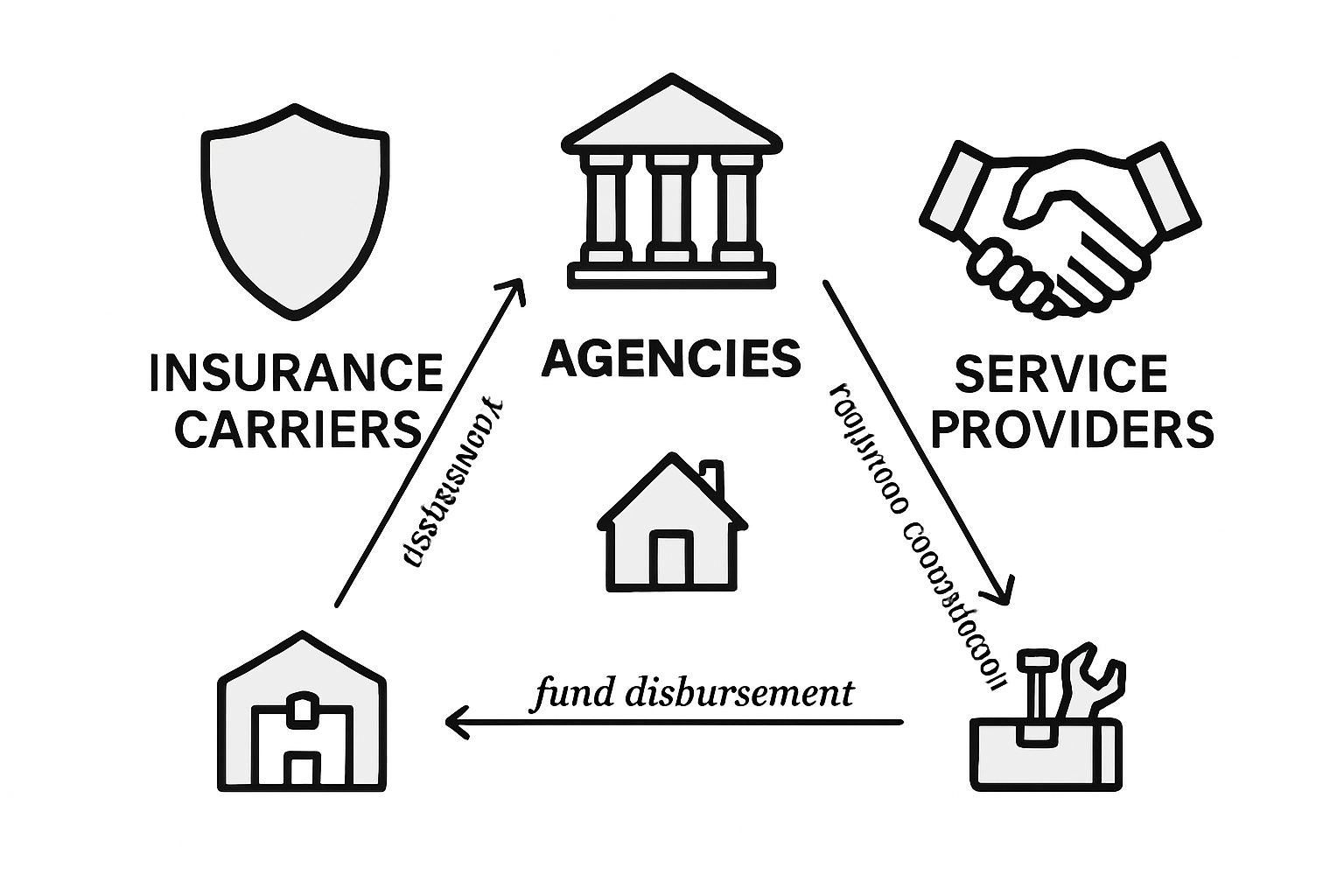
Collaborative disaster recovery strategies focus on creating integrated communication channels, establishing clear protocols for resource sharing, and developing flexible response mechanisms that can adapt to rapidly changing emergency conditions. The goal is to create a unified, responsive system that prioritizes victim support and community resilience.
Common Pitfalls and How to Avoid Them
Disaster recovery is a complex process fraught with potential challenges that can significantly delay or derail victim support efforts. Understanding and anticipating these obstacles is crucial for creating a streamlined, effective recovery strategy that minimizes bureaucratic hurdles and maximizes assistance.
FEMA recently announced major reforms to address longstanding issues in disaster aid programs, eliminating bureaucratic barriers that previously hindered swift support. Key reforms include:
- Expanded Assistance Eligibility: Allowing homeowners with insufficient insurance payouts to receive additional aid
- Simplified Application Process: Removing restrictive preliminary loan application requirements
- Increased Flexibility: Providing more direct paths to financial support
One of the most significant challenges in disaster recovery is the lack of coordination between insurers and government agencies, which can create confusion and substantial delays in support delivery. Establishing robust, real-time information-sharing frameworks becomes critical for expediting recovery efforts.
Strategies for avoiding common disaster recovery pitfalls require proactive communication, comprehensive documentation, and a thorough understanding of available resources. Disaster victims should maintain meticulous records, understand their insurance coverage completely, and be prepared to navigate multiple support systems simultaneously to ensure maximum assistance.
Partner with Experts in Navigating Insurance Challenges After Disasters
Recovering from a disaster extends far beyond filing insurance claims. The article highlights how insurance carriers play a vital role in disaster recovery with complex coverage options and detailed claims processes that can often overwhelm victims. If you are facing confusion or delays due to insurance intricacies, lack of coordination among agencies, or need urgent housing assistance following a catastrophic event, you are not alone.
At DisasterVictimServices.com, we understand these struggles and specialize in delivering fast, compassionate support to help you overcome these hurdles. Our expert team works directly with insurance carriers, government programs, and first responders to streamline emergency housing solutions and claims navigation. Discover how we help bridge the gap between you and critical disaster resources in our Uncategorized resource section and explore the latest support initiatives in our New projects category.
Do not let insurance complexities delay your recovery process. Take control now and visit DisasterVictimServices.com to access the critical assistance you need to rebuild your life with confidence and care.
Frequently Asked Questions
What are the primary responsibilities of insurance carriers in disaster recovery?
Insurance carriers provide financial support, risk assessment, and community assistance during and after catastrophic events, helping individuals and communities recover from significant losses.
What types of insurance coverage are available for disaster recovery?
Common types of disaster recovery insurance coverage include flood insurance, earthquake coverage, terrorism insurance, and natural disaster comprehensive policies, each designed to address specific risks.
How does the claims process work for disaster recovery insurance?
The claims process typically involves damage assessment, documentation submission, evaluation by an insurance adjuster, and determination of compensation, essential for victims seeking financial assistance after disasters.
What partnerships do insurance carriers have in disaster recovery efforts?
Insurance carriers collaborate with government agencies, scientific organizations, local emergency responders, and nonprofit relief organizations, ensuring coordinated support and effective resource sharing during disasters.
Recommended
- How Insurance Covers Disasters – Essential Recovery Facts – Disaster Victim Services | Helping You Recover After Disaster
- Disaster Recovery Phases Explained for 2025: Guide for Victims, Pros & Agencies – Disaster Victim Services | Helping You Recover After Disaster
- 7 Examples of Insurance Coordination Steps You Need – Disaster Victim Services | Helping You Recover After Disaster
- Disaster Recovery Process Steps: A Complete Guide 2025 – Disaster Victim Services | Helping You Recover After Disaster