

Every year, over 240 million calls for emergency assistance are placed in the United States alone. The rapid response of first responders often makes the difference between life and death. These highly trained professionals arrive at chaotic, dangerous scenes to deliver critical care, restore safety, and provide hope in the darkest moments. Understanding who first responders are and how their teams operate sheds light on the vital, complex roles they play when disaster strikes.
Table of Contents
- Defining First Responders And Core Functions
- Types Of First Responders And Key Distinctions
- How First Responders Operate In Emergencies
- Coordination With Agencies And Disaster Support Services
- Challenges And Risks Faced By First Responders
Key Takeaways
| Point | Details |
|---|---|
| Role of First Responders | First responders are essential professionals who provide critical interventions during emergencies, encompassing diverse roles such as law enforcement, medical services, and disaster response. |
| Core Functions | Their primary functions include immediate medical care, public safety assurance, multi-agency coordination, and environment stabilization. |
| Interagency Coordination | Effective emergency response relies on coordinated efforts among various agencies to enhance communication, resource allocation, and response strategies. |
| Challenges Faced | First responders encounter significant psychological and occupational risks, including PTSD and burnout, exacerbated by high-stress scenarios and exposure to trauma. |
Defining First Responders and Core Functions
First responders are the critical professionals who protect and preserve life during emergencies, serving as the first line of defense when disaster strikes. First responders represent a diverse group of emergency personnel who rapidly mobilize to manage complex and often dangerous situations.
According to the United States Government Accountability Office GAO, first responders are “individuals responsible for protecting and preserving life, property, evidence, and the environment in the early stages of an incident.” Their roles span multiple critical domains:
- Emergency Public Safety: Police officers, firefighters, and emergency management specialists
- Law Enforcement: Police and sheriff departments, federal agents
- Emergency Medical Personnel: Paramedics, EMTs, emergency room staff
- Disaster Response Teams: Search and rescue professionals
The Department of Homeland Security DHS further emphasizes that these professionals are “critical to managing and caring for people affected by emergencies.” Their core functions extend beyond immediate intervention, encompassing comprehensive emergency management that includes:
- Providing immediate medical care
- Ensuring public safety
- Coordinating complex multi-agency response efforts
- Protecting vulnerable populations
- Stabilizing dangerous environments
While each type of first responder has specialized training, they share a fundamental commitment: to save lives, minimize damage, and create pathways to recovery during humanity’s most challenging moments. Their rapid, coordinated response can mean the difference between tragedy and survival.
Types of First Responders and Key Distinctions
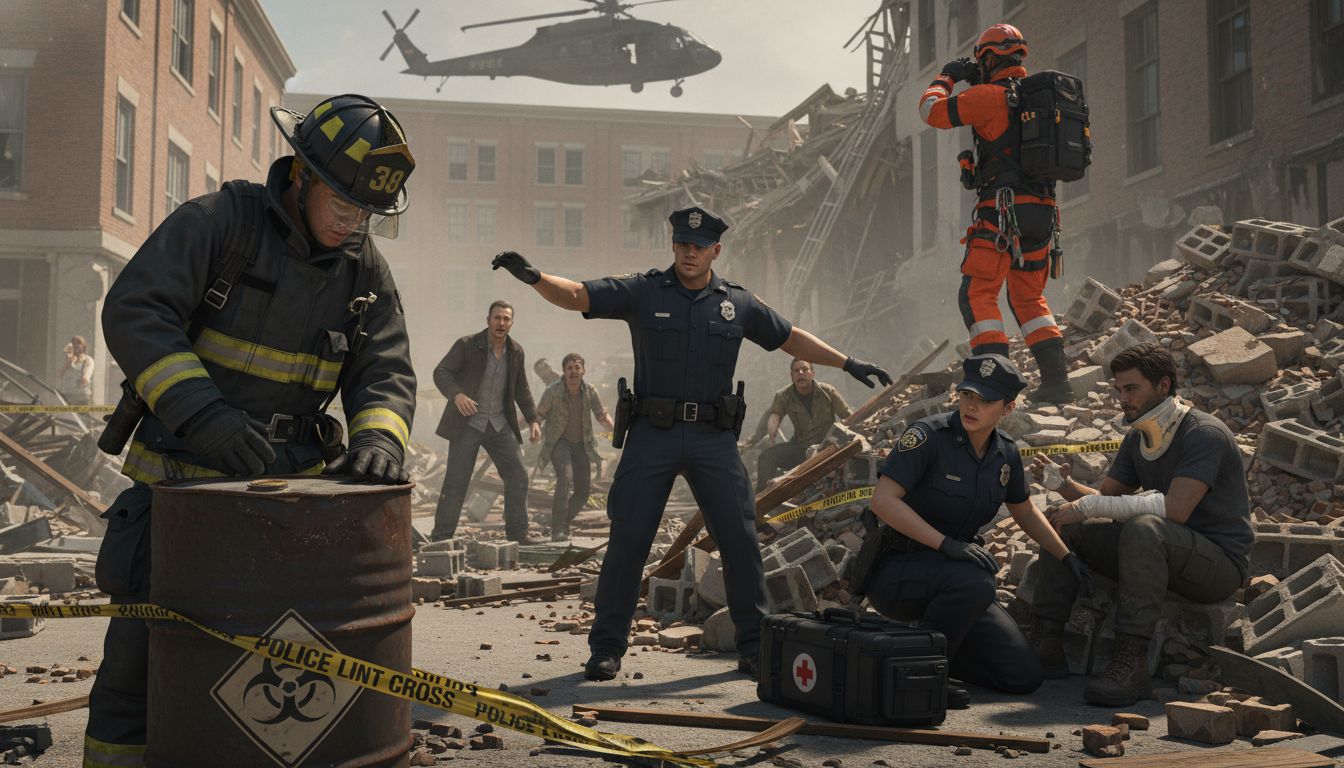
The emergency response ecosystem comprises multiple specialized professionals, each playing a crucial role in protecting and supporting communities during critical situations. First responders represent a complex network of trained experts who rapidly deploy to manage diverse and challenging scenarios.
According to Wikipedia, first responders encompass several distinct professional categories, each with unique training and responsibilities:
- Law Enforcement Officers: Police personnel who secure scenes and manage public safety
- Emergency Medical Services: Paramedics and EMTs providing immediate medical intervention
- Firefighters: Professionals handling fire suppression, rescue, and hazardous environment management
- Search and Rescue Personnel: Specialists trained in locating and extracting individuals from dangerous environments
Wikipedia further highlights that each first responder role carries specialized training requirements that distinguish them within the emergency response framework. For instance, a paramedic requires extensive medical knowledge, while a police officer needs tactical training for crowd control and threat neutralization.
The key distinctions among first responders lie not just in their immediate responsibilities, but in their specialized skill sets:
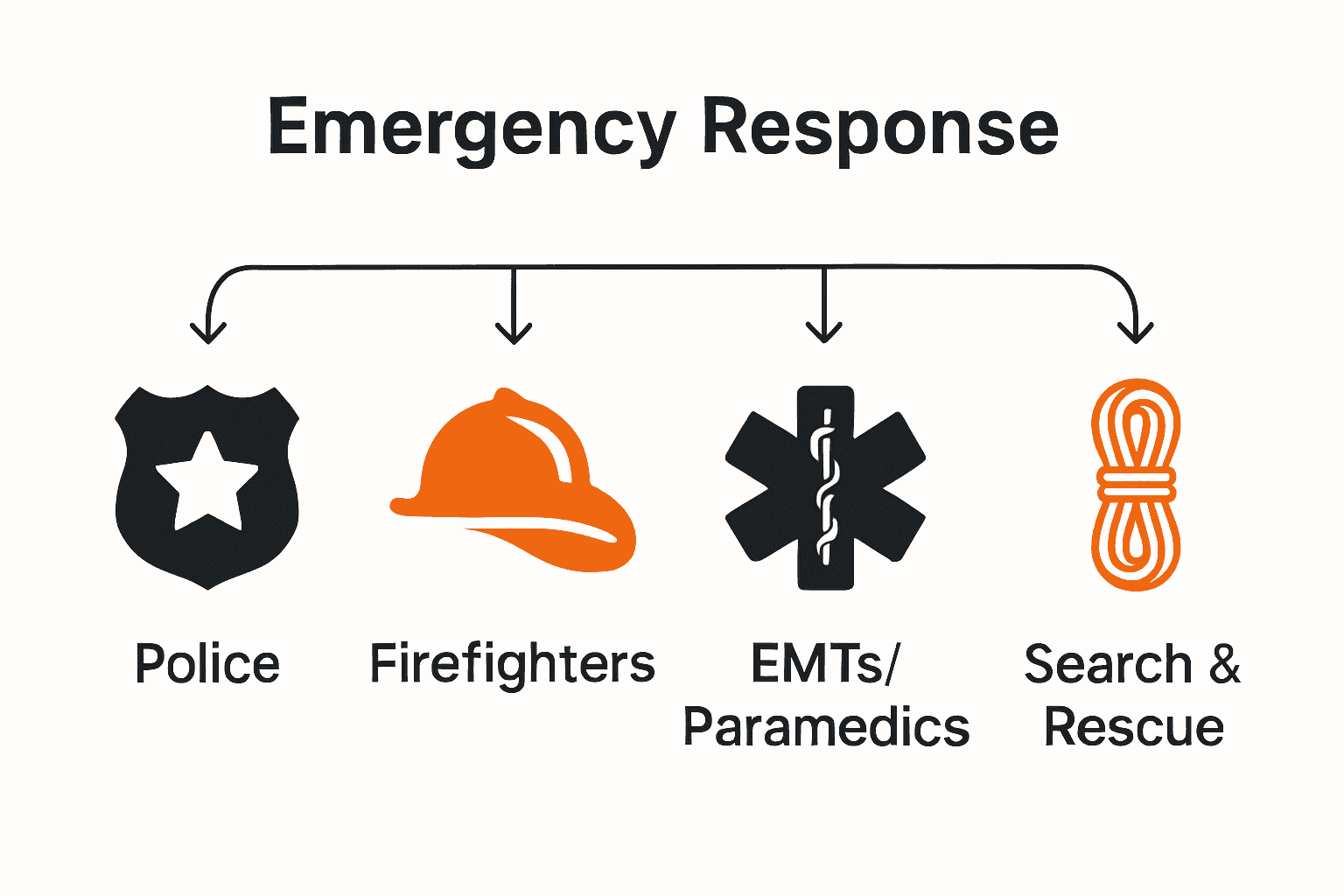
- Medical Responders: Focus on immediate patient care and emergency medical treatment
- Law Enforcement: Prioritize scene security and public safety
- Firefighters: Manage fire suppression, structural rescue, and hazardous material incidents
- Search and Rescue Teams: Specialize in locating and extracting victims from complex environments
For professionals looking to understand more about coordinating these critical roles, our first responder coordination guide offers comprehensive insights into effective emergency response strategies.
How First Responders Operate in Emergencies
Emergency response is a complex, carefully choreographed process that demands split-second decision-making and precise coordination across multiple professional disciplines. First responders operate within a structured framework designed to maximize effectiveness and minimize potential risks during critical incidents.
According to the EMS, first responders follow a systematic approach when arriving at an emergency scene. Their operational protocol typically involves:
- Scene Assessment: Quickly evaluating potential hazards and determining immediate risks
- Medical Triage: Prioritizing victims based on severity of injuries
- Immediate Care: Providing critical first aid and stabilizing patients
- Coordination: Communicating with other emergency services
- Patient Transport: Facilitating safe movement to medical facilities
The National Incident Management System provides a standardized methodology that ensures seamless collaboration between different emergency response agencies. This system creates a structured approach that allows first responders to:
- Establish clear communication protocols
- Define specific roles and responsibilities
- Implement unified command structures
- Manage resources effectively
- Adapt to evolving emergency scenarios
To gain deeper insights into the intricate world of emergency response strategies, our guide on understanding first responder roles offers comprehensive information about the critical work these professionals perform every day.
Coordination With Agencies and Disaster Support Services
Effective emergency response requires intricate collaboration between multiple agencies, creating a complex web of communication and resource allocation that can mean the difference between chaos and controlled recovery. Interagency coordination stands as the critical backbone of comprehensive disaster management.
According to the Government Accountability Office, first responders must coordinate extensively with various governmental and support agencies. This coordination involves:
- Command Center Establishment: Setting up centralized communication hubs
- Safe Zone Identification: Demarcating secure areas for victim support
- Multi-Level Authority Collaboration: Engaging federal, state, and local authorities
- Resource Allocation: Strategically distributing critical emergency supplies
- Communication Protocols: Maintaining clear, consistent information channels
The National Incident Management System provides a standardized framework that transforms potential communication barriers into seamless collaborative opportunities. This system ensures that different agencies can:
- Share real-time information
- Align operational objectives
- Minimize response time
- Optimize resource utilization
- Reduce potential conflicts during high-stress scenarios
To better understand the intricacies of emergency response coordination, professionals can explore our guide on coordinating disaster response, which offers deeper insights into multi-agency collaboration strategies.
Challenges and Risks Faced by First Responders
The world of emergency response is fraught with extraordinary challenges that test the physical, mental, and emotional resilience of those who serve on the front lines. First responders operate in environments where danger and unpredictability are constant companions, facing risks that extend far beyond the immediate physical threats of an emergency.
According to Wikipedia, first responders experience significant work-related stress due to repeated exposure to traumatic events. These psychological challenges manifest in multiple critical ways:
- Acute Psychological Stress: Immediate emotional reactions to traumatic scenes
- Post-Traumatic Stress Disorder (PTSD): Long-term mental health implications
- Emotional Burnout: Chronic exhaustion from continuous high-stress environments
- Compassion Fatigue: Diminished capacity to empathize after repeated trauma exposure
- Vicarious Traumatization: Indirect psychological impact from witnessing suffering
Wikipedia further highlights the substantial occupational health risks, particularly evident during global health emergencies like the COVID-19 pandemic. First responders face unique exposure risks that include:
- Direct contact with infectious diseases
- Limited personal protective equipment
- Extended work hours in high-risk environments
- Potential transmission risks to their families
- Heightened personal health vulnerabilities
To help professionals understand and manage these critical challenges, our responder fatigue warning signs guide offers comprehensive insights into recognizing and mitigating occupational risks.
Supporting First Responders Through Seamless Disaster Recovery
The role of first responders is critical in every emergency situation. Their rapid action and coordination save lives and stabilize communities. However, as the article highlights, these heroes face complex challenges that extend well beyond the initial response. One major hurdle involves ensuring that displaced victims can quickly access safe emergency housing and essential resources. This creates a vital link between first response efforts and ongoing recovery.
At DisasterVictimServices.com, we specialize in bridging this gap by connecting disaster victims with immediate housing solutions while working closely with insurance carriers, government agencies, and first responders. Our services help reduce the burden on emergency teams by streamlining recovery and ensuring smooth transitions from crisis to stability. Discover how we support the broader emergency response network and the communities they protect by visiting our Uncategorized project category and learn more about our approach at DisasterVictimServices.com.
If you want to ensure those affected by disasters receive the compassionate, efficient help they deserve right away, act now. Partner with us or explore our resources today to amplify the impact of first responders and improve recovery outcomes.
Frequently Asked Questions
What are the primary roles of first responders?
First responders are responsible for protecting and preserving life during emergencies. Their primary roles include providing immediate medical care, ensuring public safety, coordinating multi-agency response efforts, protecting vulnerable populations, and stabilizing dangerous environments.
What types of professionals are classified as first responders?
First responders include a diverse range of professionals such as law enforcement officers, emergency medical personnel (like paramedics and EMTs), firefighters, and search and rescue teams. Each of these roles has specialized training and responsibilities.
How do first responders coordinate their efforts during an emergency?
First responders coordinate through a structured approach that includes scene assessment, medical triage, communication with other emergency services, and unified command structures as outlined by the National Incident Management System (NIMS).
What challenges do first responders face in their line of work?
First responders face significant challenges, including acute psychological stress from traumatic experiences, the risk of PTSD, emotional burnout, compassion fatigue, and occupational health hazards, especially during public health emergencies.
Recommended
- First Responder Roles Explained: Key Duties and Impact in 2025 – Disaster Victim Services | Helping You Recover After Disaster
- Understanding First Responder Roles in Emergency Situations – Disaster Victim Services | Helping You Recover After Disaster
- First Responder Roles Explained: Key Duties and Impact in 2025 – Disaster Victim Services | Helping You Recover After Disaster
- Understanding the Steps of First Aid: A Comprehensive Guide – Disaster Victim Services | Helping You Recover After Disaster