
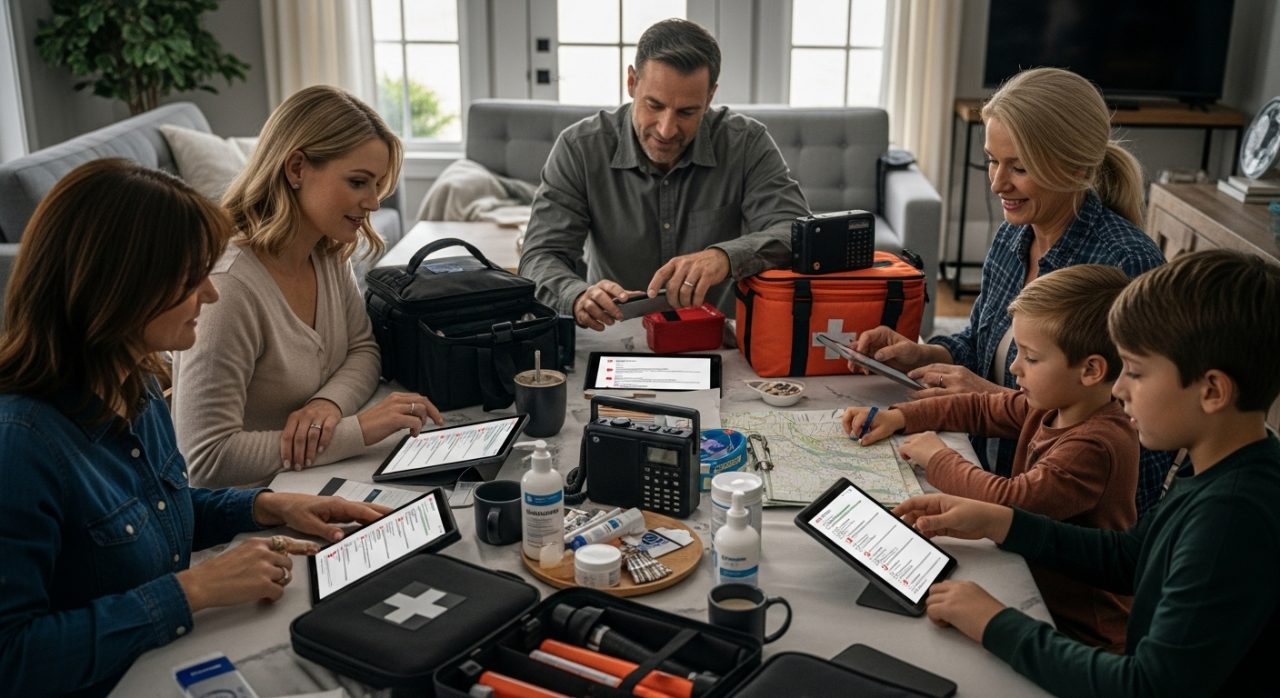
Disasters never check your calendar before they hit, and the stakes have never been higher. FEMA reports that effective emergency response plans raise survival odds by up to 60 percent. Most people picture an emergency kit as little more than a box of canned food and batteries, but the real secret is a dynamic checklist that grows with your family and uses the latest digital tools. Preparedness in 2025 is all about adapting and thinking ahead.
Table of Contents
- Understand The Basics Of Emergency Preparedness
- Create A Family Emergency Plan
- Assemble Your Emergency Kit
- Know The Local Emergency Resources
- Stay Informed About Local Risks And Alerts
- Practice Your Response Drills Regularly
- Review And Update Your Checklist Annually
Quick Summary
| Takeaway | Explanation |
|---|---|
| Assess Local Risks Thoroughly | Identify potential natural and human-made disasters affecting your area for effective planning. |
| Establish Clear Communication Plans | Use designated protocols and meeting points to ensure family members can connect during emergencies. |
| Assemble a Personalized Emergency Kit | Include essential supplies tailored to your family’s specific needs and local hazards for efficient response. |
| Regularly Review and Update Plans | Treat your emergency response checklist as a living document; involve your family in annual reviews. |
| Practice Response Drills Consistently | Conduct diverse, realistic drills to enhance skills and reduce panic in actual emergencies. |
1: Understand the Basics of Emergency Preparedness
Emergency preparedness is not just a recommendation—it’s a critical lifeline when unexpected disasters strike. The foundation of any effective emergency response checklist begins with a comprehensive understanding of potential risks and strategic planning. According to FEMA’s comprehensive emergency preparedness guidelines, successful preparation involves more than just stockpiling supplies.
In 2025, emergency preparedness requires a holistic approach that integrates multiple layers of readiness. Knowing your specific risks is paramount. This means understanding the potential natural and human-made disasters that could impact your region, whether they are hurricanes, earthquakes, wildfires, floods, or technological disruptions.
Key preparedness concepts include:
-
Comprehensive Risk Assessment: Identify potential threats specific to your location
-
Communication Strategy: Develop clear communication protocols with family members and emergency contacts
-
Resource Allocation: Create a robust plan for immediate survival needs
Your emergency response checklist must address multiple critical domains. Physical preparedness involves creating emergency kits, establishing evacuation routes, and understanding basic survival skills. Psychological preparedness means developing mental resilience and stress management techniques to maintain calm during chaotic situations.
Technological advancements in 2025 have transformed emergency preparedness. Digital tools now provide real-time updates, satellite communication options, and advanced tracking systems that can significantly enhance your emergency response capabilities. Read more about our practical emergency response basics to stay ahead of potential challenges.
Remember, an emergency response checklist is a living document. Regular review, updating, and practicing your plan ensures you remain adaptable and ready for whatever challenges may arise. Preparedness is not about fear—it’s about empowerment and strategic planning.
2: Create a Family Emergency Plan
Creating a comprehensive family emergency plan transcends basic preparation—it represents your family’s lifeline during unexpected disasters. According to Ready.gov’s family emergency planning guidelines, successful planning requires strategic coordination and clear communication.
Effective family emergency planning involves multiple critical components. Your plan must account for diverse scenarios, individual family member needs, and potential communication disruptions. This means developing a flexible strategy that adapts to rapidly changing circumstances.
Key family emergency plan elements include:
-
Communication Protocols: Establish primary and backup communication methods
-
Designated Meeting Points: Select multiple safe locations for family reunification
-
Individual Responsibility Assignment: Define specific roles for each family member
Modern emergency planning in 2025 requires technological integration and digital preparedness. Smart devices, emergency alert systems, and real-time tracking applications provide unprecedented opportunities for family safety monitoring. Ensure every family member understands how to use these technological tools effectively.
Special considerations are crucial when developing your plan. Families with young children, elderly members, or individuals with medical conditions need tailored emergency strategies. This might include specific medication protocols, mobility assistance plans, or specialized communication methods.
Explore our comprehensive emergency preparedness guide to understand nuanced planning strategies that can protect your loved ones.
Regular plan review and practice are non-negotiable. Conduct family emergency drills at least twice annually, updating contact information, reassessing potential risks, and ensuring all members remain familiar with the established protocols. Your emergency plan is a living document—treat it as an evolving strategy that grows with your family’s changing dynamics.
3: Assemble Your Emergency Kit
Assembling a comprehensive emergency kit is more than a survival strategy—it’s your lifeline during unexpected disasters. According to Ready.gov’s emergency preparedness guidelines, a well-constructed emergency kit can make the critical difference between vulnerability and resilience.
Modern emergency kits in 2025 require strategic, multifaceted planning. This means moving beyond traditional survival supplies and incorporating technology, personalized medical needs, and adaptable resources that address diverse emergency scenarios.
Critical emergency kit components include:
-
Water and Nutrition: Minimum three-day supply of non-perishable food and water
-
Communication and Power: Battery-powered devices, portable chargers, emergency radio
-
Medical and Personal Care: First aid supplies, prescription medications, hygiene products
Technology has transformed emergency preparedness. Smart emergency kits now integrate digital tracking, real-time communication tools, and compact multifunctional devices that maximize space and utility. Consider lightweight, durable equipment that provides maximum functionality with minimal weight.
Personalization is key. Your emergency kit should reflect your family’s unique medical requirements, dietary restrictions, and specific environmental challenges. This might include specialized medications, adaptive equipment for family members with disabilities, or region-specific survival tools.
Discover our comprehensive guide to packing the ultimate emergency kit to ensure you’re fully prepared for any scenario.
Regular maintenance of your emergency kit is non-negotiable. Schedule biannual reviews to replace expired items, update technological components, and reassess your family’s changing needs. An emergency kit is not a static collection—it’s a dynamic, evolving resource that grows with your preparedness knowledge.
4: Know the Local Emergency Resources
Understanding your local emergency resources is a critical component of comprehensive disaster preparedness. According to Ready.gov’s emergency planning guidelines, knowing precisely where and how to access local support can mean the difference between chaos and coordinated response.
Local emergency resources extend far beyond basic emergency services. In 2025, community preparedness involves complex networks of government agencies, volunteer organizations, medical facilities, and technological support systems designed to provide rapid, comprehensive assistance during crisis situations.
Key local emergency resources to identify include:
-
Emergency Contact Centers: Local 911 dispatch, city emergency management offices
-
Medical Support: Nearest hospitals, urgent care centers, emergency medical services
-
Shelter and Displacement Services: Community shelters, temporary housing coordination centers
Technological advancements have transformed how communities access and utilize emergency resources. Mobile applications, real-time alert systems, and geolocation-based emergency tracking provide unprecedented connectivity during disaster scenarios. These tools enable instant communication, resource mapping, and rapid response coordination.
Special populations require targeted resource understanding. Families with medical needs, individuals with disabilities, elderly residents, and non-English speaking communities often need specialized emergency support channels. Research local organizations that provide culturally sensitive and accessibility-focused emergency assistance.
Learn more about navigating local emergency support networks to ensure comprehensive disaster readiness.
Building relationships with local emergency management professionals before a crisis occurs can significantly enhance your preparedness. Attend community emergency preparedness workshops, participate in local disaster drills, and maintain updated contact information for key emergency service providers. Proactive engagement transforms theoretical knowledge into practical, life-saving understanding.
5: Stay Informed About Local Risks and Alerts
Staying informed about local risks and alerts is not just a recommendation—it’s a critical survival strategy in an increasingly complex emergency landscape. According to the U.S. Department of Homeland Security’s emergency alert guidelines, understanding potential threats can mean the difference between proactive response and reactive panic.
Modern risk awareness transcends traditional communication methods. In 2025, emergency information flows through multiple sophisticated channels, providing real-time, granular insights into potential hazards.
Effective risk monitoring strategies include:
-
Multi-Platform Alert Systems: Wireless Emergency Alerts, smartphone notifications, local broadcast channels
-
Digital Tracking Tools: Geographic risk mapping, real-time weather monitoring applications
-
Community Communication Networks: Local emergency management social media channels, neighborhood alert systems
Technological advancements have revolutionized how individuals receive and process emergency information. Artificial intelligence and machine learning now power predictive risk assessment tools that can anticipate potential emergencies before they fully develop. These systems analyze historical data, current environmental conditions, and complex meteorological patterns to provide unprecedented early warning capabilities.
Regional specificity is crucial when monitoring risks. Different geographic areas face unique environmental and infrastructural challenges. Understanding local geological patterns, potential natural disaster risks, and community-specific vulnerabilities allows for more targeted preparedness.
Explore our comprehensive guide to understanding local emergency risks to develop a nuanced approach to emergency preparedness.
Consistent engagement with local emergency management resources remains key. Attend community briefings, participate in local emergency preparedness workshops, and maintain active communication channels with regional authorities. Remember, information is your most powerful tool in navigating potential emergency scenarios.
6: Practice Your Response Drills Regularly
Regular emergency response drills transform theoretical knowledge into actionable survival skills. While planning provides the blueprint, consistent practice ensures your family can execute that plan under high-stress conditions. Muscle memory and psychological preparedness are critical components of effective emergency response.
Modern emergency drill strategies go beyond traditional scenarios, incorporating dynamic and unpredictable simulation techniques that challenge family members to adapt quickly. These advanced practice methods help identify potential gaps in your emergency response plan before an actual crisis occurs.
Key drill practice elements include:
-
Scenario Diversity: Practice multiple emergency scenarios including natural disasters, medical emergencies, home evacuations
-
Role Rotation: Ensure each family member understands multiple emergency responsibilities
-
Technology Integration: Use digital simulation tools and mobile applications for realistic drill experiences
Technological advancements have revolutionized emergency drill preparation. Virtual reality simulations, augmented reality training modules, and interactive digital platforms now provide immersive, realistic emergency scenario experiences. These tools allow families to practice complex response strategies in safe, controlled environments.
Psychological preparation is equally important as physical practice. Emergency drills help reduce panic responses, build confidence, and create a sense of collective resilience. Children and vulnerable family members particularly benefit from repeated, age-appropriate emergency practice sessions.
Discover comprehensive emergency response protocol strategies to enhance your family’s preparedness.
Consistent drill scheduling is crucial. Recommend conducting full family emergency drills at least twice annually, with smaller, focused practice sessions every three to four months. Document your drill outcomes, discuss performance, and continuously refine your emergency response strategy. Remember, the goal is not perfection, but progressive improvement and adaptability.
7: Review and Update Your Checklist Annually
An emergency response checklist is a living document that demands consistent evolution. According to FEMA’s emergency management guidelines, annual reviews are not just recommended—they are essential for maintaining an effective emergency preparedness strategy.
Dynamic emergency preparedness requires continuous adaptation. Technological advancements, changing family dynamics, shifting regional risks, and emerging disaster response technologies necessitate regular comprehensive checklist updates.
Key annual review considerations include:
-
Personal Circumstance Changes: Updated medical information, new family members, changing mobility needs
-
Technological Upgrades: Newer communication tools, improved emergency tracking systems
-
Regional Risk Modifications: Evolving local environmental and infrastructural challenges
Technological innovations have transformed how families approach emergency preparedness documentation. Digital platforms now enable real-time tracking, automatic update suggestions, and sophisticated risk assessment algorithms that can highlight potential gaps in your emergency response strategy.
Professional emergency management experts recommend a systematic approach to annual checklist updates. This involves not just reviewing documents, but conducting comprehensive family discussions, reassessing potential scenarios, and integrating lessons learned from previous drills and potential near-miss experiences.
Explore our comprehensive disaster preparedness checklist framework to streamline your annual review process.
Consider scheduling your annual emergency response checklist review during a consistent, predictable time—perhaps during a family gathering or at the start of a new year. Involve all family members, including children, to ensure collective understanding and commitment. Document your changes, maintain digital and physical copies, and treat this review as a critical investment in your family’s long-term safety and resilience.
The table below provides a comprehensive summary of the key emergency preparedness tips, benefits, and actions outlined throughout the article for creating an effective emergency response checklist in 2025.
| Step & Focus | Key Actions & Details | Benefits/Outcomes |
|---|---|---|
| 1. Understand Emergency Preparedness | Assess local risks, develop strategic plans, combine physical and psychological readiness, adopt digital tools | Foundation for all further preparedness; empowered mindset |
| 2. Create a Family Emergency Plan | Establish communication protocols, assign roles, plan reunification, account for special needs, use digital alerts | Ensures family cohesion and safety during emergencies |
| 3. Assemble Your Emergency Kit | Stock 3 days food/water, include tech, medical items, personalize supplies, conduct biannual updates | Provides supplies for survival and tailored needs |
| 4. Know Local Emergency Resources | Identify contacts, medical centers, shelters, leverage tech apps, engage with community | Enables fast, coordinated response and support |
| 5. Stay Informed on Local Risks & Alerts | Subscribe to official alerts, use risk apps, attend briefings, follow local channels, leverage AI prediction | Allows proactive adaptation and reduced response time |
| 6. Practice Response Drills Regularly | Conduct drills twice yearly, rotate roles, integrate tech, document outcomes, adjust plans | Builds muscle memory, reduces panic, identifies weaknesses |
| 7. Review & Update Annually | Reassess risks, update for tech/family changes, review as a group, document changes | Maintains checklist relevance and maximizes preparedness |
Take Your Emergency Readiness Further With Disaster Victim Services
You have just learned how crucial a proactive emergency response checklist is for protecting your family in uncertain times. Planning, practicing, and keeping up-to-date are only the first steps. When a real disaster hits, one of the biggest challenges is turning your careful preparation into fast, real-world solutions for housing, communication, and recovery. The need for fast emergency assistance and reliable support is a major pain point mentioned throughout the article—especially when families are suddenly displaced with little warning and feel overwhelmed.
If you want expert help that bridges your careful planning with real, compassionate action, trust Disaster Victim Services. Our nationwide team is available 24/7 to coordinate emergency shelter, manage insurance logistics, and guide you through every stage of recovery. We work directly with first responders and insurance professionals to streamline transitions from crisis to stability. Explore even more tips and support resources by visiting our Uncategorized – Disaster Victim Services section. Take action now and let us turn your emergency readiness into real relief—visit our main site and connect with a team that puts your family first.
Frequently Asked Questions
What are the key components of an emergency response checklist?
Your emergency response checklist should include a comprehensive risk assessment, established communication strategies, resource allocation for immediate survival needs, physical preparedness measures, and mental resilience techniques.
How often should I review and update my emergency response checklist?
It’s essential to review and update your emergency response checklist at least once a year, considering changes in personal circumstances, technological advancements, and regional risk modifications.
What should be included in a family emergency plan?
A family emergency plan should include communication protocols, designated meeting points for reunification, individual responsibility assignments for each family member, and consideration of specific needs for children, elderly, or those with medical conditions.
How do I assemble a comprehensive emergency kit for my family?
A comprehensive emergency kit should contain a minimum three-day supply of water and non-perishable food, communication and power supplies like battery-powered devices and chargers, and essential medical and personal care items including first aid supplies and prescription medications.
Recommended
- Essential Emergency Supply Checklist for 2025: Stay Safe and Prepared – Disaster Victim Services | Helping You Recover After Disaster
- Disaster Safety Checklist 2025: Essential Steps for Every Family and Organization – Disaster Victim Services | Helping You Recover After Disaster
- Essential Emergency Supply Checklist for 2025: Stay Safe and Prepared – Disaster Victim Services | Helping You Recover After Disaster
- Disaster Safety Checklist 2025: Essential Steps for Every Family and Organization – Disaster Victim Services | Helping You Recover After Disaster