
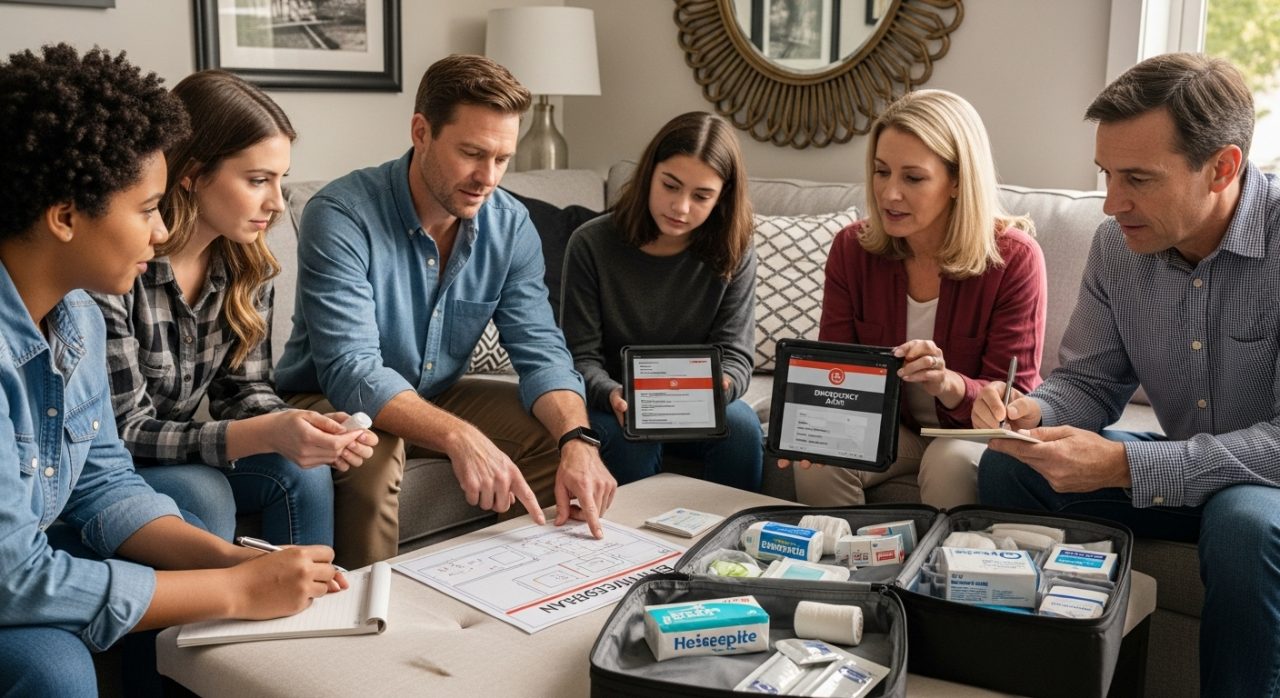
Emergency preparedness might sound simple and routine. Yet every year, over half a million cardiac arrests occur in the US alone and only a fraction of families have a solid emergency plan in place. Most people think creating a plan or kit is enough and then never revisit it. The real edge comes from building a network, updating your supplies, and learning skills that can literally save lives before help arrives.
Table of Contents
- Know Your Emergency Contacts
- Create A Family Emergency Plan
- Assemble A Disaster Supply Kit
- Stay Informed With Updated Alerts
- Understand Local Risk Factors
- Practice First Aid And Cpr Techniques
- Explore Virtual Emergency Courses
- Collaborate With Community Resources
Quick Summary
| Takeaway | Explanation |
|---|---|
| Organize Your Emergency Contacts | Compile a list of essential contacts including family, local services, and healthcare providers for quick access during emergencies. |
| Develop a Family Emergency Plan | Create a detailed plan that outlines roles, communication methods, and meeting locations for each family member during a crisis. |
| Assemble a Disaster Supply Kit | Prepare a kit with vital supplies for at least 72 hours, including food, water, and medical items tailored to family needs. |
| Stay Informed with Alerts | Use multiple alert channels to receive timely updates regarding emergencies, focusing on official sources for accurate information. |
| Engage Community Resources | Collaborate with local organizations and neighbors to establish a support network that enhances collective emergency response efforts. |
1: Know Your Emergency Contacts
Preparing for emergencies begins with establishing a robust communication network that keeps you connected during critical moments. Understanding and organizing your emergency contacts is a fundamental step in creating a comprehensive emergency response strategy for 2025.
According to the Centers for Disease Control and Prevention, developing a strategic contact list is crucial for effective emergency preparedness. Your emergency contact list should be comprehensive and easily accessible, including various critical connections.
Key individuals to include in your emergency contact network:
-
Family members with their full names, phone numbers, and alternative contact methods
-
Local emergency services including police, fire department, and medical services
-
Healthcare providers such as your primary care physician and specialists
-
Insurance representatives who can assist with immediate claims and support
-
Trusted neighbors who can provide immediate local assistance
-
Out-of-state contacts who can help coordinate communication if local networks are disrupted
Create both digital and physical copies of your emergency contact list. Store digital versions in secure cloud storage and password-protected documents. For physical copies, keep waterproof and portable versions in your emergency go-bag, ensuring you can access critical contact information even when electronic devices fail.
For those interested in more comprehensive emergency planning, our guide offers additional insights into building a resilient communication strategy.
Remember to update your contact list annually, verifying phone numbers, addresses, and alternative communication methods. During emergencies, having accurate and current contact information can make a significant difference in your ability to connect with critical support networks quickly and effectively.
2: Create a Family Emergency Plan
A comprehensive family emergency plan serves as your roadmap during unexpected disasters, ensuring every family member understands their role and knows precisely how to respond. In 2025, strategic planning goes beyond simple conversations to creating a detailed, actionable strategy that addresses multiple potential scenarios.
According to Ready.gov, developing a robust family emergency plan requires thoughtful preparation and regular communication. Your plan should be comprehensive yet adaptable to various emergency scenarios.
Key components of an effective family emergency plan include:
-
Communication protocols for reconnecting if separated during an emergency
-
Designated meeting locations both near your neighborhood and outside your immediate area
-
Individual responsibilities for each family member based on their capabilities
-
Emergency supply kit with essential survival items
-
Backup communication methods in case mobile networks are unavailable
Each family member should understand critical information such as:
-
Home address and contact details
-
Emergency contact phone numbers
-
Location of emergency supply kit
-
Basic first aid and evacuation procedures
Consider unique family needs when developing your plan. This includes accounting for elderly family members, children, pets, and individuals with specific medical requirements. Our comprehensive emergency preparedness guide offers additional insights into tailoring plans for diverse family compositions.
Regular practice and annual review are crucial. Conduct family emergency drills twice yearly, updating contact information and reassessing your strategy. Treat your emergency plan as a living document that evolves with your family’s changing circumstances, ensuring you remain prepared for whatever challenges may arise.
3: Assemble a Disaster Supply Kit
A well-prepared disaster supply kit can mean the difference between survival and vulnerability during unexpected emergencies. In 2025, assembling a comprehensive kit requires strategic thinking and advanced planning to address diverse potential scenarios.
According to Ready.gov, your disaster supply kit should provide essential resources for survival during the critical first 72 hours after a disaster when normal infrastructure might be compromised.
Essential items for your disaster supply kit should include:
-
Water (one gallon per person per day)
-
Non-perishable food with extended shelf life
-
First aid kit with comprehensive medical supplies
-
Flashlight and extra batteries
-
Battery-powered or hand-crank radio
-
Personal hygiene items
-
Prescription medications
-
Important documents in waterproof containers
Additional critical considerations for your disaster supply kit:
-
Rotate food and water supplies every six months
-
Include items specific to your family’s unique needs
-
Store kit in a portable, easy-to-carry container
-
Maintain a digital backup of important documents
Our comprehensive emergency kit guide provides detailed insights into creating a customized kit that adapts to various emergency scenarios.
Consider creating multiple kits: one for home, one for your vehicle, and compact versions for each family member. Digital technology in 2025 allows for more compact, multifunctional emergency tools, so invest in lightweight, versatile equipment that can serve multiple purposes.
Remember that your disaster supply kit is not a static collection but a dynamic resource that requires regular review and updating. Check your kit biannually, replacing expired items and adjusting contents based on changing family needs, medical requirements, and potential regional emergency risks.
4: Stay Informed with Updated Alerts
In an era of rapidly evolving emergencies, staying informed becomes a critical survival skill. Timely and accurate information can mean the difference between safety and vulnerability during unexpected disasters.
According to the Centers for Disease Control and Prevention, developing a comprehensive alert strategy is crucial for effective emergency response in 2025.
Multiple Alert Channels for Maximum Coverage:
-
Wireless Emergency Alerts on smartphones
-
Local government emergency notification systems
-
NOAA weather radio
-
Official social media channels
-
Local news and media platforms
Critical Information to Track:
-
Evacuation routes and instructions
-
Shelter locations
-
Immediate safety recommendations
-
Infrastructure status updates
-
Medical and healthcare guidance
Technology in 2025 offers unprecedented connectivity, enabling more sophisticated alert systems. Smart devices now provide real-time, location-specific emergency notifications with unprecedented precision. Download official emergency management apps, enable push notifications, and register for local alert systems to ensure you receive critical updates instantly.
Our comprehensive emergency preparedness guide offers additional strategies for staying informed during complex emergency scenarios.
Remember that information sources matter. Prioritize official government channels, verified emergency management platforms, and scientifically backed sources. Avoid spreading unverified information and focus on actionable, immediate guidance from authorized agencies.
Create a communication hierarchy where you have multiple backup methods to receive critical alerts. This might include traditional radio, digital platforms, community notification systems, and direct communication networks with local emergency responders.
5: Understand Local Risk Factors
Comprehending the specific emergency risks unique to your geographical location is a critical component of effective disaster preparedness. In 2025, understanding local risk factors goes beyond generic emergency planning and requires a nuanced, data-driven approach.
According to the Centers for Disease Control and Prevention, local risk assessment demands a comprehensive evaluation of potential threats specific to your region.
Primary Risk Categories to Evaluate:
-
Natural disaster potential (floods, hurricanes, earthquakes)
-
Climate change impact zones
-
Industrial and technological hazard proximity
-
Infrastructure vulnerability points
-
Population density and demographic factors
Key Risk Assessment Strategies:
-
Review local emergency management agency reports
-
Analyze historical disaster data for your region
-
Consult geographic and geological surveys
-
Understand climate projection models
-
Identify community-specific vulnerabilities
Our comprehensive risk assessment guide provides detailed insights into localized emergency preparedness strategies.
Technology in 2025 offers sophisticated risk mapping tools that provide granular insights into potential emergency scenarios. These advanced systems integrate satellite imagery, climate data, geological surveys, and real-time environmental monitoring to create predictive risk models.
Consider consulting local emergency management offices, participating in community preparedness workshops, and leveraging digital platforms that offer localized risk assessments. Understanding your specific risk profile allows for targeted, effective emergency planning that goes beyond generic recommendations.
Remember that risk factors are dynamic. Regularly update your understanding by staying connected with local authorities, attending community preparedness sessions, and utilizing advanced digital risk assessment tools that provide real-time environmental and geological insights.
6: Practice First Aid and CPR Techniques
Lifesaving skills are no longer optional but essential survival capabilities in emergency scenarios. Mastering first aid and CPR techniques can transform an ordinary bystander into a critical emergency responder capable of preserving human life during critical moments.
According to the National Institutes of Health, approximately half a million cardiac arrests occur annually, highlighting the urgent need for widespread emergency medical knowledge.
Critical First Aid Skills to Master:
-
Cardiopulmonary resuscitation (CPR)
-
Heimlich maneuver
-
Wound management and bleeding control
-
Shock recognition and treatment
-
Basic trauma assessment
Key Considerations for Emergency Medical Training:
-
Attend certified training programs
-
Practice techniques regularly
-
Update skills annually
-
Understand personal limitations
-
Learn to assess scene safety
Technology in 2025 offers innovative training methods, including virtual reality simulations and interactive online courses that provide realistic emergency scenario practice. Digital platforms now enable individuals to learn and refresh lifesaving techniques from the comfort of their homes.
Our comprehensive first aid guide provides in-depth insights into modern emergency medical techniques.
Remember that first aid skills are perishable. Regular practice, consistent training, and staying updated with the latest medical protocols are crucial. Consider joining local community emergency response teams, participating in workshops, and maintaining current certifications to ensure your skills remain sharp and effective.
7: Explore Virtual Emergency Courses
Emergency preparedness education has transformed dramatically, with virtual learning platforms offering unprecedented access to critical survival skills. In 2025, digital courses provide flexible, comprehensive training that can be accessed from anywhere, breaking down traditional barriers to emergency response knowledge.
According to the Center for Domestic Preparedness, virtual classroom training represents a revolutionary approach to emergency response education, enabling individuals to develop crucial skills without geographical limitations.
Advanced Virtual Learning Platforms:
-
Interactive simulation training
-
Real-time expert instruction
-
Scenario-based learning modules
-
Mobile-friendly course formats
-
Certification tracking systems
Key Benefits of Online Emergency Training:
-
Learn at your own pace
-
Access global expert knowledge
-
Cost-effective skill development
-
Flexible scheduling options
-
Immediate performance feedback
Our comprehensive emergency response training guide provides deeper insights into virtual learning opportunities.
Technology in 2025 integrates artificial intelligence and augmented reality to create immersive learning experiences. Advanced platforms now offer personalized training paths, adapting content based on individual learning progress and identifying skill gaps in real-time.
Prioritize courses from recognized institutions like FEMA, Red Cross, and professional emergency management organizations. Seek programs that offer practical skills, interactive components, and verifiable certifications. Remember that continuous learning is key preparing for unpredictable emergency scenarios. Regularly update your skills, participate in refresher courses, and stay connected with evolving emergency response methodologies.
8: Collaborate with Community Resources
Effective emergency response transcends individual preparedness and requires robust community collaboration. In 2025, interconnected support networks represent the most powerful mechanism for navigating complex disaster scenarios and ensuring collective resilience.
Understanding the power of community resources means recognizing that no individual can successfully manage emergencies in isolation. Diverse local networks provide critical support, information, and practical assistance during challenging times.
Key Community Resources to Engage:
-
Local emergency management offices
-
Neighborhood disaster response teams
-
Religious and community centers
-
Professional mutual aid networks
-
Local government support services
Strategic Collaboration Approaches:
-
Attend community preparedness workshops
-
Join local emergency response groups
-
Participate in neighborhood communication networks
-
Share and receive critical resource information
-
Cross-train with local support organizations
Our comprehensive community resource guide provides deeper insights into building effective support networks.
Technology in 2025 enables unprecedented community connectivity through advanced digital platforms. Smartphone applications, geographically targeted communication systems, and real-time information sharing tools transform how communities coordinate emergency responses.
Remember that collaboration is a two-way street. Offer your skills, knowledge, and support to community resources while simultaneously being open to receiving assistance. Building trust, maintaining open communication channels, and demonstrating mutual respect are fundamental to creating resilient, responsive community networks that can effectively navigate emergencies together.
The table below provides a comprehensive summary of the 8 essential emergency response tips for 2025, highlighting the main action areas, key steps, and the core benefits of each tip discussed in the article.
| Tip / Action Area | Key Steps & Components | Main Benefits & Outcomes |
|---|---|---|
| Organize Emergency Contacts | Compile key contacts (family, local services, healthcare, insurance, neighbors, out-of-state), keep updated & accessible | Rapid communication and support during emergencies |
| Create a Family Emergency Plan | Define roles, set meeting places, establish communication protocols, address special needs, conduct regular drills | Clear procedures, family cohesion, faster response |
| Assemble a Disaster Supply Kit | Prepare kit (water, food, meds, hygiene, documents, flashlight, radio); tailor to family, store in multiple locations | Immediate self-sufficiency for at least 72 hours |
| Stay Informed with Alerts | Use official apps & channels, enable notifications, have backup alert systems, track evacuation/shelter info | Timely, accurate updates for safe decision-making |
| Understand Local Risk Factors | Assess natural/industrial threats, use maps & data, update knowledge regularly, consult local agencies | Reliable risk-specific preparedness and planning |
| Practice First Aid and CPR | Attend certified courses, refresh skills, practice annually, learn key emergency techniques, join drills | Empowered to save lives and provide aid pre-response |
| Explore Virtual Emergency Courses | Use online/AR courses, access expert knowledge, earn certifications, study flexibly and update as needed | Skills accessible to all, ongoing learning |
| Collaborate with Community Resources | Connect with community teams & neighbors, share info, join workshops, use digital networks for coordination | Stronger mutual aid and resilient local response |
Take Action With Trusted Emergency Response Support
Emergencies can turn life upside down, leaving you searching for fast solutions and reliable resources. The article “8 Essential Emergency Response Tips for 2025” highlights common challenges like staying connected, understanding local risks, and accessing immediate support when disaster strikes. Trying to safeguard your family and manage communication, housing, and logistics can feel overwhelming in uncertain times.
At DisasterVictimServices.com, our mission is to fill those gaps with expert guidance and hands-on help. We specialize in quick emergency housing, insurance claim coordination, and connecting you with trusted professionals who can help you recover. Explore our emergency recovery resources for practical support and tailored solutions that match the latest emergency preparedness strategies. If you are seeking peace of mind and a clear plan to move forward, visit us today. Do not wait until disaster happens; get the expertise and compassionate support you deserve now.
Frequently Asked Questions
What should I include in my emergency contact list?
Your emergency contact list should include family members’ names and phone numbers, local emergency services (police, fire department, medical services), healthcare providers, insurance representatives, trusted neighbors, and out-of-state contacts for coordination.
How can I create an effective family emergency plan?
An effective family emergency plan should include communication protocols, designated meeting locations, individual responsibilities, an emergency supply kit, and backup communication methods. Regular practice and communication are essential for your plan to be effective.
What are the essential items for a disaster supply kit?
Essential items for a disaster supply kit include water (one gallon per person per day), non-perishable food, a first aid kit, a flashlight with extra batteries, a battery-powered or hand-crank radio, personal hygiene items, prescription medications, and important documents in waterproof containers.
How can I stay informed during an emergency?
To stay informed during an emergency, utilize multiple alert channels such as Wireless Emergency Alerts on smartphones, local government emergency notification systems, NOAA weather radio, official social media channels, and local news platforms for immediate updates on safety, evacuation routes, and shelter locations.
Recommended
- Essential Emergency Supply Checklist for 2025: Stay Safe and Prepared – Disaster Victim Services | Helping You Recover After Disaster
- Disaster Safety Checklist 2025: Essential Steps for Every Family and Organization – Disaster Victim Services | Helping You Recover After Disaster
- Emergency Response Basics for 2025: A Practical Guide – Disaster Victim Services | Helping You Recover After Disaster
- Disaster Preparedness Checklist 2025: Essential Guide for All Responders – Disaster Victim Services | Helping You Recover After Disaster