
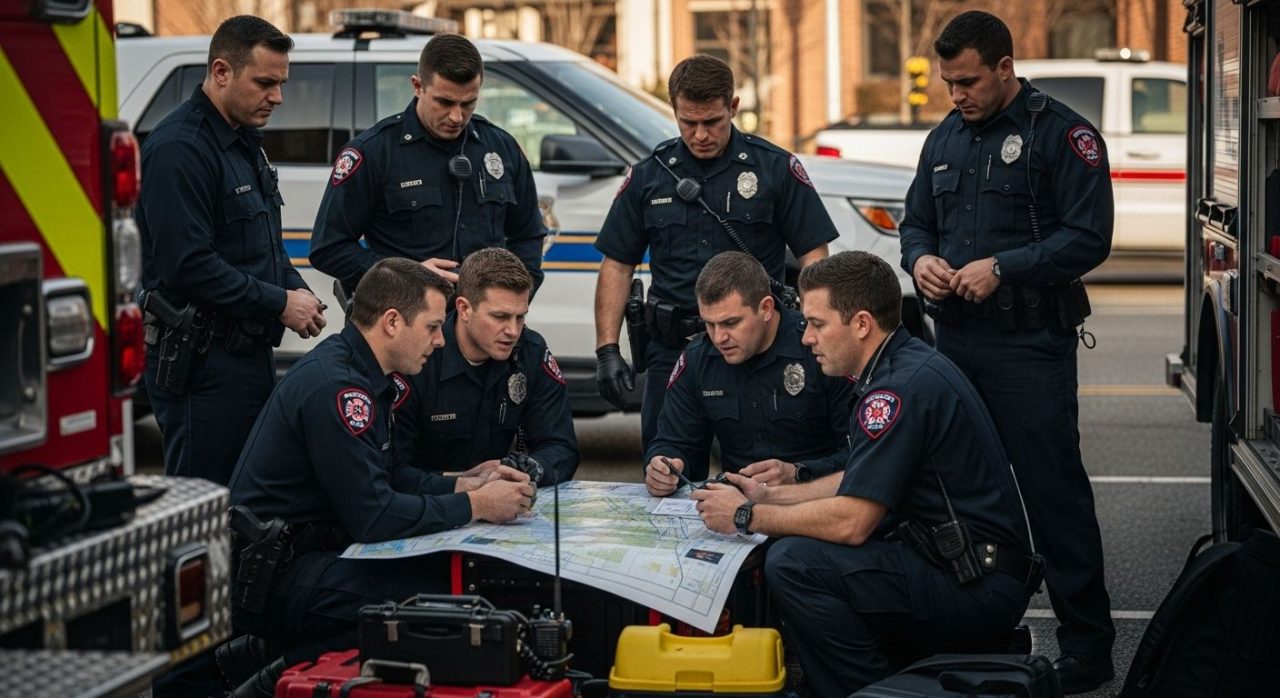
Disaster response is chaotic and fast-moving, but a clear system brings order to even the most complex emergencies. Imagine hundreds of responders from different agencies moving in sync. That is not luck, it is the Incident Command Structure in action, and it can scale from a minor accident to nationwide disaster relief with the same core setup. Most people expect only police or firefighters to be involved, yet ICS actually unites dozens of agencies under a single plan. This surprising teamwork is what makes rapid, life-saving coordination possible when every second counts.
Table of Contents
- Understanding The Incident Command Structure
- Key Roles And Responsibilities In Ics
- Benefits Of Using Incident Command Structure
- Incident Command Structure In Real-World Emergencies
Quick Summary
| Takeaway | Explanation |
|---|---|
| Incident Command Structure coordinates multiple agencies | ICS standardizes emergency management, enhancing cooperation across diverse groups in crises. |
| Clear roles improve efficiency in emergencies | Defined responsibilities within ICS allow for organized action and faster decision-making during high-pressure situations. |
| ICS is adaptable for varying emergencies | The structure can scale depending on the incident’s size, from minor events to large-scale disasters, ensuring appropriateness of response. |
| Enhanced communication reduces misunderstandings | A uniform communication protocol within ICS helps ensure that all responders receive consistent information, minimizing confusion. |
| Real-world effectiveness in various scenarios | ICS proved valuable in managing different emergencies like natural disasters and health crises, showcasing its versatility and reliability. |
Understanding the Incident Command Structure
Disaster response requires a systematic approach to manage complex emergencies effectively. The Incident Command Structure (ICS) provides a standardized framework that enables multiple agencies and organizations to work together seamlessly during critical situations.
The Core Purpose of Incident Command
At its foundation, the Incident Command Structure is a comprehensive management system designed to coordinate emergency response efforts across different teams and agencies. Learn more about emergency response coordination when complex incidents demand precise organizational strategies.
According to Binghamton University’s Comprehensive Emergency Management Plan, the ICS establishes a clear hierarchy and communication protocol that allows emergency responders to quickly adapt to rapidly changing situations. This structured approach ensures that resources are allocated efficiently, responsibilities are clearly defined, and decision making remains focused and streamlined.
Organizational Flexibility and Scalability
One of the most significant advantages of the Incident Command Structure is its remarkable adaptability. As the U.S. Forest Service’s Pacific Southwest Region explains, the system can scale up or down depending on the complexity and scope of the emergency. Whether responding to a small localized incident or a large scale disaster, the ICS provides a consistent management approach.
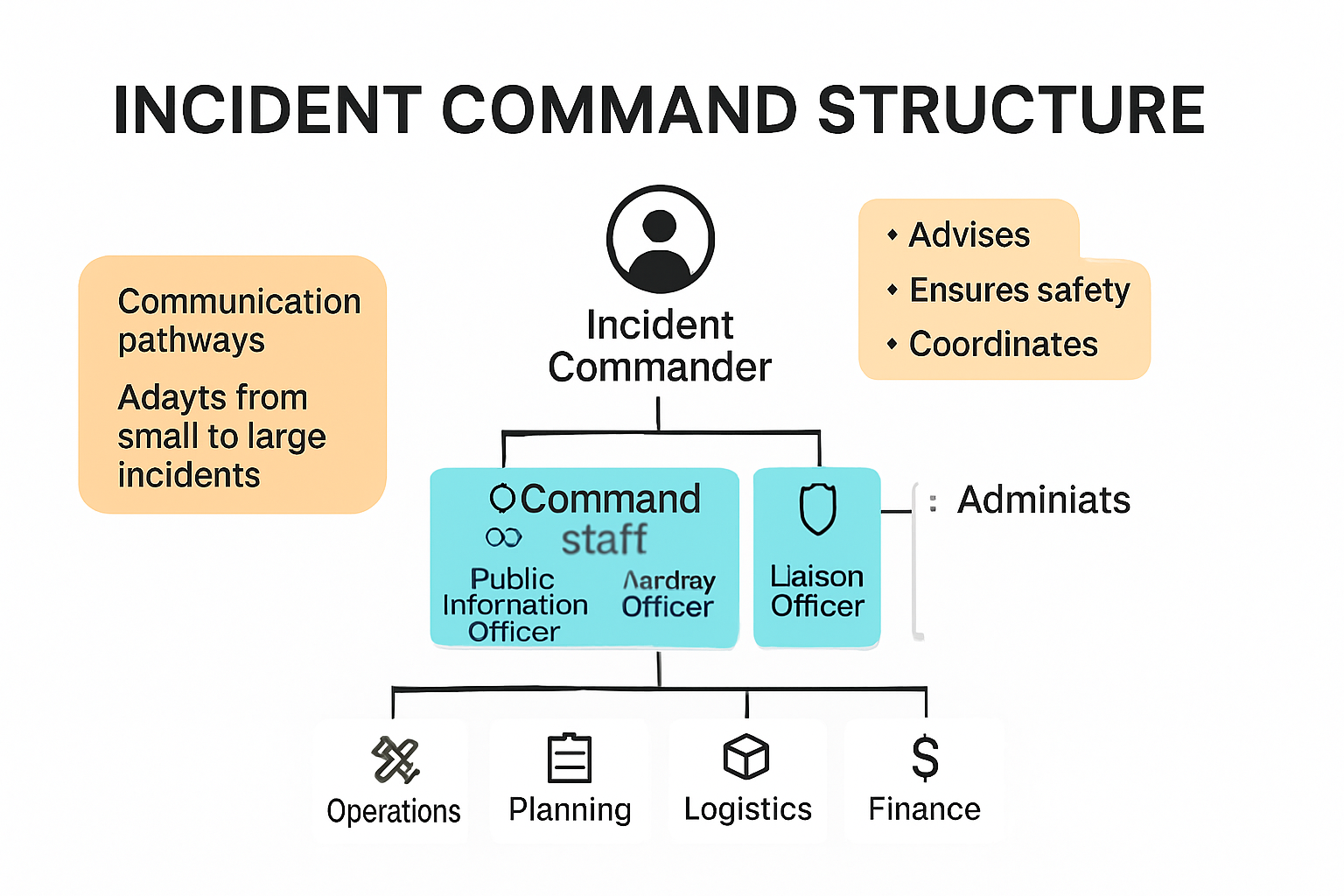
The structure typically includes key positions such as the Incident Commander, who holds ultimate responsibility for overall incident management, and specialized staff like the Information Officer, Liaison Officer, and Safety Officer. Each role has specific responsibilities that contribute to a comprehensive and coordinated response.
Critical Communication and Coordination
Purdue University’s Emergency Preparedness department highlights that the ICS provides a common language for emergency responders, which is crucial during high stress situations. This standardized communication protocol helps prevent misunderstandings and ensures that all team members can quickly comprehend the current situation, objectives, and their individual responsibilities.
The Incident Command Structure transforms chaos into organized action. By establishing clear reporting lines, defining specific roles, and creating a unified communication framework, emergency teams can respond more effectively, ultimately saving lives and minimizing damage during critical incidents.
Key Roles and Responsibilities in ICS
The Incident Command System (ICS) is built on a carefully structured organizational framework that ensures efficient emergency response through clearly defined roles and responsibilities. Each position within the system plays a critical part in managing complex incidents and coordinating multifaceted rescue and recovery efforts.
To help clarify the structure and purpose of key roles within the Incident Command System (ICS), the following table summarizes the main Command and General Staff positions and their core responsibilities.
| Position | Type | Core Responsibility |
|---|---|---|
| Incident Commander | Command Staff | Sets objectives, oversees entire incident management |
| Public Information Officer | Command Staff | Manages communication with public and media |
| Safety Officer | Command Staff | Ensures safety procedures for personnel |
| Liaison Officer | Command Staff | Coordinates with external agencies |
| Operations Section Chief | General Staff | Directs tactical and operational response activities |
| Planning Section Chief | General Staff | Tracks resources, documents progress, develops action plans |
| Logistics Section Chief | General Staff | Provides materials, services, and support |
| Finance Section Chief | General Staff | Manages costs, purchasing, and compensation |
The Incident Commander: Central Leadership Role
At the heart of the Incident Command Structure is the Incident Commander, who bears ultimate responsibility for managing the entire emergency response. Explore our comprehensive guide on emergency response coordination to understand the nuanced leadership required in critical situations.
According to FEMA’s training materials, the Incident Commander is responsible for establishing incident objectives, managing overall operations, applying resources, and ensuring the safety of all personnel. This role demands exceptional decision making skills, adaptability, and the ability to maintain composure under extreme pressure.
Command and General Staff Positions
The USDA Forest Service outlines several critical staff positions that support the Incident Commander:
-
Command Staff: Includes the Public Information Officer, Safety Officer, and Liaison Officer. These roles provide specialized support and ensure communication, safety protocols, and inter agency coordination.
-
General Staff: Comprises four primary sections responsible for planning, logistics, finance, and operations. Each section has specific duties that contribute to the overall incident management strategy.
Specialized Responsibilities and Collaboration
The Federal Highway Administration emphasizes that effective ICS implementation relies on clear communication and well defined roles. Each team member must understand their specific responsibilities while maintaining the flexibility to adapt as the incident evolves.
The Operations Section manages tactical activities directly related to incident objectives. The Planning Section tracks resources, documents incident progress, and develops strategic plans. The Logistics Section provides critical support by securing necessary resources, equipment, and personnel. The Finance Section manages financial aspects, including tracking incident related costs and processing compensation.
This structured approach ensures that during emergencies, from natural disasters to complex rescue missions, every aspect of the response is systematically addressed. By defining clear roles, establishing direct lines of communication, and promoting collaborative problem solving, the Incident Command Structure transforms potential chaos into a coordinated, efficient emergency response mechanism.
Benefits of Using Incident Command Structure
The Incident Command Structure (ICS) offers a robust framework that transforms emergency response from potentially chaotic situations into organized, efficient operations. By implementing a systematic approach, emergency responders can maximize their effectiveness and minimize potential risks during critical incidents.
Enhanced Coordination and Communication
Learn more about emergency response strategies that leverage comprehensive organizational frameworks. According to FEMA’s resource management guidelines, one of the most significant benefits of ICS is the establishment of a clear chain of command and manageable span of control. This structure ensures that each responder reports to a single supervisor, dramatically reducing confusion and enhancing accountability during high stress emergency scenarios.
Key communication advantages include:
- Standardized communication protocols
- Clear reporting mechanisms
- Reduced risk of miscommunication
- Efficient information sharing across multiple agencies
Scalability and Adaptability
The United States Fire Administration highlights the remarkable flexibility of the Incident Command Structure. The system offers unprecedented scalability, allowing for rapid expansion or contraction of the command structure based on the specific needs and complexity of an incident.
This adaptability means emergency teams can quickly adjust their organizational approach whether responding to a small localized emergency or a large scale disaster. The structure can seamlessly integrate resources from multiple agencies, creating a unified response mechanism that can efficiently manage diverse and evolving situations.
Resource Management and Efficiency
The ICS provides a systematic approach to resource allocation that ensures maximum efficiency during emergency responses. By clearly defining roles, establishing priority protocols, and creating a structured decision making framework, emergency teams can optimize their response strategies.
Key resource management benefits include precise tracking of personnel, equipment, and supplies, preventing redundancy and ensuring that critical resources are deployed where they are most needed.
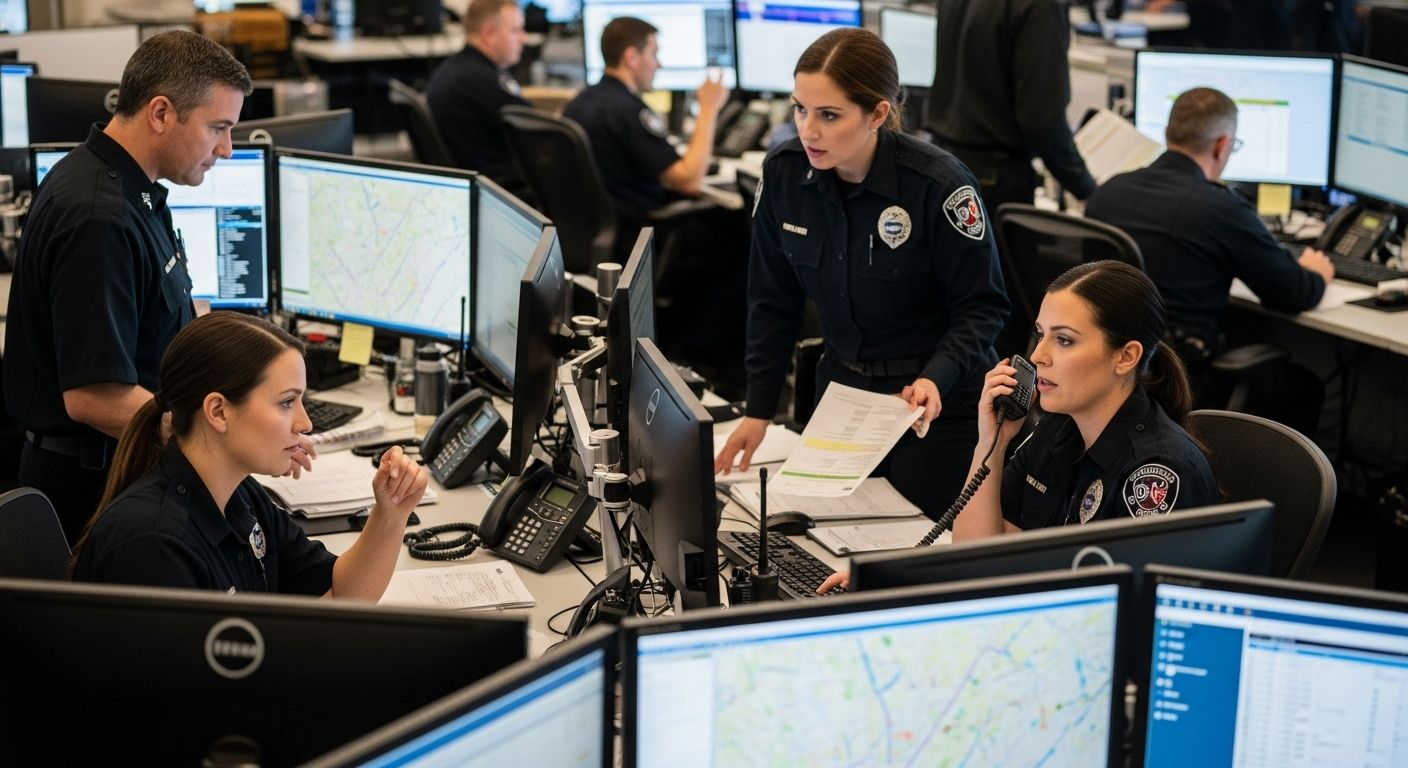
The standardized approach reduces waste, minimizes duplicated efforts, and allows for real time tracking and adjustment of response strategies.
Ultimately, the Incident Command Structure represents more than just an organizational tool. It is a comprehensive system designed to transform potential chaos into coordinated action, ensuring that emergency responders can work together seamlessly to protect lives, minimize damage, and restore safety during critical incidents.
The following table summarizes the key benefits of implementing the Incident Command Structure as outlined in the article. It provides a quick overview of how ICS enhances emergency management.
| Benefit | Description |
|---|---|
| Enhanced Coordination & Communication | Clear chain of command, standardized communication, and reduced risk of misunderstandings |
| Scalability & Adaptability | Can expand or contract to fit incidents of varying size and complexity |
| Efficient Resource Management | Systematic tracking and allocation of personnel, equipment, and supplies |
| Unified Response Across Agencies | Seamless integration and cooperation among multiple organizations |
| Minimized Redundancy & Waste | Avoids duplication of efforts and optimizes deployment of resources |
| Improved Accountability | Defined roles and reporting structures ensure clear oversight and responsibility |
Incident Command Structure in Real-World Emergencies
Real world emergencies demonstrate the critical importance of a structured and adaptable response mechanism. The Incident Command Structure (ICS) has proven invaluable across numerous complex scenarios, from natural disasters to public health crises, showcasing its versatility and effectiveness in managing high stakes situations.
Pandemic Response and Public Health Emergencies
Explore our detailed guide on emergency response strategies to understand how organizational frameworks save lives. During the COVID-19 pandemic, an analysis in Lab Med highlighted how the Incident Command System provided a critical framework for rapid personnel assembly, situation assessment, and strategic response development. Healthcare institutions worldwide utilized ICS principles to coordinate complex medical responses, manage resource allocation, and communicate effectively across multiple departments and agencies.
Key pandemic response advantages included:
- Rapid mobilization of medical resources
- Clear communication channels
- Coordinated inter agency collaboration
- Systematic tracking of personnel and equipment
Natural Disaster Management
The Centers for Disease Control and Prevention emphasizes the importance of Emergency Operations Centers (EOCs) in managing large scale emergencies. When hurricanes, wildfires, or earthquakes strike, the Incident Command Structure enables seamless coordination between local, state, and federal response teams.
Emergency management professionals can quickly establish a unified command, integrating resources from multiple agencies. This approach ensures that rescue operations, resource distribution, and public safety protocols are implemented efficiently, minimizing potential casualties and maximizing recovery efforts.
Complex Institutional Emergency Preparedness
Purdue University’s Integrated Emergency Management Plan demonstrates how institutions can implement ICS to create robust emergency response capabilities. The system provides a flexible organizational structure that can be quickly adapted to incidents of varying complexity, from campus security threats to widespread environmental emergencies.
By establishing a common language, assigning personnel based on expertise, and promoting clear communication protocols, organizations can transform potential chaos into a coordinated, effective response. The Incident Command Structure ensures that every team member understands their role, reporting structure, and critical objectives during high pressure situations.
These real world applications underscore the Incident Command Structure’s fundamental value: transforming complex, potentially overwhelming emergencies into manageable, systematic responses that prioritize human safety and efficient resource management.
Frequently Asked Questions
What is the Incident Command Structure (ICS)?
The Incident Command Structure (ICS) is a standardized framework used to coordinate and manage emergency response efforts among multiple agencies. It provides clear roles, responsibilities, and communication protocols to ensure effective management during crises.
What are the key roles within the Incident Command Structure?
The ICS includes several critical roles, such as the Incident Commander, Public Information Officer, Safety Officer, and various section chiefs for operations, planning, logistics, and finance. Each role has specific responsibilities that contribute to coordinated emergency response efforts.
How does the ICS improve communication during emergencies?
ICS establishes standardized communication protocols, defining clear reporting lines and responsibilities. This helps prevent misunderstandings and ensures that all team members have access to consistent information, improving overall coordination during high-pressure situations.
In what types of emergencies is the Incident Command Structure used?
The ICS can be employed in a variety of emergencies, including natural disasters (like hurricanes or wildfires), public health crises (such as pandemics), and complex institutional emergencies. Its adaptable framework allows it to be effective in managing incidents of differing scales and complexities.
Turn Incident Command Principles Into Immediate Support For Disaster Victims
You have just learned how the Incident Command Structure brings clarity and coordination to emergencies when chaos threatens to take over. But even with the best frameworks in place, the real challenge is connecting affected families with the help they desperately need—quickly, efficiently, and with genuine care. If you are seeking a trusted partner who understands the critical nature of streamlined coordination and clear communication, DisasterVictimServices.com bridges the gap between emergency response plans and real-world recovery for displaced individuals.
When every second matters, our team applies the same command and collaboration standards discussed in this article. We work directly with first responders, government agencies, and insurance carriers to deliver immediate emergency housing and logistical support. See how we facilitate a smooth transition from crisis to rebuilding by visiting our main site. Experience firsthand why so many families and professionals trust us for reliable assistance and expert guidance during disaster recovery. Take action now and let us help you turn structure into real results—reach out to DisasterVictimServices.com today.
Recommended
- Incident Command Chain Explained: Roles and Steps for 2025 – Disaster Victim Services | Helping You Recover After Disaster
- Understanding Emergency Response Roles in 2025: Key Insights – Disaster Victim Services | Helping You Recover After Disaster
- First Responder Roles Explained: Key Duties and Impact in 2025 – Disaster Victim Services | Helping You Recover After Disaster
- Disaster Response Chain: How It Works and Why It Matters in 2025 – Disaster Victim Services | Helping You Recover After Disaster