
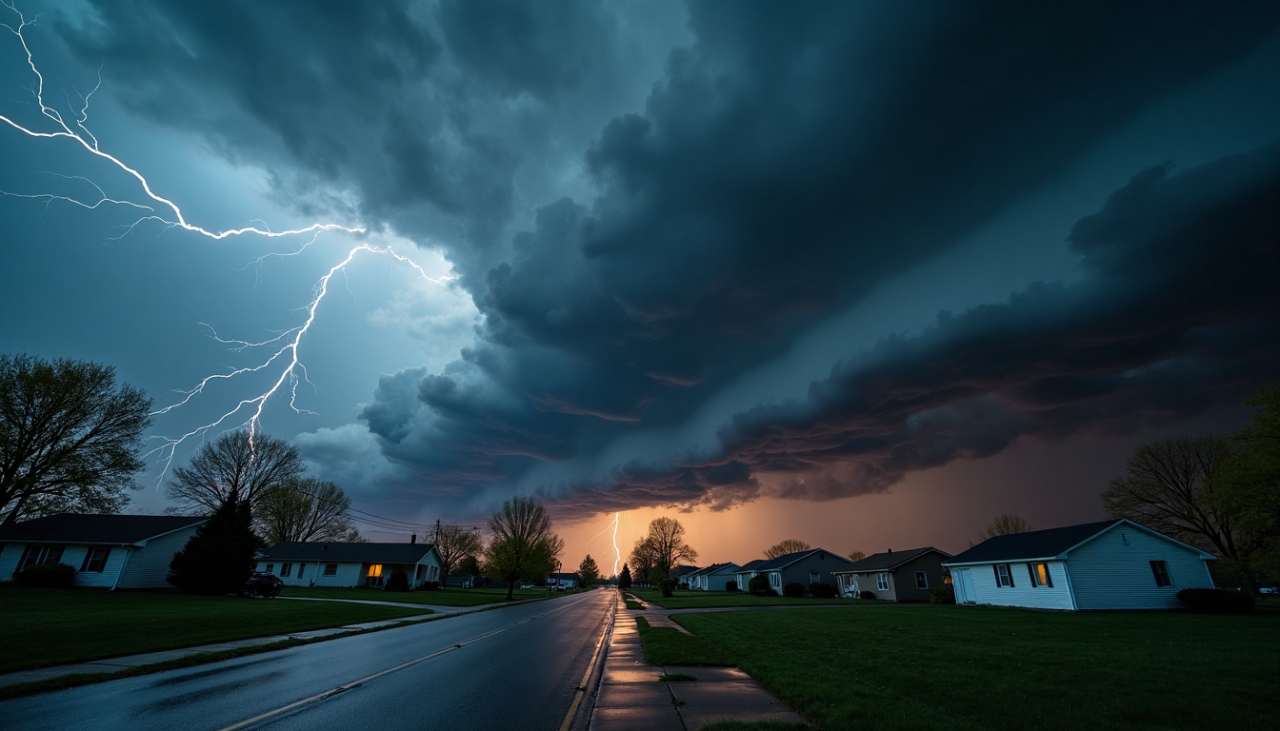
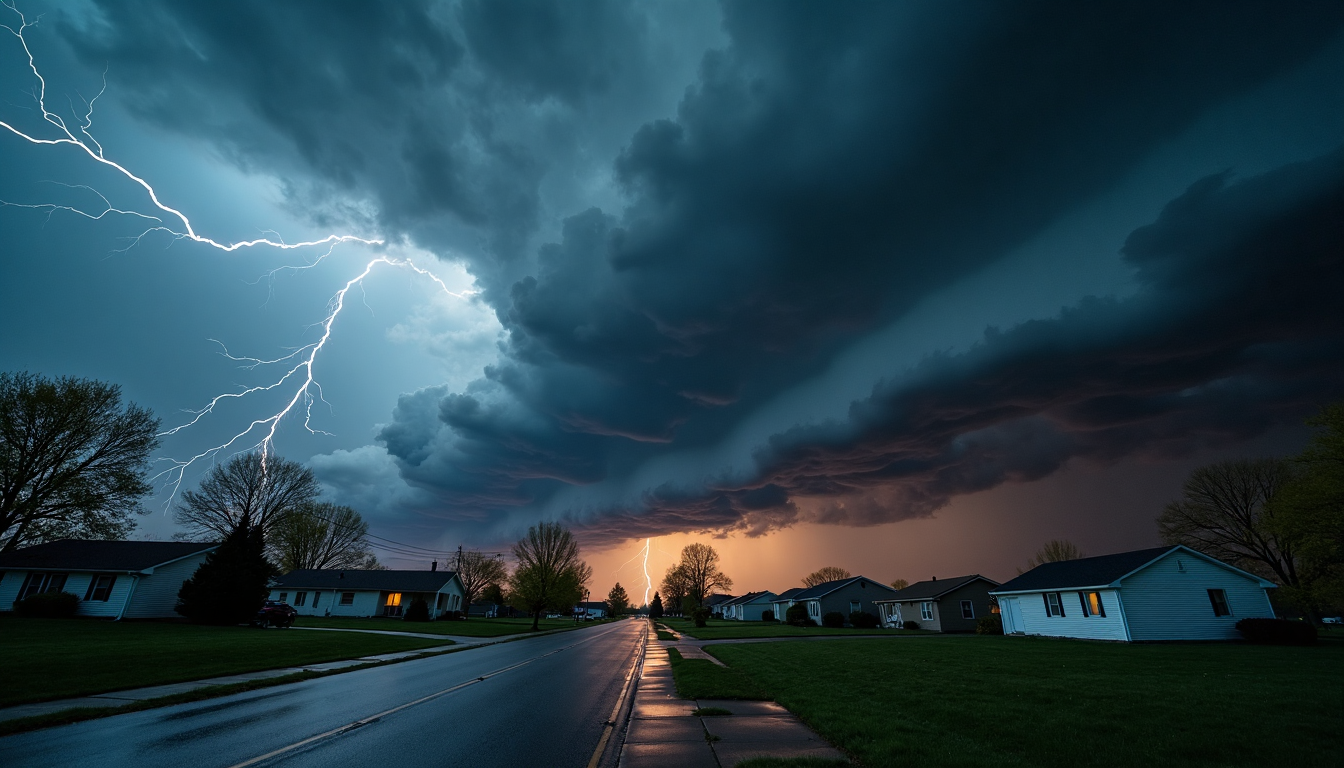
Storms in 2025 delivered a wake-up call. The United States saw a relentless spike in tornadoes, with 473 tornadoes reported by early April—nearly double the usual average. That alone sounds extreme. Yet most people are missing what really matters. Behind those headline-grabbing stats lies a far more unsettling reality for families and communities: disaster losses soared and entire regions faced setbacks that can’t be measured by property damage alone. Here’s what the numbers don’t say at first glance.
Table of Contents
- Major Storm Events And Damage In 2025
- Human And Community Impact Insights
- Insurance Claims And Financial Loss Trends
- Recovery Efforts And Resource Allocation
Quick Summary
| Takeaway | Explanation |
|---|---|
| Escalating Severe Weather Activity | The 2025 storm season saw a dramatic rise in tornado activity, with 473 tornadoes reported by early April, prompting urgent updates to disaster response strategies. |
| Disproportionate Impact on Vulnerable Communities | Vulnerable populations, especially in underfunded areas, faced devastating consequences, highlighting the need for equitable recovery strategies that address specific community needs. |
| Insurance Industry Transformation | The sharp rise in insured losses, which have surged 90% over the past decade, necessitates a complete reevaluation of risk assessment methods and proactive strategic adaptations by insurance providers. |
| Collaborative Recovery Strategies | Successful recovery efforts emphasized the importance of collaboration among government, nonprofit, and private sectors to ensure efficient resource distribution and comprehensive community support. |
| Data-Driven Emergency Planning | Enhanced use of demographic and economic data by local and state governments is crucial for informed resource allocation and targeted recovery initiatives in disaster-stricken areas. |
Major Storm Events and Damage in 2025
The 2025 storm season delivered unprecedented challenges for emergency response teams and disaster recovery professionals. Characterized by heightened severe weather activity and substantial economic impact, the year revealed critical insights into the evolving nature of storm systems across the United States.
Tornado Outbreak Devastation
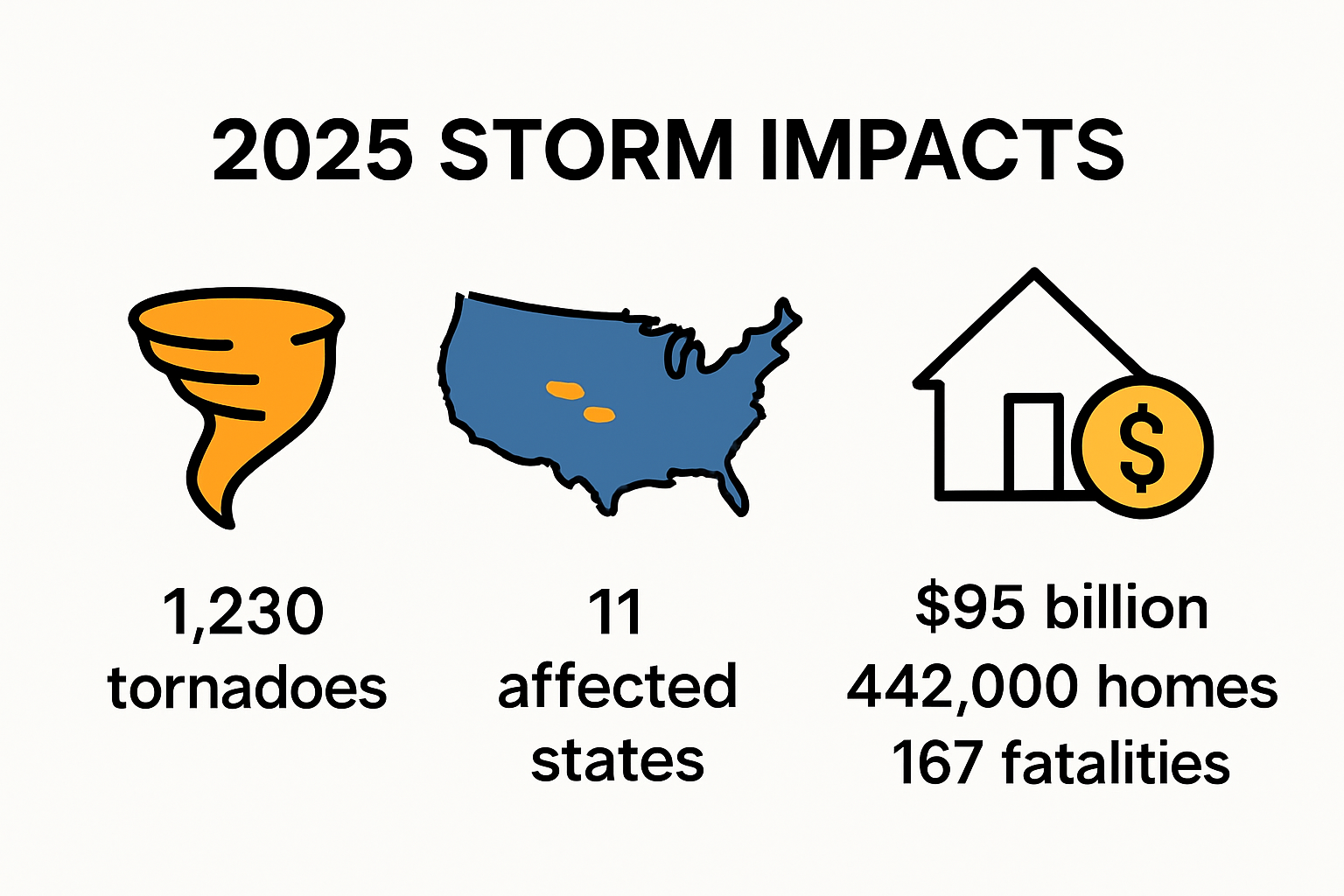
The early months of 2025 marked a significant surge in tornado activity that shocked meteorological experts and community leaders alike. AccuWeather reported an extraordinary increase in tornado occurrences, with preliminary reports showing 473 tornadoes by April 7—nearly double the 16-year historical average of 266 for the same period.
The most catastrophic event unfolded in May 2025, when a widespread tornado outbreak ravaged the U.S. Midwest and Southeast. According to Reinsurance News, this single event resulted in staggering damage:
- Property Damage: Approximately 63,000 properties impacted
- Economic Cost: Total reconstruction expenses nearing $16 billion
- Human Impact: At least 28 fatalities reported
- Infrastructure Disruption: Over 600,000 customers lost electrical power
Particular regions bore the brunt of this destructive outbreak. St. Louis, Missouri experienced severe devastation, with five deaths and thousands of structures damaged or destroyed. Disaster Philanthropy reported entire communities in Kentucky and Missouri were completely leveled, underscoring the storm systems’ unprecedented intensity.
Economic and Social Implications
Beyond the immediate physical destruction, the 2025 storm events exposed critical vulnerabilities in emergency preparedness and infrastructure resilience. The extraordinary frequency and intensity of tornado systems challenged existing disaster response protocols, demanding rapid adaptation from government agencies, insurance providers, and community support networks.
The economic ripple effects extended far beyond immediate reconstruction costs. Displaced families faced significant challenges in rebuilding their lives, while local economies struggled to absorb the sudden, massive disruption. Insurance adjusters worked overtime to process claims, and mitigation contractors found themselves stretched thin across multiple severely impacted regions.
These storm impact statistics for 2025 serve as a stark reminder of the increasing complexity and unpredictability of severe weather events. They underscore the critical need for enhanced predictive technologies, robust emergency response strategies, and comprehensive community resilience planning. As climate patterns continue to evolve, understanding and preparing for such extreme weather scenarios becomes not just a priority, but a necessity for survival and recovery.
Human and Community Impact Insights
The 2025 storm season exposed profound vulnerabilities within communities, revealing complex social and economic challenges that extend far beyond immediate physical destruction. Understanding the human dimension of disaster impact becomes crucial for developing more equitable and comprehensive emergency response strategies.
Disproportionate Disaster Vulnerability
Disaster Philanthropy highlighted a disturbing trend in storm-related devastation during 2025: vulnerable populations suffered significantly more severe consequences. The May tornado outbreak demonstrated that entire communities—particularly those in underfunded and predominantly Black areas—experienced catastrophic losses, with 35 people killed and numerous regions completely leveled.
The unequal impact of natural disasters is not coincidental. Time Magazine reported that billion-dollar natural disasters have increased more than sixfold since 1980, with low-income communities facing the greatest risk and being systematically pushed further into economic instability. These communities often lack robust infrastructure, emergency resources, and financial buffers to effectively recover from severe weather events.
Community Resilience Challenges

The U.S. Census Bureau’s Community Resilience Estimates provided critical insights into regional disaster recovery capabilities. Their research revealed that approximately 25% of people in high-risk areas like Miami-Dade County may have significant difficulties recovering from natural disasters—a figure notably higher than the national estimate of 20.4%.
Factors contributing to reduced community resilience include:
- Economic Instability: Limited financial resources for rebuilding
- Housing Vulnerability: Inadequate or fragile housing structures
- Age Demographics: Higher proportions of elderly or dependent populations
- Educational Limitations: Reduced access to information and recovery resources
These challenges underscore the need for targeted, comprehensive support strategies that address the multifaceted impacts of severe weather events. Emergency response cannot be a one-size-fits-all approach but must be nuanced, culturally sensitive, and adaptive to specific community needs.
Long-Term Psychological and Social Recovery
Beyond immediate physical damage, storm events in 2025 demonstrated significant long-term psychological impacts on affected communities. Displacement, loss of personal property, disrupted social networks, and economic uncertainty created profound emotional and mental health challenges.
Communities faced extended periods of uncertainty, with many individuals experiencing heightened stress, anxiety, and potential long-term trauma. The recovery process extended far beyond physical reconstruction, requiring holistic support systems that address mental health, social reconnection, and economic rehabilitation.
As climate patterns continue to evolve, understanding and mitigating these human and community impacts becomes increasingly critical. Developing resilient, empathetic, and comprehensive disaster response strategies is no longer optional—it is an essential commitment to protecting the most vulnerable members of our society.
Insurance Claims and Financial Loss Trends
The 2025 storm season dramatically reshaped the insurance landscape, exposing unprecedented financial challenges and forcing comprehensive reevaluations of risk assessment strategies. Insurance providers and financial institutions confronted a complex ecosystem of escalating natural disaster costs and increasingly unpredictable weather patterns.
Escalating Economic Burden
NOAA’s National Centers for Environmental Information reported a striking trend of weather-related financial impacts. In 2024, the United States experienced 27 separate weather and climate disaster events, each causing losses exceeding $1 billion—a clear indication of the mounting economic pressure facing insurance industries.
Insurance Business Magazine highlighted an alarming statistic: average annual insured losses from natural disasters have surged 90% over the past decade, now consistently exceeding $33 billion per year. Reinsurance costs for severe convective storms reached a 20-year peak, directly impacting the affordability and availability of home insurance in disaster-prone regions.
Claims Processing and Risk Modeling
The first half of 2024 set unprecedented records for insurance claims. Water Street Company revealed that severe thunderstorms resulted in $34 billion in insured losses—the highest ever recorded for that period. This extraordinary financial burden prompted insurers to fundamentally reassess their risk models and premium structures.
Key challenges in claims processing and risk assessment included:
- Rapid Risk Evolution: Traditional modeling became increasingly inadequate
- Complex Claim Scenarios: Multi-faceted damage requiring nuanced evaluation
- Increased Claim Frequency: More frequent and intense storm events
- Higher Reconstruction Costs: Rising materials and labor expenses
Long-Term Industry Transformation
Insurance providers recognized that adaptation was not just advisable but essential. The volatile storm impact statistics of 2025 demanded comprehensive strategy shifts. Companies began investing heavily in advanced predictive technologies, satellite imaging, and artificial intelligence to develop more accurate risk assessment frameworks.
Moreover, the insurance industry started collaborating more closely with climate scientists, urban planners, and emergency management professionals. This interdisciplinary approach aimed to develop proactive strategies that could mitigate potential losses before they occurred.
The financial implications extended beyond individual insurance companies. Local and state governments, recognizing the potential economic destabilization, began exploring public-private partnerships to create more resilient infrastructure and support mechanisms for communities most vulnerable to severe weather events.
As storm patterns continue to evolve, the insurance industry stands at a critical juncture. The ability to innovate, adapt, and provide meaningful financial protection will determine not just corporate survival, but the broader economic resilience of communities facing increasingly complex environmental challenges.
Recovery Efforts and Resource Allocation
The 2025 storm season presented unprecedented challenges in disaster recovery, demanding sophisticated resource allocation strategies and collaborative multi-agency approaches. Effective response required intricate coordination, advanced planning, and adaptive management techniques across government, nonprofit, and private sector organizations.
Operational Challenges and Resource Constraints
Reinsurance News reported the May 2025 tornado outbreak damaged approximately 63,000 properties nationwide, with reconstruction costs nearing $16 billion. This massive scale of destruction exposed significant operational limitations within emergency response infrastructure.
Disaster Philanthropy highlighted a critical operational challenge: workforce reductions at the National Weather Service (NWS) impacted weather data collection capabilities. Over 600 employees were cut, creating difficulties in maintaining regular weather balloon launches—a critical component of predictive modeling and disaster preparedness.
Key resource allocation challenges included:
- Limited Personnel: Reduced emergency response staffing
- Technological Constraints: Insufficient predictive infrastructure
- Financial Limitations: Stretched government and nonprofit budgets
- Complex Logistical Coordination: Managing multi-region responses
Data-Driven Recovery Strategies
The U.S. Census Bureau emerged as a critical resource in emergency planning and recovery efforts. Their comprehensive data collection and analysis provided essential insights for targeted resource allocation. Local and state governments increasingly relied on detailed demographic and economic data to prioritize recovery initiatives.
To address these complex challenges, emergency management teams developed more sophisticated resource deployment strategies. This included advanced coordination protocols that enabled rapid, flexible responses across multiple affected regions.
Collaborative Recovery Ecosystem
Recovery efforts in 2025 demonstrated the critical importance of collaborative approaches. Government agencies, nonprofit organizations, private sector entities, and local community groups developed unprecedented levels of coordination. This integrated approach allowed for more efficient resource distribution, reduced redundancies, and provided more comprehensive support to affected communities.
Innovative strategies emerged, including:
- Digital Coordination Platforms: Real-time resource tracking
- Adaptive Funding Mechanisms: Flexible financial support models
- Community-Centered Recovery Plans: Localized, culturally sensitive approaches
The storm impact statistics of 2025 revealed that successful recovery is not just about immediate response, but about building long-term resilience. Emergency management teams recognized the need to move beyond traditional reactive models toward proactive, data-driven strategies that anticipate and mitigate potential challenges.
As climate patterns continue to evolve, the ability to dynamically allocate resources, leverage technological innovations, and foster collaborative partnerships will become increasingly critical in disaster response and community recovery efforts.
Frequently Asked Questions
What were the tornado statistics for the U.S. in 2025?
The U.S. experienced a significant surge in tornado activity in 2025, with 473 tornadoes reported by early April, nearly double the historical average of 266 for the same period.
How did the storms in 2025 impact vulnerable communities?
Vulnerable populations, especially in underfunded areas, faced devastating consequences during the 2025 storms, highlighting the need for equitable recovery strategies and targeted support for those hit hardest.
What were the economic impacts of the tornado outbreak in May 2025?
The May 2025 tornado outbreak caused extensive damage, with reconstruction costs estimated at $16 billion and approximately 63,000 properties impacted, demonstrating significant economic disruption.
How is the insurance industry responding to the increasing severity of storms?
In light of the rising insured losses, the insurance industry is reevaluating risk assessment methods and investing in advanced predictive technologies to better prepare for unpredictable severe weather and mitigate potential losses.
Ready to Bridge the Gap Between Storm Statistics and Real Recovery?
The latest numbers in 2025 highlight just how quickly disasters can overwhelm families and neighborhoods. Surging tornadoes. Record-breaking property losses. Unprecedented pressure on underfunded communities and fragile local infrastructure. If the statistics in this article left you wondering what comes next, you are not alone. Many disaster victims struggle with finding safe shelter, starting insurance claims, and navigating the chaotic days after a storm. Delays in response and poor coordination can leave families without support when they need it most.
DisasterVictimServices.com steps in exactly where the data says help is needed. Our specialized team delivers immediate emergency housing and personal guidance through each stage of recovery. We work directly with insurance carriers and relief agencies to smooth out the process, not just for individuals, but for entire communities seeking stability. Visit our New Disaster Recovery Solutions to see how we turn statistics into action. Want expert support fast? Start now at DisasterVictimServices.com and move confidently from crisis to rebuilding with a partner who puts your safety first.
Recommended Articles
- How to Coordinate Response in Disasters: A Guide for 2025 – Disaster Victim Services | Helping You Recover After Disaster
- Home Safety Tips 2025: Essential Guide for Disaster Recovery – Disaster Victim Services | Helping You Recover After Disaster
- how to coordinate response – Disaster Victim Services | Helping You Recover After Disaster