
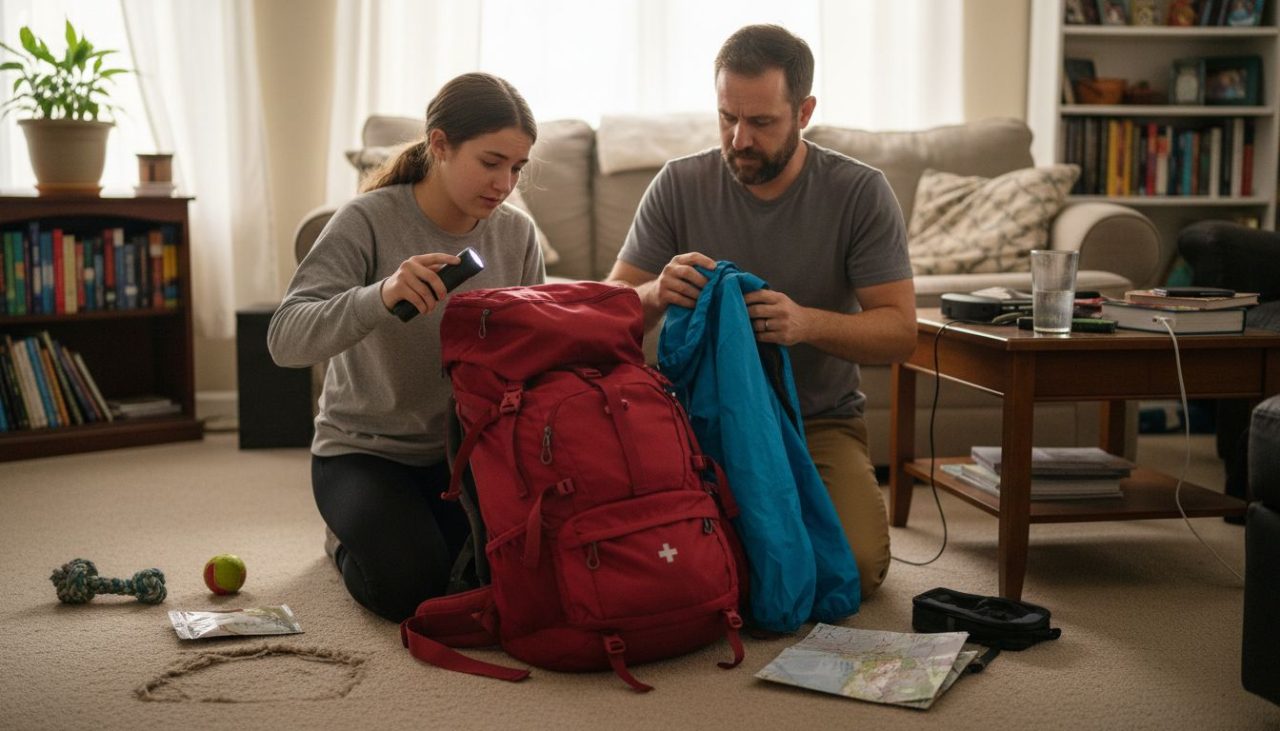
Every year, nearly 60 percent of American households are unprepared for emergencies that require evacuation. When disaster strikes, families often realize too late that a basic go bag can be the difference between panic and confidence. By understanding your family’s specific needs and taking a few simple steps now, you can ensure your household has the right supplies, documents, and practical plans for safety and peace of mind.
Table of Contents
- Step 1: Assess Personal and Family Needs
- Step 2: Gather Essential Supplies and Documents
- Step 3: Pack and Organize the Go Bag
- Step 4: Label and Store the Go Bag Properly
- Step 5: Review and Update Items Regularly
Quick Summary
| Key Insight | Explanation |
|---|---|
| 1. Assess Family Needs First | Consider each family member’s requirements for emergencies, including health, mobility, and comfort. This ensures everyone’s safety during evacuations. |
| 2. Gather Essential Documents | Collect critical documents such as IDs and medical records in waterproof containers to access quickly during evacuation. |
| 3. Pack Strategically | Use a durable backpack or duffel bag to organize emergency items effectively, ensuring easy transport during emergencies. |
| 4. Regularly Review Supplies | Conduct biannual checks to update your go bag with fresh supplies and adjust items based on changes in your family’s needs. |
| 5. Develop a Communication Plan | Ensure all family members know the location of the go bag and essential contact details for efficient retrieval in emergencies. |
Step 1: Assess Personal and Family Needs
Preparing your disaster go bag starts with a thorough assessment of your family’s unique requirements. Every household has distinct needs that demand careful consideration before an emergency strikes. Discussing specific household needs helps create a tailored emergency plan that addresses individual challenges and ensures everyone’s safety.
Begin by gathering your family members for a comprehensive discussion about potential emergency scenarios. Evaluate each person’s specific needs such as medications, mobility assistance, dietary restrictions, and personal comfort items. For individuals with chronic health conditions, create a detailed medical information sheet including current prescriptions, dosage requirements, and physician contact details. Consider special needs for children, elderly family members, or those with disabilities who might require additional support during evacuation.
Pro tip: Create a family communication plan that includes emergency contact numbers, designated meeting locations, and backup communication methods. FEMA recommends practicing emergency scenarios to improve your family’s preparedness and response capabilities. Document critical information like insurance details, identification documents, and medical records to include in your go bag, ensuring quick access during stressful evacuation situations.
Step 2: Gather Essential Supplies and Documents
Assembling critical supplies and documents is a crucial step in creating an effective disaster go bag. Your goal is to compile a compact collection of items that will sustain and protect you during potential emergency evacuations. This preparation requires strategic selection of essential items that balance survival needs with portability and practicality.
Prioritize gathering key documents in waterproof containers such as passports, identification cards, insurance policies, medical records, and emergency contact information. Supplement these documents with portable survival essentials including bottled water, non perishable food items, first aid supplies, prescription medications, extra cash, portable chargers, and a multifunction emergency tool. Cal OES recommends including specific emergency preparedness items like bottled water, cash, medications, and critical documents to ensure you are ready for quick evacuation.
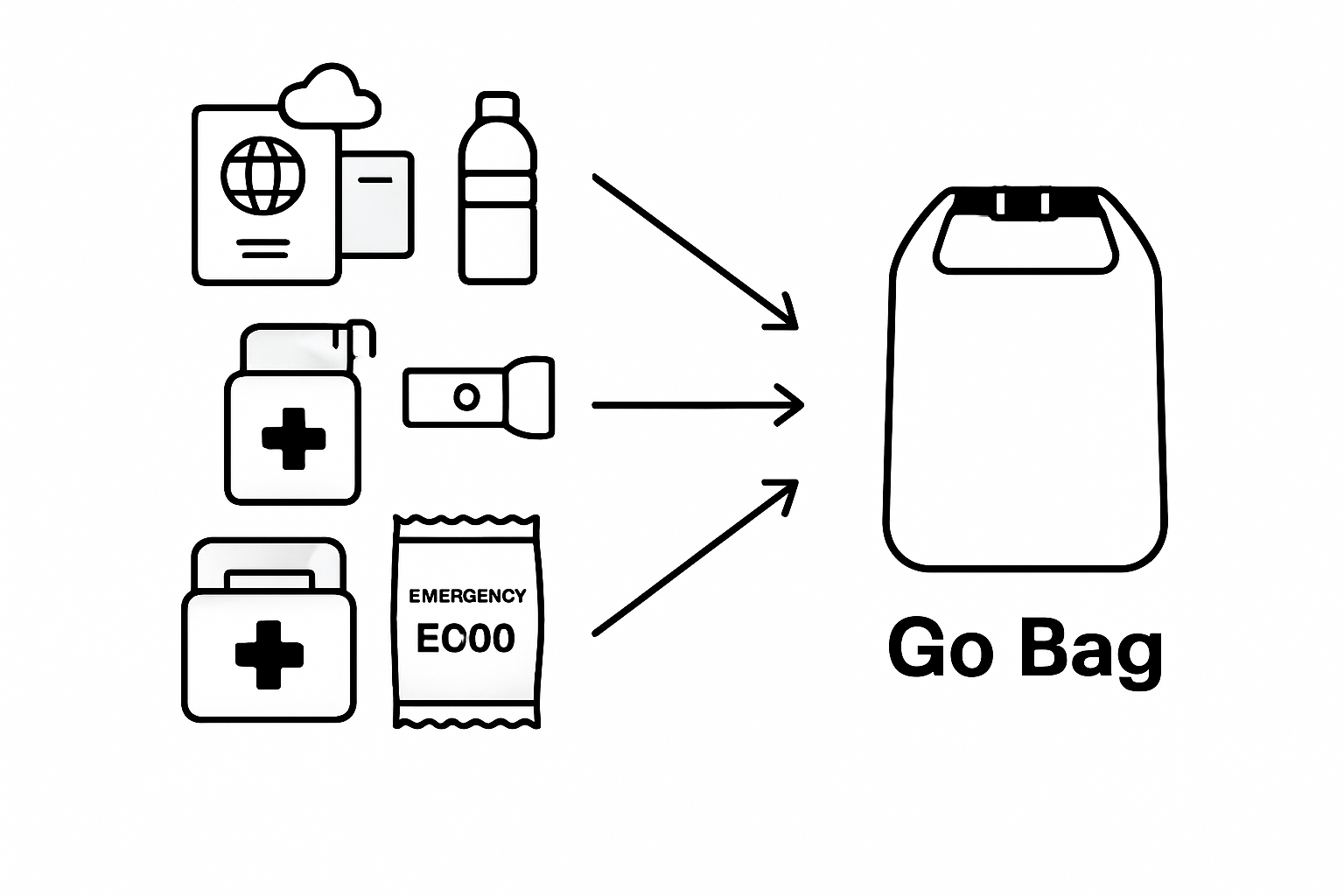
Pro tip: Create digital backups of important documents by scanning and storing encrypted copies in secure cloud storage or on a compact portable drive. This redundancy ensures you can access crucial information even if physical documents are lost. Pack your go bag in a lightweight backpack or duffel bag that is easy to carry and store near an exit for rapid deployment during unexpected emergencies.
Step 3: Pack and Organize the Go Bag
Strategically packing your emergency go bag requires careful organization and thoughtful selection of items to maximize efficiency during potential evacuation scenarios. Your goal is to create a compact and lightweight emergency kit that contains all essential survival and personal items while remaining manageable and easy to transport quickly.
Begin by selecting a durable backpack or waterproof duffel bag with multiple compartments for systematic item storage. University of Tennessee recommends personalizing your emergency kit with specific items tailored to individual needs, focusing on critical survival essentials. Organize your bag using clear plastic waterproof bags or compression sacks to separate and protect different categories of items such as documents, medical supplies, food, and emergency tools. Prioritize lightweight and multi purpose items that serve multiple functions to minimize overall weight and maximize utility.
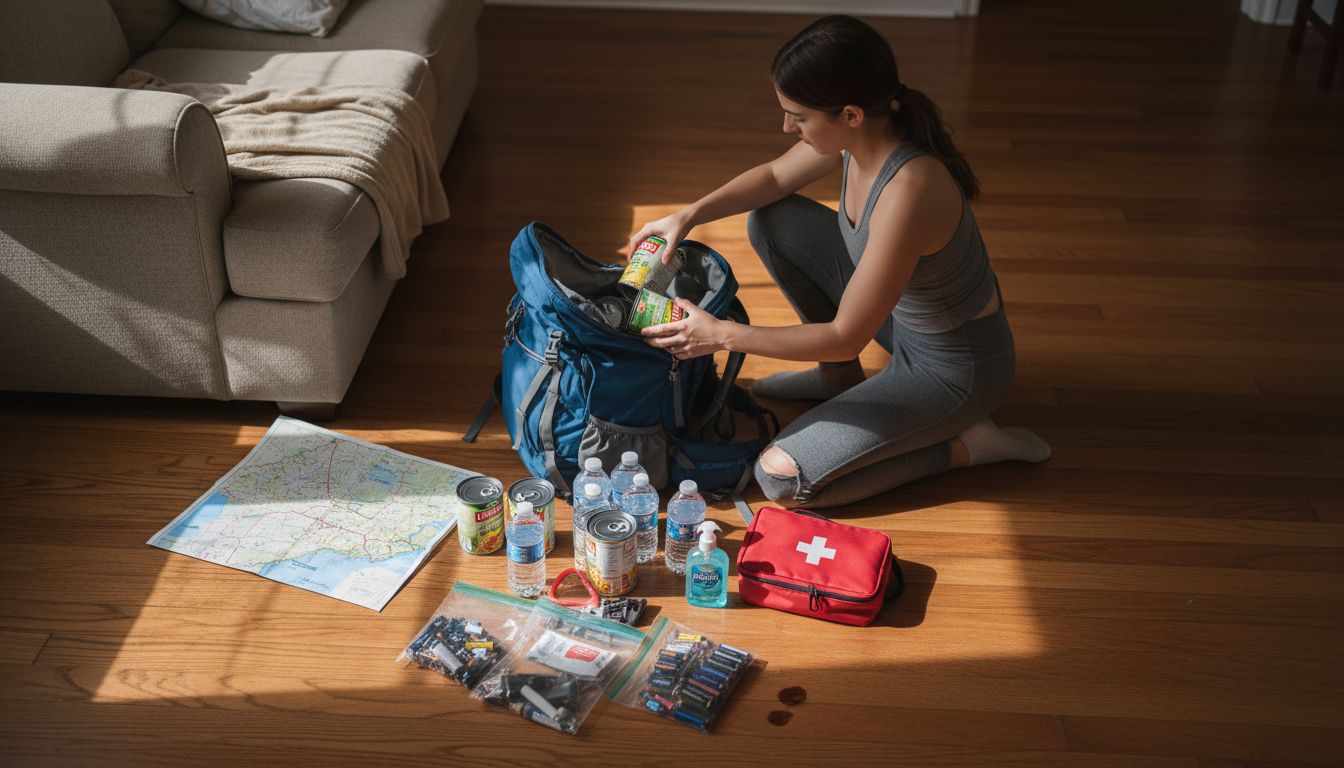
Pro tip: Perform a quarterly inventory check of your go bag to replace expired items, update documents, and rotate perishable supplies. Keep your packed bag in an easily accessible location near an exit and ensure all family members know its exact location. Consider creating individual go bags for each family member with shared and personalized contents to increase overall emergency preparedness.
Step 4: Label and Store the Go Bag Properly
Selecting the right storage location for your emergency go bag is critical to ensuring rapid access during unexpected disasters. Your goal is to create a strategic storage solution that keeps your emergency kit protected yet immediately retrievable for quick evacuation scenarios.
Choose a sturdy storage container that is both waterproof and portable with clear labeling indicating its emergency contents. Dutchess County Emergency Response recommends using a large watertight container that can be easily moved, preferably with wheels or comfortable carrying handles. Create prominent labels on your go bag using waterproof markers or printed labels that clearly state emergency contents, date of last inventory check, and any critical medical information. Position your go bag in an easily accessible location near an exit such as a hallway closet, garage, or mudroom where all family members can quickly locate it during high stress situations.
Pro tip: Develop a family communication protocol where each member knows the exact location of the emergency go bag and understands basic retrieval procedures. Consider creating a small emergency information card with key contact numbers and medical details to keep with the bag, ensuring critical information remains centralized and accessible during unexpected evacuations.
Step 5: Review and Update Items Regularly
Maintaining the effectiveness of your emergency go bag requires consistent and systematic review of its contents. Your goal is to create a proactive maintenance strategy that ensures your emergency kit remains current, functional, and aligned with your family’s evolving needs.
NYC Emergency Management recommends conducting comprehensive reviews of your emergency supplies at least twice annually, strategically timing these assessments during predictable seasonal transitions like daylight saving time changes. During each review, meticulously check expiration dates on food, medications, and batteries, replacing any items that have degraded or reached their shelf life. Reassess your family’s medical requirements, update prescription inventories, and adjust personal items based on changes in age, health status, or family composition. Pay special attention to clothing sizes for children, updating emergency wardrobes to match current measurements and seasonal needs.
Pro tip: Create a digital or physical inventory checklist with specific replacement dates and item tracking. Set calendar reminders on your smartphone or create a dedicated folder where you store go bag maintenance documentation. This systematic approach transforms emergency preparedness from a reactive task into a predictable, manageable routine that keeps your family protected and confident during unexpected challenges.
Be Ready for the Unexpected with Expert Disaster Support
Preparing a disaster go bag is essential for a quick and safe evacuation during emergencies. The challenge lies not only in assembling the right supplies and documents but also in ensuring that you can access immediate support when disaster strikes. Key goals include having organized essentials, clear communication plans, and a reliable partnership to help navigate the complexities of displacement.
At DisasterVictimServices.com, we understand the urgency and emotional stress of sudden evacuations. Our dedicated team specializes in providing around-the-clock emergency assistance and seamless housing solutions, helping families transition smoothly from crisis to recovery. Learn more about how we work alongside insurance carriers and first responders to support you at every step in our Uncategorized category and explore our approach to effective project design.
Take action now to complement your disaster go bag preparation with trusted expert support. Visit DisasterVictimServices.com today to access immediate help and guide your family safely through all phases of disaster recovery.
Frequently Asked Questions
How do I assess my family’s needs for a disaster go bag?
Start by gathering your family to discuss specific emergency scenarios. Evaluate each person’s needs, including medications, mobility assistance, and personal comfort items to create a tailored emergency plan.
What essential supplies should I include in my disaster go bag?
Prioritize critical documents like identification and medical records, alongside survival essentials such as water, non-perishable food, and first aid supplies. Aim to pack items that cover both immediate survival and personal comfort during an evacuation.
How should I organize and pack my go bag to ensure efficiency?
Use a durable backpack or waterproof duffel bag, organizing items into clear, waterproof containers. Pack lightweight, multi-purpose items that serve multiple functions to maximize utility while keeping the bag manageable.
How often should I review and update my go bag items?
Conduct a comprehensive review at least twice a year or during seasonal changes. Check expiration dates on food and medications while reassessing your family’s needs to keep the go bag relevant and functional.
What is the best way to label and store my go bag?
Label your go bag clearly with its contents, the date of the last review, and any critical medical information. Store it in an easily accessible location near an exit to ensure quick retrieval during emergencies.
How can I create a family communication plan regarding the go bag?
Develop a plan that includes emergency contact numbers and designated meeting locations. Ensure every family member knows the go bag’s location and retrieval procedures to streamline evacuation during a disaster.
Recommended
- Evacuation Checklist 2025: Essential Steps for Safety – Disaster Victim Services | Helping You Recover After Disaster
- How to Pack Emergency Kit: Essential 2025 Guide for Disaster Relief – Disaster Victim Services | Helping You Recover After Disaster
- Disaster Safety Checklist 2025: Essential Steps for Every Family and Organization – Disaster Victim Services | Helping You Recover After Disaster
- Evacuation Checklist 2025: Essential Steps for Safety – Disaster Victim Services | Helping You Recover After Disaster