

In 2024, the United States faced 27 disasters costing over a billion dollars each, setting a new record and signaling urgent change in disaster recovery. As extreme weather events and cyber threats grow more common, communities and organizations can no longer depend on outdated response plans. Advances in technology, data analytics, and community engagement are transforming recovery strategies, helping people prepare for more frequent and complex emergencies.
Table of Contents
- Defining 2025 Disaster Recovery Trends
- Emerging Technologies Transforming Disaster Recovery
- Evolving Insurance Practices And Regulations
- Multi-Agency Collaboration And Communication Strategies
- Common Mistakes And Future Challenges
Key Takeaways
| Point | Details |
|---|---|
| Emerging Technologies | Innovations like AI, drone mapping, and cloud platforms are transforming disaster recovery by enhancing real-time data analysis and communication. |
| Proactive Risk Management | Shift from reactive to proactive disaster planning is essential to mitigate impacts and costs effectively. |
| Multi-Agency Collaboration | Enhanced inter-agency coordination through digital platforms is critical for effective and seamless disaster response. |
| Insurance Evolution | Adaptation of dynamic pricing models and community resilience incentives will redefine how insurance supports disaster recovery efforts. |
Defining 2025 Disaster Recovery Trends
The landscape of disaster recovery is dramatically transforming, driven by unprecedented environmental and technological shifts. According to the GAO, the United States experienced 27 billion-dollar disasters in 2024, a staggering increase from just 14 such events in 2018. This escalating frequency signals a critical need for adaptive, resilient recovery strategies.
Key trends emerging in 2025 disaster recovery landscape include technological integration, predictive analytics, and community-centered approaches. Professionals are rapidly moving beyond traditional reactive models toward proactive, data-driven solutions. As the USGS research indicates, the cumulative impact of 73 billion-dollar natural disasters between 2022 and 2024 underscores the urgent necessity for innovative recovery frameworks.
The most significant shifts in disaster recovery focus on several core principles:
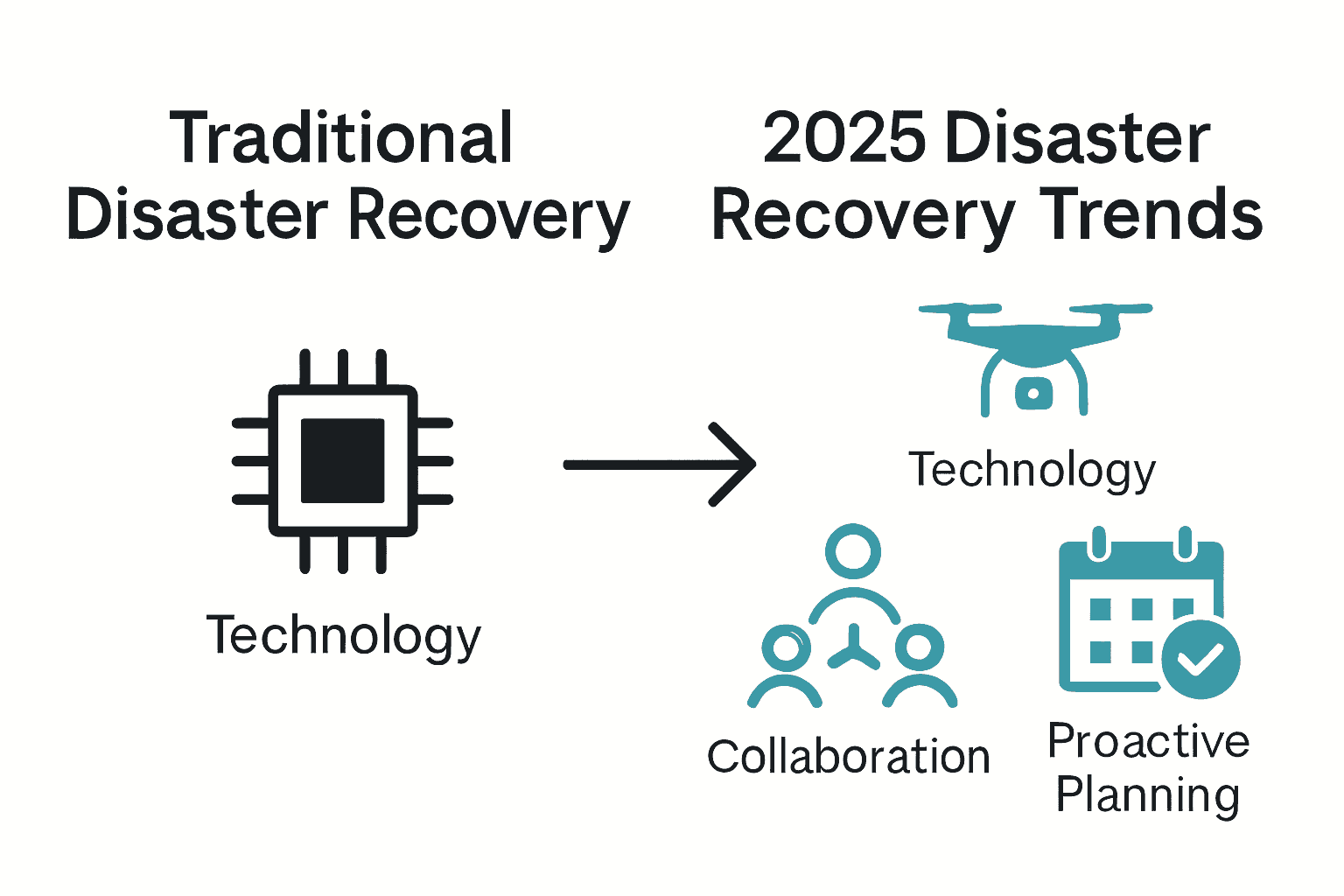
- Rapid Response Technologies: Advanced communication and mapping tools enabling faster initial assessment
- Data-Driven Decision Making: Utilizing AI and machine learning to predict potential disaster impacts
- Integrated Multi-Agency Collaboration: Breaking down organizational silos for more efficient recovery efforts
- Community Resilience Planning: Developing localized strategies that empower residents before, during, and after disasters
For a comprehensive understanding of these emerging strategies, see our guide on disaster recovery process steps. As disaster landscapes become increasingly complex, adaptability and technological innovation will be paramount in protecting communities and minimizing long-term disruptions.
Emerging Technologies Transforming Disaster Recovery
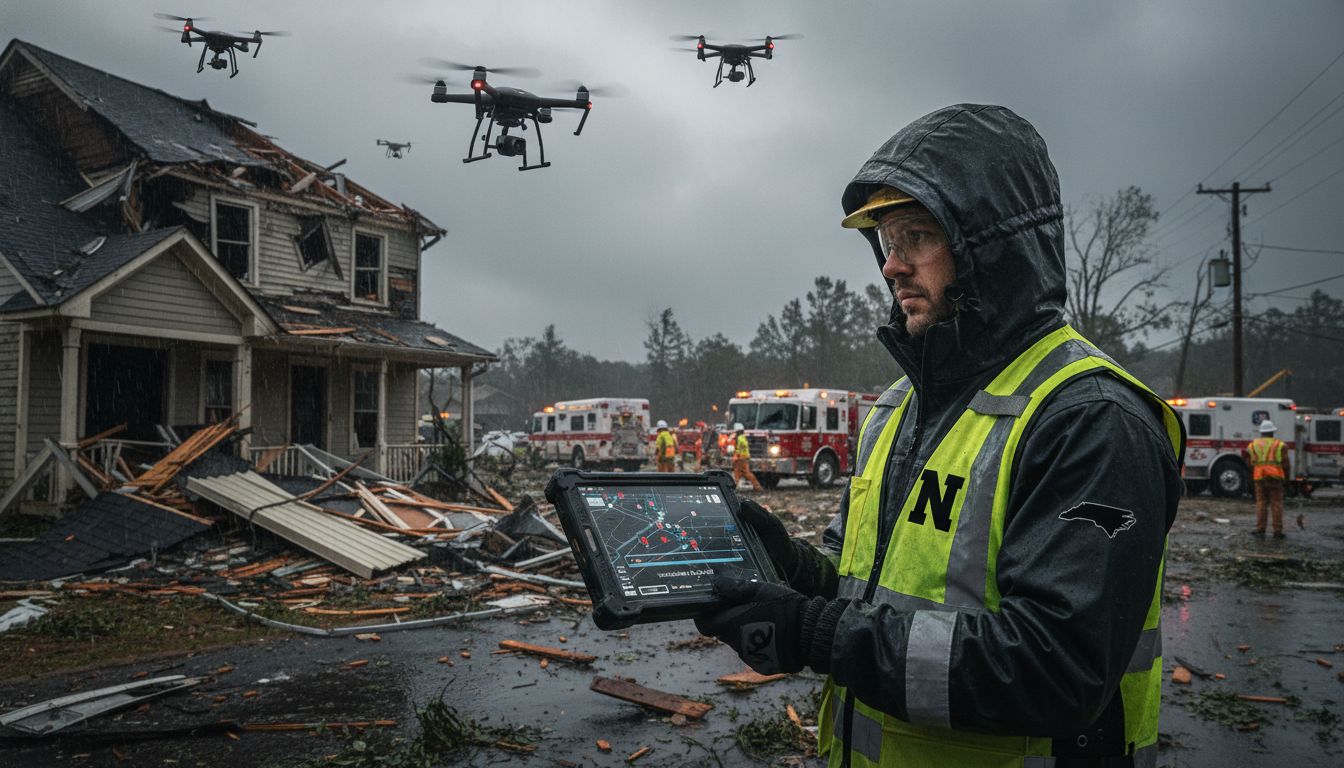
Disaster recovery is experiencing a technological revolution, with cutting-edge innovations reshaping how communities respond to and recover from catastrophic events. According to the Department of Homeland Security, new technologies are critical for streamlining recovery operations and expediting aid delivery to affected populations.
Artificial Intelligence and Machine Learning are emerging as game-changing technologies in disaster response. These advanced systems can now predict potential disaster impacts, analyze complex environmental data, and generate real-time strategic recommendations. By processing massive datasets instantaneously, AI enables emergency responders to make more informed decisions, potentially saving lives and reducing economic damage.
Key emerging technologies transforming disaster recovery include:
Here’s a comparison of emerging technologies and their roles in disaster recovery:
| Technology | Main Function | Disaster Recovery Impact |
|---|---|---|
| Artificial Intelligence (AI) | Data analysis & prediction | Enables informed, rapid decisions |
| Drone Mapping | Aerial assessment | Fast damage evaluation |
| Satellite Communication Systems | Ensures connectivity | Maintains communication in crises |
| Predictive Analytics | Scenario forecasting | Identifies risks, aids planning |
| Cloud-Based Resilience Platforms | Data storage & recovery | Supports business & operational continuity |
- Drone Mapping Technologies: Providing rapid aerial assessments of disaster-affected areas
- Satellite Communication Systems: Ensuring reliable communication in infrastructure-compromised regions
- Advanced Predictive Analytics: Utilizing machine learning to forecast potential disaster scenarios
- Cloud-Based Resilience Platforms: As highlighted by ER, institutions are adopting cloud solutions to enhance data recovery and continuity
For deeper insights into technological innovations, explore our Technological Advances in Response guide. The future of disaster recovery lies in seamlessly integrating human expertise with technological capabilities, creating more responsive, adaptive, and efficient emergency management systems.
Evolving Insurance Practices and Regulations
The insurance landscape for disaster recovery is undergoing a profound transformation, driven by increasing environmental risks and economic challenges. According to the Health Response Alliance, states are pioneering innovative financing models like resilience bonds and catastrophe insurance to manage escalating disaster response costs in an era of reduced federal aid.
Risk Assessment and Proactive Strategies are becoming the cornerstone of modern insurance practices. Pew Charitable Trusts emphasizes the critical need for states to update budgeting practices, focusing on fiscal strategies that anticipate and mitigate potential disaster impacts. This shift represents a fundamental change from reactive compensation to preventative risk management.
Key emerging trends in insurance and regulatory approaches include:
- Dynamic Pricing Models: Incorporating real-time climate and disaster risk data
- Parametric Insurance Products: Providing faster payouts based on predefined event triggers
- Community Resilience Incentives: Offering reduced premiums for proactive risk mitigation
- Advanced Risk Modeling: Utilizing AI and machine learning for more accurate predictive assessments
To understand how these changes impact insurance claims and recovery processes, explore our adjuster field inspection guide. As the disaster recovery ecosystem evolves, insurers are increasingly positioned not just as financial protection mechanisms, but as critical partners in building more resilient communities.
Multi-Agency Collaboration and Communication Strategies
Disaster recovery in 2025 demands unprecedented levels of inter-agency coordination and strategic communication. According to FEMA, the National Disaster Recovery Framework has become a critical blueprint for promoting seamless collaboration among governments, nonprofits, and businesses to ensure unified and effective recovery efforts.
Digital Communication Platforms and Integrated Response Systems are transforming how agencies interact during crisis scenarios. These advanced technologies enable real-time information sharing, breaking down traditional organizational silos that historically impeded rapid, coordinated responses. By leveraging cloud-based communication tools and standardized data protocols, agencies can now synchronize their efforts with remarkable precision and speed.
Key strategies for effective multi-agency collaboration include:
- Unified Command Structures: Establishing clear leadership and decision-making protocols
- Shared Digital Platforms: Creating interoperable communication systems
- Standardized Reporting Mechanisms: Ensuring consistent and transparent information exchange
- Cross-Training Programs: Developing shared understanding across different agency cultures
FEMA’s Recovery Resource Library provides critical tools for state and local governments, nonprofits, and businesses to navigate federal disaster recovery programs. As disaster response becomes increasingly complex, the ability to communicate and collaborate effectively will be the defining factor in successful recovery operations.
Common Mistakes and Future Challenges
Navigating disaster recovery in 2025 requires confronting significant systemic challenges that have long plagued emergency response efforts. GAO has identified a critical issue: fragmentation among over 30 federal entities involved in disaster recovery, which dramatically complicates assistance navigation and undermines efficient resource allocation.
Budgetary Constraints and Systemic Inefficiencies represent the most pressing obstacles in modern disaster recovery. Pew research underscores that traditional state budgeting approaches are fundamentally inadequate for current disaster trends, necessitating comprehensive updates to manage increasingly complex and costly recovery scenarios.
Common mistakes that impede effective disaster recovery include:
- Reactive Instead of Proactive Planning: Waiting for disasters to occur rather than developing comprehensive preventative strategies
- Insufficient Interdepartmental Communication: Failing to create robust, integrated information-sharing mechanisms
- Limited Technology Adoption: Resisting advanced digital tools that could streamline recovery processes
- Inadequate Risk Assessment: Not leveraging predictive analytics to understand potential disaster impacts
To better understand how to overcome these challenges, review our coordination guide for disaster response. The future of disaster recovery depends on our collective ability to learn from past mistakes, embrace technological innovations, and develop more adaptive, collaborative approaches.
Navigate 2025’s Disaster Recovery Challenges with Trusted Support
The 2025 disaster recovery trends spotlight critical challenges like fragmented agency coordination, reactive planning, and the urgent need for data-driven solutions. If you or your community faces the overwhelming stress of navigating disaster response, you are not alone. Key hurdles such as rapid housing needs, complex insurance claims, and multi-agency communication gaps can slow recovery and increase uncertainty.
At DisasterVictimServices.com, we specialize in easing these burdens through compassionate, expert assistance that aligns perfectly with evolving recovery trends. Our proven approach bridges the gap between victims, insurance adjusters, and government agencies to ensure you receive timely emergency housing and logistical support. Learn how we are innovating in this space by exploring our latest resources in the New category and insightful updates from our Uncategorized section.
Don’t wait until disaster strikes or delays deepen your hardship. Act now to secure immediate help and streamline your path to recovery. Visit us today at DisasterVictimServices.com and take the first step toward resilient rebuilding.
Frequently Asked Questions
What are the key trends in disaster recovery for 2025?
The key trends in disaster recovery for 2025 include technological integration, predictive analytics, community-centered approaches, rapid response technologies, and enhanced multi-agency collaboration. These shifts focus on proactive planning and data-driven strategies to improve resilience and response efficiency.
How is technology transforming disaster recovery in 2025?
Technology is revolutionizing disaster recovery by incorporating artificial intelligence (AI) for predictive analytics, drone mapping for rapid aerial assessments, satellite communication systems to ensure connectivity, and cloud-based resilience platforms for improved data recovery and operational continuity.
What mistakes are commonly made in disaster recovery planning?
Common mistakes in disaster recovery planning include reactive approaches instead of proactive strategies, insufficient interdepartmental communication, limited technology adoption, and inadequate risk assessment, which can hinder effective recovery efforts.
How can agencies improve collaboration during disaster recovery?
Agencies can improve collaboration during disaster recovery by establishing unified command structures, utilizing shared digital platforms for real-time information sharing, implementing standardized reporting mechanisms, and developing cross-training programs to foster understanding across different agency cultures.
Recommended
- Disaster Recovery Statistics 2025: Key Trends for Agencies and Families – Disaster Victim Services | Helping You Recover After Disaster
- Disaster Recovery Statistics 2025: Key Trends for Agencies and Families – Disaster Victim Services | Helping You Recover After Disaster
- Technological Advances in Response: Innovations for Disaster Recovery 2025 – Disaster Victim Services | Helping You Recover After Disaster
- Emergency Response Trends 2025: What Stakeholders Need to Know – Disaster Victim Services | Helping You Recover After Disaster