

When disaster strikes the first steps you take can make all the difference. Fast support and trusted guidance can help you move from chaos to stability when you are facing the unknown. There are a range of services that promise help with recovery, housing, and restoring your peace of mind but each offers something unique. How do you know which will really bring you comfort when you need it most? Taking a closer look at different options reveals a world of choices for families and professionals who need fast answers before the next day arrives.
Table of Contents
- Disaster Victim Services
- Sedgwick Temporary Housing Division
- Ale Solutions
- CRDN (Content Recovery & Disaster Network)
- National Disaster Recovery
- Travelers Insurance
Disaster Victim Services
At a Glance
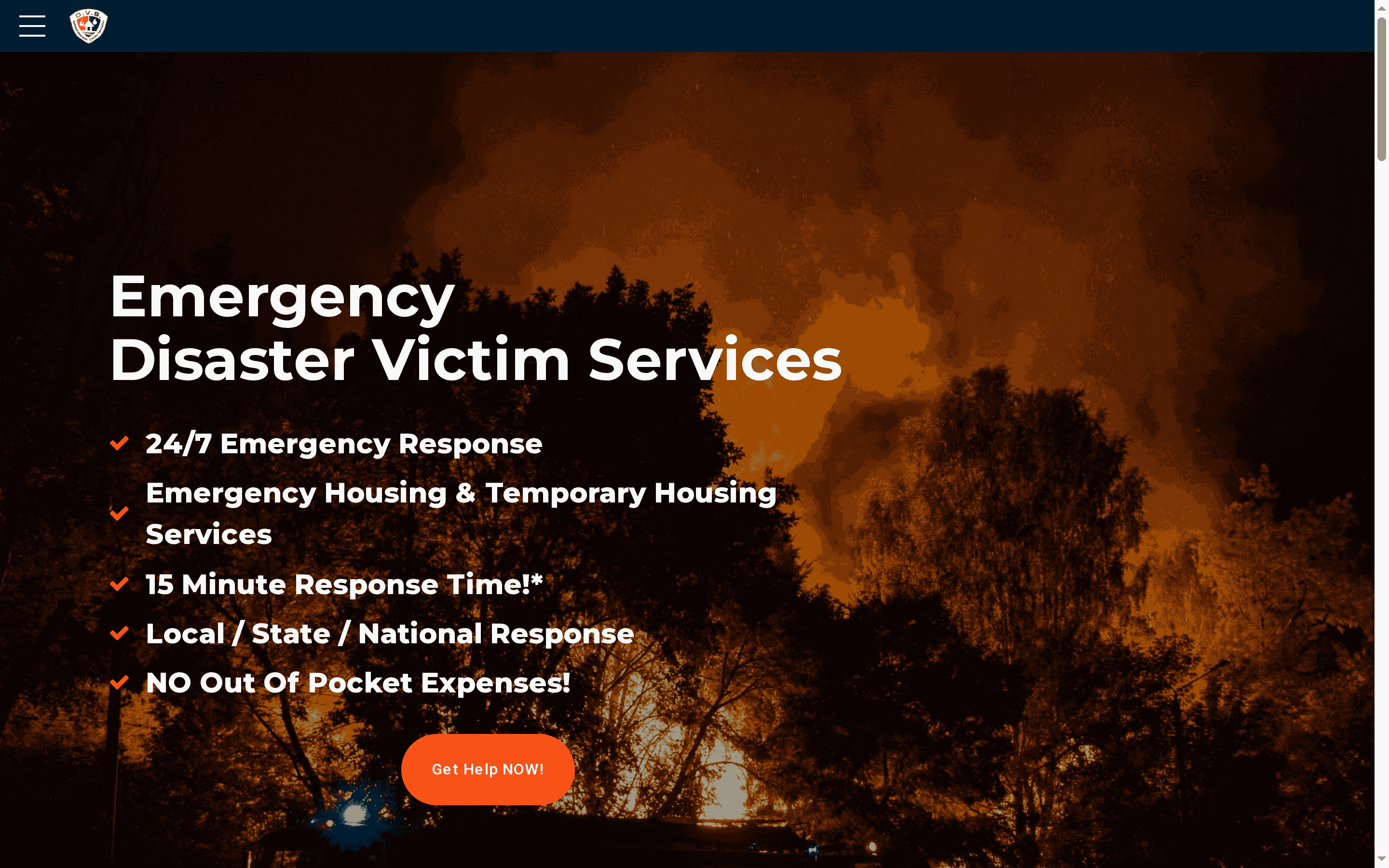
Disaster Victim Services delivers immediate, reliable emergency housing and coordinated recovery support for families displaced by disasters. They answer calls 24/7 and frequently respond within 15 minutes, which materially reduces time spent without shelter after a catastrophe. Built to work hand-in-hand with insurance carriers, government agencies, and first responders, this team prioritizes speed, compassion, and operational clarity. Bottom line: if you need urgent, coordinated housing support after a disaster, this is a best-in-class partner.
Core Features
Disaster Victim Services specializes in rapid emergency response, temporary housing placement, and seamless coordination with insurance carriers and partner services. Core capabilities include a guaranteed 24/7 emergency line, emergency and temporary housing solutions, a documented 15-minute response time metric, and integrated communication with adjusters, attorneys, contractors, and government agencies to check and deploy support resources. The organization also provides broader recovery guidance and shares displacement statistics to inform planning. In short: rapid shelter plus multi-agency coordination designed to move families from crisis to recovery faster.
Pros
- Rapid response times, often within 15 minutes, ensure families are connected to shelter and support without long delays.
- Nationwide service coverage means help is available across jurisdictions and during large-scale, multi-state events.
- No out-of-pocket expenses for clients removes a major barrier to immediate assistance and simplifies the intake process.
- Comprehensive disaster recovery support extends beyond immediate housing to logistics, claims coordination, and referrals to trusted partners.
- Experienced team with over a century of combined expertise brings institutional knowledge that improves response quality and reduces costly missteps.
Who It’s For
Disaster Victim Services is built for displaced families who need fast, dependable shelter and for the professionals who support them: insurance adjusters arranging client placements, government agencies coordinating emergency response, mitigation contractors, and nonprofits seeking a reliable housing partner. If you manage disaster logistics or need a trusted conduit between survivors and the broader recovery ecosystem, this service fits your operational needs.
Unique Value Proposition
What sets Disaster Victim Services apart is the combination of measurable speed, deep industry relationships, and a no-out-of-pocket client model. The 15-minute response target is not marketing—it changes outcomes by reducing exposure, stress, and secondary harms. Their strength is multi-agency integration: insurance carriers and first responders can plug into an established workflow rather than reinvent coordination after each event. The team’s extensive experience (over a century cumulatively) means tightened processes and fewer administrative delays. Any perceived limitations are deliberate design choices: pricing is managed via insurance or case-specific arrangements to avoid billing survivors directly, and the primary focus on emergency housing ensures they excel at the urgent phase of recovery rather than offering a diffuse set of long-term services. That focus equals superior performance where it matters most: the first 72 hours.
Real World Use Case
When recent wildfires displaced multiple families, Disaster Victim Services was activated to source secure accommodations, liaise with insurers, and brief local authorities on needs and timelines. Families moved into vetted temporary housing within hours, claims workflows began immediately, and case managers coordinated next-step services until permanent solutions were in place.
Pricing
Quote-based (not explicitly specified; likely depends on insurance and case-specific factors).
Website: https://disastervictimservices.com
Sedgwick Temporary Housing Division
At a Glance
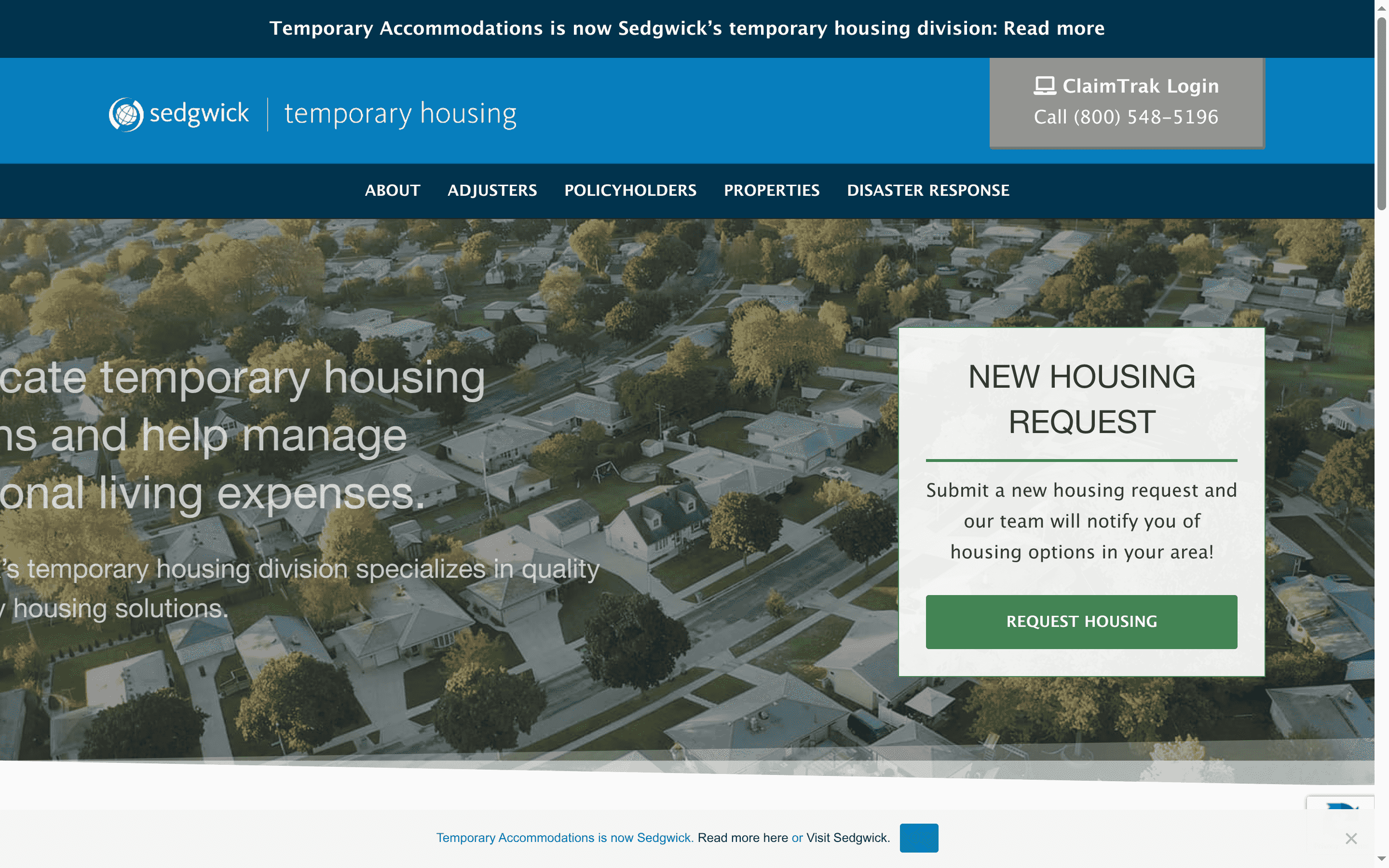
Sedgwick Temporary Housing Division focuses on locating and managing temporary housing and additional living expenses for people displaced by disasters, renovations, or corporate moves. The service is integrated with Sedgwick’s broader insurance and disaster response capabilities, which can streamline coordination with adjusters and relief teams. It’s a practical choice when you need a single point of contact to find housing, handle expenses, and arrange related services like furniture rental.
Core Features
Sedgwick’s temporary housing offering centers on locating temporary housing options and managing additional living expenses (ALE). The service accepts housing request submissions through online forms and provides solutions across disaster response, corporate relocation, furniture rentals, and rural housing scenarios. The team also maintains resources and a blog for industry insights, and positions itself to support insurance carriers and other professionals managing displaced clients.
Pros
- Specialized temporary housing expertise: Sedgwick focuses specifically on quality temporary housing solutions, which helps speed up placement and reduce the back-and-forth for displaced families.
- Comprehensive service mix: The division combines housing location, ALE management, and furniture rental coordination into one service, reducing the number of vendors you must manage.
- Responsive customer service reported positively: Available feedback indicates timely, helpful support, which is critical when someone needs immediate relocation after a disaster.
- Straightforward housing request process: Online forms and a clear request workflow make it easier for adjusters and homeowners to submit needs quickly.
- Industry resources and insight: The team’s resources and blog provide useful context for insurance professionals and emergency responders managing case logistics.
Cons
- Limited pricing transparency: Pricing details are not specified on the website, which makes budgeting and quick client estimates difficult.
- Sparse detail on housing types: The site lacks granular information about specific housing options, unit sizes, or quality tiers, forcing callers to rely on case-by-case explanations.
- Custom requests may take longer: Depending on location and unique needs, custom housing placements could require an extended coordination process that affects speed of placement.
Who It’s For
This service is best for insurance adjusters, emergency responders, contractors, relief organizations, and displaced individuals who need a coordinated temporary housing solution tied into an insurance or claims workflow. If you manage many cases or need a partner that integrates housing, ALE, and furniture logistics, Sedgwick’s division is designed for that operational model.
Unique Value Proposition
Sedgwick Temporary Housing Division brings housing placement and ALE management under the umbrella of a well-established insurance and disaster response company. That integration helps align communications between adjusters, households, and service providers, reducing duplication and streamlining case handling during recovery.
Real World Use Case
A homeowner forced out by water and mold damage uses Sedgwick’s service to locate short-term housing, have additional living expenses managed through their insurer, and arrange temporary furniture rentals while repairs occur—allowing the family to focus on safety and restoration rather than logistics.
Pricing
Not specified on the website.
Website: https://tacares.com
ale solutions
At a Glance
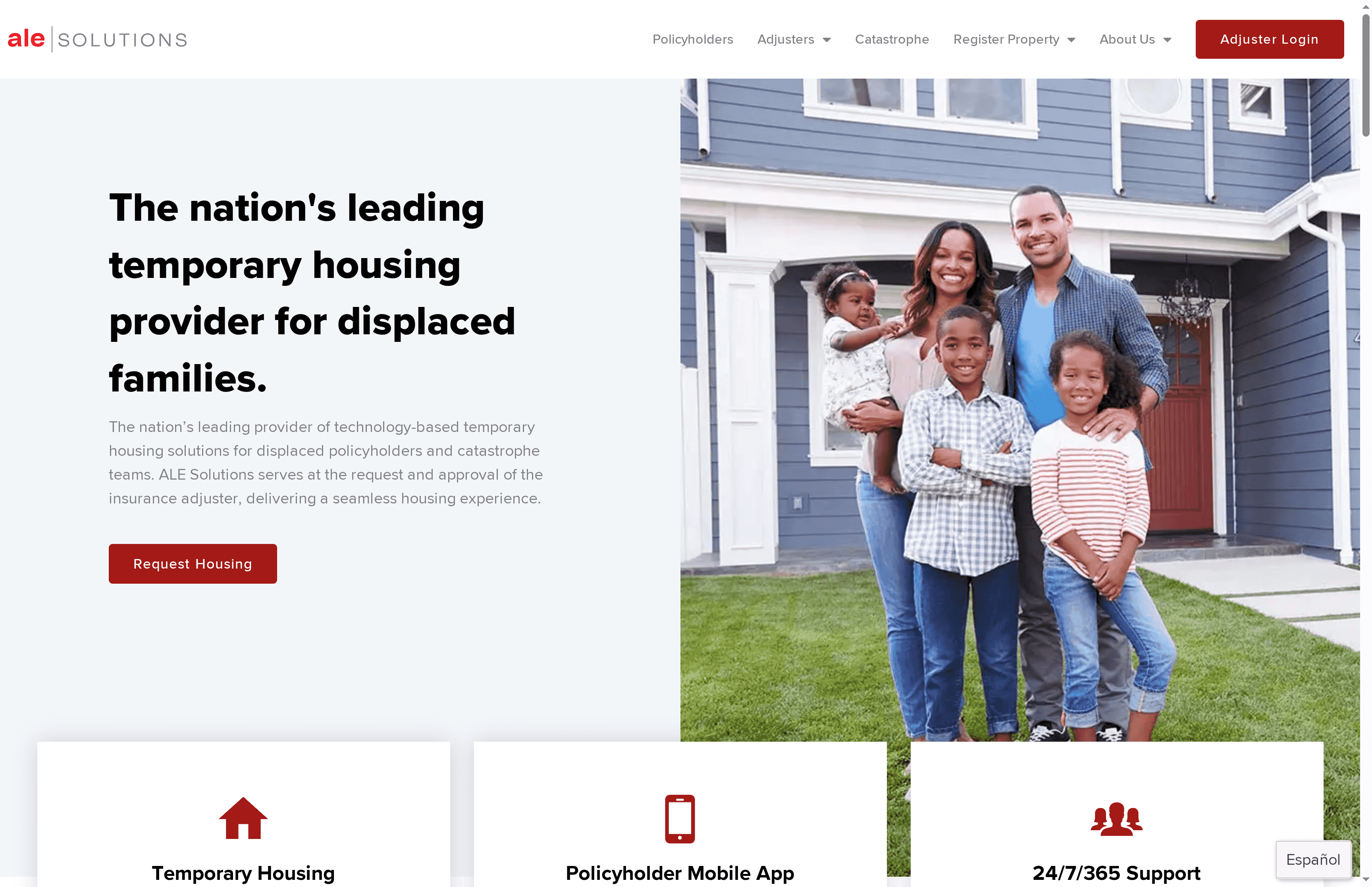
ALE Solutions delivers technology-driven temporary housing and catastrophe logistics for displaced policyholders and insurance teams. Their offering centers on a mobile-first experience—powered by the “My ALE Home” app—combined with 24/7/365 support and hotel partnerships that help control costs. Bottom line: ALE moves quickly and provides practical tools for adjusters and families, though pricing and long-term housing details are handled case-by-case and require direct consultation.
Core Features
ALE Solutions combines a claims portal and the My ALE Home mobile app to streamline housing requests, notifications, and communication between policyholders, adjusters, and catastrophe teams. The company supports disaster response with a dedicated logistics team that can deploy within 24 hours, offers continuous (24/7/365) support, and taps partnerships with hotel groups to secure discounted nightly rates and centralized billing. The stack is focused on speed, transparency, and operational control during chaotic events.
Fast. Focused. Practical.
Pros
- Comprehensive mobile app for policyholders: The My ALE Home app centralizes reservations, notifications, and policyholder communications in a single interface.
- Rapid deployment capability: ALE’s logistics teams can mobilize within 24 hours, which shortens the time families spend without stable shelter.
- Cost control through hotel partnerships: Negotiated hotel rates and streamlined billing help insurers manage expenses and reduce administrative friction.
- 24/7/365 support for adjusters and policyholders: Continuous availability reduces delays and helps resolve urgent issues any day of the year.
- Dedicated catastrophe administrative services: ALE provides specialized personnel to manage large-scale hotel reservations and claims-related logistics, easing the load on internal teams.
Cons
- Pricing transparency is limited: The website does not publish specific pricing models, so you must request a quote to understand costs.
- Unclear long-term housing coverage: Information on long-term or extended-stay housing options is limited, which can leave questions for prolonged displacement scenarios.
- Limited visibility into customer feedback: Public customer reviews appear predominantly positive and lack a range of critical perspectives, making independent validation harder.
Who It’s For
ALE Solutions is built for insurance carriers, adjusters, catastrophe response teams, property managers, and landlords who need fast, organized temporary housing placements after a disaster. If you manage claims or coordinate emergency housing at scale and want app-driven communication plus hotel-network savings, ALE is designed for your workflows.
Unique Value Proposition
ALE’s distinct value is the integration of a dedicated disaster logistics team with mobile-first policyholder tools and negotiated hotel relationships. That combination compresses response timelines (teams on-site or active within 24 hours), reduces billing complexity, and centralizes communication for both policyholders and insurers.
Real World Use Case
After a catastrophe, a response team engages ALE; within 24 hours logistics personnel secure hotel blocks, register displaced families in the My ALE Home app, and route billing details to the insurer through the claims portal—so families have rooms, adjusters have visibility, and accounting receives consolidated invoices.
Pricing
Quote-based. Pricing details are not explicitly provided on the website and are likely tailored to the scale of the event and services required.
Website: https://alesolutions.com
CRDN (Content Recovery & Disaster Network)
At a Glance
CRDN helps put the pieces back together after fire, flood, or storm by focusing on contents restoration and disaster restoration cleaning. It combines rapid 24/7 response with specialized processes for textiles, electronics, art, and furniture, and operates through locally owned stores across the US, Canada, and the UK. For homeowners, insurers, and contractors who need hands-on recovery of irreplaceable items, CRDN strikes a strong balance between community-focused service and technical expertise.
Core Features
CRDN’s core capabilities center on contents restoration across a broad range of items—textiles, electronics, art, antiques, appliances, and furniture—paired with onsite assessment and testing. The service model includes specialized restoration processes for fire and water damage, commercial restoration options, and an interactive house tool to help clients visualize what can be restored. Critically, CRDN advertises a 24/7 emergency response with certified experts available within an hour, which matters when rapid triage can prevent further loss.
Pros
- Trusted, long-standing reputation: CRDN has over two decades in the field, which suggests institutional knowledge and refined restoration workflows.
- International footprint: Operating in the US, Canada, and the UK means broader scalability for insurers and agencies working across borders.
- Local ownership model: Locally owned and operated stores enable tailored, community-focused service and faster on-the-ground coordination.
- Specialized technical expertise: Industry-leading experience in specialized content restoration gives confidence when dealing with delicate items like art or electronics.
- Rapid emergency response: Certified experts available within an hour support fast assessments that can reduce long-term damage.
Cons
- Pricing transparency is limited: Specific service pricing is not provided on the website, which makes budgeting and comparing quotes difficult for homeowners and adjusters.
- Potential variation by location: Because stores are locally owned, service quality and turnaround times may vary between franchises.
- Unclear long-term guarantees: The website offers limited information about warranties or long-term guarantees on restored items, leaving questions for policyholders about durability and follow-up support.
Who It’s For
CRDN is best suited for homeowners and business owners facing the aftermath of a disaster who need expert contents restoration rather than full-structure rebuilding. Insurance policyholders, claims adjusters, contractors, and mitigation companies benefit from CRDN’s ability to coordinate with carriers and provide technical assessments for irreplaceable items.
Unique Value Proposition
CRDN’s unique value lies in combining rapid, certified emergency response with specialized restoration processes and a local-store approach—so you get both technical depth and community-level service. That mix is particularly valuable when items have sentimental or high monetary value.
Real World Use Case
Imagine a homeowner after a house fire: CRDN performs an onsite assessment within hours, catalogs and tests textiles, electronics, and furniture, then applies specialized cleaning and restoration workflows to return items to pre-loss condition while coordinating with the homeowner’s insurance.
Pricing
Not specified on the website.
Website: https://crdn.com
National Disaster Recovery
At a Glance
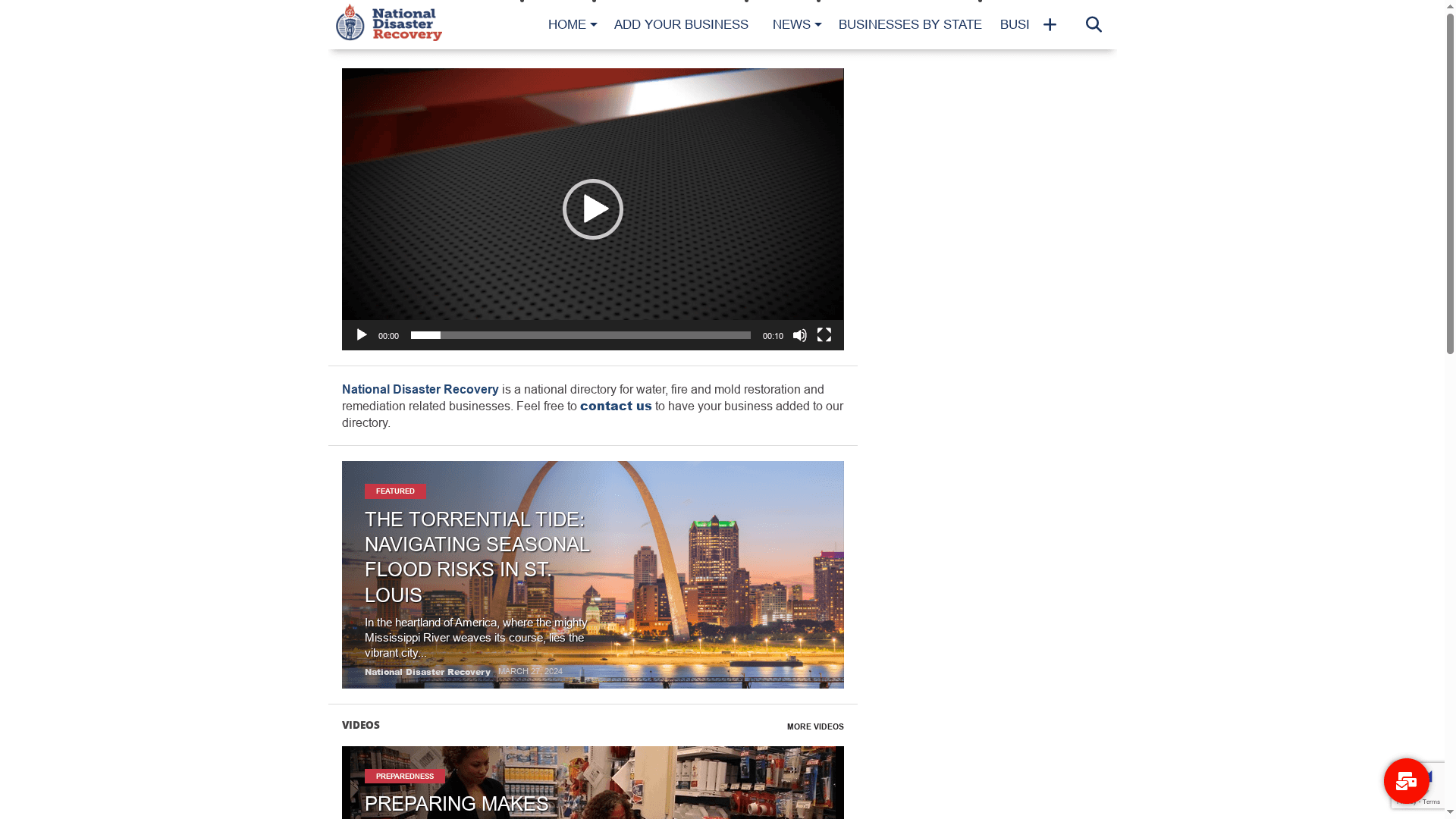
National Disaster Recovery is a focused, information-first resource for flood, fire, and mold recovery that connects property owners and communities with restoration businesses and emergency contacts. It excels at educational content—articles and videos—that clarify preparedness and recovery steps. While it’s not a hands-on recovery contractor, it functions as a practical directory and hub for agencies, hospitals, and grant resources. Bottom line: great for guidance and connections, less so for end-to-end service management.
Core Features
National Disaster Recovery provides a searchable directory of water, fire, and mold recovery businesses alongside a library of articles and videos covering preparedness, storm and fire recovery, mold issues, and flood protection. It also lists emergency agencies and related government resources, and it allows businesses to add their listings. The site acts as a central informational resource that funnels victims, property owners, and responders toward local service providers and official assistance programs.
Quick note.
Pros
- Comprehensive disaster recovery resources for property owners and businesses make it easier to find relevant guidance after an incident.
- Useful educational content with videos and articles helps you understand next steps and avoid common recovery pitfalls.
- Free business listing in the directory lowers barriers for local restoration companies to be discovered by those who need them.
- Links to vital agencies and government programs connect users with official assistance and potential funding options.
- Focus on community recovery and expert insights promotes coordinated response and resilience planning.
Cons
- No detailed descriptions of specific services offered by listed businesses makes it harder to compare contractors on scope and quality.
- Limited information on the process and costs of recovery services can leave users uncertain about timelines and budgets.
- Primarily informational, the site may require you to contact third-party service providers for hands-on mitigation and restoration work.
Pause. Consider this.
Who It’s For
This site is designed for property owners, business owners, disaster recovery professionals, community planners, and individuals who need clear, actionable information and local contacts after a flood, fire, or mold event. If you’re coordinating with adjusters, mitigation contractors, or government agencies, this resource helps you identify potential partners and find program links quickly.
Unique Value Proposition
National Disaster Recovery stands out as a community-oriented information hub that bridges the gap between victims and service providers. Its combination of educational media, directories, and agency links concentrates recovery knowledge in one place—so you can move from confusion to action faster than searching scattershot resources.
Real World Use Case
A homeowner displaced by a flood uses the site to identify nearby water restoration companies, watches a short video on immediate mitigation steps, and locates contact details for state grant programs and local emergency agencies to begin recovery and funding conversations.
Pricing
Free to access website content; additional services and business listings may involve fees.
Website: https://nationaldisasterrecovery.org
Travelers Insurance
At a Glance
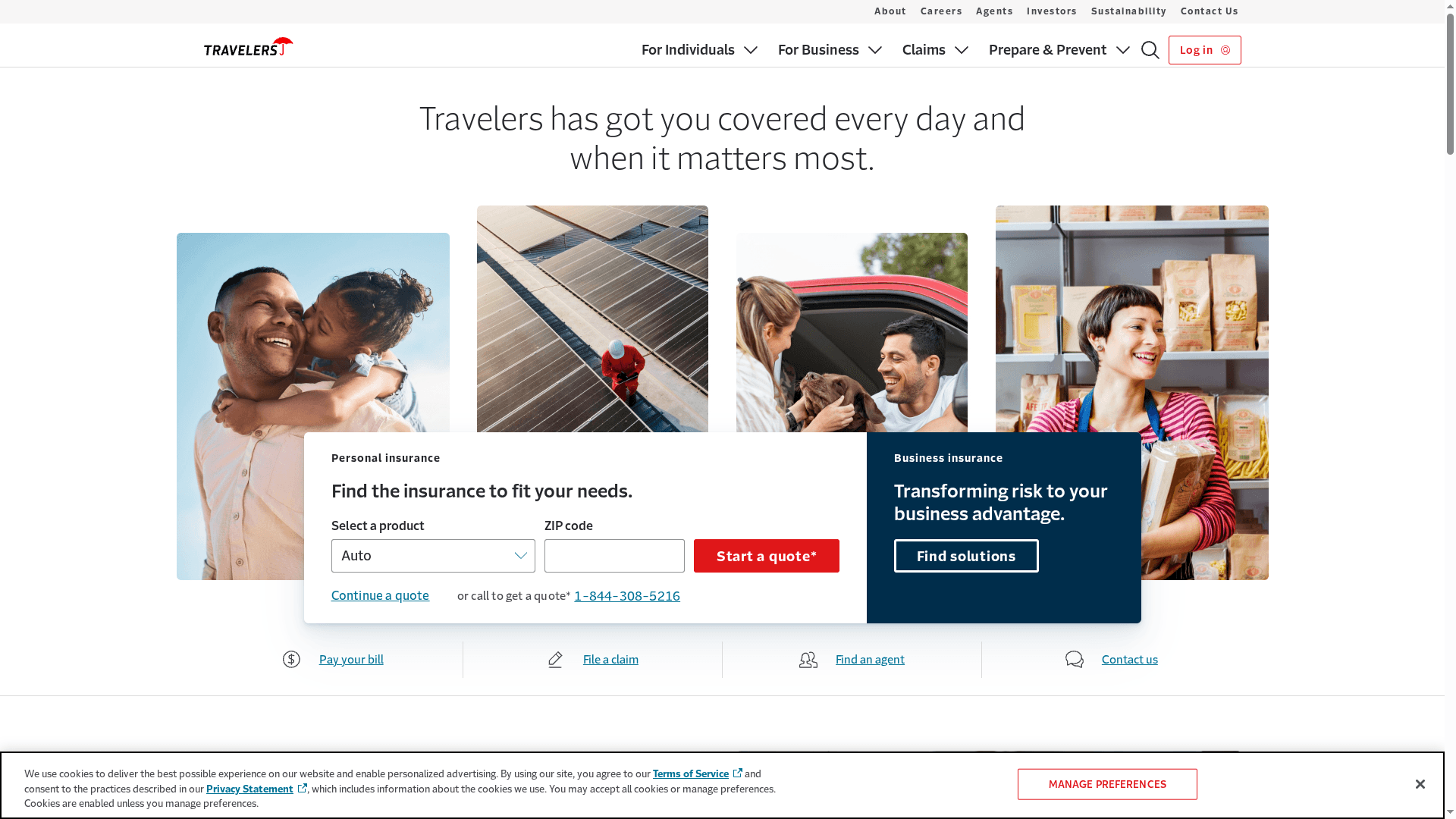
Travelers Insurance is a full-service insurer that covers a wide spectrum of personal and commercial needs, combining broad product lines with a network of local agents. If you want an insurer that pairs online tools with human guidance, Travelers delivers both a self-service experience and agent-led personalization. It’s especially well suited for people and businesses that value choice, long-term stability, and community-focused corporate responsibility. Expect solid coverage options—but plan to contact an agent for firm pricing and specific policy details.
Core Features
Travelers offers a comprehensive suite of personal insurance products (auto, home, renters, condo, boat & yacht, umbrella, valuable items, travel, pet, motorcycle, flood, landlord) and business solutions (commercial auto, liability, cyber, property, workers’ compensation, plus industry-specific packages for manufacturing, energy, finance, and technology). The platform includes online tools to find an agent, file claims, manage policies, and request quotes, and it partners with specialized providers to extend coverages where needed. The emphasis is on flexible choices and agent support rather than a single off-the-shelf policy.
Pros
- Comprehensive product range: Travelers covers an extensive list of personal and commercial risks, giving you one place to consolidate many types of protection.
- Strong agent network and expertise: Local agents provide personalized guidance, which helps translate broad offerings into policies tailored to your situation.
- User-friendly online tools: The website supports policy management, claims filing, and quote requests, making day-to-day interactions straightforward.
- Established track record: With over 170 years in the industry, Travelers brings institutional experience that can matter during complex claims and long recoveries.
- Community and sustainability focus: Corporate initiatives around community support and sustainability reflect an organizational commitment beyond profit.
Cons
- Quotes unavailable in specific states: Travelers does not provide online quotes for risks in Alaska, Florida, Hawaii, and Louisiana, which limits immediate access for affected residents.
- Pricing often requires agent contact: Many policy specifics and price points aren’t shown directly on the website, so you’ll need to speak with an agent for accurate numbers.
- Limited online policy detail: The website may not list full policy terms or pricing details, which can slow decision-making when you need immediate clarity.
Who It’s For
Travelers is ideal for individuals and families who want a broad set of personal insurance choices and prefer having a local agent to translate options into a custom plan. It’s equally appropriate for small to large businesses that need industry-aware commercial insurance and access to experienced underwriters.
Unique Value Proposition
Travelers blends a wide product catalog with human-centered service: online tools for convenience plus local agents for tailoring and claims support. That combination is valuable when disasters demand both speed and expertise. Simple. Reliable. Local touch.
Real World Use Case
A small business owner uses Travelers’ online portal to explore coverage options, contacts a local agent to tailor limits and endorsements for their industry, and then manages a subsequent claim through the site’s claim center—keeping one carrier relationship throughout the recovery.
Pricing
Quote-based: specific pricing is not published online and customers must request quotes via the website or an agent to get personalized rates.
Website: https://travelers.com
Disaster Recovery Services Comparison
This table provides a comparative overview of several disaster recovery services, highlighting their key features, pros, cons, and pricing details.
| Service Name | Features | Pros | Cons | Pricing |
|---|---|---|---|---|
| Disaster Victim Services | 24/7 emergency line 15-min response Coordination with partners |
Rapid response Nationwide coverage No out-of-pocket expenses |
Some limitations in long-term services | Quote-based |
| Sedgwick Temporary Housing | Temporary housing and ALE management Insurance integration |
Temporary housing expertise Comprehensive service mix Responsive support |
Limited pricing transparency Detailed housing options not specified |
Not specified |
| ALE Solutions | My ALE Home app 24/7 support Hotel partnerships |
Comprehensive app Rapid deployment Cost control through partnerships |
Unclear long-term housing coverage Limited public reviews |
Quote-based |
| CRDN | Contents restoration Rapid 24/7 response |
Trusted reputation International footprint Local ownership model |
Pricing transparency limited Service quality may vary by location |
Not specified |
| National Disaster Recovery | Directory of recovery businesses Educational content |
Comprehensive resources Community recovery focus |
Non-detailed service descriptions Informational rather than hands-on |
Free to access content |
| Travelers Insurance | Comprehensive insurance products Online tools |
Broad product range Strong agent network User-friendly tools |
Quotes unavailable online for some states Agent contact often required |
Quote-based |
Choose Speed and Compassion for Disaster Recovery
Facing a disaster can leave families overwhelmed and desperate for immediate shelter and support. The challenge of finding reliable emergency housing fast while managing the complex coordination between insurance carriers, adjusters, and first responders adds layers of stress when every minute counts. If you are looking for disaster recovery support tools that prioritize swift response and seamless communication, you need more than just technology—you need a trusted partner who understands the urgency and complexity involved.
At DisasterVictimServices.com, we specialize in delivering 24/7 rapid emergency housing and coordinated multi-agency assistance designed to ease your burden and help you or those you serve move from crisis toward rebuilding with confidence. By connecting displaced families directly with tailored temporary housing solutions and expert claims support, we reduce the painful wait times and eliminate confusion common in disaster recovery. To explore how we champion speed and compassion in practice, visit our Uncategorized category for real-time insights and success stories.
Do not let disaster recovery slow your path to stability. Experience how streamlined coordination and expert guidance transform recovery into restoration. Act now by visiting DisasterVictimServices.com and discover our latest resources in the New projects section to start your journey toward faster, clearer, and more compassionate disaster support.
Frequently Asked Questions
How can I evaluate disaster recovery support tools to meet my needs?
To evaluate disaster recovery support tools, identify your specific requirements such as response time, coordination capabilities, and user accessibility. Create a comparison matrix highlighting features, costs, and feedback from similar users to simplify your decision-making process.
What features should I look for in a disaster recovery support tool?
Look for features such as 24/7 response capability, integration with insurance and logistical services, as well as user-friendly communication platforms. Ensure the tool supports both immediate housing and long-term recovery to cover all aspects of disaster management.
How do I determine the costs associated with disaster recovery support tools?
Costs can vary greatly based on the features and service levels provided by disaster recovery tools. Assess pricing structures by requesting quotes from potential vendors, considering factors like per-incident charges and monthly subscription fees for ongoing use.
What steps should I take to implement a disaster recovery support tool effectively?
To implement a disaster recovery support tool effectively, begin by training your team on how to use the tool and establish a clear communication protocol for all stakeholders involved. Schedule regular evaluations to adapt workflows based on the ongoing feedback and tool performance.
How quickly can I expect disaster recovery support tools to respond in a crisis?
Many disaster recovery support tools promise response times as quick as 15 minutes, significantly reducing the time families spend without shelter or support. Ensure your selected tool has set service level agreements (SLAs) to guarantee these response times during critical events.
How can disaster recovery support tools help with coordination among multiple agencies?
Disaster recovery support tools facilitate communication between insurance adjusters, emergency responders, and recovery agencies by creating a centralized platform for information sharing. Choose a tool that emphasizes integrated workflows to streamline these communications effectively.
Recommended
- Disaster Recovery Statistics 2025: Key Trends for Agencies and Families – Disaster Victim Services | Helping You Recover After Disaster
- Disaster Recovery Statistics 2025: Key Trends for Agencies and Families – Disaster Victim Services | Helping You Recover After Disaster
- Disaster Recovery Process Steps: A Complete Guide 2025 – Disaster Victim Services | Helping You Recover After Disaster
- How to Access Support: Guide for Disaster Recovery 2025 – Disaster Victim Services | Helping You Recover After Disaster