
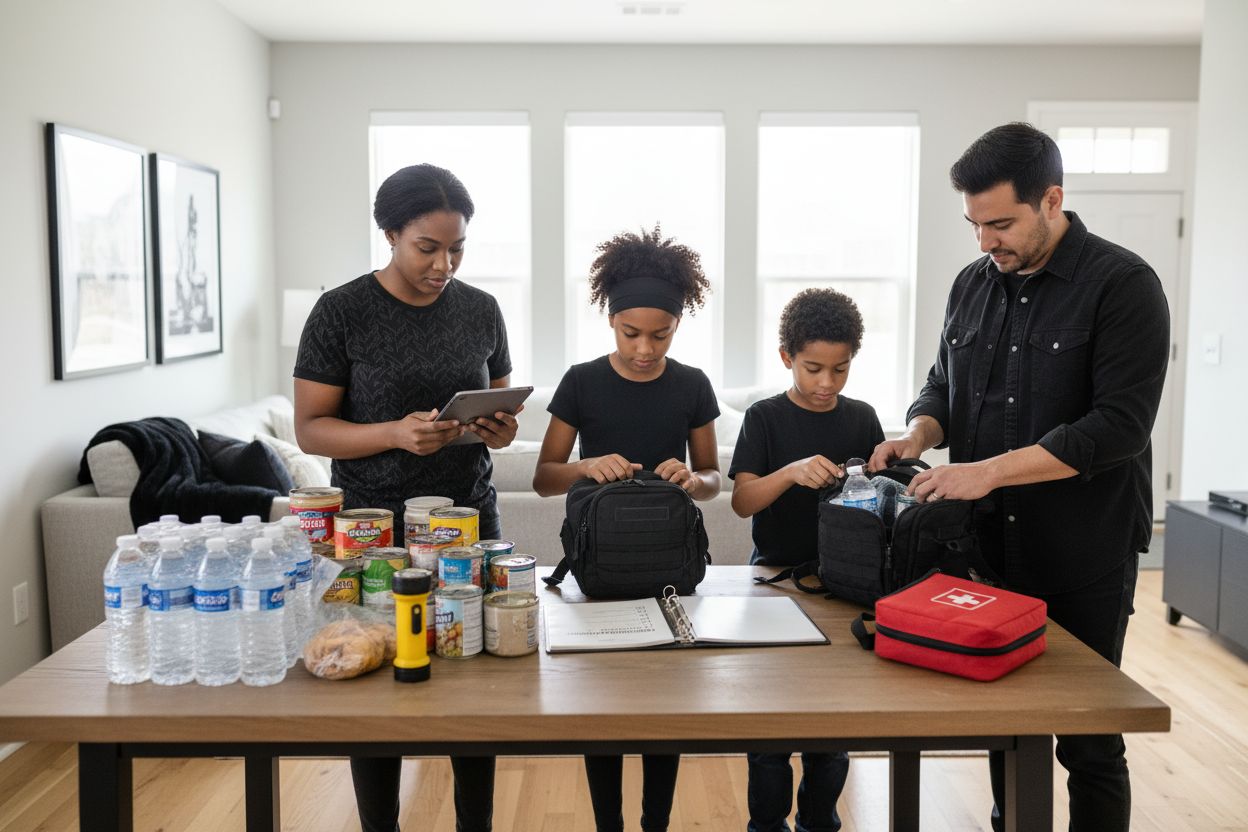
Did you know that more than 60 percent of Americans lack a fully stocked disaster plan at home? Emergencies can disrupt life with little warning, putting families at risk if they are unprepared. By learning practical steps to keep loved ones safe and organized before a crisis hits, you gain confidence and peace of mind no matter what comes your way.
Quick Summary
| Takeaway | Explanation |
|---|---|
| 1. Create a Family Emergency Plan | Tailor a comprehensive plan based on your family’s specific needs, addressing communication and evacuation strategies. |
| 2. Assemble an Emergency Supplies Kit | Stock your kit with essential items like water, food, and first aid supplies, and store it in a portable container. |
| 3. Secure Important Documents | Protect critical personal documents by using both physical and digital storage methods to ensure access during emergencies. |
| 4. Identify Local Emergency Shelters | Research various shelter options and create routes to reach them to enhance safety during disasters. |
| 5. Review and Update Your Checklist | Regularly evaluate and revise your disaster preparedness checklist to reflect changes in your family circumstances and local resources. |
Table of Contents
- Create And Practice A Family Emergency Plan
- Assemble An Emergency Supplies Kit
- Secure Important Documents And Records
- Identify Emergency Shelters And Housing Options
- Establish Communication With Support Networks
- Coordinate With Insurance And Emergency Services
- Review And Update Your Checklist Regularly
1. Create and Practice a Family Emergency Plan
A family emergency plan is your lifeline during unexpected disasters. It transforms panic into purposeful action when chaos strikes.
According to Ready.gov, creating a comprehensive emergency plan requires thoughtful preparation tailored to your household’s specific needs. Your plan should address critical communication strategies, evacuation routes, and safety protocols that everyone in your family understands.
Key Components of an Effective Family Emergency Plan:
- Communication Strategy: Establish how family members will contact each other if separated during an emergency
- Evacuation Routes: Identify multiple exit paths from home, workplace, and school
- Meeting Points: Select designated safe locations where family can reunite
- Emergency Contacts: Create a written list of critical phone numbers and email addresses
The most effective plans are those practiced regularly. Schedule quarterly family emergency drills where everyone learns and reviews the plan. FEMA recommends treating these practice sessions like fire drills to build muscle memory and reduce potential panic during actual emergencies.
Specifically design your plan around unique family circumstances. Do you have family members with medical needs? Speak different languages? Have young children or elderly relatives? Each of these factors requires customized emergency considerations.
Pro Tip: Create a physical emergency plan document that every family member can access. Print multiple copies and store them in easily accessible locations like refrigerators, car glove compartments, and emergency kits.
A well-prepared family is a resilient family. By investing time in creating and practicing your emergency plan, you transform potential vulnerability into confident readiness. Remember preparation is not about fear but about empowering your loved ones to respond effectively when unexpected challenges arise.
2. Assemble an Emergency Supplies Kit
An emergency supplies kit is your survival lifeline during unexpected disasters. Think of it as a portable safety net that can mean the difference between vulnerability and preparedness.
According to FEMA, a comprehensive emergency kit goes far beyond throwing random items into a bag. It requires strategic planning and thoughtful selection of essential survival tools.
Essential Kit Components:
- Water: One gallon per person per day for at least three days
- Non-perishable Food: Three-day supply with manual can opener
- First Aid Kit: Comprehensive medical supplies
- Flashlight and Extra Batteries: For emergency lighting
- Battery Powered Radio: To receive critical emergency updates
- Personal Sanitation Items: Wet wipes, hand sanitizer, garbage bags
- Important Documents: Copies of identification, insurance information
- Cash: Small bills in waterproof container
- Multi Tool: With basic repair capabilities
The CDC emphasizes customizing your kit to address specific family needs. For individuals with disabilities or special requirements, additional items become critical. This might include extra medication, adaptive equipment batteries, communication devices, and specialized health documents.
Pro Storage Tip: Store your emergency kit in a lightweight waterproof container. Select something easily portable that you can quickly grab during an evacuation. Place it in an accessible location where all family members know its location.
Rotate your supplies annually. Check expiration dates on food, medications, and batteries. Update your kit with seasonal changes and as your family’s needs evolve. An emergency kit is not a one-time project but an ongoing commitment to your family’s safety.
Remember survival is about preparation. Your emergency kit transforms potential chaos into a structured response. When unexpected challenges arise, you will be ready.
3. Secure Important Documents and Records
Your critical personal documents are lifelines during disaster recovery. Protecting these records means safeguarding your identity, financial security, and legal standing when chaos strikes.
According to the Federal Trade Commission, creating a comprehensive document protection strategy involves more than simply storing papers in one location.
Critical Documents to Protect:
- Birth certificates
- Social security cards
- Passport and government ID
- Insurance policies
- Property deeds
- Marriage and divorce certificates
- Medical records
- Vehicle titles
- Bank account information
Multiple storage methods provide the best protection. Digital backups offer flexibility while physical copies ensure access during technology failures. AP News recommends creating both physical and digital safety nets for your important records.
Storage Strategy Options:
- Fire‑proof and water‑resistant home safe
- Bank safe deposit box
- Encrypted digital cloud storage
- Password‑protected USB drives
- Scanned digital copies stored on secure platforms
Create digital copies by scanning documents at high resolution. Store these backups in multiple secure locations like encrypted cloud services and external hard drives. Password protect all digital files and use two‑factor authentication for added security.
Update your document collection annually. Life changes like marriages, births, property purchases, or significant financial shifts require document updates. Schedule a yearly review to ensure your records remain current and comprehensive.
Remember protecting your documents is about more than paper preservation. It is about maintaining your ability to rebuild and recover when unexpected challenges emerge. One organized file cabinet can become your lifeline during challenging times.
4. Identify Emergency Shelters and Housing Options
Knowing where to find safety during a disaster can mean the difference between vulnerability and survival. Emergency shelters are not just locations but lifelines that provide critical protection when your home becomes uninhabitable.
Ready.gov emphasizes that emergency shelter planning must be comprehensive and proactive. Your shelter strategy should include multiple options and backup plans.
Types of Emergency Shelter Options:
- Local community centers
- School gymnasiums
- Religious institution buildings
- Government designated emergency facilities
- Red Cross shelters
- State and federal emergency response centers
- Temporary housing provided by FEMA
Research from Reuters highlights how government agencies like FEMA and HHS mobilize resources during emergencies. These organizations work to establish safe housing quickly when disasters disrupt normal living conditions.
Critical Shelter Preparation Steps:
- Research local emergency shelter locations in advance
- Map multiple routes to reach these shelters
- Understand each shelter’s specific capabilities (medical support, accessibility)
- Confirm maximum capacity and registration procedures
- Check if shelters accommodate special needs (disabilities, medical requirements)
Practical preparation means knowing more than just addresses. Call local emergency management offices to understand exact shelter protocols. Some facilities might have specific entry requirements or limited capacity during major events.
Remember that shelter identification is not a one‑time task. Regularly update your information as community resources and emergency plans change. Your preparedness today could be the safety net that protects your family tomorrow.
5. Establish Communication With Support Networks
In moments of crisis, your communication network becomes your lifeline. A well-established support system can transform chaos into coordinated recovery.
Ready.gov emphasizes that effective communication planning goes far beyond simple phone calls. It requires strategic thinking about how your entire household will stay connected during emergencies.
Key Communication Network Elements:
- Designated family emergency contact
- Out of state emergency contact
- Backup communication methods
- Shared digital communication platforms
- Emergency group messaging apps
- Predetermined meeting locations
- Backup communication devices
Consider multiple communication channels. Cell networks might fail during disasters, so diversify your communication strategies. Establish alternative methods like satellite phones, battery powered radios, or offline messaging apps that can function without traditional networks.
Communication Planning Strategies:
- Create a written communication plan
- Share plan with all household members
- Practice communication protocols
- Identify potential communication barriers
- Establish backup contact methods
- Include considerations for pets and medical needs
- Develop code words or signals for specific scenarios
Technology platforms like the ePACT Network offer secure ways to store emergency information and connect support networks. These digital tools can provide critical coordination during challenging times.
Remember communication is about more than technology. It is about creating a resilient network of support that can adapt when standard communication methods fail. Your preparation today could be the bridge that keeps your loved ones safe tomorrow.
6. Coordinate With Insurance and Emergency Services
Navigating insurance and emergency services during a disaster requires strategic planning and proactive communication. Your ability to coordinate effectively can significantly impact your recovery speed and financial stability.
Investopedia recommends comprehensive preparation before disaster strikes.
Critical Insurance Preparation Steps:
- Review current insurance policy details
- Confirm active coverage status
- Document home and personal property inventory
- Understand specific disaster coverage limits
- Photograph valuable possessions
- Store insurance documents securely
- Know your policy claim procedures
The Emergency Management Assistance Compact demonstrates how coordinated emergency response works. Government agencies and insurance providers collaborate to provide comprehensive support during complex disaster scenarios.
Emergency Service Coordination Strategies:
- Establish direct contact with local emergency management offices
- Save emergency service phone numbers
- Understand FEMA and Red Cross resources
- Know your local disaster response protocols
- Create a quick reference guide for emergency contacts
- Identify nearby medical facilities
- Learn about regional emergency shelter locations
Prepare digital and physical copies of insurance documents. Store these in waterproof containers and maintain digital backups in secure cloud storage. Your documentation can make the difference between swift recovery and prolonged financial uncertainty.
Remember insurance is not just a policy. It is your financial safety net during unpredictable moments. Proactive communication and thorough documentation transform potential chaos into manageable recovery.
7. Review and Update Your Checklist Regularly
A disaster preparedness checklist is not a static document but a living strategy that evolves with your life circumstances. What works today might become obsolete tomorrow.
AP News highlights the critical importance of maintaining an up-to-date preparedness plan through regular reviews and updates.
Recommended Review Triggers:
- Major life changes
- New family members
- Changes in medical conditions
- Relocation
- Career transitions
- Insurance policy updates
- Changes in local emergency protocols
- Technology upgrades
- Family member age progression
Consider setting specific review periods. Many experts recommend a comprehensive checklist review every six months. Mark these dates on your calendar like any other important appointment.
Update Strategies:
- Schedule biannual review dates
- Create digital and physical backup copies
- Involve entire household in review process
- Test emergency communication methods
- Verify contact information accuracy
- Replace expired emergency supplies
- Review insurance coverage levels
- Update technology and communication tools
Your preparedness checklist should be flexible enough to adapt to changing personal and community circumstances. Think of it as a living document that grows and changes with your family.
Remember preparedness is not about perfection. It is about staying informed, adaptable, and ready to protect what matters most.
Below is a comprehensive table summarizing the essential emergency preparedness strategies discussed throughout the article.
| Topic | Key Actions & Strategies | Benefits/Outcomes |
|---|---|---|
| Family Emergency Plan | Create customized plans, establish communication strategies, practice drills | Reduces panic, improves response confidence |
| Emergency Supplies Kit | Assemble water, food, first aid, and tools; customize for family needs | Enhances survival readiness, provides essential resources |
| Document Protection | Secure critical documents physically and digitally | Safeguards identity, simplifies recovery process |
| Shelter Options | Identify local shelters and routes, understand capabilities | Provides safety, ensures preparedness |
| Communication Networks | Set up family and backup contacts, use diverse channels | Maintains connection, coordinates recovery efforts |
| Insurance Coordination | Review policies, document possessions, understand claims | Quickens recovery, protects against financial loss |
| Checklist Maintenance | Regularly review and update plans | Ensures continued relevance, adapts to changes |
Make Your Disaster Preparedness Checklist Work for You
Reading about the essential steps for disaster readiness is the first move toward protecting your loved ones. But when real emergencies strike, confusion sets in fast and theoretical plans may not be enough. Are you worried about where your family will go if your home becomes uninhabitable? Do you feel overwhelmed by the logistics of securing immediate shelter and managing insurance claims during a stressful time? The article has shown how communication, emergency supplies, and up-to-date documentation can build your resilience—but when it comes to putting those steps into action, you need hands-on support and clear guidance.
That is exactly what DisasterVictimServices.com provides. Our team is fully dedicated to giving displaced families immediate help with emergency housing and recovery logistics. We actively coordinate with insurance and government resources and share practical insights you cannot afford to miss. Explore more insights and resources on our Disaster Recovery Information page to make sure nothing falls through the cracks. When you want reliable support and a rapid response in your time of need, visit Disaster Victim Services – Helping You Recover After Disaster now. Secure your path to safety and peace of mind before the next crisis arrives.
Frequently Asked Questions
What are the first steps to create a disaster preparedness checklist?
To create a disaster preparedness checklist, start by developing a family emergency plan that includes communication strategies, evacuation routes, and meeting points. Schedule quarterly drills with your family to practice this plan and adjust it according to any unique needs.
How can I assemble a comprehensive emergency supplies kit?
Assemble your emergency supplies kit by including essential items such as water, non-perishable food, a first aid kit, and important documents. Aim to review and rotate your supplies annually to ensure everything is up-to-date and usable.
What important documents should I protect for disaster preparedness?
You should protect critical documents like birth certificates, insurance policies, and medical records to ensure you have access during a disaster. Store physical copies in a waterproof safe and maintain digital backups in secure locations.
How do I find or identify emergency shelters in my area?
Identify emergency shelters by researching local community centers, schools, and designated emergency facilities ahead of time. Regularly check for updated contact and capacity information to ensure you have access to these resources when needed.
What should I include in my disaster communication plan?
Your disaster communication plan should include a designated family emergency contact, backup communication methods, and predetermined meeting spots. Create a written plan and practice these protocols to ensure everyone knows what to do in an emergency.
How often should I review and update my disaster preparedness checklist?
Review and update your disaster preparedness checklist at least twice a year, or whenever there are significant life changes like relocations or new family members. Schedule these reviews on your calendar to maintain current and effective preparedness.
Recommended
- Disaster Safety Checklist 2025: Essential Steps for Every Family and Organization – Disaster Victim Services | Helping You Recover After Disaster
- Disaster Preparedness Checklist 2025: Essential Guide for All Responders – Disaster Victim Services | Helping You Recover After Disaster
- Disaster Preparedness Checklist 2025: Essential Guide for All Responders – Disaster Victim Services | Helping You Recover After Disaster
- Essential Emergency Supply Checklist for 2025: Stay Safe and Prepared – Disaster Victim Services | Helping You Recover After Disaster