
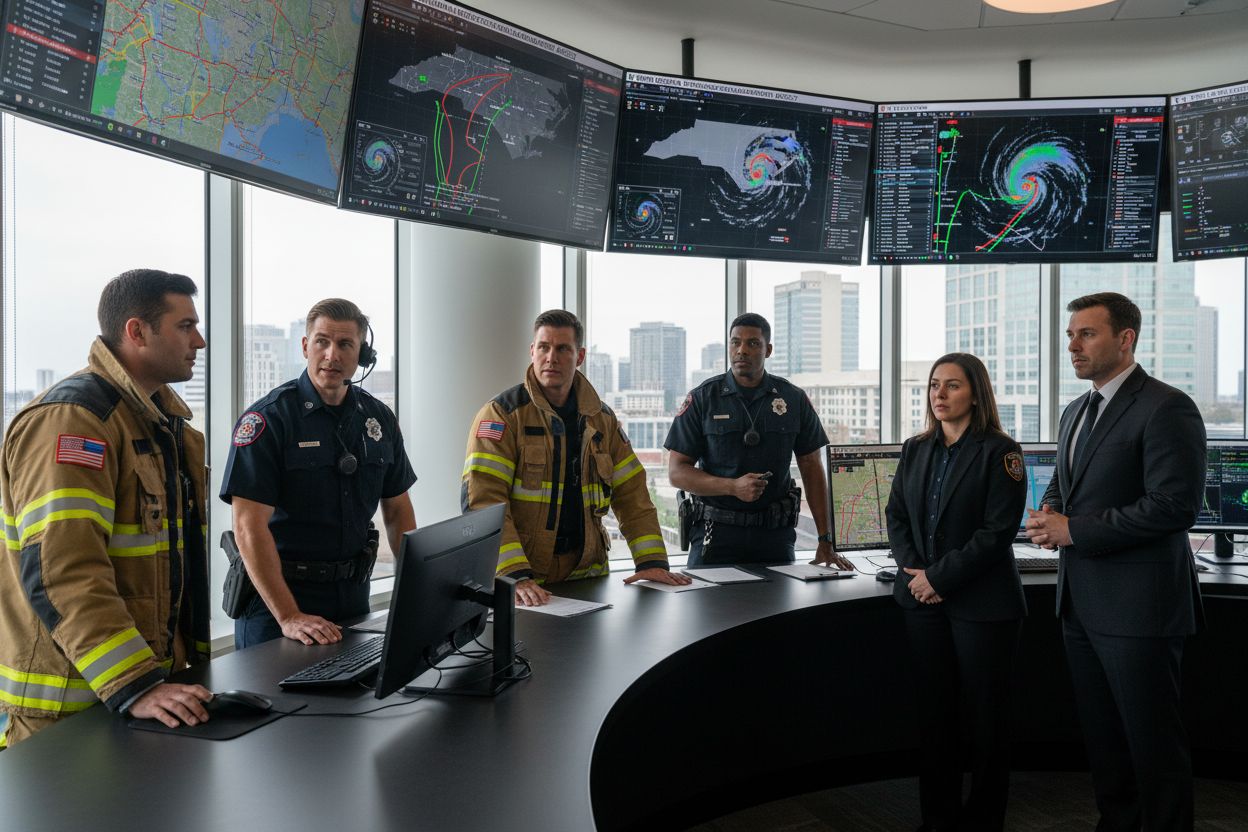
Emergency response may sound like a world of sirens and fast decisions but the real action happens behind the scenes with words. A single communication error can delay rescue efforts by up to 17 minutes in large-scale disasters. Most people expect chaos in a crisis yet professionals rely on a specialized language that turns confusion into clear, coordinated action every time.
Table of Contents
- What Is Emergency Response Terminology?
- Why Emergency Response Terminology Matters In Crisis Situations
- How Emergency Response Terminology Enhances Coordination
- Key Concepts In Emergency Response Terminology
- Real-World Applications Of Emergency Response Terminology 2025
Quick Summary
| Takeaway | Explanation |
|---|---|
| Standardized terminology improves communication | It minimizes misunderstanding and enhances clarity during emergencies, ensuring all agencies comprehend critical information. |
| Rapid information exchange is essential | Facilitated by standardized communication, this speeds up decision-making processes in high-stress crisis situations. |
| Integration of technology enhances response | Modern digital tools support real-time data sharing and coordination, improving overall emergency response efficacy. |
| Interdisciplinary collaboration is crucial | Established terminology fosters collaboration between various fields, leading to more comprehensive emergency management solutions. |
| Training in protocols boosts preparedness | Familiarity with emergency response terminology and protocols equips professionals to handle diverse crisis scenarios effectively. |
What is Emergency Response Terminology?
Emergency response terminology represents a specialized language system critical for clear, coordinated communication during crisis situations. This complex communication framework enables professionals across different agencies and disciplines to share precise information quickly and effectively during emergencies.
Defining the Communication Framework
Emergency response terminology is a standardized set of definitions, protocols, and communication strategies used by first responders, government agencies, medical professionals, and disaster management teams. Understanding emergency response terminology allows these professionals to transmit critical information rapidly and accurately, reducing potential misunderstandings that could compromise rescue and recovery efforts.
Key elements of this terminology include:
- Standardized codes for incident types
- Specific communication protocols
- Universal definitions for emergency scenarios
- Precise medical and technical language
Purpose and Importance
The primary purpose of emergency response terminology is to create a universal language that transcends individual organizational boundaries. According to FEMA’s National Incident Management System, this standardized communication approach ensures that during high-stress situations, all involved parties can understand each other immediately.
By establishing clear, concise language protocols, emergency response teams can:
- Minimize communication errors
- Accelerate decision making processes
- Enhance coordination between multiple agencies
- Provide consistent information transmission
Evolving Communication Standards
Emergency response terminology is not static but continuously evolves with technological advancements, lessons learned from past incidents, and emerging global challenges. The 2025 landscape of emergency response communication reflects increased integration of digital technologies, real-time data sharing, and more sophisticated interdisciplinary collaboration strategies.
Professionals must stay updated on these evolving communication standards to maintain effective emergency response capabilities across diverse and complex scenarios.
Why Emergency Response Terminology Matters in Crisis Situations
During high-stakes emergency scenarios, effective communication becomes a critical lifeline that can determine survival, safety, and successful crisis resolution. Emergency response terminology serves as the foundational language that transforms complex, chaotic situations into coordinated, strategic responses.
Communication as a Critical Survival Tool
In crisis situations, miscommunication can have catastrophic consequences. First responder roles and communication protocols are essential for creating a unified approach to emergency management. When different agencies and professionals use standardized terminology, they can:
- Quickly assess emergency conditions
- Rapidly deploy appropriate resources
- Minimize potential human errors
- Streamline decision making processes
Real World Impact of Precise Language
According to research from the National Institutes of Health, standardized emergency terminology directly correlates with improved response outcomes. Precise language enables emergency professionals to:
- Communicate complex medical conditions accurately
- Describe incident severity with objective metrics
- Share geographic and situational details without ambiguity
- Coordinate multi-agency rescue and support efforts
Beyond Immediate Crisis Response
Emergency response terminology extends its impact far beyond immediate incident management. It creates a comprehensive framework for documentation, post-crisis analysis, and continuous improvement of emergency response strategies. By maintaining consistent language standards, professionals can develop more effective training programs, refine communication protocols, and build more resilient emergency response systems for future challenges.
The deliberate use of standardized terminology transforms communication from a potential weakness into a strategic strength during the most challenging and unpredictable circumstances.
How Emergency Response Terminology Enhances Coordination
Coordination represents the heartbeat of effective emergency response, where multiple agencies, professionals, and resources must synchronize seamlessly to address complex crisis scenarios. Emergency response terminology serves as the critical communication infrastructure that enables this intricate collaborative process.
Breaking Down Organizational Barriers
Disaster response coordination strategies rely on a shared linguistic framework that transcends individual organizational boundaries. By establishing standardized communication protocols, emergency response teams can:
- Eliminate communication silos
- Create unified operational understanding
- Reduce potential misinterpretation risks
- Accelerate collaborative decision making
Multiagency Communication Dynamics
According to FEMA’s National Incident Management System, effective coordination requires more than just technical communication skills.
It demands a comprehensive approach where different agencies can instantly comprehend each other’s communication, regardless of their specific operational background.
Key coordination enhancement strategies include:
- Implementing universal incident classification systems
- Developing cross-agency communication training
- Establishing real-time information sharing platforms
- Creating adaptive terminology update mechanisms
Strategic Interoperability Framework
Emergency response terminology acts as a strategic interoperability framework, transforming potential communication challenges into streamlined collaborative opportunities. This approach ensures that fire departments, medical teams, law enforcement, and government agencies can operate as a cohesive unit during high-stress emergency scenarios.
The ultimate goal of this terminological coordination is to create a responsive, adaptive communication ecosystem that can rapidly adjust to evolving emergency conditions, minimizing response times and maximizing effective intervention strategies.
Key Concepts in Emergency Response Terminology
Emergency response terminology encompasses a sophisticated network of specialized language designed to communicate complex emergency scenarios quickly and precisely. Understanding these fundamental concepts is crucial for effective crisis management and inter-agency collaboration.
To help clarify the core foundations that enable emergency professionals to communicate effectively, the table below summarizes key communication concepts used during crisis situations.
| Concept | Description |
|---|---|
| Incident Classification Levels | System for identifying and categorizing types of emergencies |
| Standardized Severity Scales | Tools to objectively communicate the seriousness of incidents |
| Universal Emergency Codes | Common codes understood by all responders for specific situations |
| Geographic Designation Protocols | Methods for accurately describing locations and coordinates |
Core Communication Foundations
First responder communication protocols establish the foundational language framework that enables rapid, accurate information exchange during emergencies. These core communication concepts include:
- Incident Classification Levels
- Standardized Severity Scales
- Universal Emergency Codes
- Geographic Designation Protocols
Strategic Terminology Categories
According to FEMA’s Emergency Management Institute, emergency response terminology can be strategically categorized into distinct operational domains. These critical categories help professionals communicate complex scenarios with precision and clarity:
The following table provides a comparison of main emergency response terminology categories and their primary focus areas, helping clarify how each supports coordinated action.
| Terminology Category | Main Focus |
|---|---|
| Incident Command System (ICS) | Leadership, structure, and response coordination |
| Medical Emergency Nomenclature | Accurate medical communication and triage |
| Hazard and Risk Assessment | Identifying and conveying risks and threats |
| Resource Deployment Vocabulary | Allocation and mobilization of personnel/equipment |
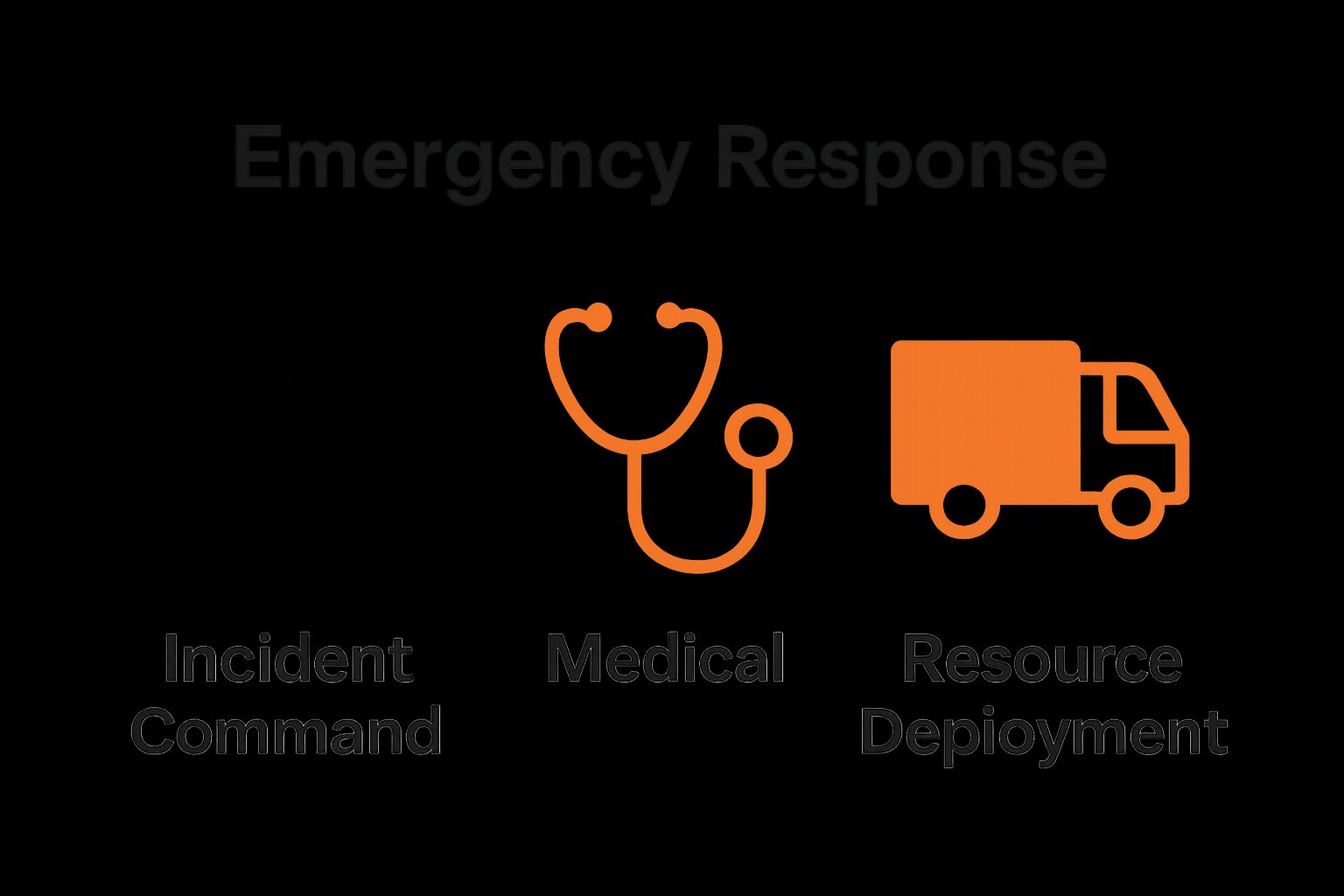
- Incident Command System (ICS) Terms
- Medical Emergency Nomenclature
- Hazard and Risk Assessment Language
- Resource Deployment Vocabulary
Advanced Communication Frameworks
Beyond basic communication, emergency response terminology represents a dynamic, evolving system that adapts to technological advancements and emerging global challenges. Modern terminology frameworks integrate digital communication technologies, real-time data analysis, and sophisticated interdisciplinary collaboration methods.
These advanced communication frameworks enable emergency professionals to transform raw information into actionable intelligence, supporting rapid decision-making processes and coordinated response strategies across multiple agencies and jurisdictions.
Real-World Applications of Emergency Response Terminology 2025
Emergency response terminology transforms theoretical communication strategies into practical, life-saving interventions across diverse crisis scenarios. By translating complex emergency situations into standardized, actionable language, professionals can rapidly mobilize resources and coordinate sophisticated response efforts.
Scenario-Specific Communication Strategies
First responder coordination techniques demonstrate how specialized terminology enables precise communication in high-stress environments. Different emergency scenarios require unique communication approaches, such as:
- Natural disaster response protocols
- Medical emergency triage language
- Urban search and rescue communication
- Hazardous material incident management
Technological Integration Landscape
According to National Emergency Management Association research, technological advancements are dramatically transforming emergency response terminology applications. Modern communication frameworks now incorporate digital platforms that enable:
- Real-time geospatial information sharing
- Automated incident classification systems
- Machine learning communication prediction tools
- Multilingual emergency translation capabilities
Complex Interdisciplinary Collaboration
Emergency response terminology serves as a critical bridge between diverse professional disciplines, allowing seamless communication across medical, law enforcement, governmental, and humanitarian sectors. This interdisciplinary approach ensures that complex emergencies receive comprehensive, coordinated responses that address multiple dimensions of human and infrastructure challenges.
By standardizing communication protocols, emergency response professionals can quickly translate nuanced, complex scenarios into clear, actionable strategies that minimize potential risks and maximize effective intervention capabilities.
Turn Emergency Response Knowledge into Real Recovery Support
Mastering emergency response terminology as highlighted in this article is only the first step toward effective crisis management. Real emergencies demand not just clear communication, but also immediate access to the right resources. When disaster displaces families, confusion about next steps and delays in securing safe shelter are common pain points. You need a support system that can translate precise emergency language into fast, compassionate action.
At DisasterVictimServices.com, we seamlessly bridge the gap between crisis communication and actual recovery. Our team partners with insurance carriers, first responders, and trusted local experts to deliver immediate emergency housing and coordinated assistance. Stay informed and prepared by visiting our Uncategorized Resource Library, where you will find practical guides and updates for navigating disaster recovery. Do not let uncertainty slow down your journey back to safety. Connect with us today through our main site and move forward with confidence, knowing you have experienced professionals on your side.
Frequently Asked Questions
What is emergency response terminology, and why is it important?
Emergency response terminology is a standardized language used to communicate vital information during crises. Understanding this terminology is crucial to ensure clear communication and effective coordination among various agencies during emergencies.
How can I learn emergency response terminology effectively?
To learn emergency response terminology effectively, focus on studying standard communication protocols, incident classification levels, and universal emergency codes. Consider enrolling in specific training programs or workshops within 60 days to gain practical knowledge and real-world applications.
How does standardized communication enhance coordination in emergencies?
Standardized communication minimizes miscommunication and streamlines decision-making during high-stress situations. To enhance coordination, ensure that all team members understand the universally accepted terms and protocols before facing real emergencies.
What role does technology play in modern emergency response terminology?
Technology enhances emergency response terminology by enabling real-time data sharing and automated incident classification. Integrate digital tools and platforms into your communication strategies to improve responsiveness and accuracy, aiming for a reduction in information transfer time by up to 30%.
How can I implement emergency response terminology in my organization?
To implement emergency response terminology in your organization, start by developing a training program that focuses on the core communication concepts specific to your operational needs. Aim to have all staff trained within the next 90 days to ensure everyone is prepared during crisis situations.
Why is it necessary to stay updated on evolving emergency response terminology?
Staying updated on evolving emergency response terminology is essential to adapt to new technologies and strategies in crisis management. Regularly review and refresh your knowledge to ensure your team is equipped to optimize communication efficiency and response effectiveness.
Recommended
- Emergency Response Basics for 2025: A Practical Guide – Disaster Victim Services | Helping You Recover After Disaster
- Understanding Emergency Response Roles in 2025: Key Insights – Disaster Victim Services | Helping You Recover After Disaster
- Emergency Response Basics for 2025: A Practical Guide – Disaster Victim Services | Helping You Recover After Disaster
- Emergency Response Protocols: Key Steps for Fast Action – Disaster Victim Services | Helping You Recover After Disaster