
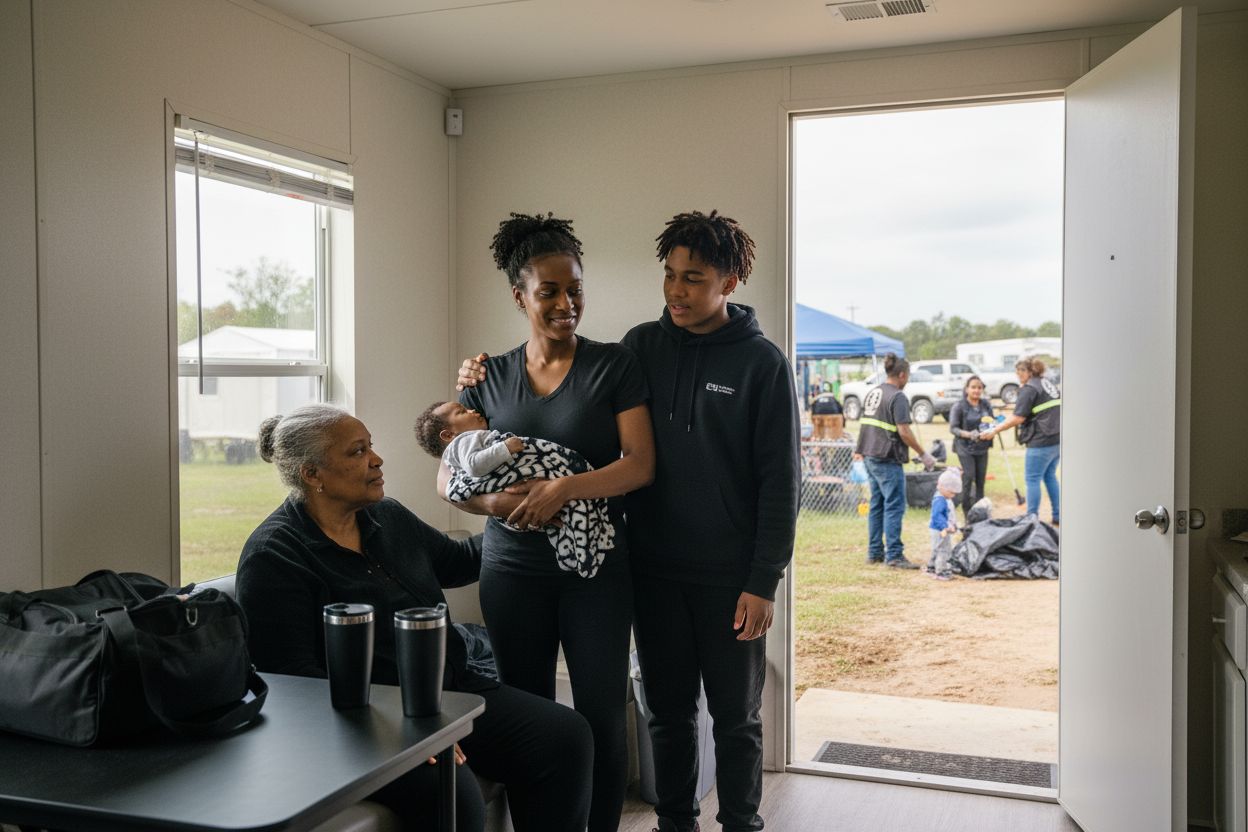
Natural disasters leave thousands without a place to call home every year and sometimes even the usual rental help is not enough. People assume shelters or hotels fill the gap but that is not always true. FEMA’s Direct Housing Process can deliver mobile homes or rapid repairs directly to families who have nowhere else to go and often becomes the real turning point when regular options just cannot keep up with the urgent need.
Table of Contents
- What Is The Direct Housing Process?
- Why Is The Direct Housing Process Important?
- How The Direct Housing Process Works
- Key Concepts In The Direct Housing Process
Quick Summary
| Takeaway | Explanation |
|---|---|
| Direct Housing Process aids disaster victims | It provides temporary housing for those displaced by emergencies when traditional solutions fail. |
| Housing restores dignity and stability | Secure living environments help maintain psychological well-being for individuals and families affected by disasters. |
| Rapid housing solutions minimize economic disruption | Quick rehousing helps communities recover economically, preventing workforce displacement and local business interruptions. |
| Eligibility verified through damage assessments | Survivors must prove their primary residence is uninhabitable and no alternatives are available to qualify for assistance. |
| Comprehensive support beyond mere shelter | The process integrates various forms of assistance, addressing both individual and community recovery needs. |
What is the Direct Housing Process?
The Direct Housing Process represents a critical emergency response mechanism designed to provide temporary housing solutions for individuals and families displaced by natural disasters or significant emergency events. FEMA’s Individual Assistance program creates this strategic approach when standard rental assistance programs cannot meet the immediate housing needs of affected populations.
Understanding the Core Purpose
At its fundamental level, the Direct Housing Process serves as a lifeline for disaster victims who have lost their primary residence and cannot immediately secure alternative housing through conventional means. This process goes beyond simple shelter provision, aiming to create a comprehensive support system that bridges the gap between immediate crisis and long-term recovery.
Key characteristics of the Direct Housing Process include:
- Providing temporary housing solutions tailored to specific disaster scenarios
- Offering support for individuals who cannot return to their original homes
- Creating a streamlined pathway for housing assistance during critical recovery periods
Operational Mechanics of Direct Housing
The process typically activates when traditional housing resources become unavailable or significantly compromised. Government agencies like FEMA work collaboratively with local authorities, relief organizations, and housing providers to rapidly deploy housing solutions. These might include temporary mobile homes, travel trailers, lease-and-repair programs, or direct financial assistance for temporary accommodations.
While the specific implementation can vary depending on the disaster’s scale and nature, the overarching goal remains consistent: reconnect displaced individuals with safe, stable living environments as quickly and efficiently as possible.
Read more about our comprehensive housing placement workflow to understand how we support families during these challenging transitions.
Why is the Direct Housing Process Important?
The Direct Housing Process represents a critical intervention strategy that goes far beyond simple shelter provision, addressing fundamental human needs during catastrophic events. Government research indicates that immediate housing support is essential for community resilience and individual psychological recovery after disasters.
Preserving Human Dignity and Stability
During disaster scenarios, the loss of housing triggers profound emotional and psychological disruptions. The Direct Housing Process serves as a critical mechanism for maintaining human dignity by ensuring individuals and families have a secure, immediate living environment. This approach recognizes that housing is more than a physical structure it is a fundamental psychological anchor that provides safety, continuity, and hope during extremely challenging times.
Key psychological benefits include:
- Reducing trauma and stress associated with displacement
- Providing a sense of normalcy and routine
- Preventing long-term psychological complications from sudden housing loss
Critical Community and Economic Restoration
Beyond individual support, the Direct Housing Process plays a significant role in broader community recovery. By quickly rehousing displaced populations, communities can minimize economic disruption and accelerate overall recovery. Rapid housing solutions prevent potential cascading economic challenges such as workforce displacement, local business interruption, and extended community instability.
The process supports multiple critical recovery dimensions:
- Maintaining local workforce continuity
- Preventing extended community economic stagnation
- Facilitating faster return to productive community functioning
Learn more about our comprehensive disaster recovery strategies to understand how we help communities rebuild and recover after significant disruptions. The Direct Housing Process is not just about providing temporary shelter it is about restoring hope, stability, and forward momentum for individuals and entire communities facing unprecedented challenges.
How the Direct Housing Process Works
The Direct Housing Process operates through a carefully coordinated system involving multiple government agencies and relief organizations, designed to provide rapid, targeted housing solutions for disaster survivors. FEMA’s official guidelines outline a structured approach to assessing, implementing, and managing emergency housing support.
Initial Assessment and Eligibility Determination
The process begins with a comprehensive damage assessment that evaluates the extent of housing destruction and the immediate needs of affected populations. Survivors must meet specific criteria to qualify for Direct Housing Assistance, which typically includes demonstrating that their primary residence is uninhabitable and that alternative housing options are unavailable or insufficient.
Key eligibility considerations include:
This table summarizes the key eligibility requirements and considerations for qualifying for the Direct Housing Process.
| Eligibility Criterion | Explanation |
|---|---|
| Uninhabitable Primary Residence | Survivor’s home must have documented disaster damage |
| Lack of Insurance or Insufficient Coverage | Insurance does not fully cover repair or replacement costs |
| No Immediate Alternative Housing | No other safe, available housing options |
| Residency in Declared Disaster Area | Property located within a federally declared disaster zone |
- Documented proof of property damage
- Lack of insurance or insufficient insurance coverage
- No immediate access to alternative housing solutions
- Residency in a federally declared disaster area
Housing Solution Implementation
Once eligibility is confirmed, government agencies deploy various housing solutions tailored to the specific disaster scenario and local conditions. These solutions can range from temporary mobile housing units to financial assistance for rental accommodations.
Here is a comparison table outlining the primary temporary housing solutions provided through the Direct Housing Process and their core characteristics.
| Housing Solution | Description | Typical Use Case |
|---|---|---|
| Transportable Housing Units | Mobile homes or travel trailers delivered to disaster sites | For survivors with no habitable residence |
| Direct Lease of Available Properties | Government leases existing rental properties for survivors | Where local rentals are available |
| Financial Assistance for Temporary Rentals | Provides funds for survivors to rent temporary accommodations | When survivors can secure rentals on own |
| Repair and Rehabilitation Support | Assistance to repair partially damaged primary residences | For homes needing repairs, not replacement |
| The goal is to provide a swift, flexible response that addresses the unique challenges of each disaster situation. |
Potential housing solutions may include:
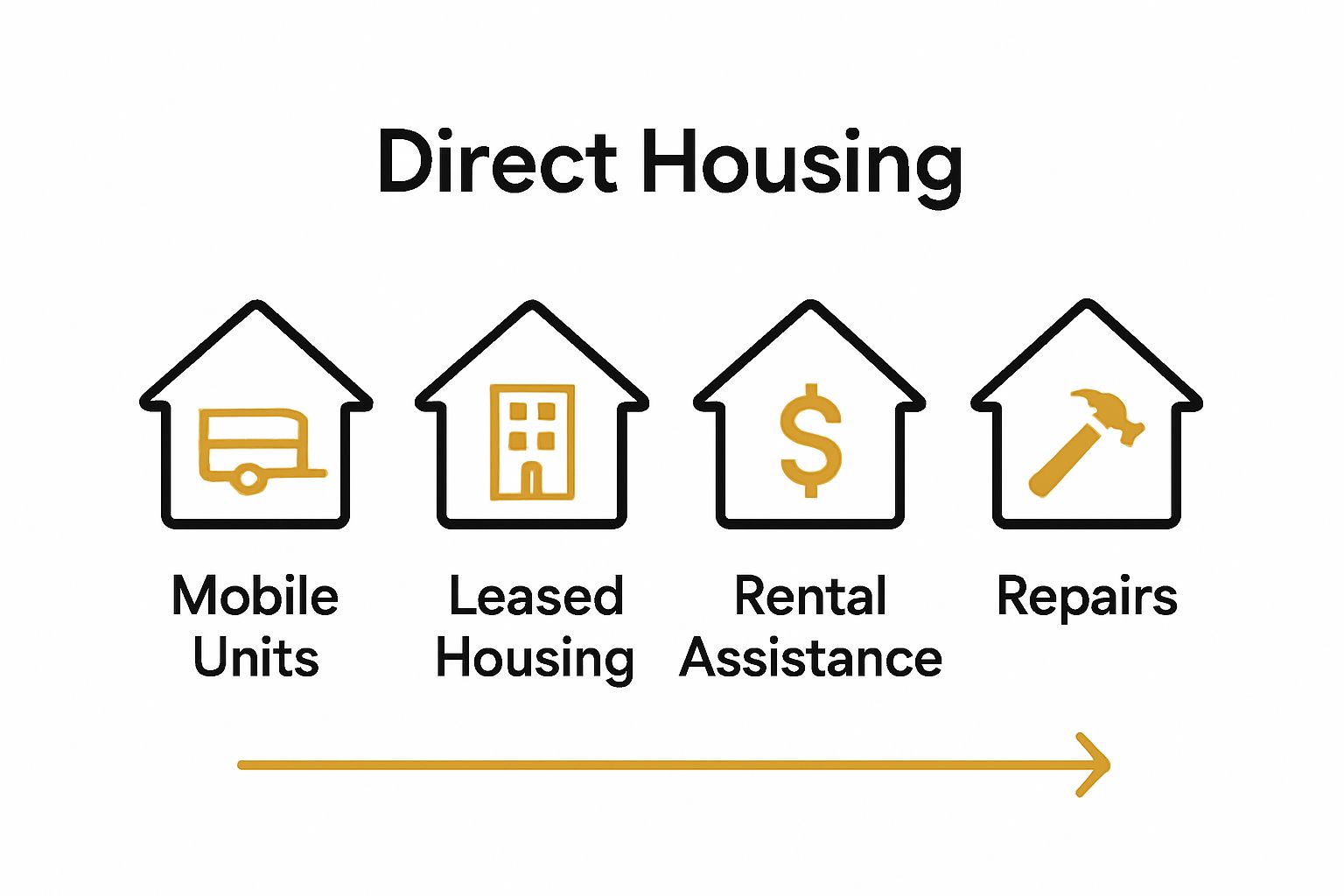
- Transportable housing units (mobile homes or travel trailers)
- Direct lease of available properties
- Financial assistance for temporary rentals
- Repair and rehabilitation support for partially damaged homes
Explore our comprehensive guide to direct housing assistance to understand the nuanced approach we take in supporting disaster survivors during their most challenging times. The Direct Housing Process is not just about providing a temporary shelter, but about creating a bridge to long-term recovery and stability.
Key Concepts in the Direct Housing Process
The Direct Housing Process encompasses a complex framework of interconnected principles designed to address emergency housing needs with precision and compassion. Government emergency management research highlights the nuanced strategies required to effectively support disaster-impacted communities through targeted housing interventions.
Comprehensive Disaster Response Framework
At its core, the Direct Housing Process represents a holistic approach to emergency housing that transcends traditional relief models. This framework recognizes housing as more than physical infrastructure, viewing it as a critical component of psychological and community recovery. The approach integrates multiple dimensions of support, ensuring that displaced individuals receive comprehensive assistance beyond mere shelter placement.
Central philosophical principles include:
- Treating housing as a fundamental human right
- Prioritizing individual and community dignity
- Creating flexible, adaptable support mechanisms
- Recognizing the interconnected nature of housing and broader recovery efforts
Adaptive Support Mechanisms
Unlike rigid traditional relief models, the Direct Housing Process employs dynamic, context-specific strategies. This approach acknowledges that each disaster scenario presents unique challenges requiring tailored solutions. Government agencies and relief organizations collaborate to develop responsive frameworks that can quickly adjust to changing environmental, economic, and social conditions.
Key adaptive strategies encompass:
- Rapid needs assessment protocols
- Flexible housing solution deployment
- Continuous evaluation and adjustment of support mechanisms
- Integrated communication channels between agencies
Learn more about our comprehensive rehousing process strategies to understand the intricate balance between immediate relief and long-term recovery support. The Direct Housing Process represents a sophisticated approach to disaster response, transforming emergency housing from a transactional service to a comprehensive support ecosystem.
Find Hope and Stability Through the Direct Housing Process
When a disaster forces you to leave your home, uncertainty can be overwhelming. The Direct Housing Process, as discussed above, is more than a technical strategy—it is a lifeline that helps you regain stability and dignity after crisis. Many survivors struggle with the trauma of sudden displacement, loss of routine, and the daunting logistics of finding safe, temporary shelter. If you are facing these challenges, you are not alone. Our team at Disaster Victim Services specializes in connecting disaster victims with immediate and reliable housing solutions. We understand the complex steps, eligibility requirements, and the urgency that comes with the need for clear guidance and swift action. Explore our Uncategorized – Disaster Victim Services section to see how we help people like you bridge the gap between disaster and recovery every day.
Do not wait for confusion or stress to grow. Let us help you navigate your next steps with clarity and compassion. Visit Disaster Victim Services now and discover how our personalized approach can bring security and hope back into your life—when you need it most.
Frequently Asked Questions
What is the Direct Housing Process?
The Direct Housing Process is an emergency response mechanism that provides temporary housing solutions for individuals and families displaced by disasters when standard rental assistance cannot meet their immediate needs.
How does eligibility for the Direct Housing Process work?
Eligibility for the Direct Housing Process requires survivors to demonstrate that their primary residence is uninhabitable, lack sufficient insurance coverage, and show no immediate access to alternative housing options in a federally declared disaster area.
What types of housing solutions are offered through the Direct Housing Process?
The Direct Housing Process offers various housing solutions, including transportable mobile homes, travel trailers, direct leases of available properties, and financial assistance for temporary rentals or repairs of partially damaged homes.
Why is the Direct Housing Process important for disaster recovery?
The Direct Housing Process is crucial for maintaining human dignity and stability during disasters. It helps reduce trauma for displaced individuals and plays a significant role in restoring community and economic stability by quickly rehousing affected populations.
Recommended
- Direct Housing Process Guide 2025: Steps, Eligibility & Tips – Disaster Victim Services | Helping You Recover After Disaster
- Direct Housing Process Guide 2025: Steps, Eligibility & Tips – Disaster Victim Services | Helping You Recover After Disaster
- Housing Placement Process Guide for Disaster Relief 2025 – Disaster Victim Services | Helping You Recover After Disaster
- Understanding Housing Reimbursement Process Steps – Disaster Victim Services | Helping You Recover After Disaster