
Responder fatigue sounds like something that happens after a tough day at work, but for emergency workers it runs much deeper. Research shows chronic fatigue in first responders can lead to a 25 percent higher risk of critical errors and injury. Most assume it’s just a matter of pushing through exhaustion, but it actually threatens entire emergency response systems and public safety in ways few people realize.
Table of Contents
- What Is Responder Fatigue And Why Does It Occur?
- The Importance Of Addressing Responder Fatigue In Emergencies
- Understanding The Psychological And Physical Impacts Of Fatigue
- Key Concepts In Responder Fatigue Prevention Strategies
- Real-World Examples Of Successful Fatigue Prevention
Quick Summary
| Takeaway | Explanation |
|---|---|
| Responder fatigue compromises emergency effectiveness. | Fatigue leads to reduced decision-making, slower reactions, and increased errors among emergency personnel. |
| Compassion fatigue affects emotional resilience. | Continuous exposure to trauma causes emotional exhaustion, diminishing the ability to empathize and engage effectively. |
| Implement mandatory rest to enhance performance. | Emergency organizations should enforce rest periods and limit consecutive work hours to reduce fatigue among responders. |
| Adopt technology for fatigue monitoring. | Utilizing mobile apps and wearable devices can help track stress and sleep patterns, aiding in timely interventions. |
| Cultivate a supportive organizational culture. | Fostering an environment that prioritizes mental health encourages dialogue about stress and enhances team morale. |
What is Responder Fatigue and Why Does it Occur?
Responder fatigue represents a complex psychological and physiological condition that significantly impacts emergency workers, public safety professionals, and disaster response teams. This phenomenon emerges when individuals experiencing prolonged high-stress environments encounter cumulative mental and physical exhaustion that compromises their operational effectiveness.
The Physiological Roots of Responder Fatigue
Emergency responders face unique challenges that precipitate extreme exhaustion. According to research from the International Journal of Environmental Research and Public Health, fatigue develops through multiple interconnected factors:
- Continuous exposure to traumatic scenarios
- Extended work shifts without adequate rest
- Intense physical and emotional demands
- Chronic stress and adrenaline depletion
- Psychological burden of managing critical situations
Psychological Dimensions of Emergency Worker Exhaustion
Beyond physical strain, responder fatigue encompasses profound psychological components. The mental toll of consistently managing high-stakes emergencies creates significant neurological and emotional challenges. Professionals repeatedly confronting human suffering, life-threatening situations, and rapid decision-making environments experience substantial cognitive and emotional depletion.
The cumulative impact of these experiences can trigger compassion fatigue, a specialized form of burnout where emergency workers gradually lose their ability to empathize and perform effectively.
This condition represents more than simple tiredness – it reflects a deep, systemic erosion of psychological resilience.
Understanding Systemic Impact
Responder fatigue is not merely an individual challenge but a critical systemic issue affecting entire emergency response networks. When key personnel become mentally and physically exhausted, entire disaster response capabilities can become compromised.
Below is a table comparing the physiological, psychological, and systemic impacts of responder fatigue, helping clarify how each dimension uniquely affects emergency workers and organizations.
| Impact Type | Description | Key Consequences |
|---|---|---|
| Physiological | Physical exhaustion from chronic stress, long shifts, and trauma exposure | Weakened immune system, cardiovascular strain |
| Psychological | Emotional and cognitive depletion due to managing high-stakes situations | Compassion fatigue, emotional exhaustion, reduced empathy |
| Neurological/Cognitive | Direct effects on brain function, memory, and decision-making | Impaired decision making, reduced attention, memory loss |
| Systemic (Organizational) | Broader effects on emergency response systems and team performance | Increased critical errors, reduced team coordination |
| The potential consequences include reduced decision-making capacity, increased risk of errors, and diminished team coordination. |
For more comprehensive insights into recognizing and managing these challenges, read our guide on responder fatigue warning signs. Understanding these dynamics is crucial for maintaining robust, effective emergency response capabilities.
The Importance of Addressing Responder Fatigue in Emergencies
Addressing responder fatigue is not merely a wellness consideration but a critical operational imperative that directly impacts public safety, emergency response effectiveness, and community resilience. The consequences of unmitigated fatigue extend far beyond individual health, potentially compromising entire emergency management systems.
Public Safety and Operational Performance
According to research from the Centers for Disease Control and Prevention, responder fatigue represents a significant threat to operational performance. Exhausted emergency workers experience measurable declines in critical cognitive functions essential for effective crisis management:
- Reduced decision-making accuracy
- Diminished situational awareness
- Slower reaction times
- Increased probability of critical errors
- Higher risk of personal injury
Psychological and Organizational Resilience
The psychological impact of unaddressed fatigue extends beyond immediate performance metrics. Emergency responders continuously exposed to high-stress environments without adequate recovery mechanisms develop long-term psychological vulnerabilities. Chronic fatigue can transform from a temporary state into a systemic organizational challenge, potentially leading to widespread burnout, decreased team morale, and increased personnel turnover.
The cumulative psychological strain can trigger complex emotional responses, including compassion fatigue, emotional exhaustion, and reduced professional efficacy. These dynamics underscore the necessity of comprehensive fatigue management strategies that prioritize both individual and collective psychological well-being.
Systemic Implications and Strategic Management
Effective fatigue management requires a holistic, proactive approach that integrates individual support with organizational policy. Emergency response organizations must recognize fatigue as a strategic risk management issue, implementing robust intervention frameworks that balance operational demands with personnel health.
Our comprehensive guide on responder fatigue prevention strategies provides detailed insights into creating resilient emergency response ecosystems. By treating responder fatigue as a critical operational challenge, organizations can develop more sustainable, effective emergency management capabilities that protect both personnel and the communities they serve.
Understanding the Psychological and Physical Impacts of Fatigue
Fatigue among emergency responders represents a complex, multifaceted condition that profoundly affects both psychological functioning and physical performance. This intricate phenomenon goes beyond simple tiredness, creating a comprehensive disruption of an individual’s mental and physiological systems.
Neurological and Cognitive Consequences
According to research from Utah State University, prolonged fatigue triggers significant neurological changes that compromise critical cognitive functions. Emergency workers experiencing sustained stress encounter measurable neurological transformations:
- Decreased executive decision making capabilities
- Reduced attention span and concentration
- Impaired emotional regulation
- Compromised memory processing
- Heightened stress hormone production
Emotional and Mental Health Vulnerabilities
Psychological impacts of responder fatigue extend far beyond momentary exhaustion. Continuous exposure to high-stress environments creates profound emotional landscapes that can fundamentally alter an individual’s mental resilience. Emergency workers frequently develop complex psychological defense mechanisms, including emotional numbing, hypervigilance, and chronic stress responses.
The cumulative psychological strain can manifest as compassion fatigue, a specialized form of emotional exhaustion where professionals gradually lose their capacity for empathetic engagement. This condition represents a critical intersection between professional dedication and personal psychological preservation.
Physical Performance and Systemic Health Implications
Fatigue is not merely a mental challenge but a significant physical health concern. Prolonged stress and exhaustion trigger cascading physiological responses that compromise overall bodily systems. Emergency responders experiencing chronic fatigue often encounter:
- Weakened immune system functioning
- Increased cardiovascular stress
By understanding these intricate psychological and physical dynamics, organizations can develop more comprehensive responder fatigue prevention strategies. Recognizing fatigue as a holistic health challenge allows for more targeted, effective intervention approaches that protect both individual well-being and organizational effectiveness.
Key Concepts in Responder Fatigue Prevention Strategies
Responder fatigue prevention requires a comprehensive, multidimensional approach that integrates individual wellness practices with organizational support systems. Successful strategies transcend traditional intervention models, focusing on proactive and holistic management of physical, psychological, and systemic challenges.
Organizational Structural Interventions
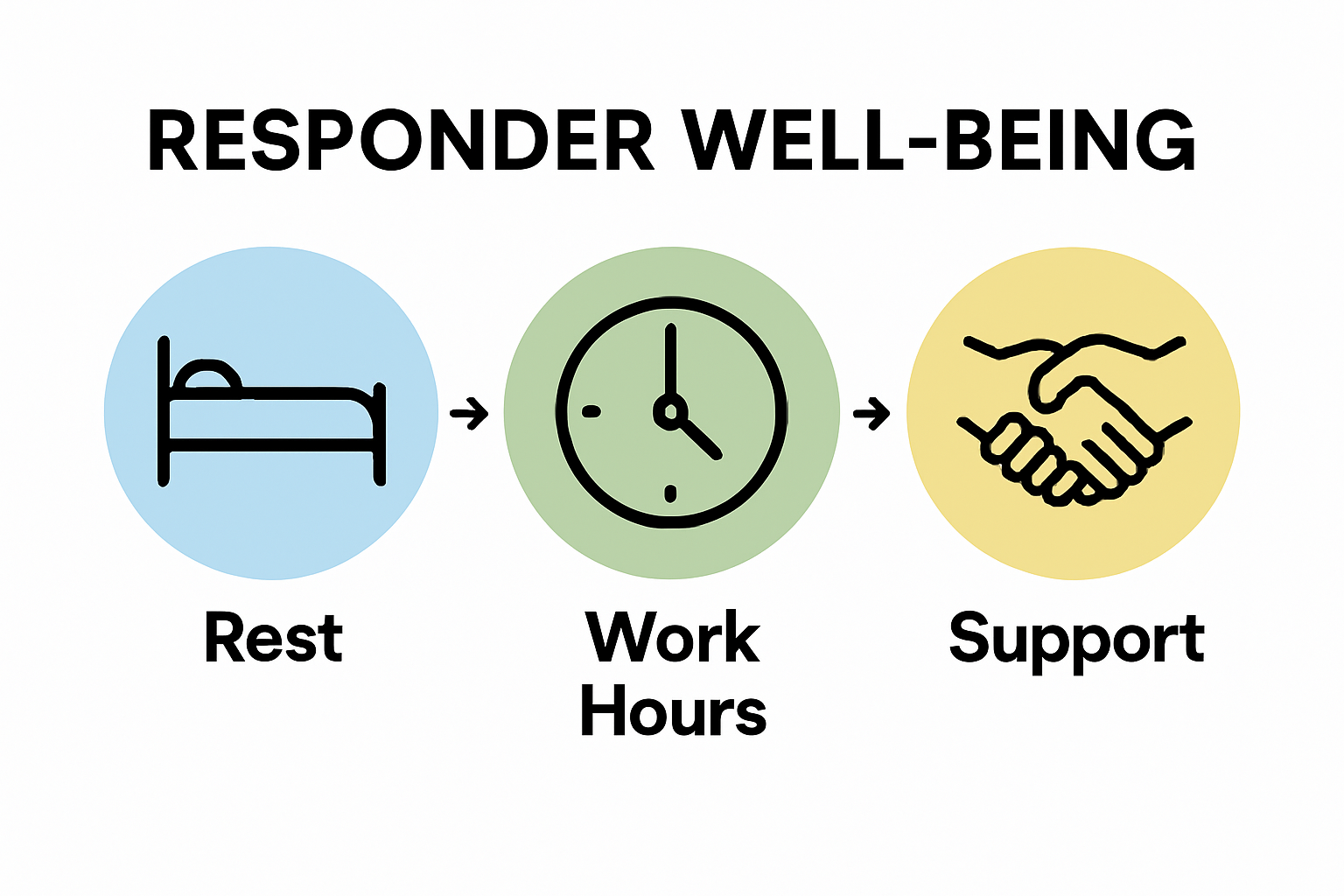
According to guidance from the Centers for Disease Control and Prevention, effective fatigue prevention demands strategic organizational modifications. Emergency response organizations must implement robust structural interventions that protect personnel well-being
 :
:
- Implementing mandatory rest periods
- Establishing maximum consecutive work hours
- Creating rotating shift schedules
- Developing comprehensive stress monitoring protocols
- Ensuring adequate personnel coverage
Individual Resilience and Self-Care Mechanisms
Personal resilience represents the foundational element of fatigue prevention. Emergency responders must develop sophisticated self-management techniques that enable psychological and physiological recovery. This involves cultivating comprehensive wellness practices that extend beyond traditional stress management approaches.
Key individual strategies include maintaining consistent sleep routines, practicing mindfulness techniques, engaging in regular physical exercise, and developing strong social support networks. Responders must view self-care not as a luxury but as a critical professional competency essential for sustained performance and long-term career sustainability.
Integrated Support and Continuous Monitoring
Successful fatigue prevention requires an integrated approach that combines organizational policy, individual skill development, and continuous health monitoring. Emergency response systems must create adaptive frameworks that recognize the dynamic nature of psychological and physical stress.
Our comprehensive guide on responder resilience strategies provides in-depth insights into developing robust fatigue management protocols. By treating prevention as a collaborative, multifaceted process, organizations can create more sustainable, effective emergency response capabilities that prioritize both personnel well-being and operational excellence.
This table provides an overview of recommended organizational and individual fatigue prevention strategies, making it easier to distinguish between workplace policies and self-care actions.
| Prevention Strategy Type | Examples | Purpose |
|---|---|---|
| Organizational Policy | Mandatory rest periods, limit work hours, rotating shifts, stress monitoring protocols | Protect responder well-being and ensure operational readiness |
| Individual Resilience | Sleep routines, mindfulness, regular exercise, strong social support networks | Support psychological recovery and prevent burnout |
| Technological Support | Monitoring apps, wearable devices, automated schedules | Enable real-time tracking and adjustment |
Real-World Examples of Successful Fatigue Prevention
Emergency response organizations worldwide have developed innovative approaches to mitigate responder fatigue, demonstrating that strategic interventions can significantly improve personnel well-being and operational effectiveness. These real-world examples provide crucial insights into practical fatigue prevention methodologies.
Technology-Driven Intervention Strategies
According to research from the Substance Abuse and Mental Health Services Administration, technological solutions are emerging as powerful tools in fatigue management. Emergency response teams have successfully implemented digital monitoring and support systems that revolutionize traditional stress management approaches:
- Mobile applications tracking sleep and stress patterns
- Wearable devices monitoring physiological stress indicators
- Digital platforms for peer support and psychological check-ins
- Automated scheduling systems preventing excessive work hours
- Real-time fatigue risk assessment technologies
Organizational Cultural Transformation
Successful fatigue prevention extends beyond technological solutions and requires fundamental cultural shifts within emergency response organizations. Progressive departments have reimagined workplace practices, creating environments that prioritize personnel resilience and psychological safety.
These transformative approaches include implementing mandatory wellness programs, developing comprehensive mental health support networks, and creating organizational cultures that destigmatize discussions about stress and emotional exhaustion. By treating responder well-being as a strategic priority, these organizations have demonstrated significant improvements in personnel retention, operational performance, and overall team morale.
Collaborative Interdisciplinary Interventions
The most effective fatigue prevention strategies emerge from collaborative approaches that integrate insights from psychology, occupational health, and emergency management. Innovative organizations have developed comprehensive intervention models that address fatigue through multifaceted support systems.
Our comprehensive guide on responder resilience strategies offers deeper insights into these transformative approaches. By viewing fatigue prevention as a dynamic, ongoing process requiring continuous adaptation, emergency response organizations can create more sustainable, supportive work environments that protect both individual and collective well-being.
Take Action Against Responder Fatigue – Your Recovery Partner is Here
Responder fatigue is more than just tiredness. It disrupts decision making, drains emotional resilience, and threatens public safety during emergencies. If you are facing these overwhelming stressors or are responsible for the well-being of your response team, you need a partner who understands both the human and logistical side of disaster response. At Disaster Victim Services, we are committed to supporting emergency workers, first responders, and displaced individuals right when they need it most.
Do not let exhaustion stand between you and effective recovery. Explore our Uncategorized resources for essential guidance or connect directly with our team for personalized, compassionate help. From emergency housing to seamless coordination with insurance and recovery professionals, we are ready to empower your team and your family to move forward. Learn how Disaster Victim Services can make a difference now. Reach out today and restore resilience in your emergency response journey.
Frequently Asked Questions
What is responder fatigue?
Responder fatigue is a condition experienced by emergency workers resulting from prolonged exposure to high-stress environments, leading to cumulative mental and physical exhaustion that impacts their operational effectiveness.
What are the main causes of responder fatigue?
The main causes of responder fatigue include continuous exposure to traumatic scenarios, extended work shifts without adequate rest, intense physical and emotional demands, chronic stress, and psychological burdens associated with critical situations.
How can organizations prevent responder fatigue?
Organizations can prevent responder fatigue by implementing mandatory rest periods, establishing maximum consecutive work hours, rotating shift schedules, developing stress monitoring protocols, and ensuring adequate personnel coverage.
What personal strategies can responders use to manage fatigue?
Emergency responders can manage fatigue by maintaining consistent sleep routines, practicing mindfulness techniques, engaging in regular physical exercise, and building strong social support networks to enhance their resilience and recovery.
Recommended
- Responder Fatigue Warning Signs: What Everyone Needs to Know in 2025 – Disaster Victim Services | Helping You Recover After Disaster
- Responder Fatigue Prevention: Essential Strategies for All Stakeholders – Disaster Victim Services | Helping You Recover After Disaster
- Responder Fatigue Warning Signs: What Everyone Needs to Know in 2025 – Disaster Victim Services | Helping You Recover After Disaster
- Emergency Response Basics for 2025: A Practical Guide – Disaster Victim Services | Helping You Recover After Disaster