
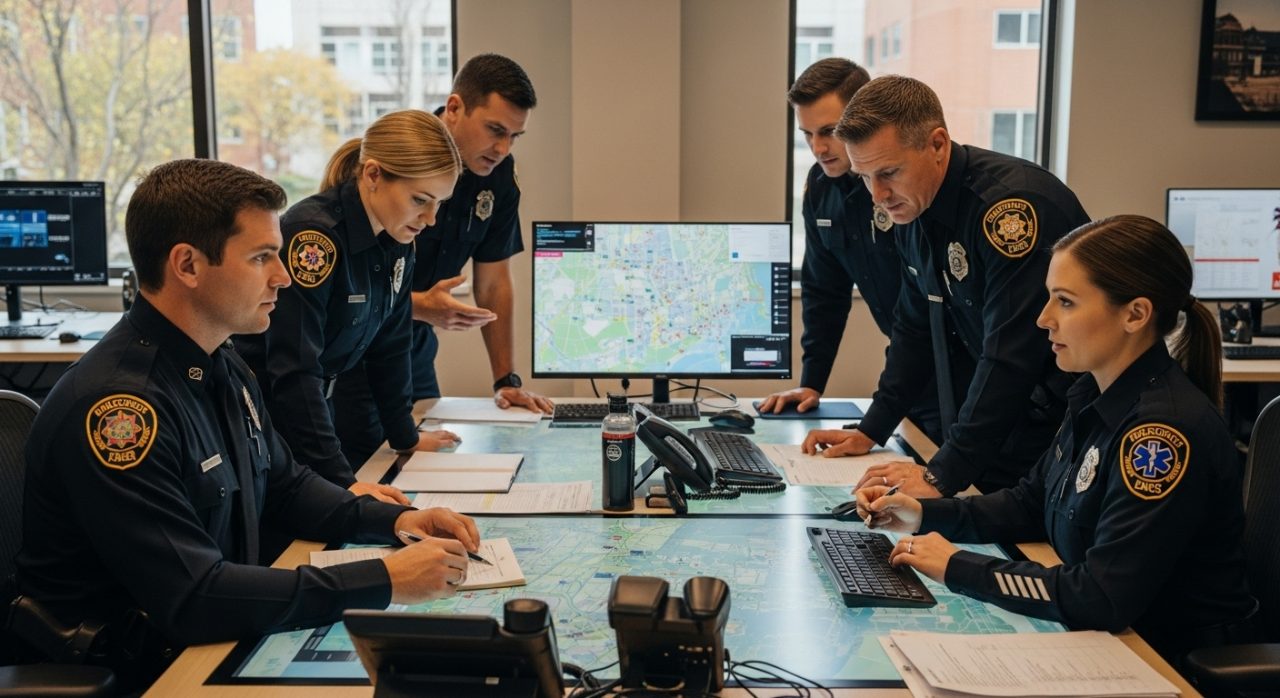
Coordinating an emergency response gets more complicated when multiple agencies are involved. It sounds impossible to keep communications clear and tasks organized when things are moving fast, but that is where the incident command structure flips the script. This method provides a scalable chain of command and has been credited with helping manage complex disasters like hurricanes and wildfires—over 90 percent of FEMA’s largest emergency responses have used this system for unified action—yet its true power lies in how it adapts on the fly, keeping chaos under control in ways most organizations never expect.
Table of Contents
- What Is Incident Command Structure And Its Purpose?
- The Importance Of Incident Command Structure In Crisis Management
- How Incident Command Structure Functions During Emergencies
- Key Roles And Responsibilities Within The Incident Command Structure
- Real-World Applications Of Incident Command Structure In Disasters
Quick Summary
| Takeaway | Explanation |
|---|---|
| Establish a clear chain of command | A structured hierarchy ensures effective communication and decision-making during emergencies. |
| Define roles and responsibilities effectively | Clearly outlined roles reduce confusion and improve accountability among responding teams. |
| Facilitate flexible response strategies | The incident command structure adapts to changing circumstances, allowing for efficient resource management. |
| Enhance inter-agency coordination | Standardized protocols help different agencies collaborate seamlessly during crises, leading to improved emergency responses. |
| Support rapid decision making | In emergencies, speed is crucial; this structure enables quick, informed decisions that can save lives. |
What is Incident Command Structure and Its Purpose?
An incident command structure represents a standardized approach to managing emergency responses across multiple organizations and agencies. This systematic framework ensures coordinated, efficient, and clear communication during critical situations that require immediate and organized intervention.
Core Purpose of Incident Command System
The incident command structure serves as a critical management tool designed to streamline emergency operations. Research from the National Wildfire Coordinating Group highlights that this system provides a universal framework for managing complex emergency scenarios. Its primary objectives include:
- Establishing a clear chain of communication
- Defining specific roles and responsibilities
- Enabling rapid and flexible response to evolving situations
- Facilitating coordination between different agencies and responders
Organizational Principles
At its core, the incident command structure creates a hierarchical yet adaptable system that can scale based on the emergency’s complexity. Unlike traditional management models, this approach allows for quick resource allocation and decision making. Our comprehensive guide on incident command chain provides deeper insights into the operational mechanics.
Key organizational principles include maintaining unity of command, where each individual reports to only one supervisor, and establishing a manageable span of control that prevents communication breakdowns. These principles ensure that during high-stress emergency situations, teams can respond effectively and efficiently, minimizing potential confusion and maximizing collaborative potential.
This table highlights the core organizational principles of the incident command structure, clarifying how each principle contributes to effective emergency response.
| Principle | Description |
|---|---|
| Unity of Command | Each individual reports to only one supervisor to maintain clear leadership lines |
| Manageable Span of Control | Limits the number of individuals reporting to a supervisor to prevent communication breakdowns |
| Clear Chain of Command | Establishes a defined hierarchy for streamlined decision making and communication |
| Defined Roles | Specifies tasks and duties to minimize confusion and encourage accountability |
| Scalable Structure | Adjusts size and complexity of the team based on emergency demands |
The Importance of Incident Command Structure in Crisis Management
The incident command structure represents a critical framework for managing complex emergencies, ensuring systematic and coordinated responses across multiple agencies and organizations. By establishing a clear operational protocol, this approach transforms potential chaos into a structured, efficient emergency management strategy.
Enhancing Organizational Effectiveness
Research from the Federal Emergency Management Agency demonstrates that a well-implemented incident command structure dramatically improves emergency response capabilities. The system’s primary significance lies in its ability to:
- Minimize communication barriers between different response teams
- Provide a standardized approach to resource allocation
- Create clear accountability mechanisms
- Reduce potential conflicts during high-stress situations
Mitigating Risks and Improving Outcomes
In emergency scenarios, rapid and coordinated decision making can mean the difference between life and death. The incident command structure enables responders to navigate complex challenges by creating a predictable operational environment. Our detailed analysis of incident management protocols offers deeper insights into these critical mechanisms.
By establishing a hierarchical yet flexible system, emergency management teams can quickly adapt to changing circumstances while maintaining clear lines of communication and responsibility. This approach ensures that resources are deployed efficiently, potential risks are quickly identified, and collaborative efforts remain focused on achieving the most critical objectives during crisis situations.
How Incident Command Structure Functions During Emergencies
The incident command structure operates as a dynamic and adaptive management system designed to handle emergencies with precision and efficiency. Unlike traditional hierarchical models, this approach provides a flexible framework that can rapidly scale and respond to evolving crisis scenarios.
Core Operational Mechanisms
According to FEMA’s emergency management training, the incident command structure functions through several critical operational principles:
- Establishing a clear chain of command
- Creating modular organizational components
- Implementing standardized communication protocols
- Enabling rapid resource mobilization
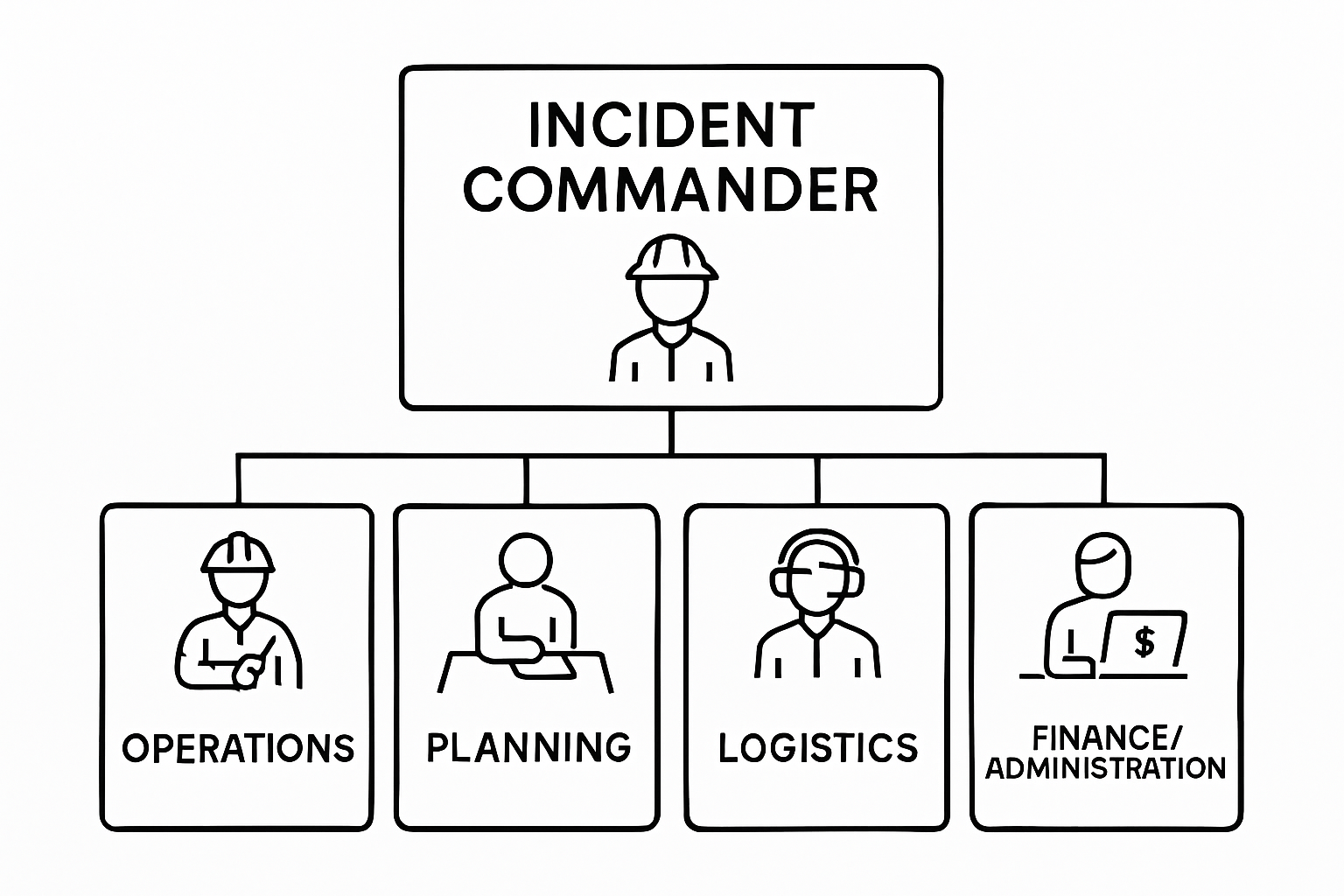
The system begins with a single incident commander who holds ultimate responsibility for managing the emergency response. This individual oversees all strategic decisions, resource allocation, and coordinates communication between different responding agencies.
Adaptive Response Strategies
Emergency scenarios are inherently unpredictable, requiring a management approach that can quickly adjust to changing conditions. Our comprehensive guide to emergency response protocols illustrates how the incident command structure provides this crucial flexibility.
The structure allows for immediate expansion or contraction of the management team based on the emergency’s complexity. During smaller incidents, a minimal team might manage operations, while larger crises can rapidly incorporate additional specialized units such as logistics, planning, finance, and operations sections. This scalability ensures that resources are efficiently deployed and that communication remains clear and consistent throughout the emergency response.
Key Roles and Responsibilities within the Incident Command Structure
The incident command structure establishes a comprehensive framework of specialized roles designed to ensure effective emergency management. Each position within this system carries specific responsibilities that contribute to a coordinated and efficient response.
Core Leadership Positions
Research from the National Park Service highlights the critical leadership roles that form the backbone of the incident command structure:
- Incident Commander: Ultimate decision maker and overall incident manager
- Operations Section Chief: Responsible for tactical field operations
- Planning Section Chief: Develops strategic action plans
- Logistics Section Chief: Manages resources and support services
- Finance/Administration Section Chief: Handles financial tracking and documentation
The Incident Commander serves as the primary strategic leader, holding comprehensive responsibility for the entire emergency response. This individual makes critical decisions, sets objectives, and manages the overall incident management strategy.
The table below summarizes the key leadership positions within the incident command structure along with their primary responsibilities for clear and at-a-glance understanding.
| Position | Primary Responsibility |
|---|---|
| Incident Commander | Overall incident management and decision making |
| Operations Section Chief | Manages tactical field operations |
| Planning Section Chief | Develops strategic action plans |
| Logistics Section Chief | Coordinates resources and support services |
| Finance/Administration Section Chief | Oversees financial tracking and documentation |
Collaborative Functional Responsibilities
Each role within the incident command structure operates with clearly defined boundaries while maintaining collaborative communication. Our comprehensive emergency management guide provides deeper insights into these intricate interactions.
The system ensures that every team member understands their specific duties, preventing overlap and potential confusion during high-stress emergency scenarios.
 By establishing precise roles and communication channels, the incident command structure transforms complex emergency situations into manageable, coordinated responses that prioritize safety, efficiency, and strategic decision making.
Real-World Applications of Incident Command Structure in Disasters
The incident command structure transforms from theoretical framework to critical operational strategy during complex emergency scenarios. Its practical implementation demonstrates remarkable adaptability across diverse disaster situations, enabling coordinated responses that save lives and minimize potential damage.
Large-Scale Emergency Responses
Research from the Federal Emergency Management Agency reveals compelling examples of incident command structure deployment during significant national emergencies. The system has proven instrumental in managing critical incidents such as:
- Hurricane response and evacuation coordination
- Wildfire management across multiple jurisdictions
- Pandemic healthcare system coordination
- Large-scale terrorist incident management
- Multistate natural disaster recovery operations
During these complex scenarios, the incident command structure provides a standardized communication protocol that allows different agencies to work seamlessly, transcending traditional organizational boundaries.
Healthcare and Pandemic Emergency Management
Our comprehensive emergency management guide offers deeper insights into practical applications across various sectors. Particularly during the COVID-19 pandemic, healthcare institutions demonstrated the incident command structure’s flexibility by rapidly adapting its principles to unprecedented challenges.
The system’s ability to create clear hierarchies, establish rapid decision making protocols, and facilitate resource allocation proved crucial in managing surge capacities, coordinating medical supply chains, and implementing emergency medical strategies. By providing a structured yet adaptable framework, the incident command structure enables organizations to respond effectively to dynamic and unpredictable emergency scenarios.
Turn Incident Command Structure Insights Into Real-World Support
Struggling with the chaos and uncertainty that emergencies bring? As highlighted throughout this article, the incident command structure exists to combat confusion and foster organized recovery. If you are facing sudden displacement, breakdowns in communication, and a maze of agencies to coordinate with, you need more than knowledge—you need rapid, compassionate action.
At DisasterVictimServices.com, we embody the multi-agency collaboration principles discussed here. Our team specializes in providing swift emergency housing, seamless communication with insurance and government agencies, and the hands-on logistical help victims need in those critical first hours and days. If today’s situation demands organization, clear roles, and immediate relief, visit our emergency assistance page to get connected with trusted support now. Let us help you move from crisis toward recovery with the clarity and compassion you deserve.
Frequently Asked Questions
What is the purpose of the incident command structure?
The incident command structure serves as a standardized framework for managing emergency responses, ensuring coordinated communication, defined roles, and efficient resource allocation across multiple agencies during critical situations.
How does the incident command structure improve emergency management?
By minimizing communication barriers, creating clear accountability mechanisms, and providing a standardized approach to resource allocation, the incident command structure enhances the overall effectiveness of emergency responses in complex situations.
What are the core roles within the incident command structure?
Key roles include the Incident Commander, Operations Section Chief, Planning Section Chief, Logistics Section Chief, and Finance/Administration Section Chief, each responsible for different aspects of emergency management and ensuring effective coordination.
How does the incident command structure adapt during emergencies?
The incident command structure allows for immediate changes in team size and structure based on the emergency’s complexity, enabling a flexible response that can scale operations up or down as needed to effectively manage the situation.
Recommended
- Incident Command Chain Explained: Roles and Steps for 2025 – Disaster Victim Services | Helping You Recover After Disaster
- Incident Command Structure Explained: Roles and Benefits – Disaster Victim Services | Helping You Recover After Disaster
- Incident Command Chain Explained: Roles and Steps for 2025 – Disaster Victim Services | Helping You Recover After Disaster
- Understanding Emergency Response Roles in 2025: Key Insights – Disaster Victim Services | Helping You Recover After Disaster