

Every minute counts when disaster strikes. Over 60 percent of people feel unprepared for emergencies, which can lead to costly mistakes and higher risks. Knowing what steps to take in the critical first moments can protect your safety and help you recover more quickly. This guide walks you through clear, actionable steps so you can respond confidently and keep yourself and your loved ones out of harm’s way.
Table of Contents
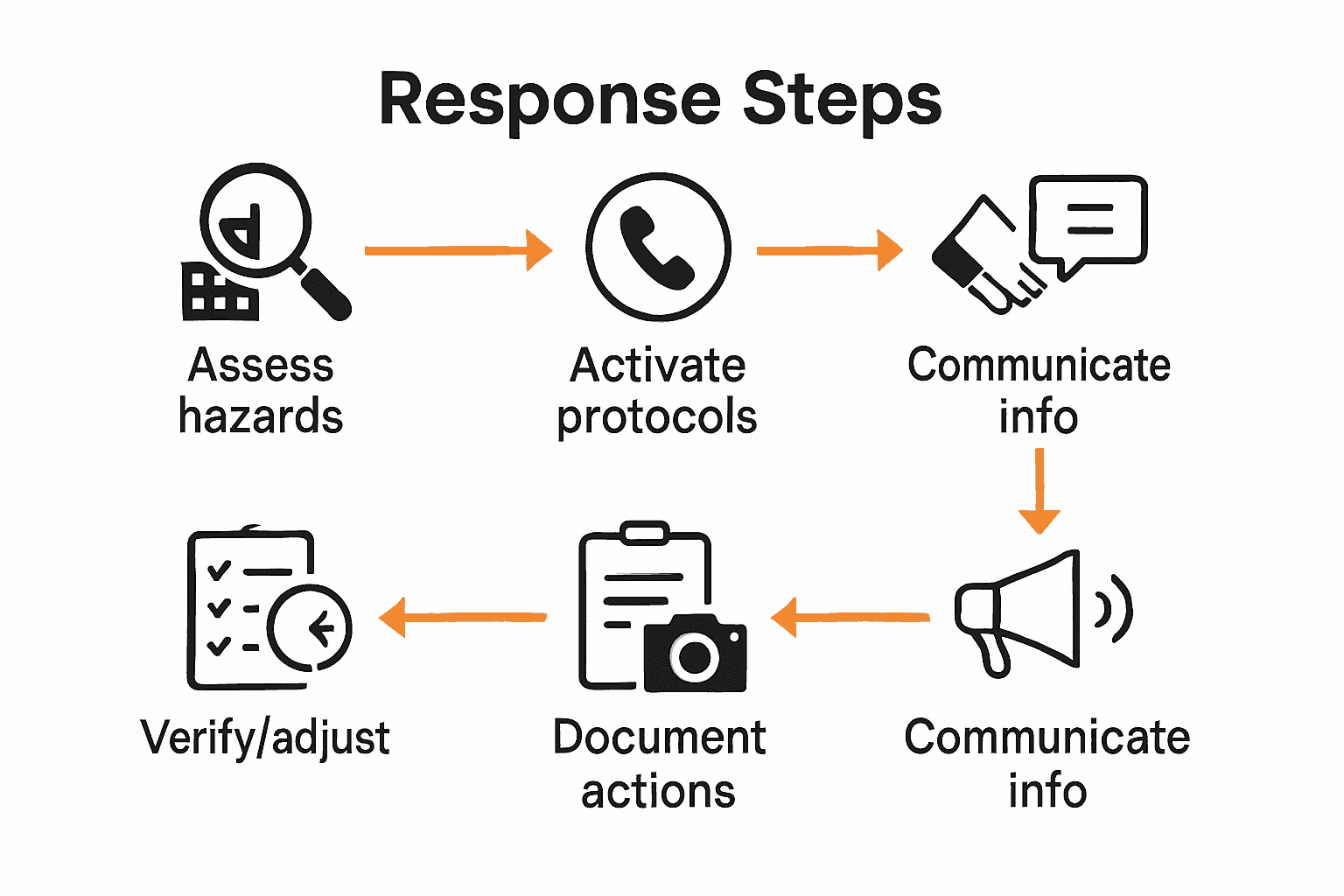
- Step 1: Assess Immediate Safety And Hazards
- Step 2: Activate Emergency Response Protocols
- Step 3: Coordinate With Key Agencies And Partners
- Step 4: Communicate Essential Information To All Parties
- Step 5: Secure And Document Resources And Actions
- Step 6: Verify Response Effectiveness And Adjust Strategies
Quick Summary
| Key Point | Explanation |
|---|---|
| 1. Assess immediate safety hazards | Quickly evaluate your environment for risks such as gas leaks or structural damage. This step protects you and others from immediate dangers. |
| 2. Activate emergency response protocols | Immediately contact local emergency services with clear information about the situation, including location and hazards to ensure timely assistance. |
| 3. Coordinate with key agencies and partners | Establish communication with local emergency management, healthcare providers, and relief organizations to ensure comprehensive support during recovery. |
| 4. Communicate essential information effectively | Share key details about the situation with all parties involved to ensure coordination and efficient response to the crisis. |
| 5. Document resources and actions taken | Keep a detailed log of actions, damages, and communications to aid in recovery efforts and facilitate insurance claims later. |
Step 1: Assess immediate safety and hazards
When disaster strikes, your first priority is protecting yourself and those around you. This step involves quickly evaluating your environment to identify potential risks that could threaten your immediate safety.
According to Ready.gov, conducting a risk assessment means systematically identifying potential hazards and analyzing possible outcomes. Start by scanning your surroundings for clear dangers: fallen electrical wires, structural damage, gas leaks, exposed sharp objects, or unstable terrain. Pay special attention to structural integrity – look for cracks in walls, broken windows, or signs that buildings might collapse.
As OSHA emphasizes, emergency preparedness requires knowing exactly how to keep yourself safe. Quickly check for these critical safety indicators:
- Structural stability of your immediate area
- Potential fire or electrical hazards
- Water or gas line ruptures
- Blocked exits or escape routes
- Presence of harmful debris or chemical spills
If you detect any immediate threats, move away carefully. Do not attempt to fix complex hazards like electrical or gas issues yourself. Your safety comes first. Once you have assessed the immediate environment, prepare to communicate your findings to emergency responders who can provide professional assistance.
Ready to move to the next critical step in disaster recovery? Let’s continue protecting yourself and your loved ones.
Step 2: Activate emergency response protocols
Now that you have assessed the immediate safety risks, your next critical task is to activate emergency response protocols swiftly and effectively. This step involves mobilizing the right resources and communication channels to ensure rapid assistance and minimize potential harm.
According to FEMA, the National Response Framework provides a comprehensive guide for disaster response. Start by immediately contacting local emergency services. Call 911 or your local emergency number and provide a clear description of the situation, including:
- Your precise location
- The type of disaster or emergency
- Number of people potentially affected
- Any immediate visible hazards
- Current conditions of the site
OSHA emphasizes the critical nature of identifying and responding to imminent danger situations. When communicating with emergency responders, be concise and factual. Use a calm tone and follow their specific instructions carefully.
Quick tip: Have emergency contact numbers programmed into your phone beforehand and keep a physical list of important contacts in case electronic devices fail. This preparation can save crucial minutes during a crisis.
Once emergency services are notified, prepare to evacuate if instructed or create a safe shelter area while waiting for professional responders to arrive.
Step 3: Coordinate with key agencies and partners
Coordinating with key agencies and partners is crucial for an effective and efficient disaster response. This step involves establishing communication channels and working collaboratively to ensure comprehensive support and resource allocation.
According to FEMA, the National Response Framework emphasizes the importance of collaboration among various stakeholders. Start by identifying and reaching out to the following key partners:
- Local emergency management offices
- Fire and police departments
- Healthcare providers
- Red Cross or local disaster relief organizations
- Utility companies
- State and federal emergency response agencies
Healthcare Ready highlights the significance of having trusted communication channels and rapid access to the right contacts. When communicating with these partners, be clear about your current situation, needs, and any specific assistance required. Provide concise and accurate information to help them understand the scope of the emergency.
Quick tip: Create a communication log to track your interactions with different agencies. Note down contact names, phone numbers, and the details of conversations. This documentation can be helpful for follow up and ensuring no critical information is missed.

As you coordinate with these agencies, stay flexible and be prepared to receive guidance and instructions. Their expertise and resources will be instrumental in navigating the disaster response effectively.
Step 4: Communicate essential information to all parties
Effective communication is the lifeline of disaster response. Your goal is to share critical information quickly and accurately with everyone involved in your recovery process to ensure coordinated and efficient support.
According to FEMA, clear communication among all parties including citizens, organizations, and agencies is fundamental to developing comprehensive disaster response plans. When sharing information, focus on providing these key details:
- Current location and status
- Specific needs and assistance required
- Number of people affected
- Any immediate health or safety concerns
- Contact information for primary and secondary points of communication
Healthcare Ready recommends creating reliable and tailored situation updates that can be quickly distributed across multiple channels. Use a combination of communication methods including phone calls, text messages, emails, and official emergency communication platforms to ensure your message reaches the right people.
Quick tip: During high stress situations, speak slowly and clearly. Repeat critical information and ask the recipient to confirm they understand. This helps prevent miscommunication when every detail matters.
Remember that good communication is a two way street. Stay available to receive updates and instructions from emergency response teams and be prepared to provide additional information as requested.
Step 5: Secure and document resources and actions
In the chaos of a disaster, systematically securing and documenting your resources and actions becomes crucial for both immediate survival and future recovery. This step helps you create a comprehensive record that can support insurance claims, emergency assistance, and personal recovery efforts.
OSHA emphasizes the critical importance of documenting emergency actions for safety and compliance. Begin by creating a detailed log that includes:
- Photographs of damage and current conditions
- List of resources you have secured or lost
- Timestamps of key actions and communications
- Names and contact information of people you have spoken with
- Description of immediate actions taken
- Inventory of personal belongings and essential items
Healthcare Ready recommends using multiple documentation methods. Consider using a combination of physical notebooks, digital notes on your phone, and cloud based storage to ensure your records are safe and accessible even if one method fails.
Quick tip: Keep your documentation waterproof and portable. Consider using a sealed plastic folder or waterproof notebook to protect your critical records from further damage.
Your thorough documentation will become an invaluable tool in navigating the aftermath of the disaster. Stay organized and detailed as you move forward in your recovery journey.
Step 6: Verify response effectiveness and adjust strategies
As your disaster response unfolds, continuous evaluation becomes critical. This step focuses on systematically assessing your current strategies and making real time adjustments to improve your recovery efforts and maximize available resources.
FEMA emphasizes the importance of building capabilities to respond to cascading challenges and stabilize community lifelines. Begin your verification process by asking these key questions:
- Are your current actions addressing immediate safety needs?
- What resources have been successfully deployed?
- Where are the gaps in your current response strategy?
- Are emergency contacts providing the support you require?
- What unexpected challenges have emerged?
Healthcare Ready recommends maintaining flexibility and being prepared to pivot your approach quickly. Regularly communicate with emergency response teams to get updated information and insights that can help you refine your strategy.
Quick tip: Schedule brief check in moments every few hours to reassess your situation. Things can change rapidly during a disaster, and your ability to adapt quickly can make a significant difference in your recovery.
Stay alert, remain adaptable, and remember that effective disaster response is an ongoing process of assessment and adjustment.
Take Control of Disaster Recovery with Trusted Support
The critical steps outlined in this guide highlight the intense challenges faced when disaster strikes: assessing immediate hazards, activating response protocols, and coordinating with multiple agencies. These pain points demand swift action and seamless communication to protect your safety and secure vital resources. Facing such a crisis alone can feel overwhelming, but you do not have to. At DisasterVictimServices.com, our dedicated team specializes in guiding individuals and families through each phase of disaster response. We connect victims to emergency housing solutions and work hand in hand with insurance carriers, government agencies, and first responders to simplify the recovery process.
Need expert support that matches the urgency and complexity of your situation? Explore our insights on disaster recovery in the Uncategorized section where we share crucial information to help you stay informed. Discover how our strategic approach to project design enhances recovery efficiency. When timing matters most, trust DisasterVictimServices.com to provide compassion, real-time assistance, and the expert guidance you need to move confidently from disaster response toward rebuilding your life.
Frequently Asked Questions
What are the first steps I should take in a disaster situation?
Start by assessing immediate safety and hazards in your surroundings. Look for clear dangers such as fallen electrical wires, structural damage, or gas leaks and move to a safer location if any threats are detected.
How do I activate emergency response protocols effectively?
To activate emergency response protocols, immediately contact local emergency services. Clearly state your location, describe the type of emergency, and outline any visible hazards, which can speed up the response time.
What key agencies should I coordinate with during a disaster?
Identify and coordinate with local emergency management offices, healthcare providers, and disaster relief organizations. Reach out quickly to ensure comprehensive support and resource allocation in your response efforts.
What information should I communicate to all parties involved?
Communicate essential information such as your current location, the specific needs for assistance, and any safety concerns. Providing concise updates will help ensure that everyone involved is informed and can coordinate effectively.
How can I document my actions during a disaster?
Create a detailed log that includes photographs of damages, timestamps of actions taken, and a list of secured resources. This documentation will be vital for insurance claims and recovery efforts later on.
What questions should I ask to verify my disaster response effectiveness?
Ask yourself if your current actions are addressing immediate safety needs and where the gaps are in your response strategy. Regularly reassessing these aspects can help you adapt quickly to changing circumstances.
Recommended
- Emergency Response Basics for 2025: A Practical Guide – Disaster Victim Services | Helping You Recover After Disaster
- First Aid Disaster Basics: Essential Steps for 2025 Recovery – Disaster Victim Services | Helping You Recover After Disaster
- Critical Logistical Support Steps for Disaster Relief 2025 – Disaster Victim Services | Helping You Recover After Disaster
- How to Deploy Aid: Effective Strategies for Disaster Response 2025 – Disaster Victim Services | Helping You Recover After Disaster