
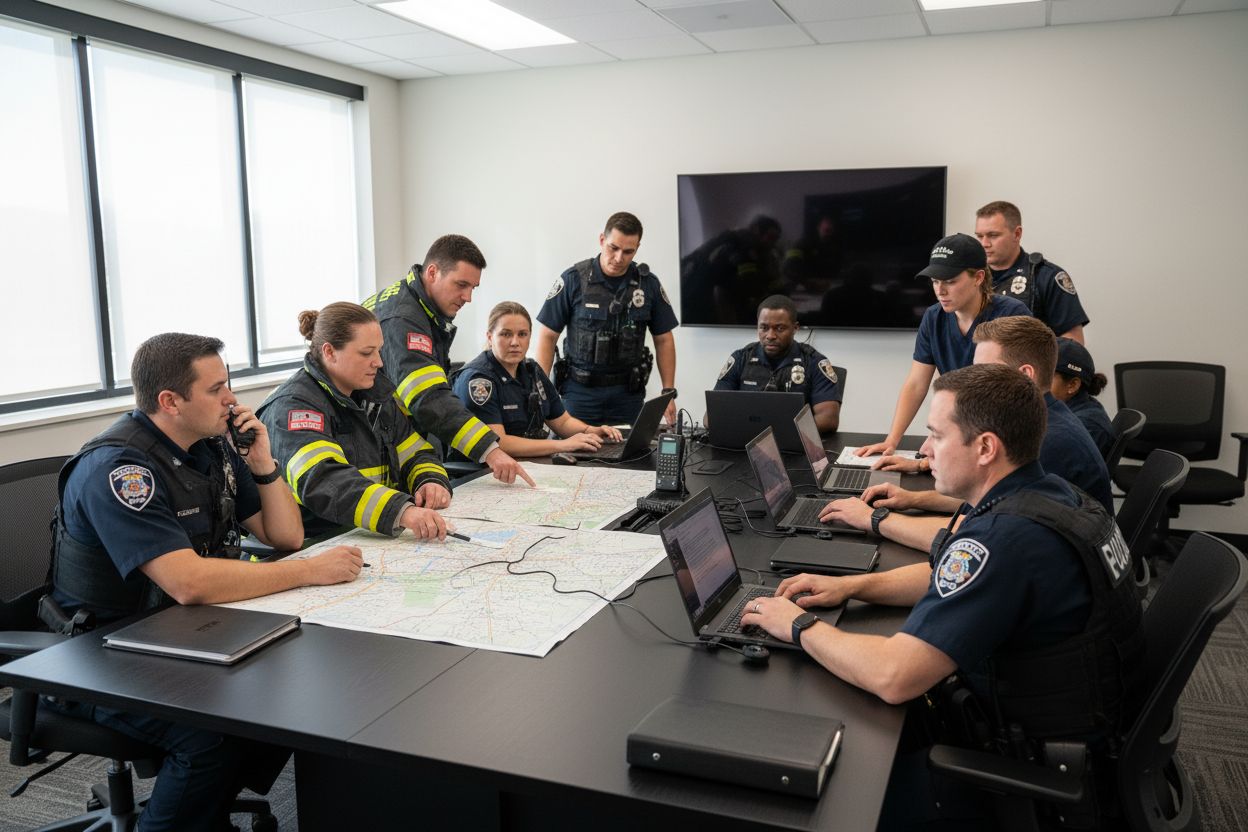
When disaster strikes, chaos can spread in minutes. Emergency response teams use a framework called Incident Command Structure to get control fast and keep people safe. But here is the wild part. ICS can handle emergencies as small as a fender bender or as massive as Hurricane Katrina, which displaced over a million people. Most only imagine complicated charts and jargon, but ICS is actually designed for flexibility and quick action no matter how strange or overwhelming the crisis.
Table of Contents
- What Is Incident Command Structure?
- Why Is Incident Command Structure Important?
- Key Concepts Of Incident Command Structure
- How Incident Command Structure Functions In Emergencies
- Real-World Examples Of Incident Command Structure
Quick Summary
| Takeaway | Explanation |
|---|---|
| Incident Command Structure standardizes emergency management. | ICS provides a clear framework for coordinated response during emergencies, ensuring effective collaboration among agencies. |
| Establish a unified command for decision-making. | A centralized leadership role helps streamline operations and resource allocation during crisis situations. |
| Flexibility is key in rapidly changing scenarios. | ICS adapts to varying incident complexities, ensuring rapid responses and efficient resource management. |
| Clear communication channels reduce confusion. | ICS fosters defined communication protocols that help eliminate barriers and enhance interagency collaboration. |
| Real-world examples highlight ICS effectiveness. | Lessons from disasters like Hurricane Katrina demonstrate the importance of organized responses and established protocols. |
What is Incident Command Structure?
The Incident Command Structure (ICS) represents a standardized management framework designed to enable effective coordination and response during emergencies and complex incidents. Developed as a systematic approach to managing critical situations, this organizational model provides a clear hierarchy and communication protocol that ensures smooth operational coordination across multiple agencies and response teams.
Core Components of Incident Command
At its fundamental level, the Incident Command Structure establishes a unified command system that centralizes decision making and resource allocation during high-stress scenarios. According to Federal Emergency Management Agency (FEMA) training guidelines, the primary objective of ICS is to provide a flexible, scalable approach that can adapt to incidents of varying complexity and size.
The structure typically includes several key organizational elements
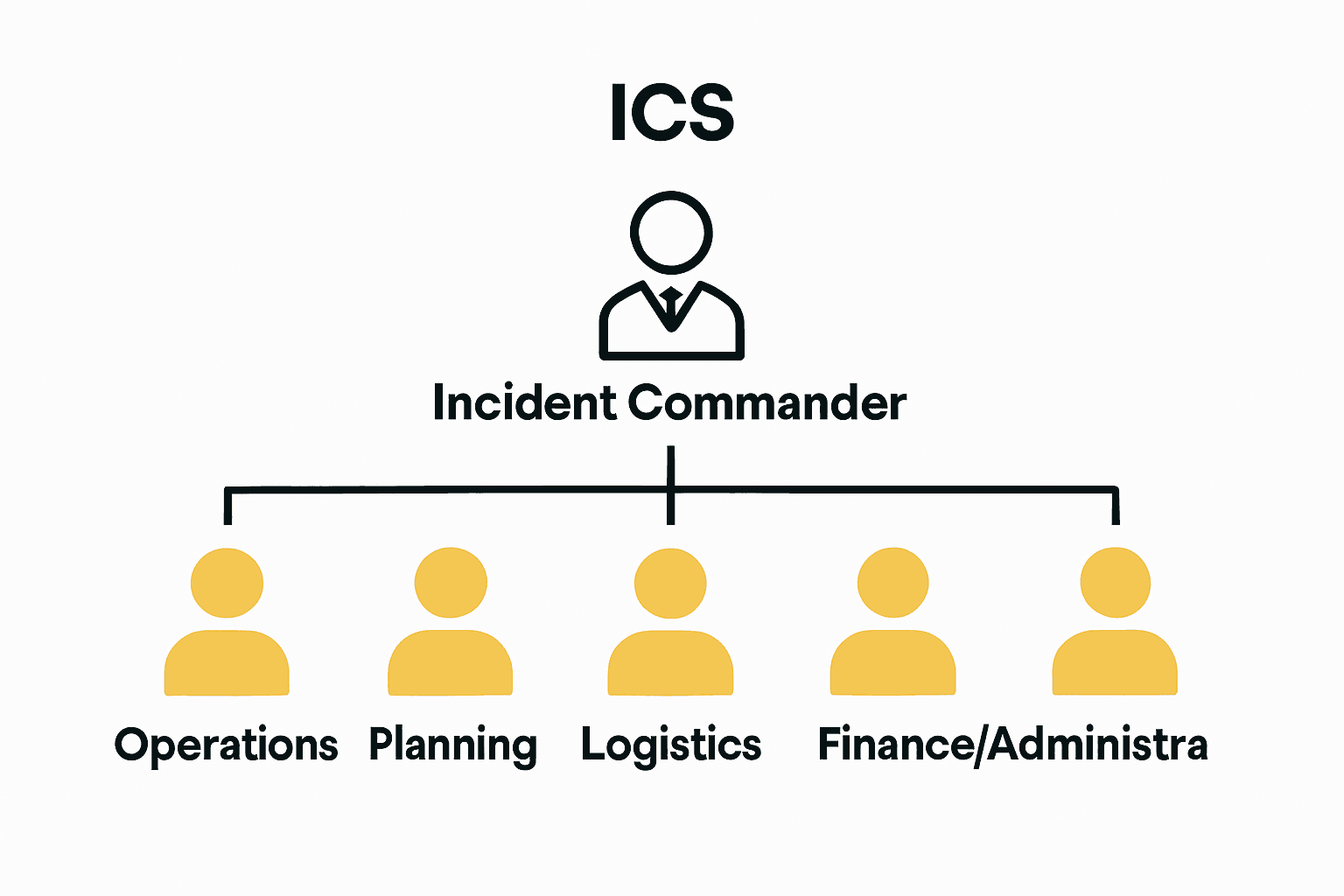
The table below summarizes the five core components of the Incident Command Structure and briefly describes the role or function of each to clarify organizational responsibilities.
| Component | Description |
|---|---|
| Incident Commander | Oversees overall strategic management and leadership |
| Operations Section | Directs tactical implementation of response strategies |
| Planning Section | Tracks incident progression and develops strategic plans |
| Logistics Section | Manages resources, supplies, and support requirements |
| Finance/Administration Section | Handles cost tracking and administrative documentation |
 :
:
- Incident Commander: The top leadership role responsible for overall strategic management
- Operations Section: Manages tactical implementation of response strategies
- Planning Section: Tracks incident progression and develops strategic plans
- Logistics Section: Manages resources, supplies, and support requirements
- Finance/Administration Section: Handles cost tracking and administrative documentation
Why Incident Command Structure Matters
Emergency scenarios demand rapid, coordinated responses where clear communication and defined roles are paramount. The ICS framework addresses these critical needs by creating a standardized approach that transcends traditional organizational boundaries. By establishing a consistent management model, our guide on incident response protocols demonstrates how diverse teams can effectively collaborate during high-pressure situations.
Whether responding to natural disasters, large-scale accidents, or complex emergency scenarios, the Incident Command Structure provides a blueprint for efficient, organized intervention. Its adaptable nature allows for seamless integration across different types of incidents, ensuring that first responders, government agencies, and support organizations can work together with maximum effectiveness and minimal confusion.
Why is Incident Command Structure Important?
The Incident Command Structure (ICS) plays a critical role in emergency management by providing a systematic framework that transforms chaotic situations into coordinated, strategic responses. Its importance extends far beyond simple organizational logistics, representing a lifeline for effective crisis intervention across numerous complex scenarios.
Streamlining Multi Agency Coordination
According to FEMA emergency management research, ICS enables seamless collaboration between diverse response organizations. Different agencies often struggle with communication and coordination during emergencies, but the standardized ICS model eliminates jurisdictional barriers and creates a unified operational approach.
Key advantages of the ICS framework include:
- Establishing clear communication channels
- Reducing organizational confusion
- Enabling rapid decision making
- Optimizing resource allocation
- Creating scalable management structures
Enhancing Emergency Response Effectiveness
In high-pressure situations, traditional hierarchical structures can become bottlenecks that slow critical interventions. The Incident Command Structure addresses this challenge by creating flexible, adaptable management protocols that prioritize immediate action and strategic flexibility. Our comprehensive guide to emergency protocols demonstrates how this approach dramatically improves response times and operational efficiency.
By establishing predefined roles, communication pathways, and decision making processes, ICS transforms potential chaos into organized, purposeful action. Whether responding to natural disasters, public health emergencies, or large-scale accidents, this framework ensures that every team member understands their responsibilities and can act quickly and decisively when seconds count.
Key Concepts of Incident Command Structure
The Incident Command Structure represents more than an organizational chart. It embodies a sophisticated management philosophy designed to handle complex emergency scenarios with precision and adaptability. Understanding its core conceptual foundations is crucial for effective implementation across diverse response environments.
Foundational Management Principles
According to medical emergency management research, ICS is grounded in several fundamental management principles that distinguish it from traditional hierarchical approaches. These principles ensure a dynamic, responsive framework capable of addressing emergencies of varying scales and complexities.
This table highlights foundational management principles that underpin the Incident Command Structure, offering a concise overview of the guiding concepts that ensure its effectiveness in emergencies.
| Principle | Summary Description |
|---|---|
| Flexibility | Expands or contracts based on incident requirements |
| Modular Organization | Scalable structure adapts to operational needs |
| Clear Chain of Command | Defined reporting relationships and decision making protocols |
| Unified Command | Collaborative leadership across multiple agencies |
Key foundational principles include:
- Flexibility: Ability to expand or contract based on incident requirements
- Modular Organization: Scalable structure that adapts to changing operational needs
- Clear Chain of Command: Defined reporting relationships and decision making protocols
- Unified Command: Collaborative leadership approach across multiple agencies
Operational Coordination Mechanisms
The success of Incident Command Structure hinges on its sophisticated coordination mechanisms. Communication protocols and standardized terminology create a common language that transcends individual organizational boundaries. Our comprehensive emergency response guide highlights how these mechanisms enable seamless interaction between different response teams.
Effective ICS implementation requires continuous situational assessment, strategic resource allocation, and rapid decision making. By establishing predefined roles, responsibilities, and communication channels, the framework transforms potential chaos into organized, purposeful action. This approach ensures that every team member understands their specific function within the larger emergency response ecosystem, enabling faster, more coordinated interventions during critical scenarios.
How Incident Command Structure Functions in Emergencies
The Incident Command Structure transforms complex emergency scenarios into organized, strategic responses through a sophisticated operational framework that prioritizes rapid, coordinated action. Its function goes beyond simple management, representing a dynamic system designed to navigate the unpredictable nature of crisis situations.
Activation and Initial Response
According to FEMA emergency management documentation, the ICS activation process begins immediately upon recognizing the incident’s complexity and potential impact.
The first responding agency establishes an initial command structure, quickly assessing the situation and determining the necessary organizational scale.
Key activation steps include:
The table below outlines typical activation steps in the Incident Command Structure, summarizing each major action required for an organized and effective emergency response.
| Activation Step | Description |
|---|---|
| Identify Initial Incident Commander | Designate who is in charge at the outset |
| Establish Communication Protocols | Set up immediate channels for team coordination |
| Conduct Situational Assessment | Rapidly analyze the current emergency conditions |
| Determine Resource Requirements | Identify personnel, equipment, and support needed |
| Implement Initial Safety Measures | Take steps to secure the area and contain immediate threats |
- Identifying the initial incident commander
- Establishing immediate communication protocols
- Conducting rapid situational assessment
- Determining resource requirements
- Implementing initial safety and containment measures
Dynamic Resource Management
Central to the ICS functionality is its ability to dynamically allocate and reallocate resources based on evolving emergency conditions. Our comprehensive emergency response protocols guide demonstrates how this adaptive approach ensures that personnel, equipment, and support services are strategically deployed to maximize response effectiveness.
The framework operates through continuous evaluation and adjustment, with each section of the command structure maintaining real time communication and updating strategic objectives. This approach allows for immediate recalibration of resources, ensuring that the emergency response remains agile and responsive to changing circumstances, ultimately minimizing potential damage and protecting human lives during critical intervention scenarios.
Real-World Examples of Incident Command Structure
Incident Command Structure demonstrates its critical importance through numerous high-stakes scenarios where coordinated emergency response can mean the difference between life and death. These real-world applications showcase the framework’s adaptability and effectiveness across diverse and complex emergency situations.
Natural Disaster Response
According to comprehensive emergency management research, natural disasters represent quintessential scenarios where ICS proves indispensable. Hurricane Katrina in 2005 serves as a pivotal example of both the challenges and potential of robust incident command protocols.
Key lessons from major natural disaster responses include:
- Establishing clear communication channels between multiple agencies
- Rapidly mobilizing resources across complex geographical areas
- Creating flexible leadership structures that adapt to changing conditions
- Prioritizing human safety and logistical coordination
- Implementing systematic evacuation and relief strategies
Large Scale Wildfire Management
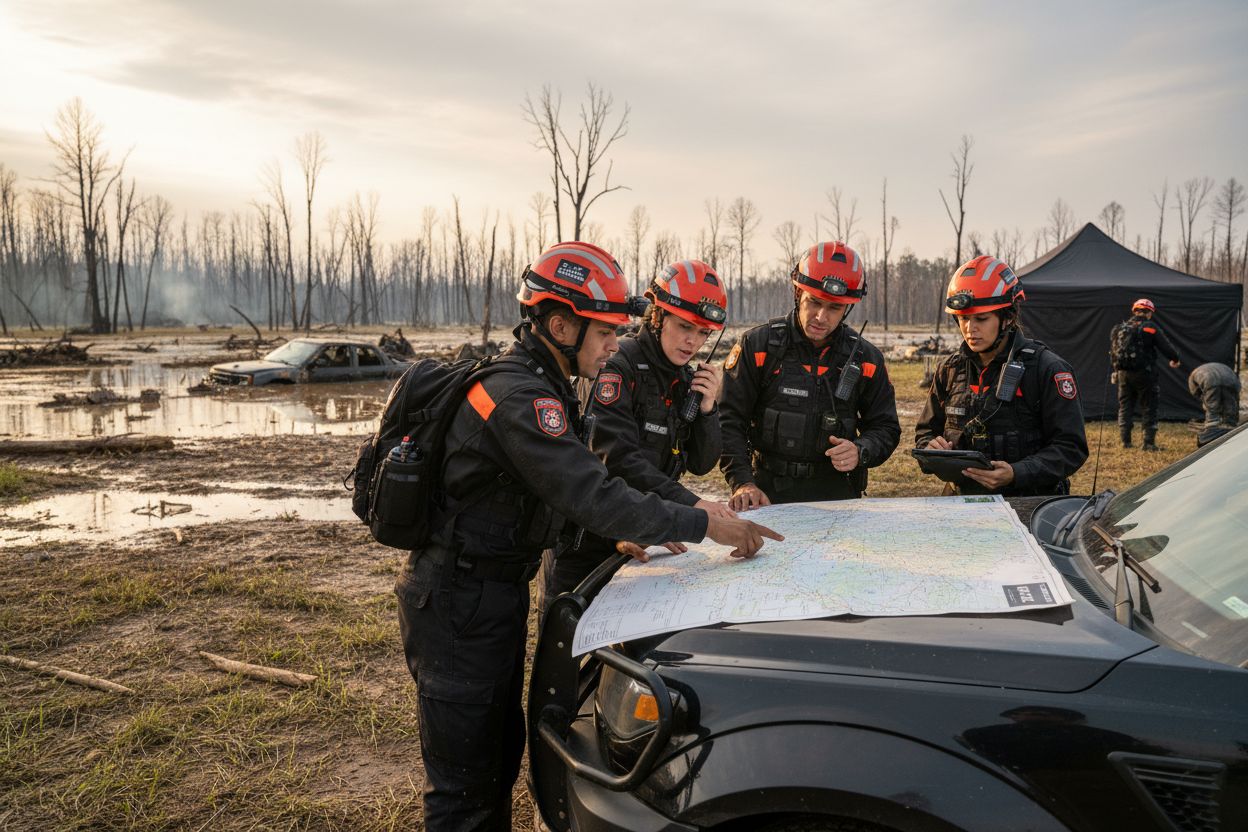
Wildfire responses illustrate the Incident Command Structure’s capacity to manage complex, dynamic emergencies. Our emergency response protocol guide highlights how interagency coordination becomes critical when managing widespread environmental emergencies that span multiple jurisdictions.
In these scenarios, the ICS framework enables firefighting teams, local authorities, state agencies, and federal resources to communicate and collaborate seamlessly. By establishing a unified command structure, these diverse teams can track fire progression, allocate firefighting resources strategically, coordinate evacuation efforts, and manage ongoing public safety communications with unprecedented efficiency and precision.
Turn Complex Incident Command Into Real-World Recovery
Learning about the Incident Command Structure gives you insights into how emergencies demand fast decisions, seamless teamwork, and coordinated resource management. But when disaster hits your home or business, those concepts become real and urgent problems. Victims often face confusion about who to call, struggle with tracking support resources, and experience delays that make recovery harder. Emotional stress grows when roles and responsibilities are unclear or when communication breaks down in the middle of a crisis.
DisasterVictimServices.com takes the guesswork out of disaster response by applying proven coordination principles from the ICS directly to your situation. Our seasoned team bridges the gap between policy and practice, offering you immediate emergency housing solutions and hands-on logistical help. When you need a trusted partner who works directly with insurance adjusters, government teams, and first responders, we bring clear communication and rapid support. Ready to turn knowledge into action? Visit DisasterVictimServices.com to discover how quickly you can regain stability and move forward. If you want more guidance about how we streamline emergency response for displaced families, start your recovery journey on our homepage now.
Frequently Asked Questions
What is the purpose of an Incident Command Structure?
The purpose of the Incident Command Structure (ICS) is to provide a standardized management framework for coordinating responses to emergencies. Utilize ICS to establish clear communication and defined roles among diverse teams during critical incidents.
How do I implement an Incident Command Structure in my organization?
To implement an ICS, start by assigning an Incident Commander and clearly defining roles within the structure. Train your team on communication protocols and decision-making processes to ensure everyone understands their responsibilities during an incident.
What are the key components of an Incident Command Structure?
The key components of an ICS include the Incident Commander, Operations Section, Planning Section, Logistics Section, and Finance/Administration Section. Familiarize your team with these components to ensure effective collaboration during emergencies.
How can the Incident Command Structure improve emergency response?
The ICS improves emergency response by streamlining communication and reducing confusion among response teams. Focus on establishing clear communication channels and predefined roles to enhance decision-making speed and operational efficiency.
What steps should be taken during the activation of the Incident Command Structure?
During activation, identify the initial Incident Commander, establish communication protocols, and conduct a rapid situational assessment. Follow these initial steps promptly to ensure an organized and effective emergency response.
How does the Incident Command Structure handle resource management during emergencies?
The ICS handles resource management by dynamically allocating and re-allocating resources in response to changing emergency conditions. Monitor resource use in real-time to maintain an agile and responsive approach, which can protect lives and minimize damage.
Recommended
- Incident Command Chain Explained: Roles and Steps for 2025 – Disaster Victim Services | Helping You Recover After Disaster
- Incident Command Structure Explained: Roles and Benefits – Disaster Victim Services | Helping You Recover After Disaster
- Incident Command Chain Explained: Roles and Steps for 2025 – Disaster Victim Services | Helping You Recover After Disaster
- Emergency Response Basics for 2025: A Practical Guide – Disaster Victim Services | Helping You Recover After Disaster