

When emergencies strike, communication can either save lives or create chaos. Records show that even a single misunderstanding caused by unclear terminology can lead to tragic mistakes during disaster response. Most people assume high-tech equipment or advanced training is what matters most in a crisis, but the real lifesaver is a shared language that emergency professionals use instantly across agencies and roles.
Table of Contents
- What Is Emergency Support Terminology?
- The Importance Of Emergency Support Terminology
- Key Concepts In Emergency Support Terminology
- How Emergency Support Terminology Facilitates Response Efforts
Quick Summary
| Takeaway | Explanation |
|---|---|
| Standardized terminology enhances clarity | Emergency support terminology creates a clear communication framework among diverse agencies, preventing misunderstandings during crises. |
| Improves response efficiency | It reduces response times and procedural errors by providing professionals with a common language for urgent situations. |
| Facilitates inter-agency coordination | The terminology allows different organizations to effectively collaborate and share resources without lengthy explanations. |
| Enables rapid information processing | Using precise language accelerates decision-making, ensuring that life-saving actions can be taken immediately. |
| Essential for managing resources | Standardized terms help prioritize interventions and better allocate limited resources during emergencies. |
What is Emergency Support Terminology?
Emergency support terminology represents a standardized communication framework enabling multiple agencies and professionals to exchange critical information rapidly and accurately during disaster scenarios. Emergency management professionals utilize these specialized language systems to ensure precise, unambiguous communication when lives and resources are at stake.
Core Components of Emergency Terminology
At its foundation, emergency support terminology encompasses a structured vocabulary designed to transcend traditional communication barriers. These specialized terms function like a universal language, allowing emergency responders, government agencies, healthcare providers, and relief organizations to understand each other instantly.
Key elements of this communication system include:
To help clarify the distinct elements discussed, the following table breaks down the core components of emergency support terminology and explains their specific functions.
| Component | Description |
|---|---|
| Standardized incident classification codes | Unique codes that categorize emergencies by type and severity for instant recognition |
| Precise descriptive terminology | Specific vocabulary to accurately describe emergency conditions and requirements |
| Universally recognized abbreviations | Common acronyms used across agencies for faster, consistent communication |
| Consistent protocol descriptions | Standardized ways to refer to established communication and action procedures |
- Standardized incident classification codes
- Precise descriptive terminology for emergency conditions
- Universally recognized abbreviations and acronyms
- Consistent protocol descriptions
Importance in Disaster Response
The significance of emergency support terminology cannot be overstated. When multiple agencies converge during a crisis, clear communication becomes paramount. Our emergency response protocols guide highlights how these terminologies reduce misunderstandings, expedite decision making, and ultimately save lives.
By establishing a common linguistic framework, emergency support terminology enables seamless coordination between diverse teams.
The following table summarizes how emergency support terminology supports various aspects of disaster response, providing clear reference points for its main advantages.
| Area Impacted | Role of Terminology |
|---|---|
| Bridging Communication Gaps | Enables instant understanding, reduces miscommunication among diverse teams |
| Operational Efficiency | Streamlines procedures, minimizes response time and errors |
| Resource Management | Clarifies resource types/needs, improves allocation and tracking |
| Rapid Information Processing | Ensures fast, accurate decision-making under pressure |
| Inter-Agency Coordination | Makes collaboration seamless by using a universally understood language |
 Whether coordinating evacuation efforts, managing medical responses, or allocating critical resources, these standardized communication tools ensure every professional understands their role and the broader operational context with absolute clarity.
The Importance of Emergency Support Terminology
In high-stakes emergency scenarios, precise communication can mean the difference between life and death. Comprehensive research on emergency management demonstrates that standardized terminology serves as a critical infrastructure enabling rapid, effective multi-agency response during complex disaster situations.
Bridging Communication Gaps
Emergency support terminology functions as a universal language that eliminates potential misunderstandings between diverse professional groups. When first responders, medical personnel, government agencies, and relief organizations must collaborate under extreme pressure, a shared linguistic framework becomes essential. Miscommunication during emergencies can lead to catastrophic consequences, making these standardized communication protocols not just helpful, but potentially lifesaving.
Key communication advantages include:
- Instant comprehension across different organizational structures
- Reduced response time during critical interventions
- Minimized risk of procedural errors
- Enhanced coordination between multiple response teams
Operational Efficiency and Resource Management
Beyond communication, emergency support terminology plays a pivotal role in resource allocation and strategic planning. Our emergency response basics guide highlights how these standardized terms enable rapid assessment of situation requirements, helping emergency teams prioritize interventions and distribute limited resources most effectively.
By creating a common language that transcends organizational boundaries, emergency support terminology transforms complex, high-stress environments into coordinated, responsive systems. This approach ensures that every professional understands their role, the broader operational context, and can act with precision when every second counts.
Key Concepts in Emergency Support Terminology
Emergency support terminology represents a sophisticated system of communication designed to provide clarity and precision during complex emergency scenarios. Research from emergency management experts reveals that understanding its core concepts is fundamental to effective disaster response.
Standardized Classification Systems
At the heart of emergency support terminology are robust classification systems that categorize incidents, resources, and response levels with exceptional granularity. These systems enable emergency professionals to communicate complex scenarios quickly and unambiguously. Incident classification codes function like a universal language, allowing instantaneous comprehension across different organizational boundaries.
Key classification components include:
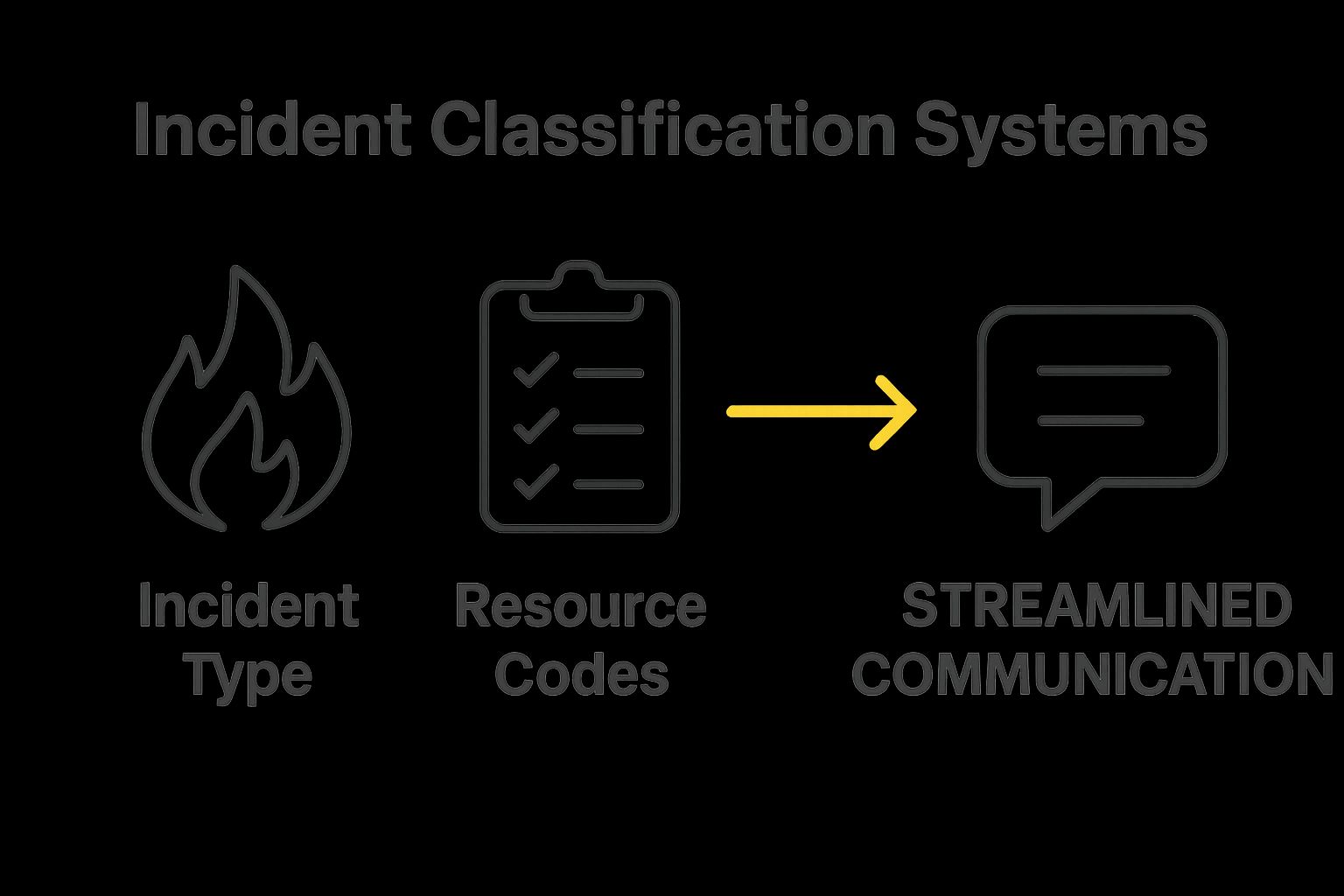
- Incident type and severity indicators
- Resource availability and allocation codes
- Geographic and jurisdictional markers
- Hierarchical response level designations
Operational Communication Protocols
Beyond classification, emergency support terminology encompasses detailed communication protocols that structure how information is shared. Our first responder roles guide underscores the critical nature of these standardized communication frameworks. These protocols ensure that every transmission carries precise, actionable information, reducing ambiguity and potential misinterpretation.
Operational protocols address critical communication elements such as situational reporting, resource request mechanisms, and inter-agency coordination strategies. By establishing a consistent language and transmission format, these protocols transform complex emergency environments into coordinated, responsive systems where every professional understands their role and the broader operational context.
How Emergency Support Terminology Facilitates Response Efforts
Comprehensive research from emergency management organizations demonstrates that emergency support terminology transforms chaotic disaster environments into structured, coordinated response systems. By providing a universal communication framework, these specialized language protocols enable multiple agencies to work together seamlessly during high-pressure scenarios.
Rapid Information Processing
Emergency support terminology accelerates critical decision making by standardizing how information is communicated and interpreted. When emergency professionals use precisely defined terms, they eliminate potential misunderstandings that could delay life-saving interventions. Seconds matter in emergency scenarios, and a shared linguistic infrastructure allows for near-instantaneous comprehension across diverse organizational boundaries.
Key information processing advantages include:
- Immediate situational awareness
- Streamlined communication channels
- Reduced cognitive load during complex scenarios
- Enhanced ability to prioritize critical interventions
Inter-Agency Resource Coordination
Our emergency response roles guide highlights how emergency support terminology facilitates sophisticated resource allocation strategies. By establishing a common language, different agencies can quickly inventory, request, and deploy resources without time-consuming explanations or clarifications.
This terminology serves as a critical infrastructure that transforms individual organizational efforts into a cohesive, collaborative response. Emergency professionals can communicate complex logistical requirements, track resource movements, and adapt strategies in real time, ensuring that every available asset is utilized efficiently and strategically during disaster scenarios.
Your Bridge to Real-Time Emergency Support and Recovery Solutions
Understanding emergency support terminology is vital when every second counts during disaster situations. The article highlights how miscommunication and a lack of standardized language can slow response, create confusion, and put lives and property at risk. If you are facing the overwhelming pressure of a crisis and need expert coordination for fast, effective housing and logistical support, you deserve a team that speaks the language of emergency management fluently and cares deeply about your recovery.
DisasterVictimServices.com transforms critical insights into action. We leverage the same collaborative protocols and terminology explored in Understanding Emergency Support Terminology 2025 to connect you instantly with emergency housing, insurance support, and compassionate guidance. Do not let confusion or delays stand between your family and a safe place to rebuild. Visit Disaster Victim Services now and take the first confident step toward recovery—our team is prepared to respond with clarity, expertise, and genuine care. For the latest updates and actionable support options, explore our New solutions today.
Frequently Asked Questions
What is emergency support terminology?
Emergency support terminology is a standardized communication framework used by emergency management professionals to facilitate precise and unambiguous information exchange during disaster scenarios.
Why is standardized terminology important in emergency response?
Standardized terminology reduces misunderstandings between different agencies and professionals, allowing for more efficient coordination, decision-making, and ultimately saving lives during crises.
How does emergency support terminology improve communication among agencies?
It establishes a common linguistic framework that allows immediate comprehension of critical information, ensuring that all responders understand their roles and the broader operational context.
What are the key components of emergency support terminology?
Key components include standardized incident classification codes, precise descriptive terminology for emergency conditions, universally recognized abbreviations, and consistent communication protocols.
Recommended
- Emergency Response Basics for 2025: A Practical Guide – Disaster Victim Services | Helping You Recover After Disaster
- Understanding Emergency Response Roles in 2025: Key Insights – Disaster Victim Services | Helping You Recover After Disaster
- Emergency Response Protocols: Key Steps for Fast Action – Disaster Victim Services | Helping You Recover After Disaster
- Responder Safety Protocols: Essential Steps for 2025 Emergencies – Disaster Victim Services | Helping You Recover After Disaster