

Trauma informed care is changing the rules for how support and recovery are offered after emotional pain. Nearly 61 percent of men and 51 percent of women in the US report experiencing at least one traumatic event in their lives. You might think traditional treatment models would address these experiences directly, but they often miss the mark entirely. This approach flips the script completely by treating trauma not as a footnote, but as the starting point for real healing.
Table of Contents
- Defining Trauma Informed Care: An Overview
- The Importance of Recognizing Trauma in Care
- Understanding Safety and Trustworthiness as Core Values
- Empowerment, Voice, and Choice in Trauma Care
- Cultural, Historical, and Gender Issues in Trauma Informed Care
Quick Summary
| Takeaway | Explanation |
|---|---|
| Recognize trauma’s widespread impact | Understanding that trauma affects behavior and well-being is essential for effective care practices. |
| Prioritize safety and trust in care | Establishing psychological safety and trust fosters a healing environment for trauma survivors. |
| Empower individuals in recovery | Actively involving trauma survivors in their healing promotes agency and personal growth. |
| Acknowledge cultural and gender contexts | Recognizing cultural and gender influences helps tailor trauma-informed care to individual needs. |
| Shift from ‘what is wrong’ to ‘what happened’ | This approach transforms care and respects the lived experiences of individuals with trauma. |
Defining Trauma Informed Care: An Overview
Trauma informed care represents a compassionate, holistic approach to understanding and supporting individuals who have experienced significant emotional or psychological distress. At its core, this framework recognizes that traumatic experiences profoundly impact a person’s mental, emotional, and physical well-being.
Understanding Trauma’s Complex Impact
Trauma informed care acknowledges that trauma is not just a singular event but a complex experience that can fundamentally reshape how individuals perceive safety, trust, and personal boundaries. Unlike traditional care models that might focus solely on symptoms, this approach considers the entire context of a person’s experiences.
Key characteristics of trauma informed care include:
- Recognizing the pervasive nature of trauma
- Understanding how traumatic experiences influence behavior and responses
- Creating environments that prioritize psychological safety
- Empowering individuals through compassionate, non-judgmental support
Principles of Holistic Recovery
Trauma informed care shifts from asking “What is wrong with you?” to “What happened to you?” This subtle but significant reframing demonstrates profound respect for an individual’s lived experiences.
 The approach emphasizes healing through understanding, validation, and providing tools for emotional regulation and resilience.
This framework applies across multiple sectors including healthcare, social services, education, and emergency response. By integrating trauma-sensitive practices, organizations can create supportive environments that facilitate genuine healing and prevent potential retraumatization.
Critical to this approach is the recognition that trauma survivors are not defined by their experiences but are resilient individuals capable of profound personal growth and transformation.
The Importance of Recognizing Trauma in Care
Recognizing trauma in care represents a critical paradigm shift in how healthcare professionals, social workers, and support systems approach individual healing and recovery. This recognition goes far beyond simple acknowledgment – it requires a fundamental reframing of understanding human experiences and responses to significant psychological challenges.
Transformative Understanding of Individual Experience
Research on trauma informed approaches demonstrates that recognizing trauma is not just compassionate but scientifically essential. When professionals understand that traumatic experiences fundamentally alter neurological and psychological responses, they can develop more effective, nuanced support strategies.
Key aspects of trauma recognition include:
- Acknowledging that trauma responses are adaptive survival mechanisms
- Understanding how past experiences shape current behavioral patterns
- Recognizing that trauma manifests differently for each individual
- Avoiding judgment or pathologizing natural psychological protective responses
Breaking Cycles of Misunderstanding
Traditional care models often misinterpret trauma responses as personal failures or intentional behavioral problems. By contrast, trauma-informed recognition views these responses as intelligent, context-dependent survival strategies. Learn more about our comprehensive disaster response workflow which integrates these critical principles.
Practitioners who recognize trauma can create environments of genuine safety and healing. They understand that symptoms like hypervigilance, emotional numbness, or seemingly irrational fears are not weaknesses but sophisticated psychological adaptations developed in response to overwhelming experiences.
Ultimately, recognizing trauma transforms care from a transactional medical interaction into a deeply human, collaborative journey of understanding, respect, and potential restoration.
Understanding Safety and Trustworthiness as Core Values
Safety and trustworthiness are foundational principles in trauma informed care, representing more than physical protection. These values create psychological environments where individuals feel genuinely secure, respected, and empowered to engage in their healing journey.
Psychological Safety as a Fundamental Construct
Research on trauma recovery reveals that safety is not merely about physical boundaries, but about creating spaces where individuals feel emotionally protected and validated. Trauma survivors often experience profound vulnerability, making psychological safety crucial for meaningful recovery.
Key elements of establishing safety include:
- Creating predictable and transparent interactions
- Respecting personal boundaries without exception
- Providing clear communication about processes and expectations
- Ensuring consistent and compassionate support
Building Trust Through Intentional Practice
Trust is not automatically granted but carefully cultivated through deliberate, consistent actions. Professionals working within trauma informed frameworks understand that trust is rebuilt incrementally, requiring patience, transparency, and genuine respect. Explore our comprehensive home safety recommendations to understand how physical and emotional safety intersect.
Trustworthy care means giving individuals genuine agency in their recovery process. This involves collaborative decision making, offering choices, and respecting an individual’s autonomy. By centering the survivor’s perspective and experience, care providers demonstrate that trust is not about control, but about genuine partnership.
Ultimately, safety and trustworthiness transform care from a transactional experience to a healing relationship based on mutual respect, understanding, and profound human dignity.
Empowerment, Voice, and Choice in Trauma Care
Empowerment represents a transformative approach in trauma care that fundamentally shifts power dynamics between care providers and individuals experiencing traumatic experiences. This principle recognizes that genuine healing occurs when survivors are active participants rather than passive recipients of support.
Reclaiming Personal Agency
Research on trauma recovery highlights that empowerment is not about telling individuals what to do, but creating environments where they can make informed decisions about their own healing journey. Trauma often strips away personal control, making the restoration of individual agency crucial for psychological recovery.
Key components of empowerment include:
- Providing clear, comprehensible information about recovery processes
- Offering multiple intervention options
- Respecting individual decision making capabilities
- Supporting self directed healing strategies
Practical Implementation of Choice
Choice is a powerful antidote to the powerlessness often experienced during traumatic events. Explore our emergency response coordination strategies to understand how comprehensive support integrates individual autonomy.
Healthcare and support professionals practicing trauma informed care recognize that true empowerment means creating collaborative environments where individuals feel genuinely heard. This involves active listening, validating experiences, and providing resources that support self determination.
Ultimately, empowerment transforms trauma care from a prescriptive model to a collaborative partnership focused on individual strengths, resilience, and potential for profound personal growth.

Cultural, Historical, and Gender Issues in Trauma Informed Care
Trauma informed care recognizes that individual experiences of trauma are profoundly shaped by complex cultural, historical, and gender-specific contexts. These intersecting dimensions fundamentally influence how traumatic experiences are perceived, processed, and ultimately addressed within therapeutic and support environments.
Understanding Cultural Complexity
Research on trauma recovery demonstrates that trauma responses are deeply embedded in cultural narratives and historical experiences. Different cultural groups develop unique coping mechanisms, communication styles, and healing traditions that must be respected and integrated into care approaches.
Key considerations in culturally sensitive trauma care include:
- Recognizing diverse cultural interpretations of trauma
- Avoiding universal, one size fits all treatment models
- Understanding generational and historical trauma impacts
- Respecting indigenous and community healing practices
Intersectionality and Gender Dynamics
Trauma experiences are significantly influenced by gender dynamics, with systemic inequalities often compounding psychological distress. Learn more about our comprehensive emergency response approaches which emphasize holistic, inclusive support strategies.
Healthcare professionals must acknowledge how gender intersects with cultural background, creating unique vulnerabilities and resilience patterns. This means moving beyond stereotypical assumptions and developing nuanced, individualized understanding of each person’s traumatic experience.
Ultimately, trauma informed care demands continuous learning, humility, and commitment to understanding the rich, complex tapestry of human experiences across different cultural and gender landscapes.
Bring Trauma Informed Care Values to Your Disaster Recovery Journey
The challenges you face after a disaster often reach far beyond physical loss. As discussed in our article on the five core values of trauma informed care, individuals and families dealing with displacement need more than just shelter. They require environments rooted in safety, trust, empowerment, and deep respect for their experiences. Addressing trauma is not just about meeting immediate needs but fostering a compassionate, collaborative recovery that affirms your dignity and restores your sense of control.
If you have been affected by disaster and want support from professionals who understand the emotional impact, Disaster Victim Services is here to help.
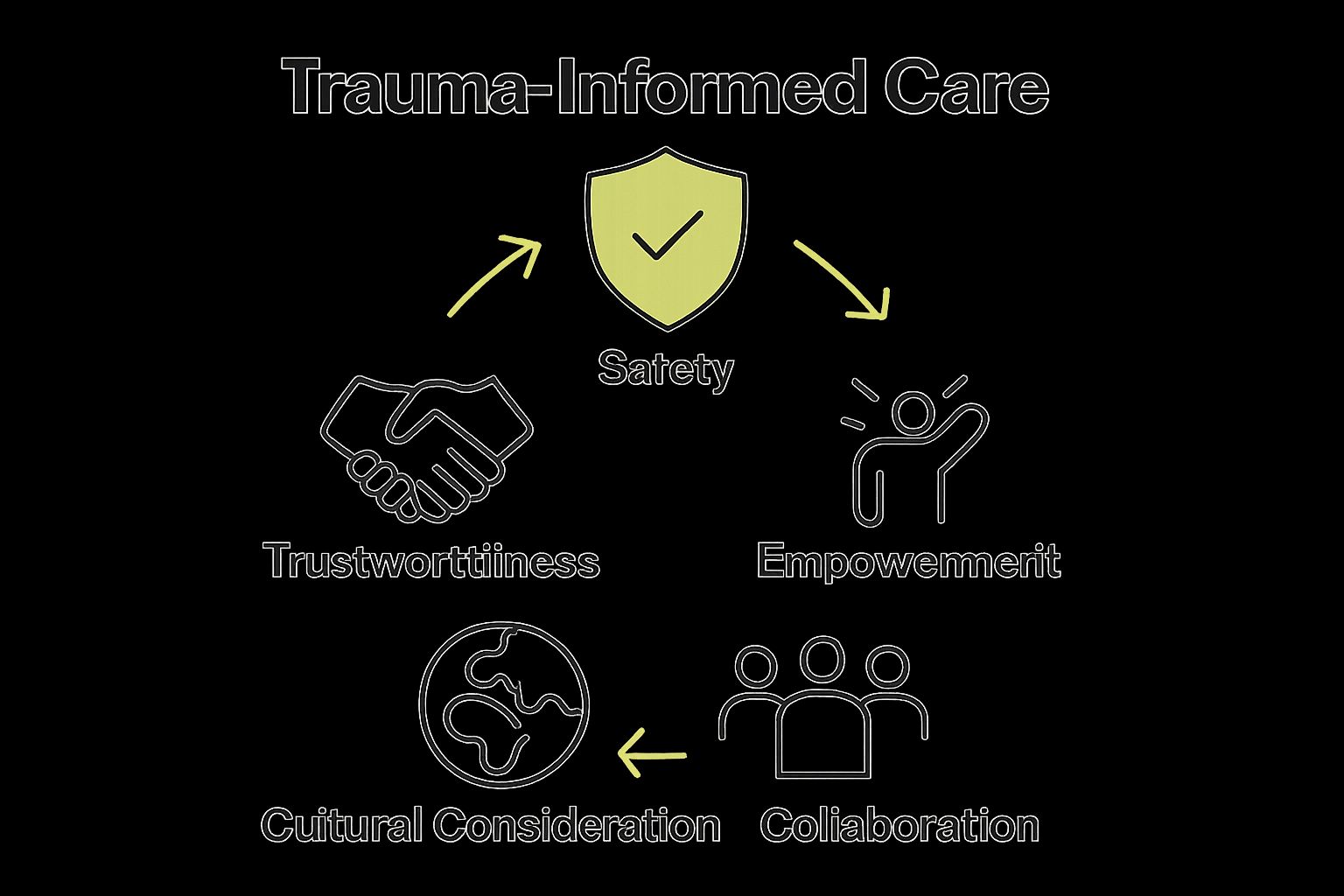
Here is a concise overview table summarizing the five core values of trauma informed care described throughout the article.
| Core Value | Explanation |
|---|---|
| Safety | Prioritizing both physical and psychological safety to create environments where healing begins. |
| Trustworthiness & Transparency | Building trust through consistent, transparent practices and clear communication. |
| Empowerment, Voice, and Choice | Supporting individual agency by promoting self-directed decision making and honoring choices. |
| Peer Support & Collaboration | Encouraging collaborative partnerships and shared decision-making throughout recovery. |
| Cultural, Historical, and Gender Issues | Recognizing the unique impacts of culture, history, and gender on trauma and recovery. |
Frequently Asked Questions
What is trauma informed care?
Trauma informed care is a compassionate and holistic framework that recognizes the profound impact of traumatic experiences on an individual’s mental, emotional, and physical well-being. It focuses on understanding the context of a person’s experiences rather than just addressing symptoms.
Why is psychological safety important in trauma informed care?
Psychological safety is crucial as it creates an environment where individuals feel emotionally protected and validated. This sense of safety is essential for meaningful recovery from trauma, allowing individuals to engage in their healing journey without fear of judgment.
How does empowerment play a role in trauma informed care?
Empowerment in trauma informed care involves restoring personal agency to individuals who have experienced trauma. By providing choices and supporting self-directed healing strategies, care providers help individuals regain control over their recovery process.
How can cultural and gender issues affect trauma informed care?
Cultural and gender dynamics significantly influence individual experiences of trauma. Trauma informed care acknowledges these complexities, ensuring that care approaches respect cultural narratives, historical contexts, and gender-specific vulnerabilities, which fosters a more inclusive environment.
Recommended
- Family Reunification Protocols 2025: Essential Steps for Safety – Disaster Victim Services | Helping You Recover After Disaster
- Emergency Response Trends 2025: What Stakeholders Need to Know – Disaster Victim Services | Helping You Recover After Disaster
- Emergency Response Basics for 2025: A Practical Guide – Disaster Victim Services | Helping You Recover After Disaster
- Incident Command Chain Explained: Roles and Steps for 2025 – Disaster Victim Services | Helping You Recover After Disaster